A short history of Pas Cov in video form
This short video describes the church through the last ten decades.
(For more details, organized thematically, see the blog.)
A short history of Pasadena Covenant to celebrate our centennial
Community and Connection
How has the church created community, fellowship, and connection?
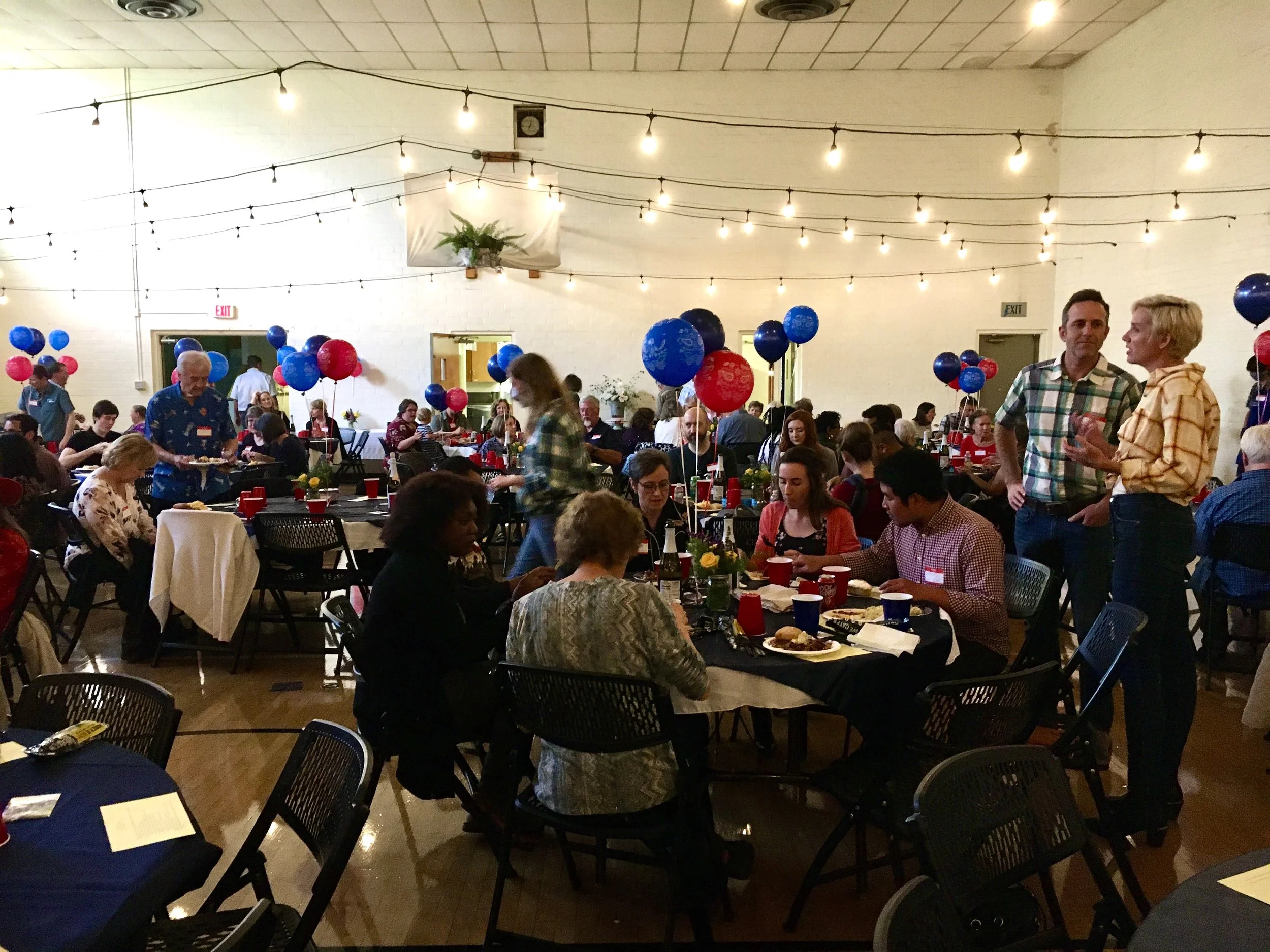
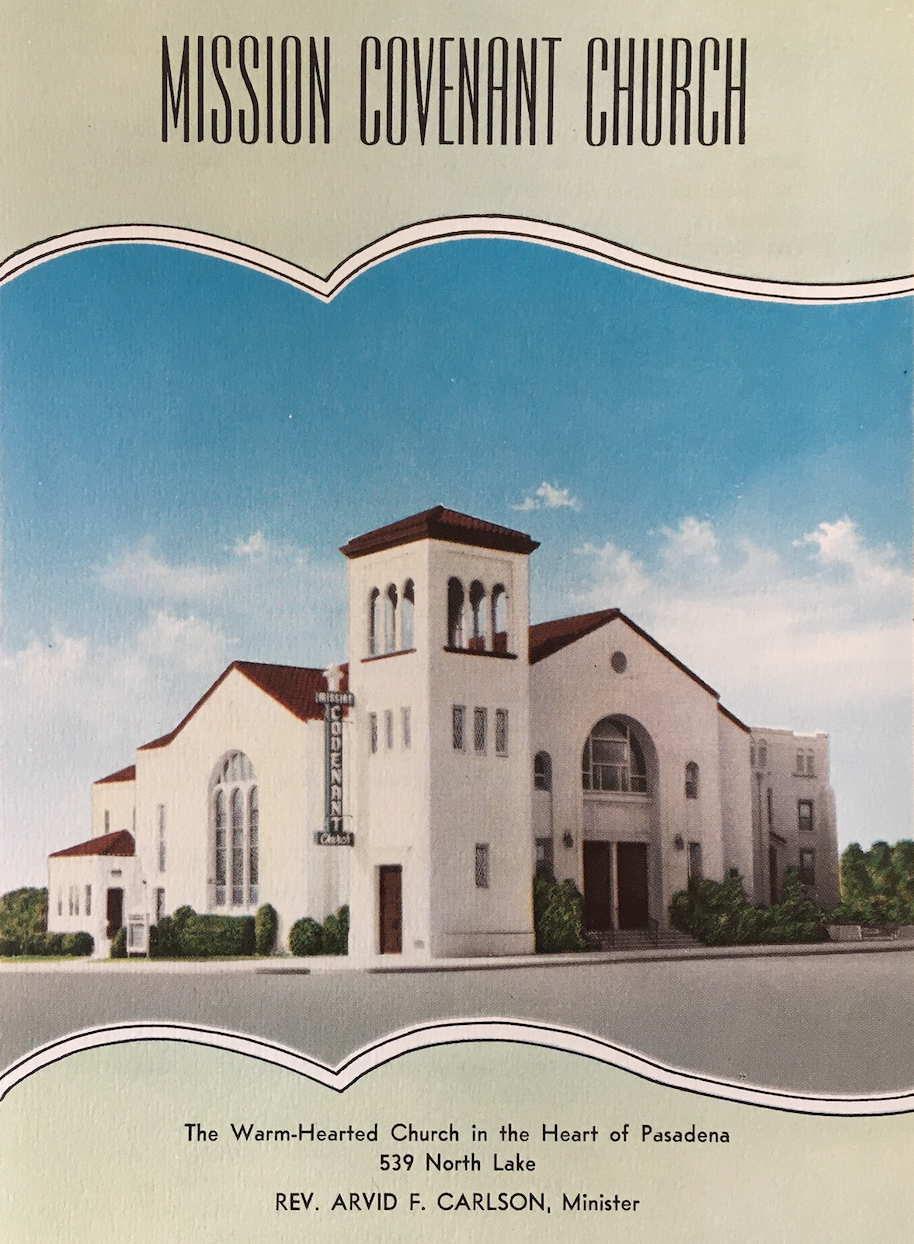
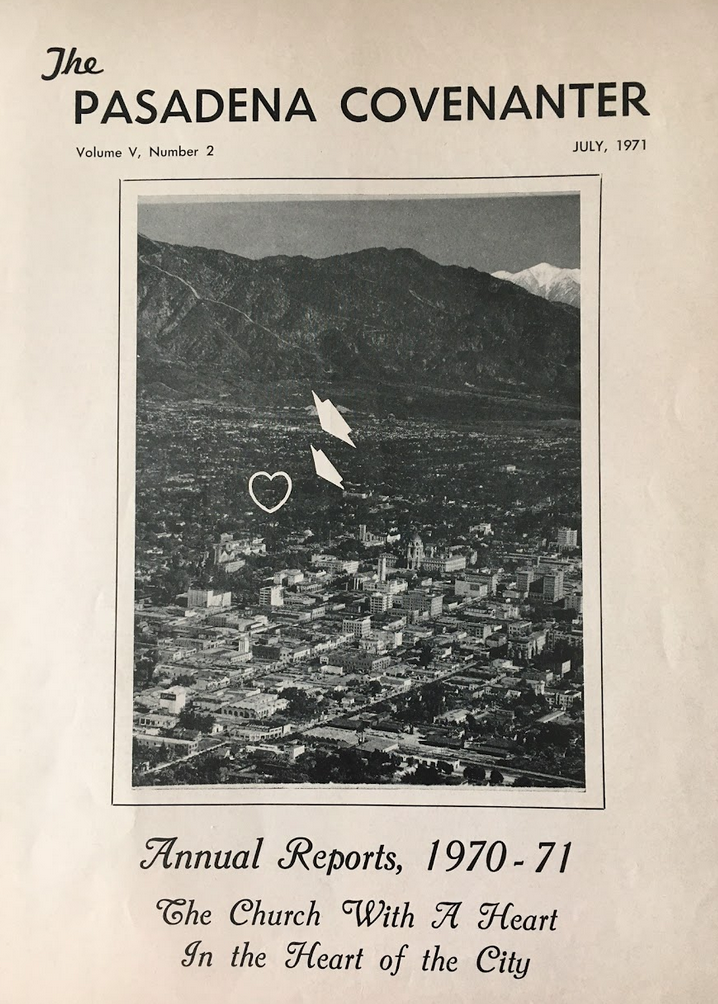
Being in community with one another has been a core value for Pasadena Covenant since before the church was even founded. The Pietist movement, out of which our denomination grew, started with small groups which gathered in homes. They referred to themselves as Mission Friends. Elmer Fredrickson, who began attending the church in 1924 at the age of 2, wrote a history of Pas Cov in 2005 in which he says, “The church pioneers…were hospitable and outgoing to strangers, neighbors, friends, and relatives. They desired to love everyone for Christ’s sake.” (You can read his history here: part 1 and part 2.) A bulletin cover from 1947 refers to a “warm-hearted church.” A 1971 newsletter used the tagline “the church with a heart in the heart of the city” to highlight the heartfelt fellowship here. “Caring” was one of four elements introduced in a new theme in 1975 and used for more than a decade. The fellowship-focused logo from 1989 to ~ 2000 was “One Family Together.” Fellowship and community through family-oriented activities was covered in an earlier post. Here the focus will primarily be on adult Sunday school classes and small groups.
Covenant Women
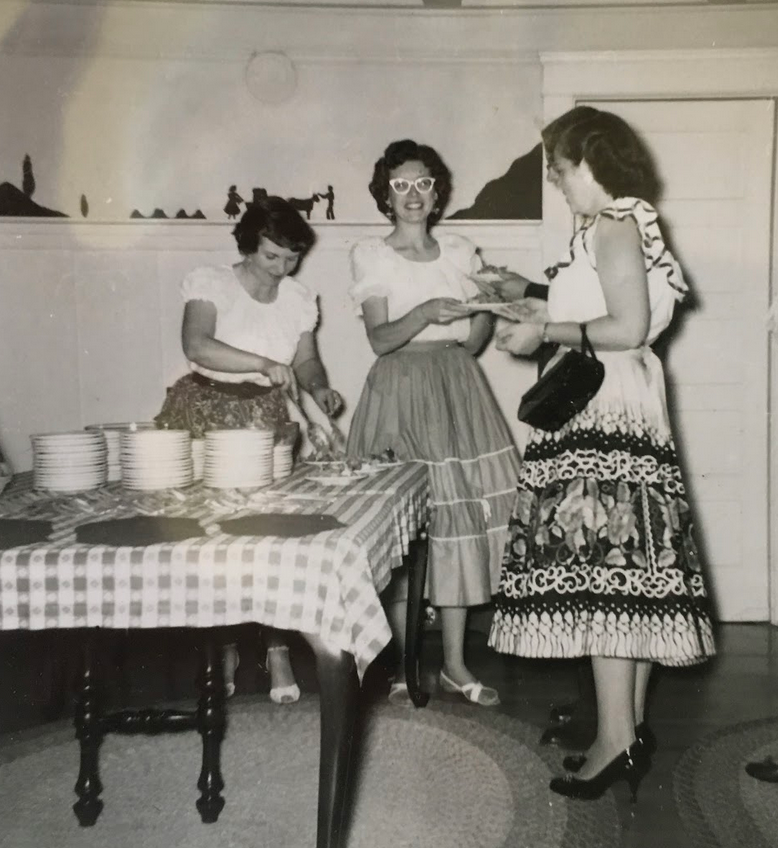
The oldest fellowship group in the church—started in 1921 before the church even began—consisted of 11 women: the Mission Friends Women’s Society. Their rules (at each monthly meeting serve coffee and not more than three treats) reflected simplicity and equality. Their dues (25 cents a month) enabled them to provide the church with new hymn books. Their emphasis not only on socializing, but on helping others, prompted them to change their name to the Phoebe Society (see Romans 16:2).
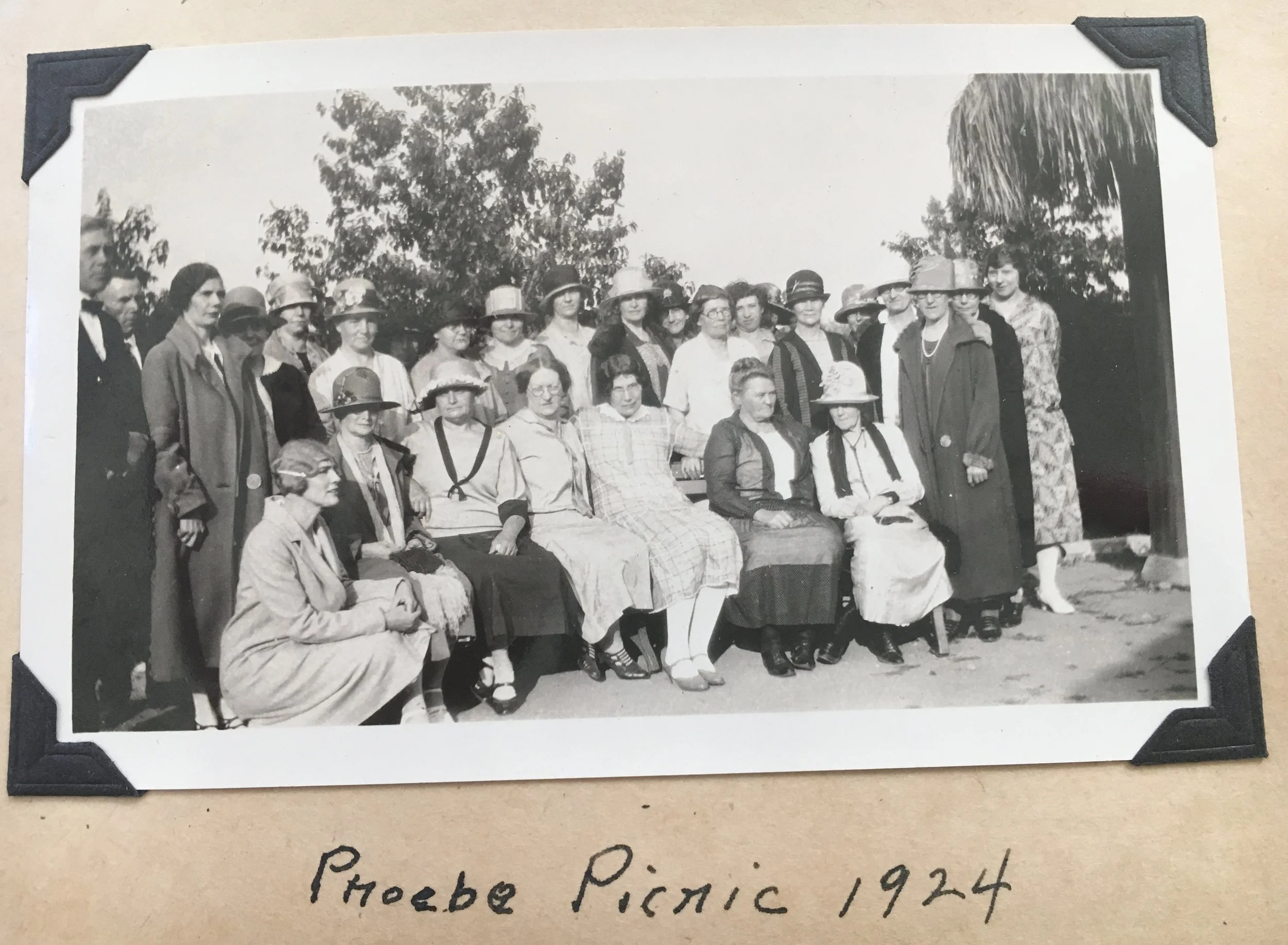
Phoebe Society picnic, 1924
By 1950 they had 80 members who “came apart from our daily duties and cares” to “be blessed, refreshed, and strengthened” by God. They also engaged in considerable acts of service.
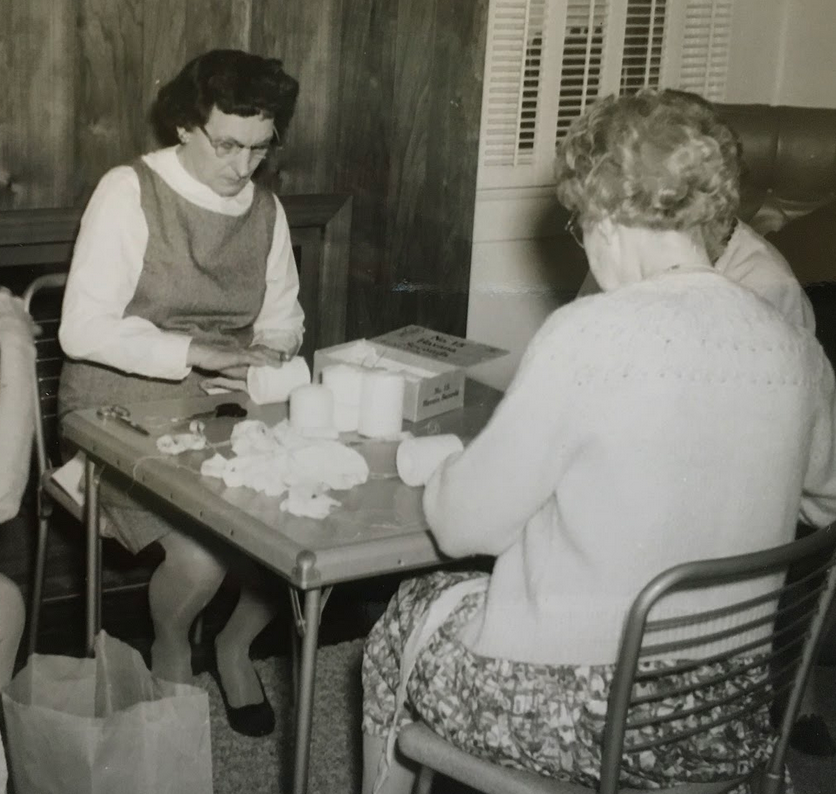
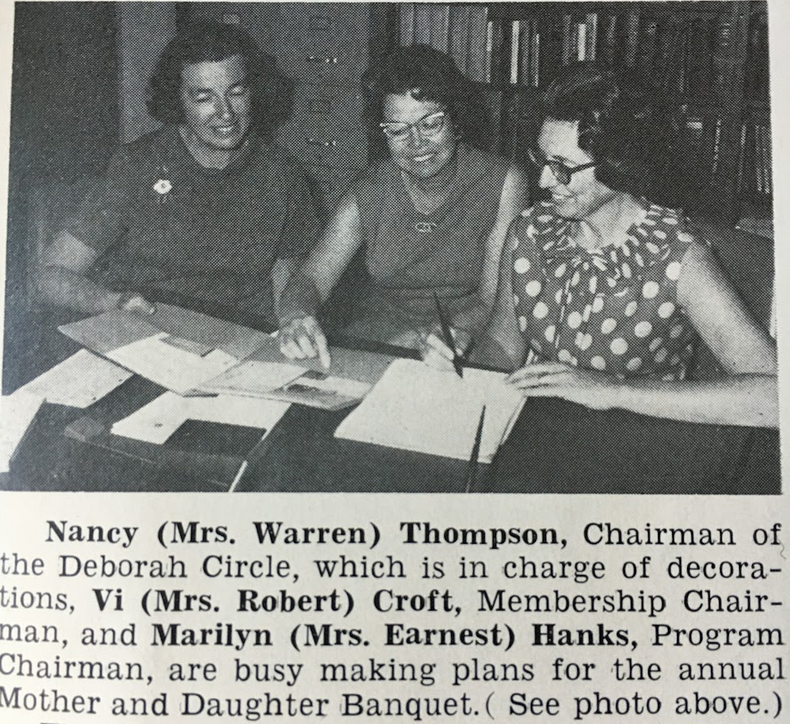
In 1955 the group changed its name to Covenant Women’s Auxiliary. They divided into circles or small groups that met in homes and offered a better opportunity for close friendship. One woman wrote, “It is so easy to get acquainted around the work table”—work that included rolling bandages and sewing gowns for mission hospitals as well as other service-oriented crafts. By 1960 Covenant Women or CW had 175 members, meeting in seven circles. Their monthly events included a day of missions, a mother-daughter banquet, breakfast at Farnsworth Park, and a fall festival. They continued sewing and quilting for others, helping with church activities, and engaging in fundraisers so they could provide for church needs and support missionaries.
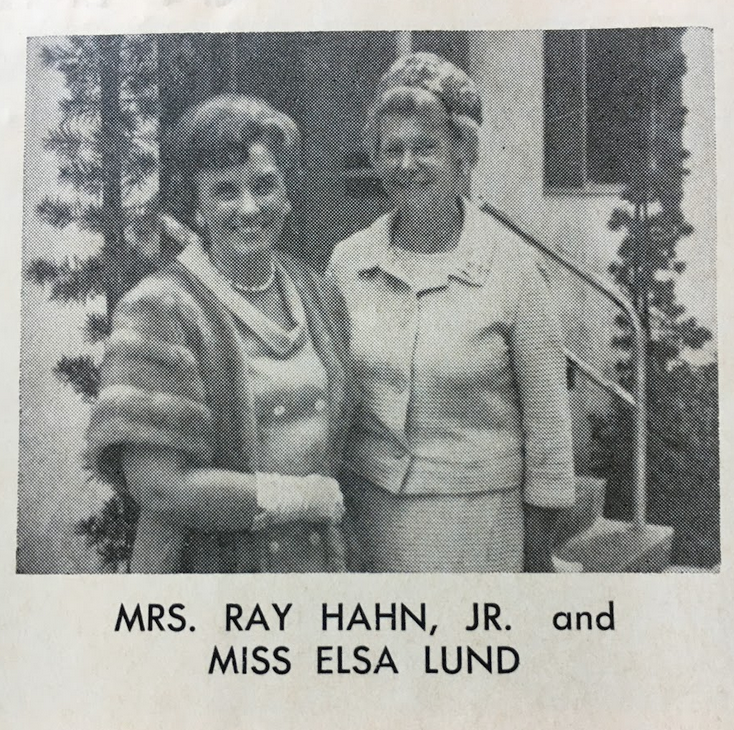
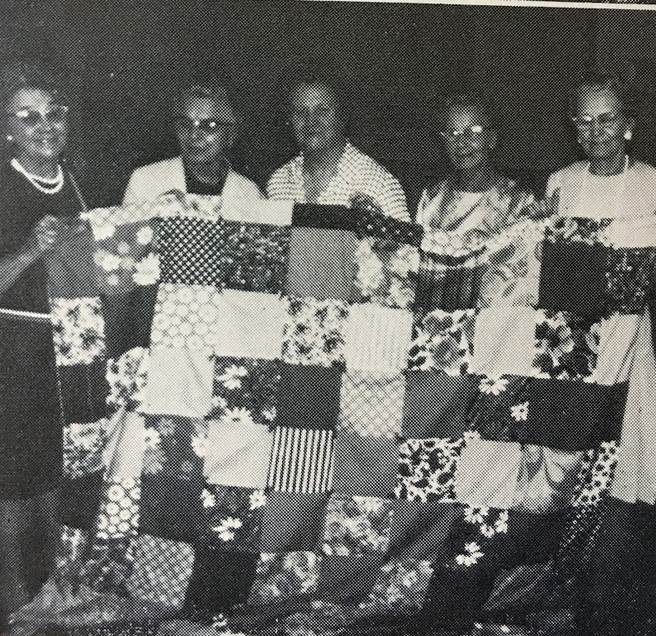
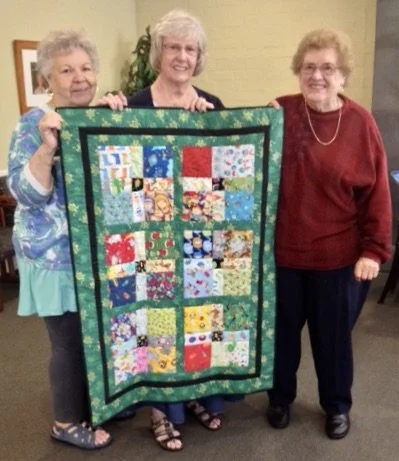
In 1977 CW started their best fundraiser ever, the Lucia Fest (which eventually served 500 at two settings and raised $5000 annually). (Lucia photos are in the post on Language & Ethnicity.) In the 1980s there were fewer circles: just the Mary and Martha Circle (it included childcare for young mothers), Mission Heirs, and Sarah Circle. CW later began a Thursday evening fellowship and an early morning Bible study for working women. Innovations in the 1990s and 2000s were the Women’s Book Club, a spring tea, and half-day retreats. The church could still count on Covenant Women for farewell receptions, memorial services, staff baby showers, and pies after the Thanksgiving service, but the giants of CW like Elsa Lund and Lucille Peterson Johnston had died, retired, or moved. The last year for the official CW was in 2010 though there are women who still gather, for example, making quilts. One of their last initiatives was a 12-week “Friendship Groups” program—a great ending to a group that started with eleven women who sought friendship with each other as they served God. (Here’s a longer version of CW history.)
And what about men?
A Covenant Men’s Fellowship was started in 1952 and functioned sporadically till 1970 with special dinners, speakers, and father-son events. There have also been periodic retreats, informal get-togethers, and a book club.
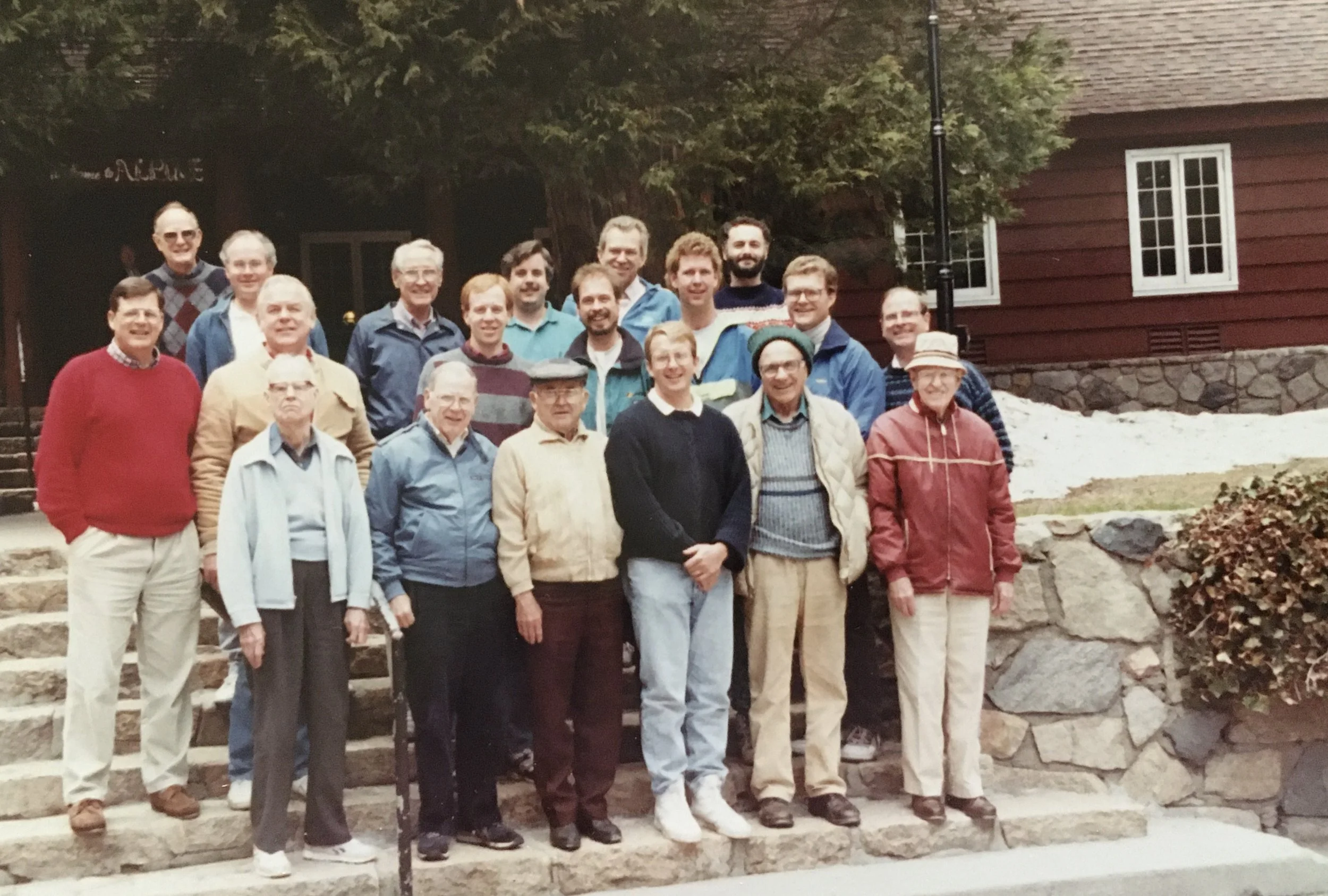
Men’s retreat at Alpine Camp, 1980s
Golden Years
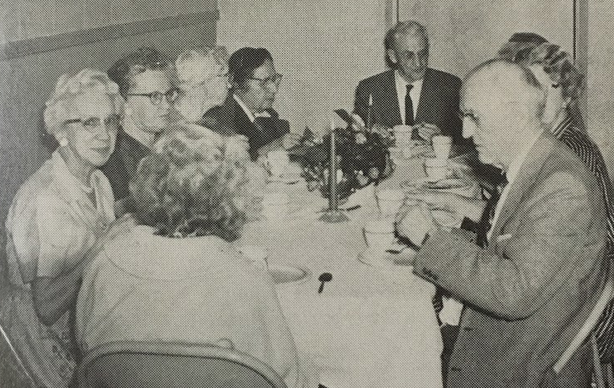
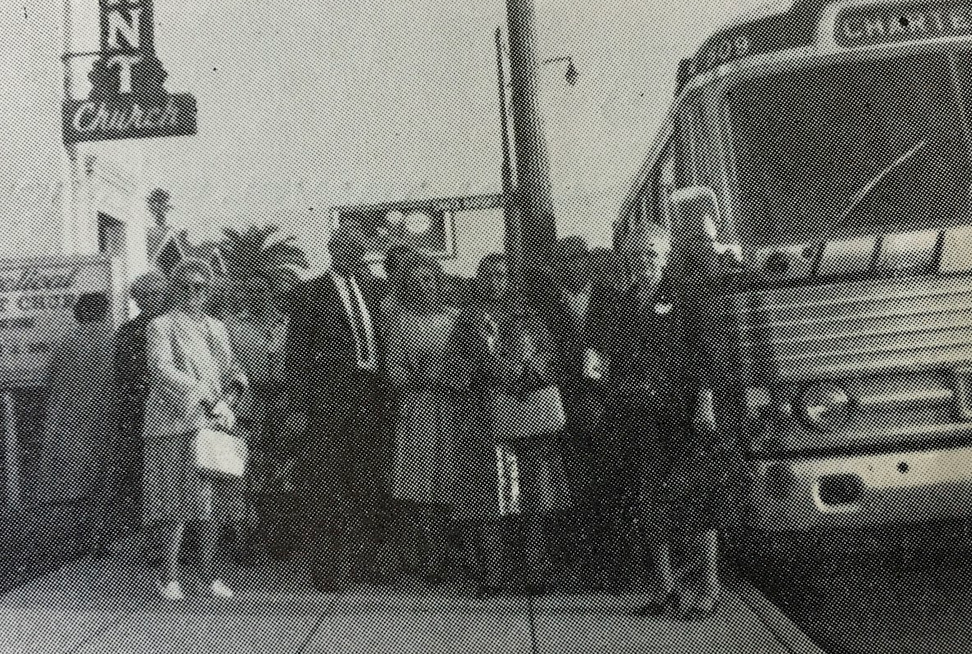
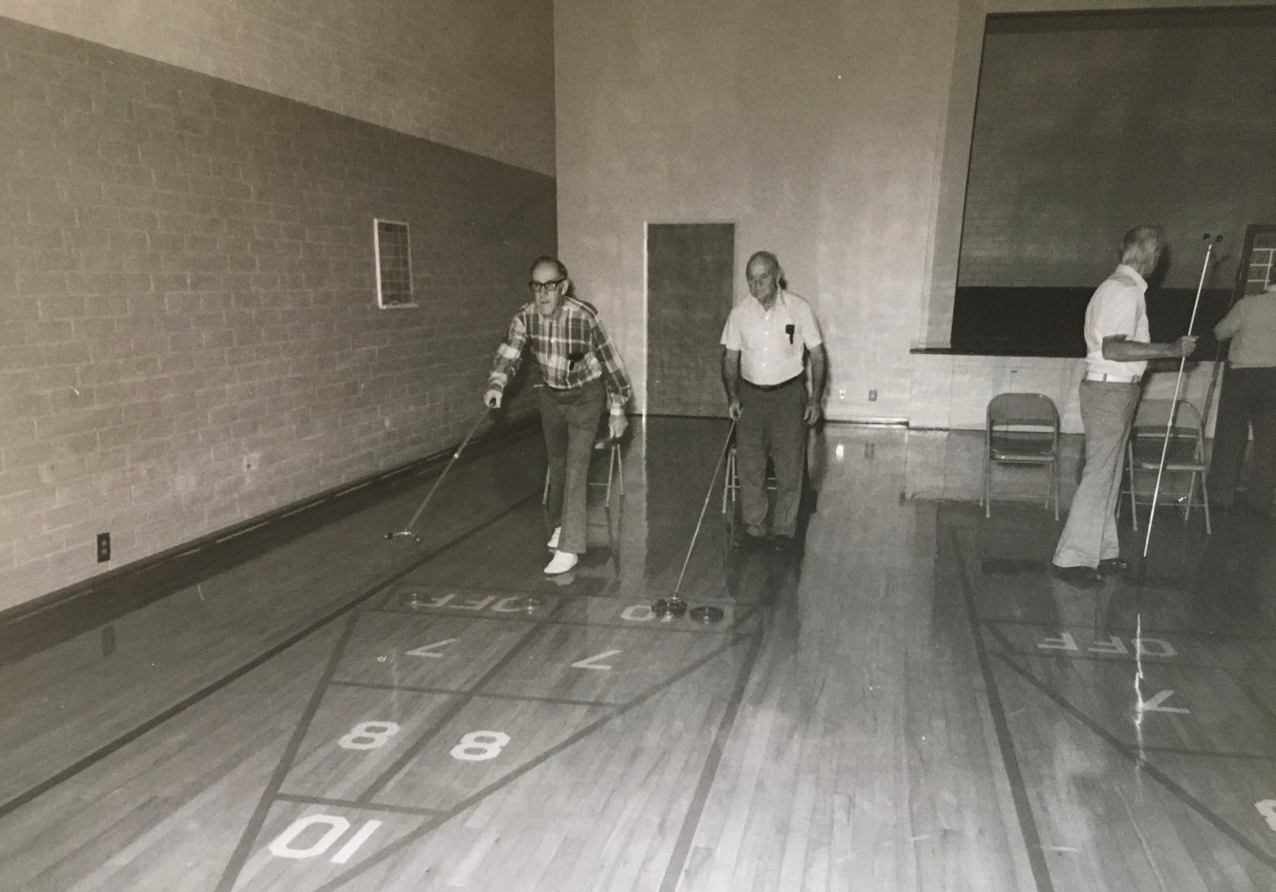
Active for several decades from the 1960s into the 1980s, Golden Years was a group that ministered to senior members of the church. Facilitated at first in 1960 by Minister of Visitation, David H. Scott, it soon became very active, with monthly meetings that averaged 60 men and women. Their stated goal was to sponsor devotional, social, and recreational activities to alleviate loneliness and encourage people to bring friends to church and to Christ. Their monthly meetings featured inspirational speakers and travelogues, and refreshments with a special table set aside for those who had birthdays that month. They sponsored bus trips several times a year to places like Solvang, San Diego, Palm Springs, Catalina, and Long Beach (often with singing on the way). A highlight was the annual Christmas party at Eric’s Smorgasbord in Glendora. Church reports referred with gratitude to the way the Golden Years handymen helped keep up the buildings. A men’s shuffleboard team that played in the gym was still going in 1990.
Adult Sunday School Classes
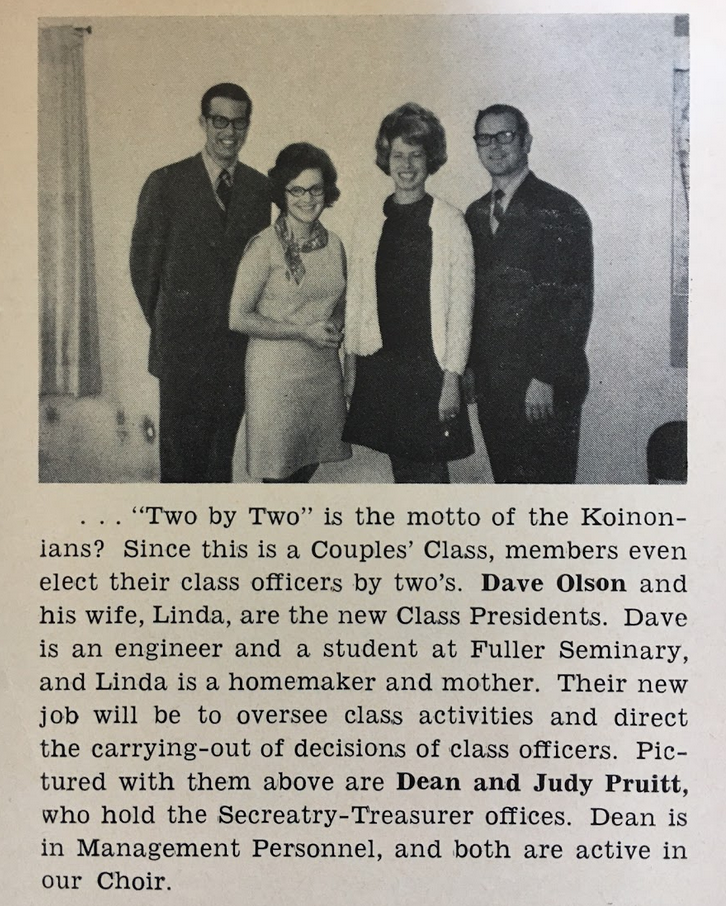
Records in the 1950s briefly mention having 200 people in the adult Sunday school program, but it was in the 1960s that records started to give details about peer-group adult classes on Sunday morning. They were a source of growth in both faith and friendship. A newsletter in 1967 mentioned the following classes: Koinonia (couples in their 20s), Bereans (people in their 30s), Couriers (formed in the 1940s for young adults, and at that point mostly people in their 40s), Fellowship (people with grown children), and Friendship (people in their later years). Groups for single young adults included SAY in the 1970s and SALT Co as well as Prime Time in the 1980s. In 1982 a new group was formed for young couples, Joint Heirs. Other groups people might remember are 60 Minutes and Pacesetters. There were also periodic elective classes on topics such as parenting, Sabbath rest, or the Minor Prophets. By 1990, cross-age adult classes had started to predominate, including Homeroom 539 (led by Wayne Aoki) and Life Together (led by Anita Sorenson).
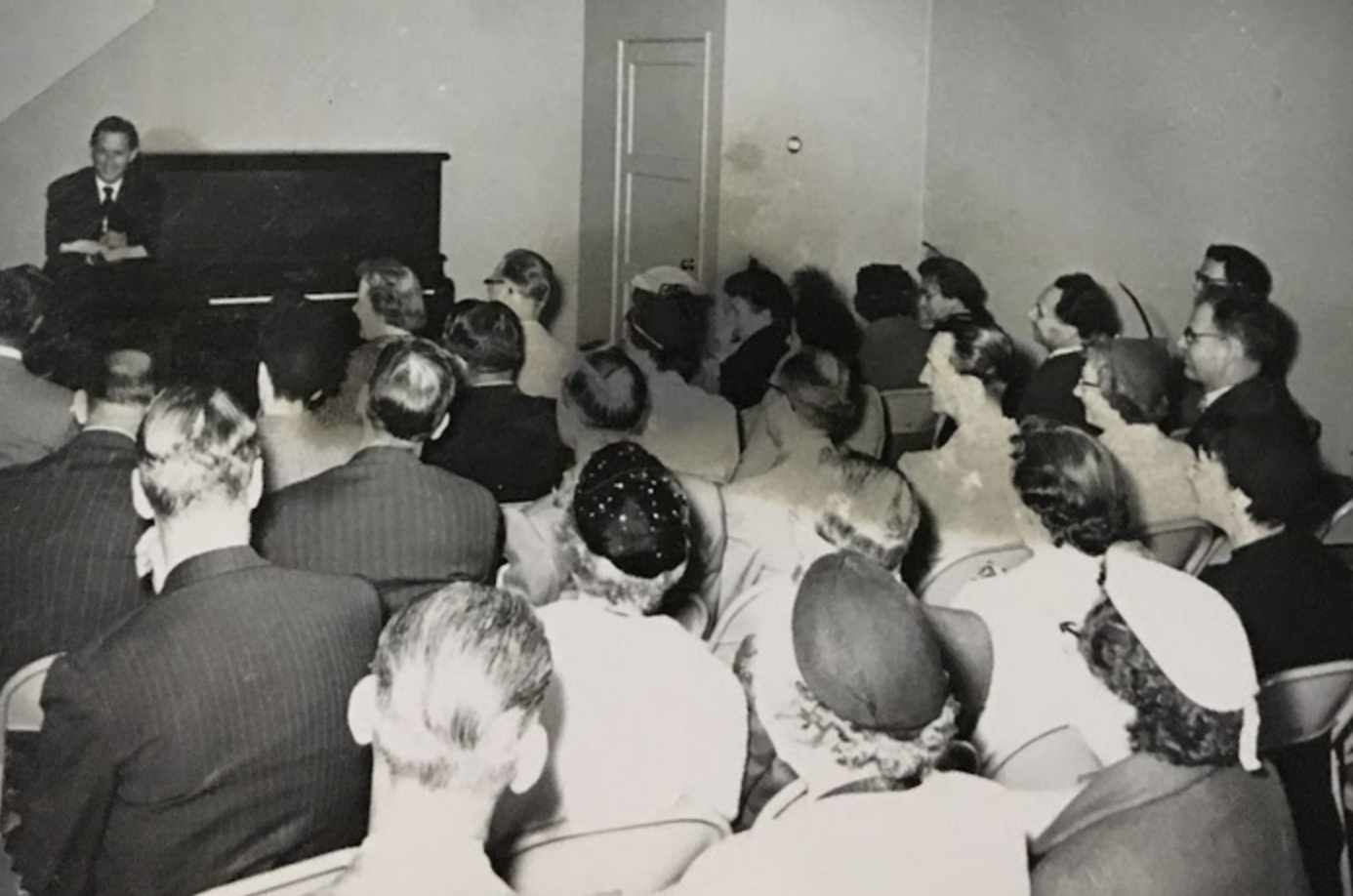
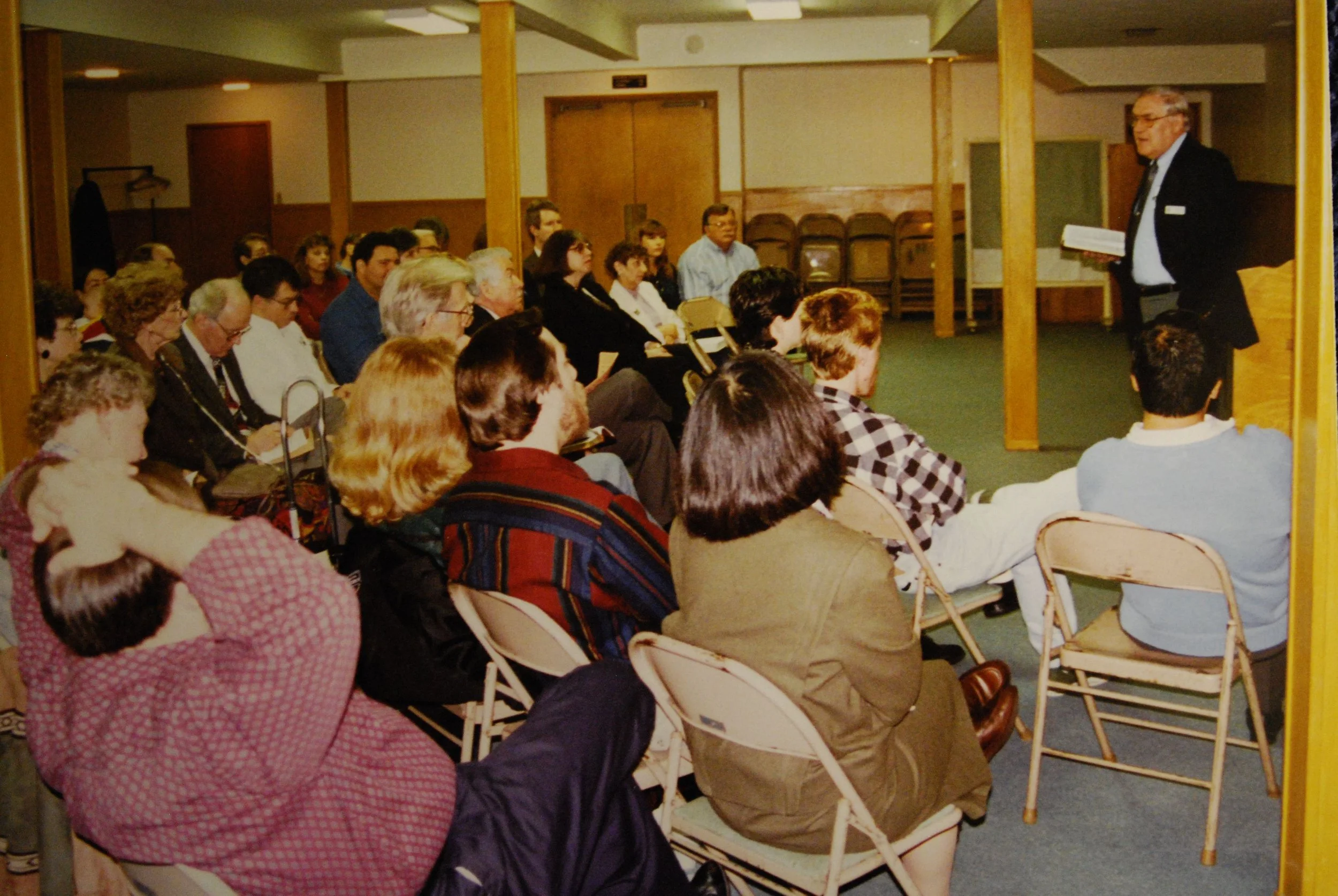
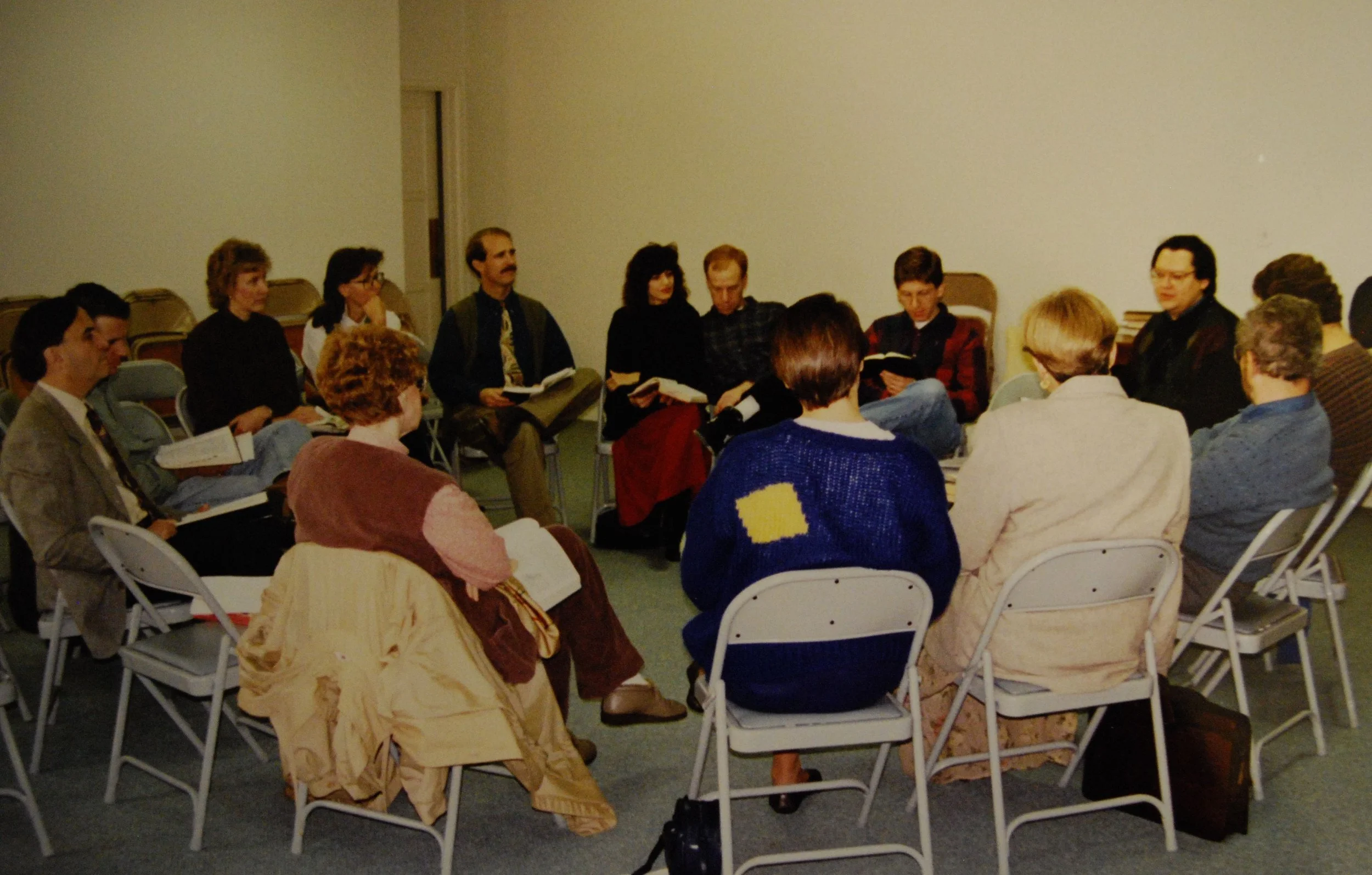
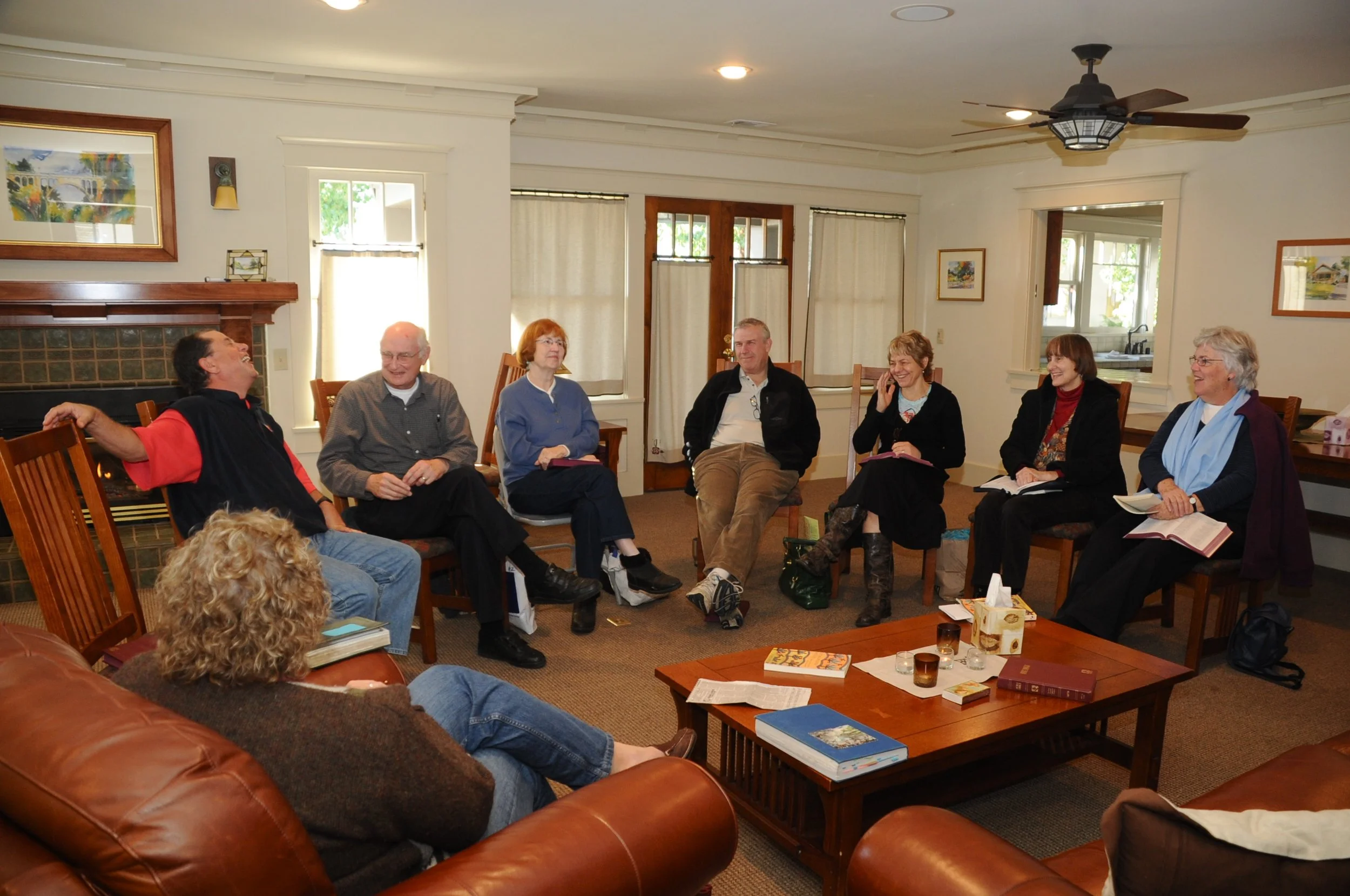
The classes were a place for teaching, Bible study, and discussion on Sunday mornings. (For more details on the teaching, see the post script at the end of this post.) They were also a place for dinners, game nights, excursions to the theater or a concert, camping, volleyball, hikes, pool parties, and service activities.
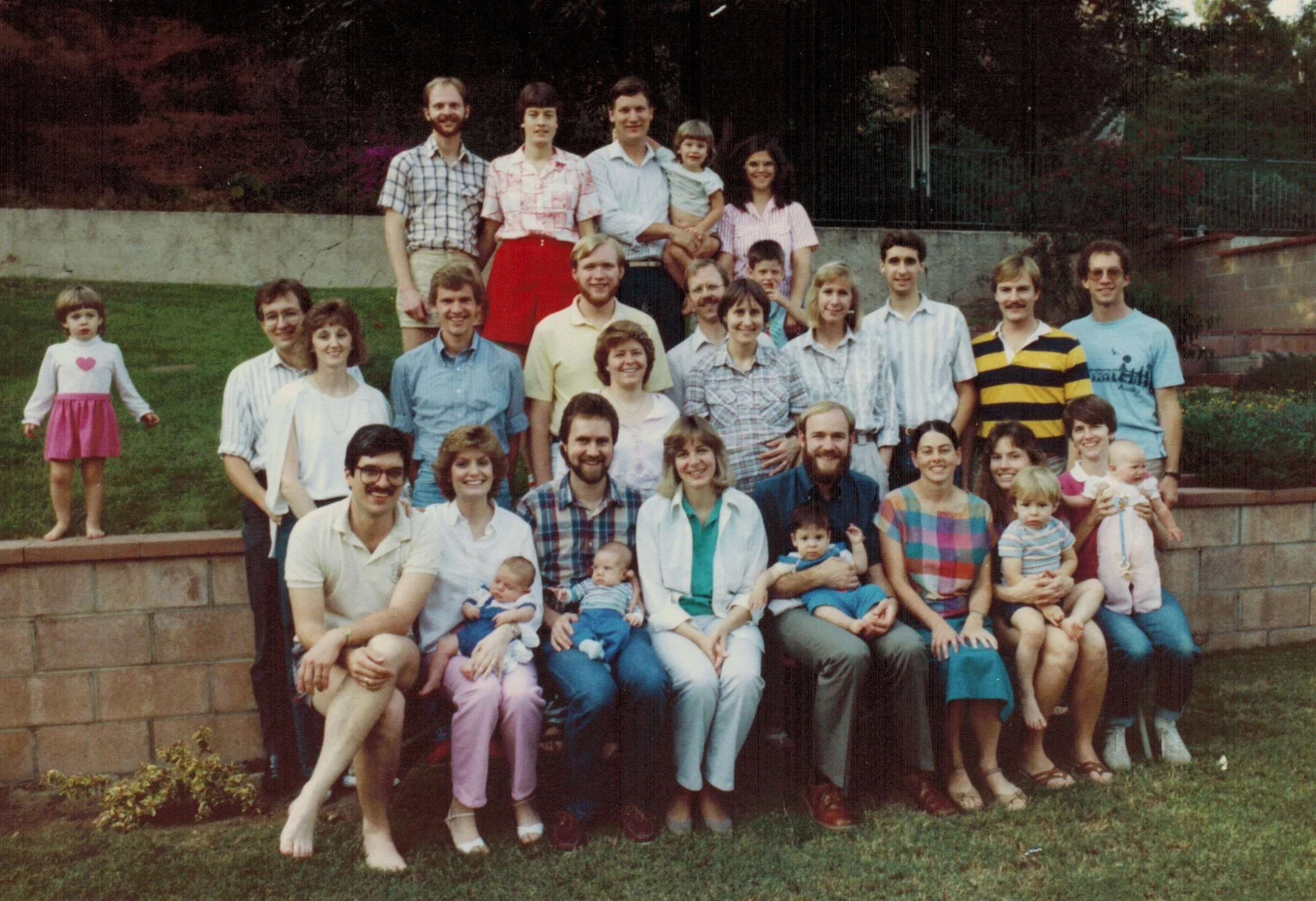
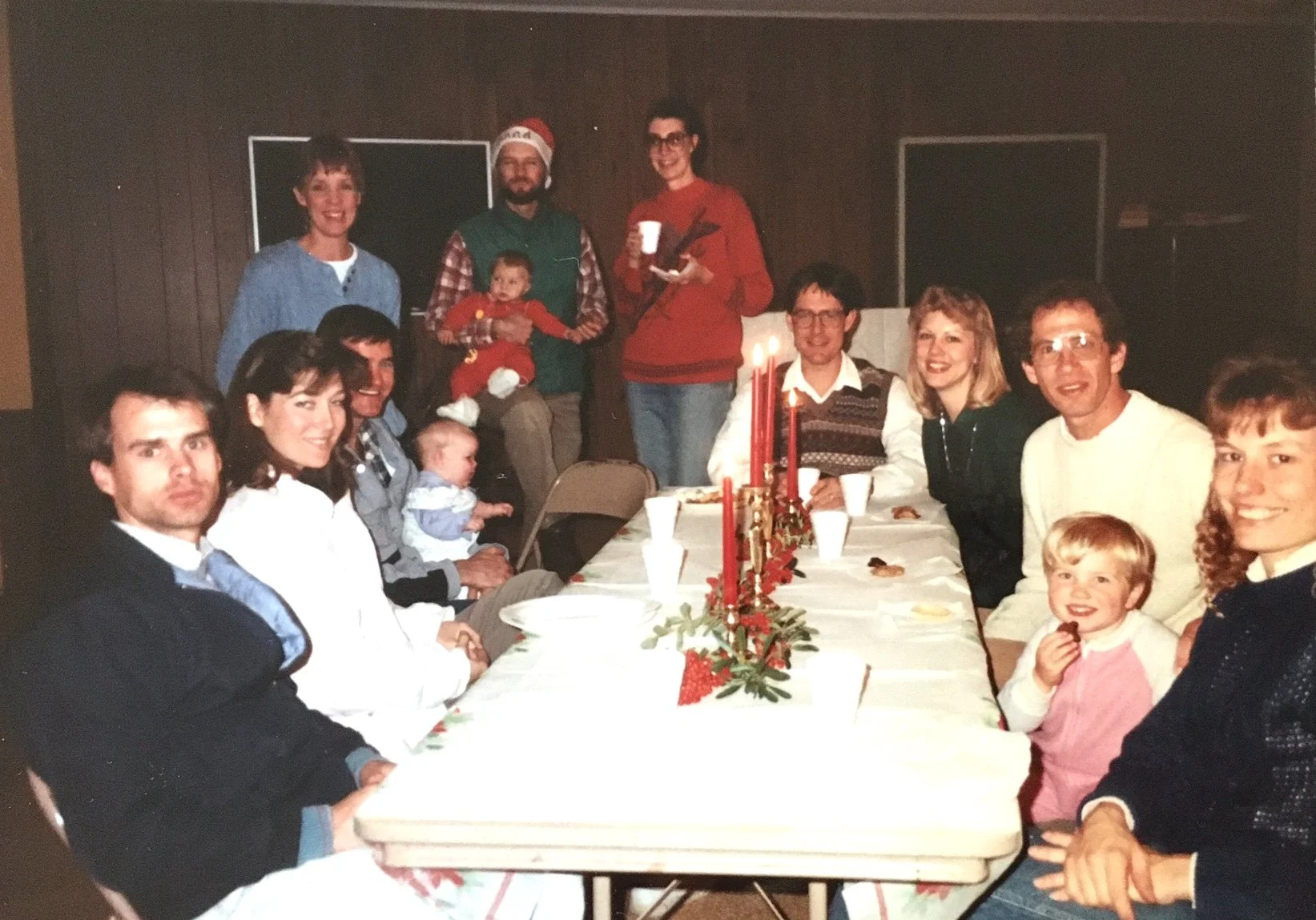
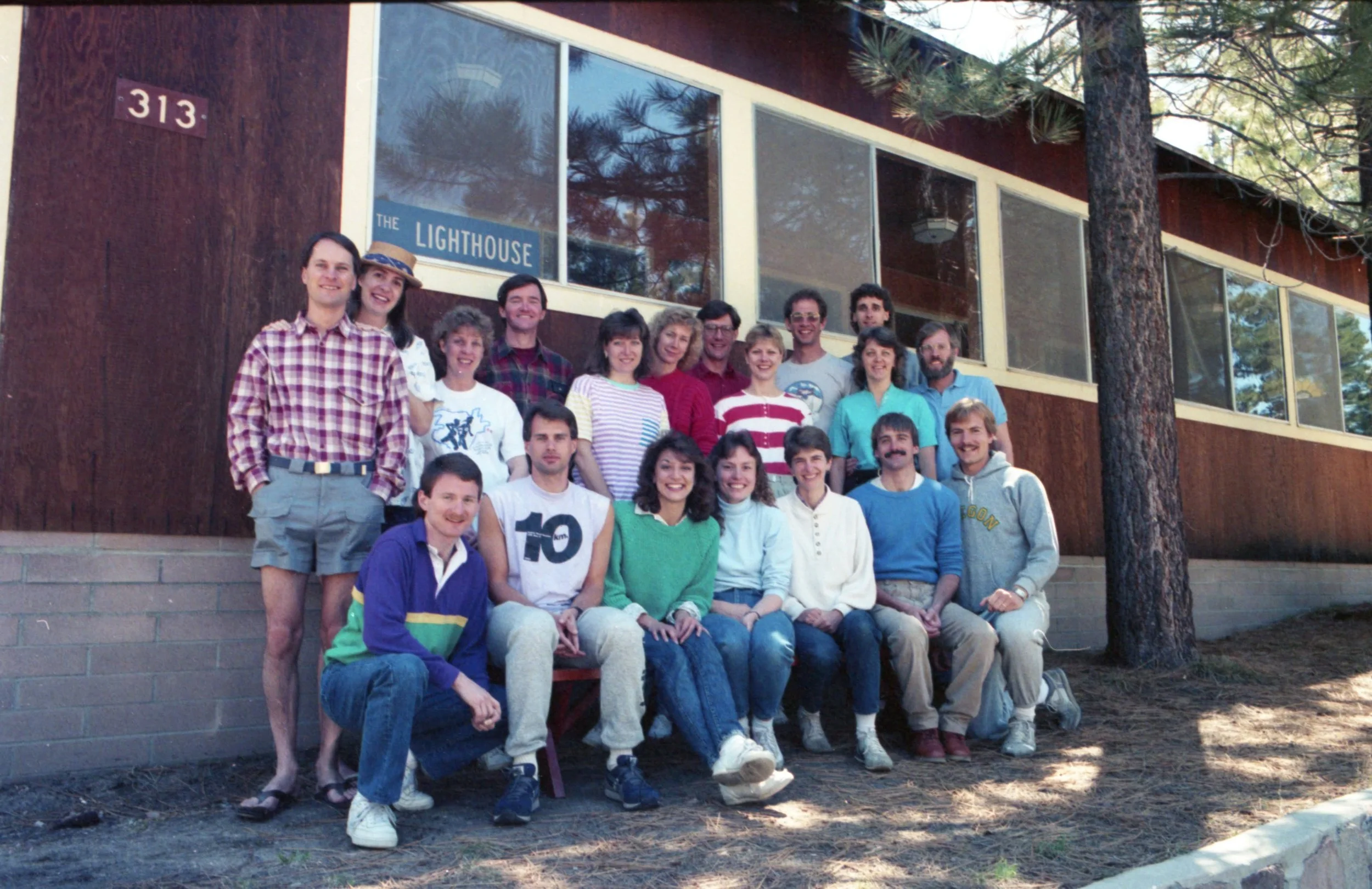
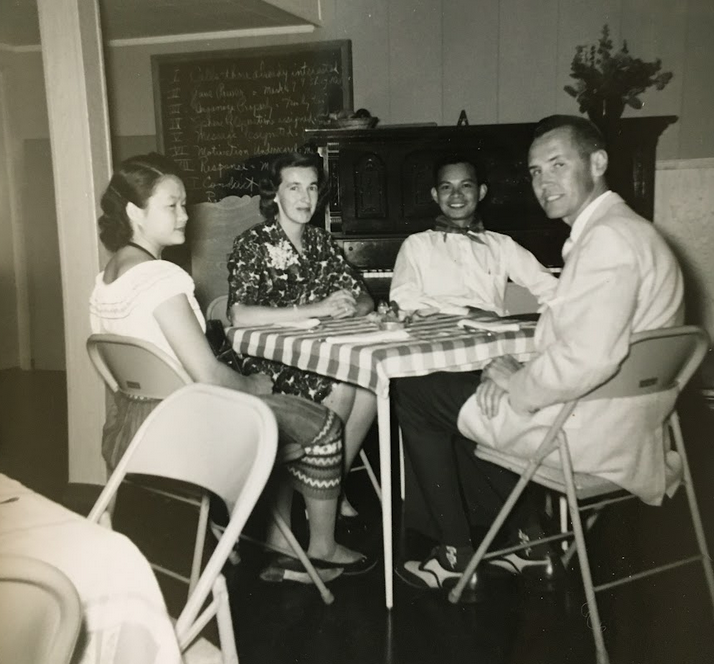
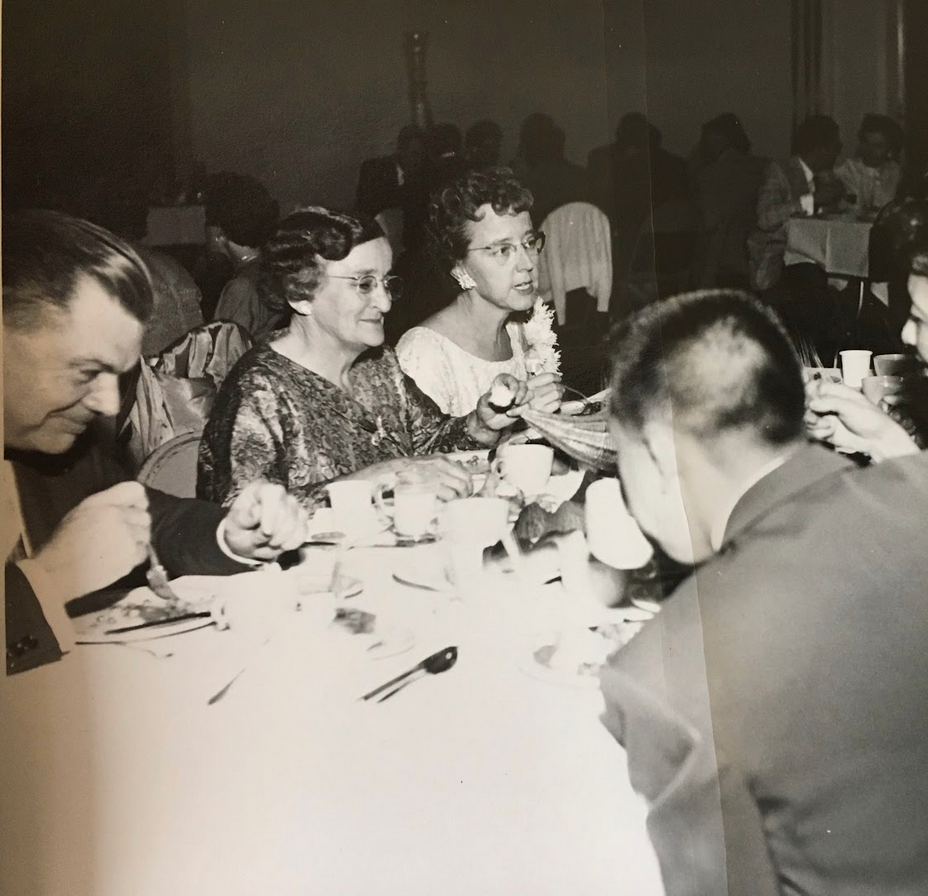
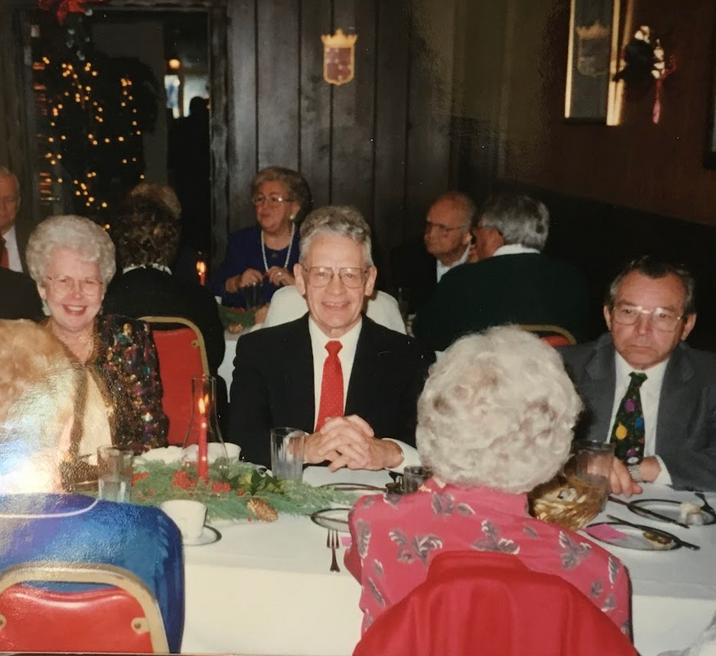
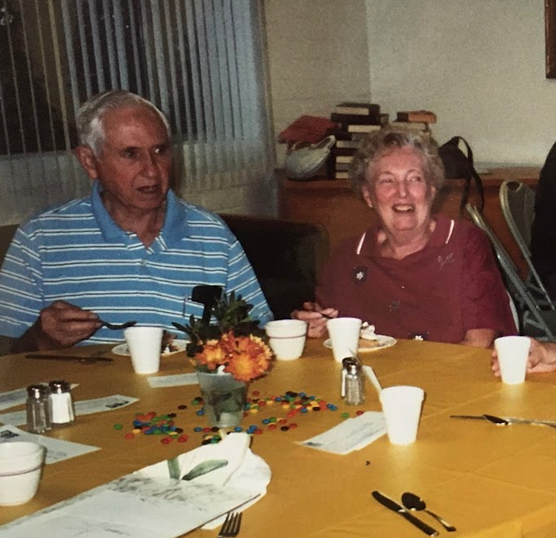
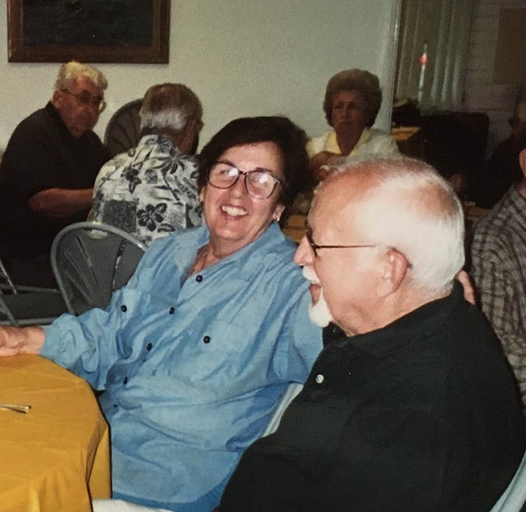
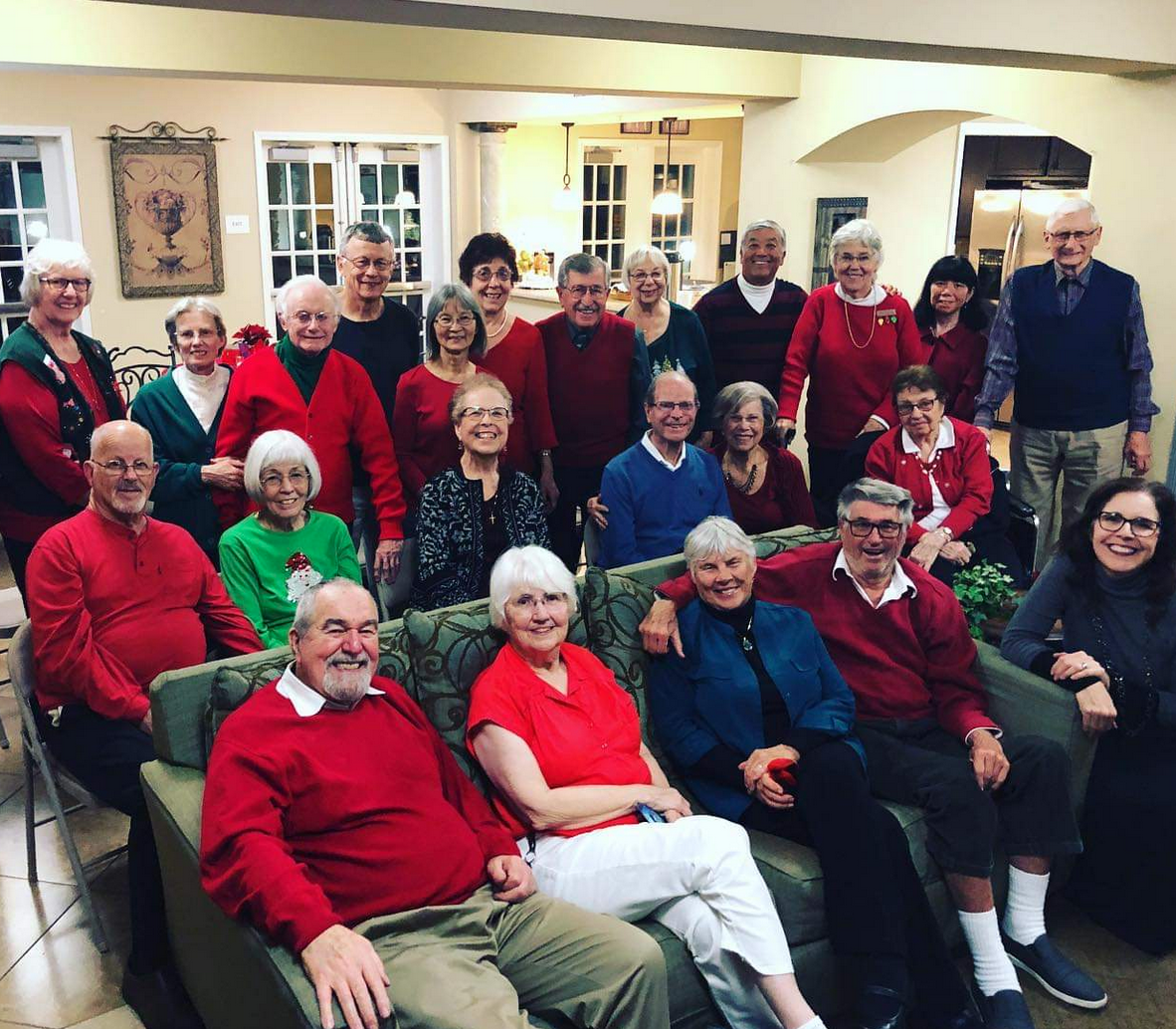
Some classes faded as people moved away from the area or chose to be involved in a cross-age class. Now adult Sunday School classes have for the most part been replaced by small groups. However, the Couriers are still meeting with a Bible teacher. And another one which has lasted from the 1960s till now is Koinonia. It has stopped meeting as a Sunday morning class, but the group still has monthly potlucks. Through the years, members have shared milestones both happy and sad across the life span—the birth of children, raising teenagers, the empty nest, retirement, aging parents, deaths, and the infirmities of age.
Small Groups
Over the years there have been many variations on small groups that meet at church or in homes for fellowship and spiritual growth. They have gone by different names: care groups, cell groups, life groups, and growth groups. Sometimes they have used a curriculum like Laymen’s Bible Study, Honeycomb Bible Studies or Companions in Christ, and other times have been more flexible. Some have been temporary, and others have met over the course of years. Some have been part of an official church program and others have been more organic.
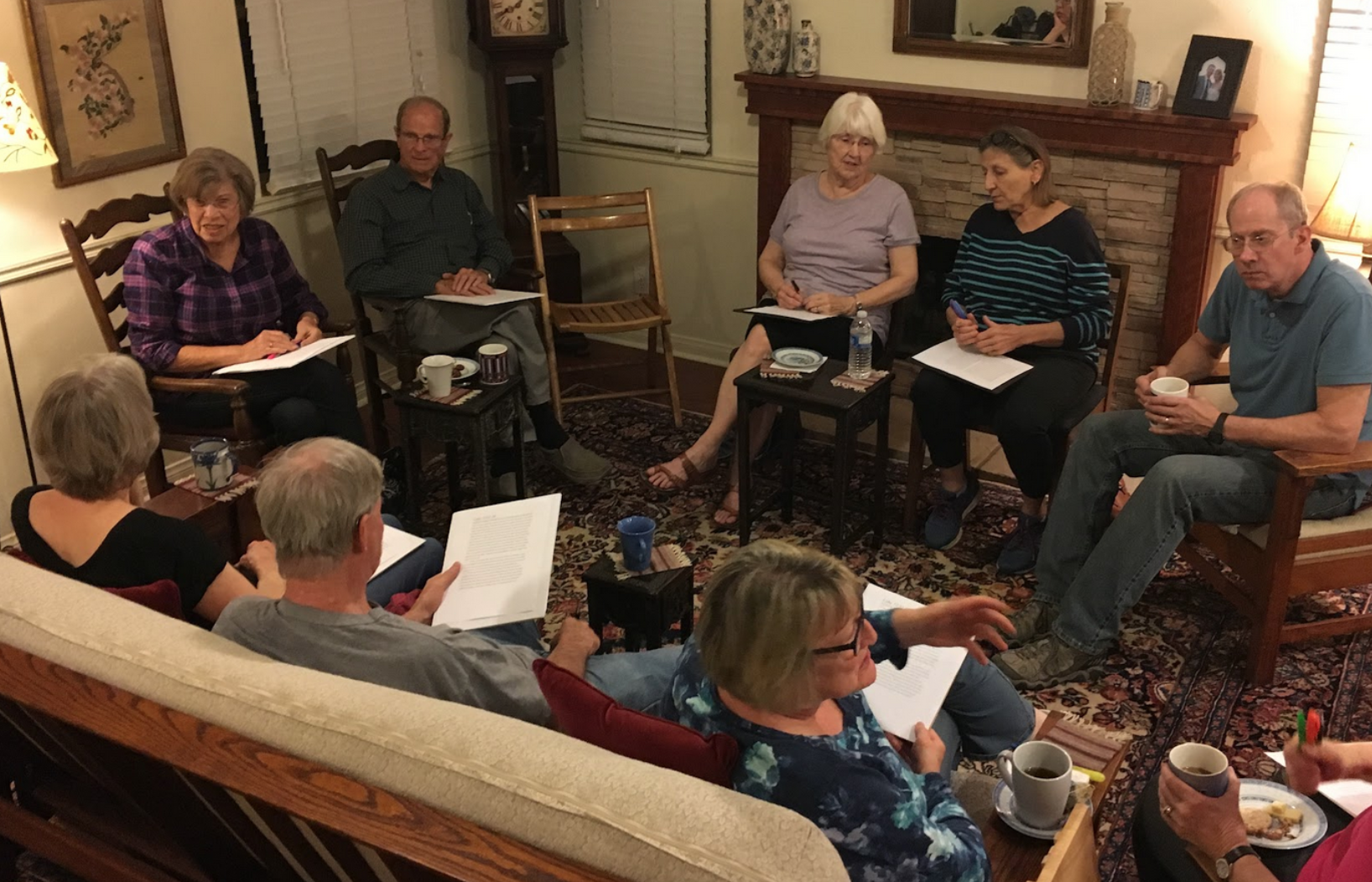
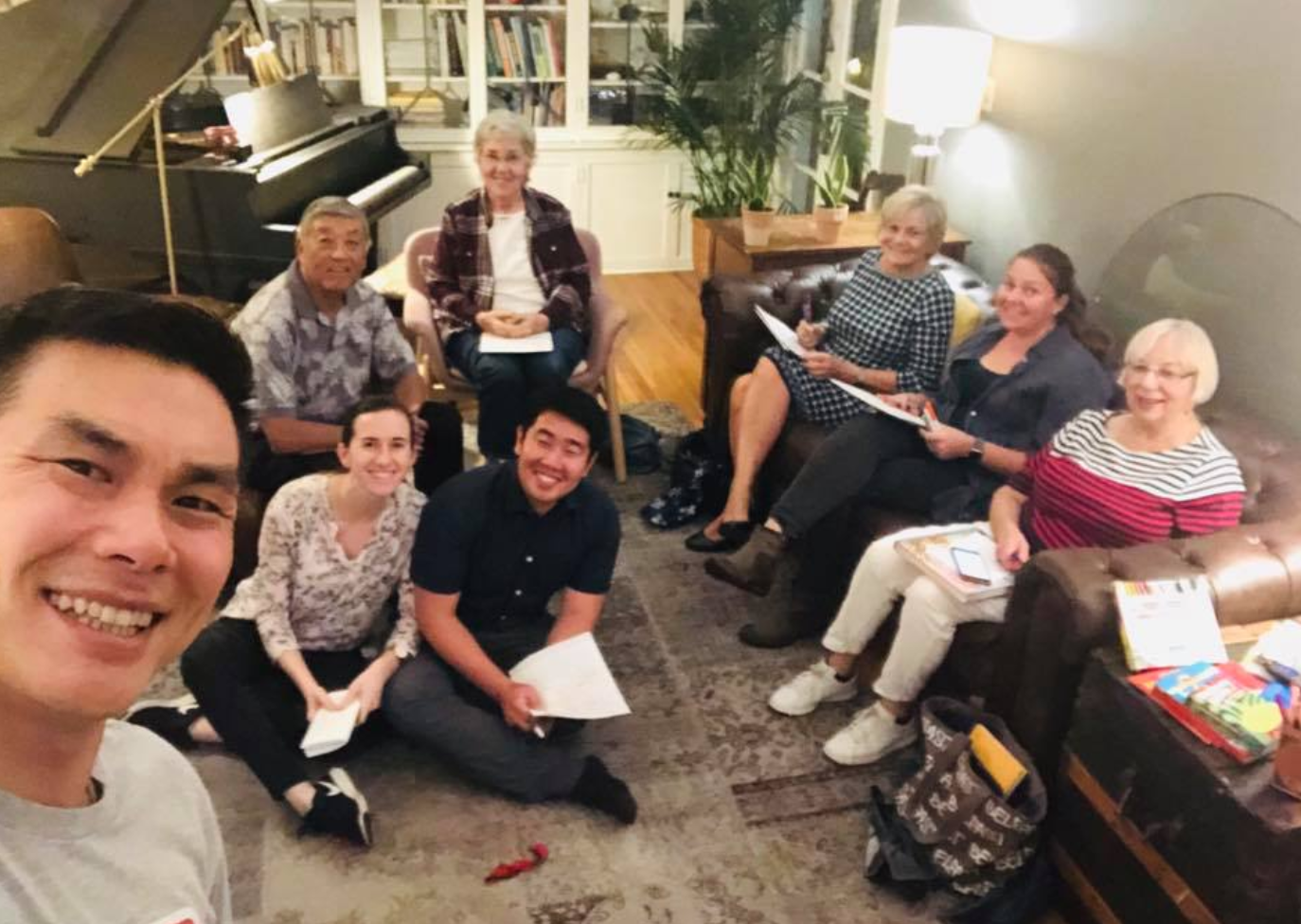
One example is the Family Friendly group. Melissa Heuer writes, “In 2015 a group of families started meeting regularly to have playdates with their young children. Over time, we became a community group that ate dinner together and spent time sharing, studying, and praying together, while the children played in the backyard. Realizing we would benefit from the wisdom and experience of older couples, we invited a few to join our group. We are now seventeen families ranging from newly married twenty-somethings to empty nesters in their seventies and eighties.” And one of the older couples, Judy & Jack Balswick, added, “We have been delighted to get to know the younger families and their children as well as to have the spiritual sharing and prayer times. During the 2020 Covid crisis, many of these families came forward to do our grocery shopping to ensure our safety as elder adults. We have been richly blessed!”
Church Events
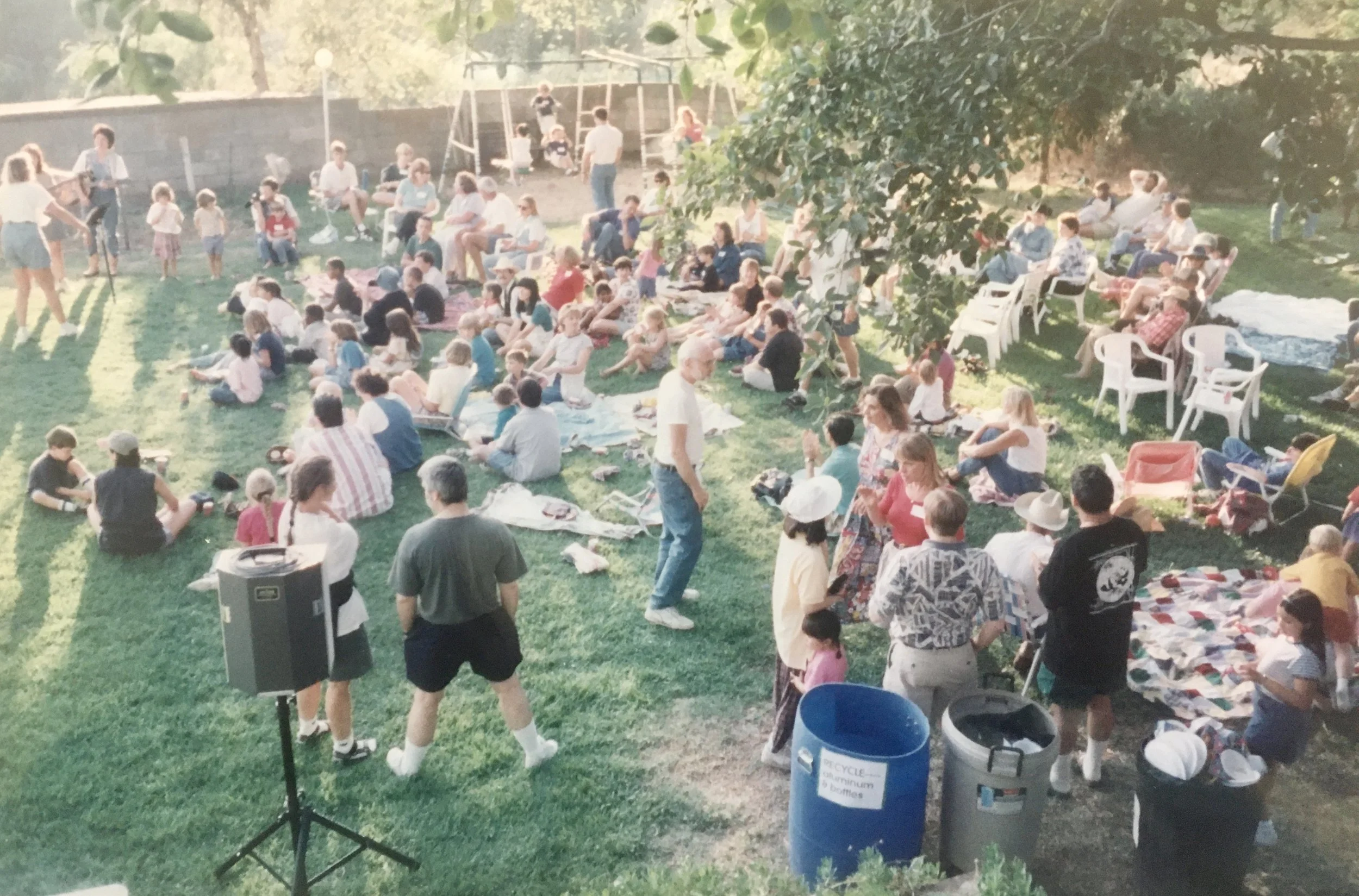
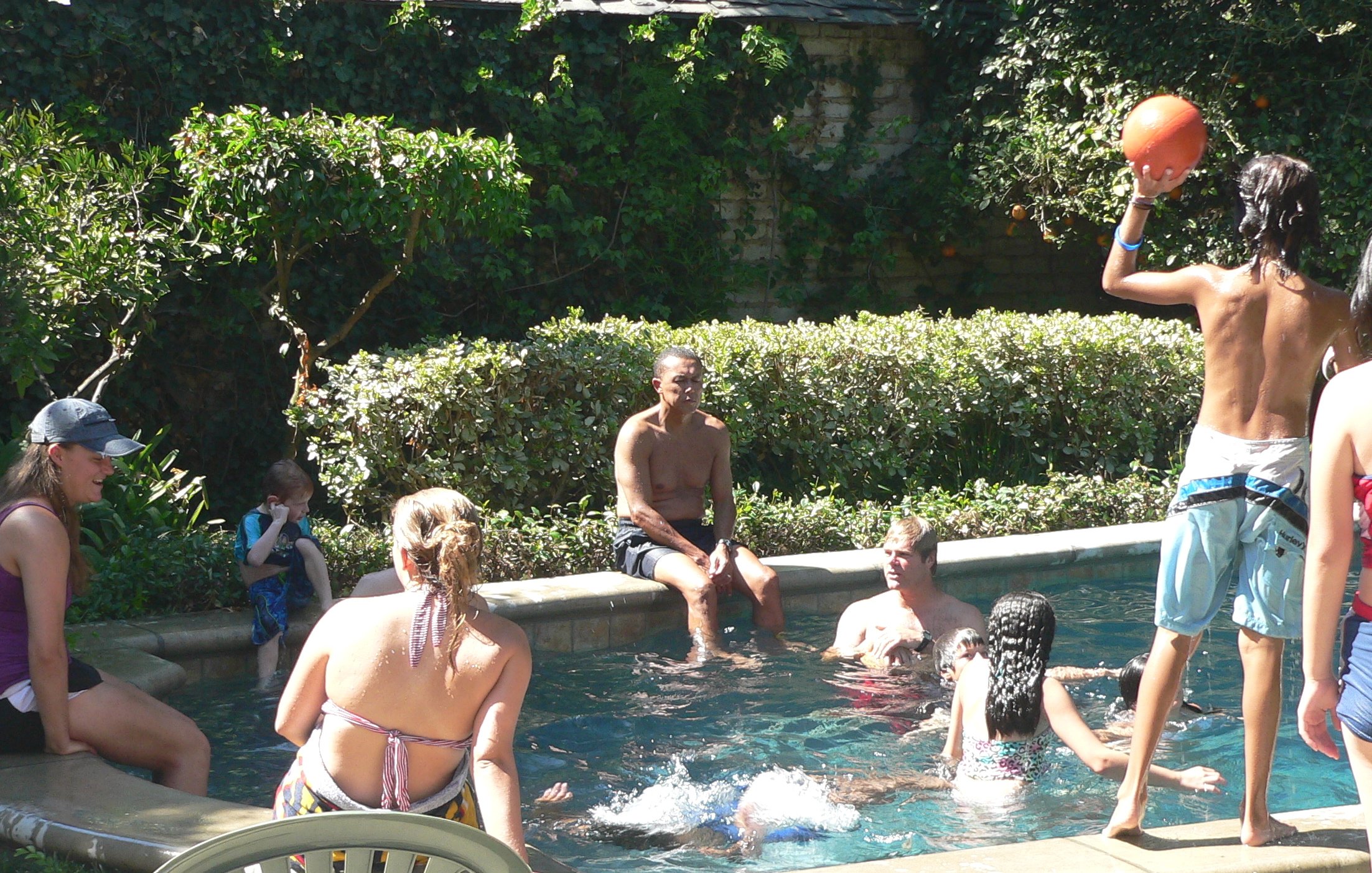
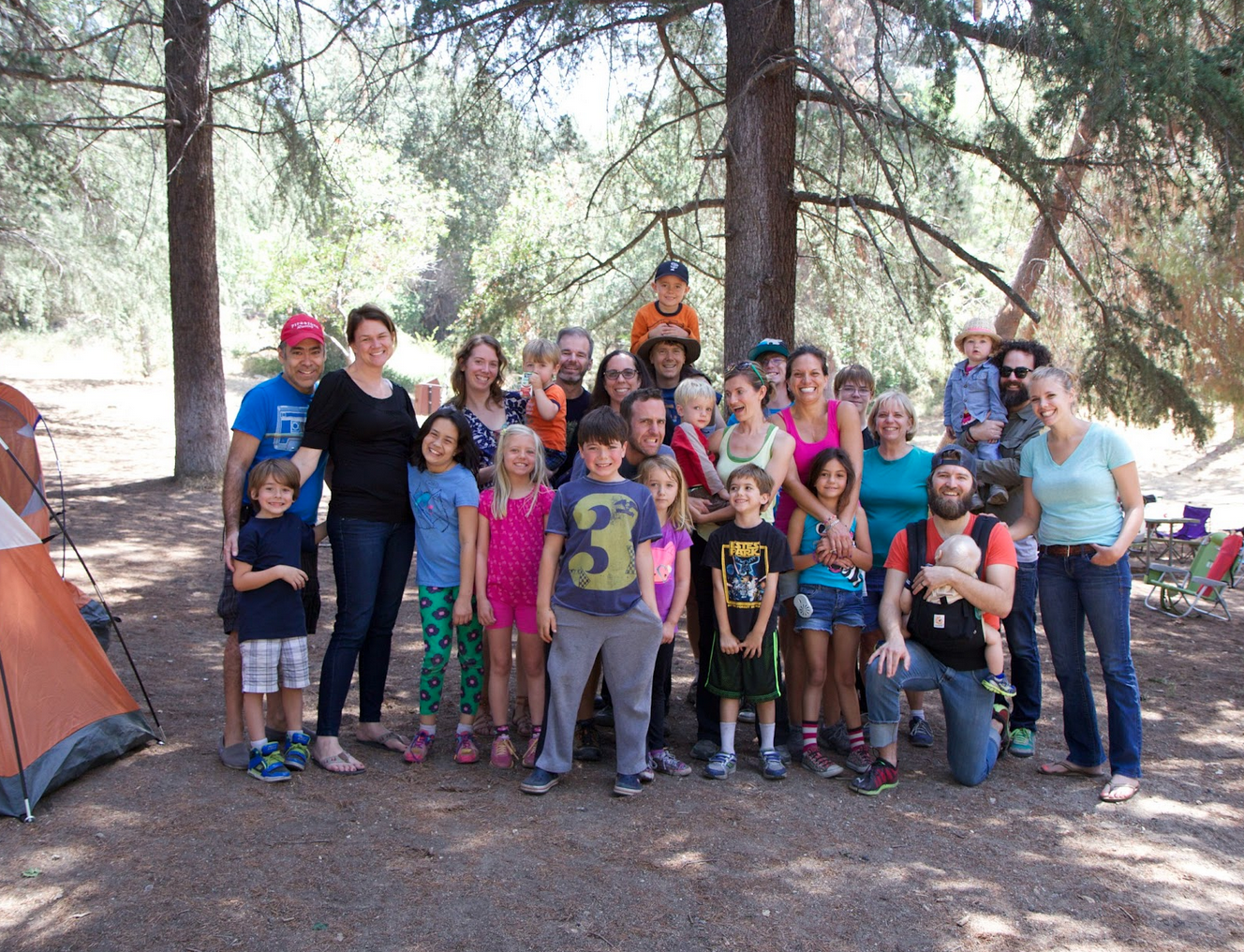
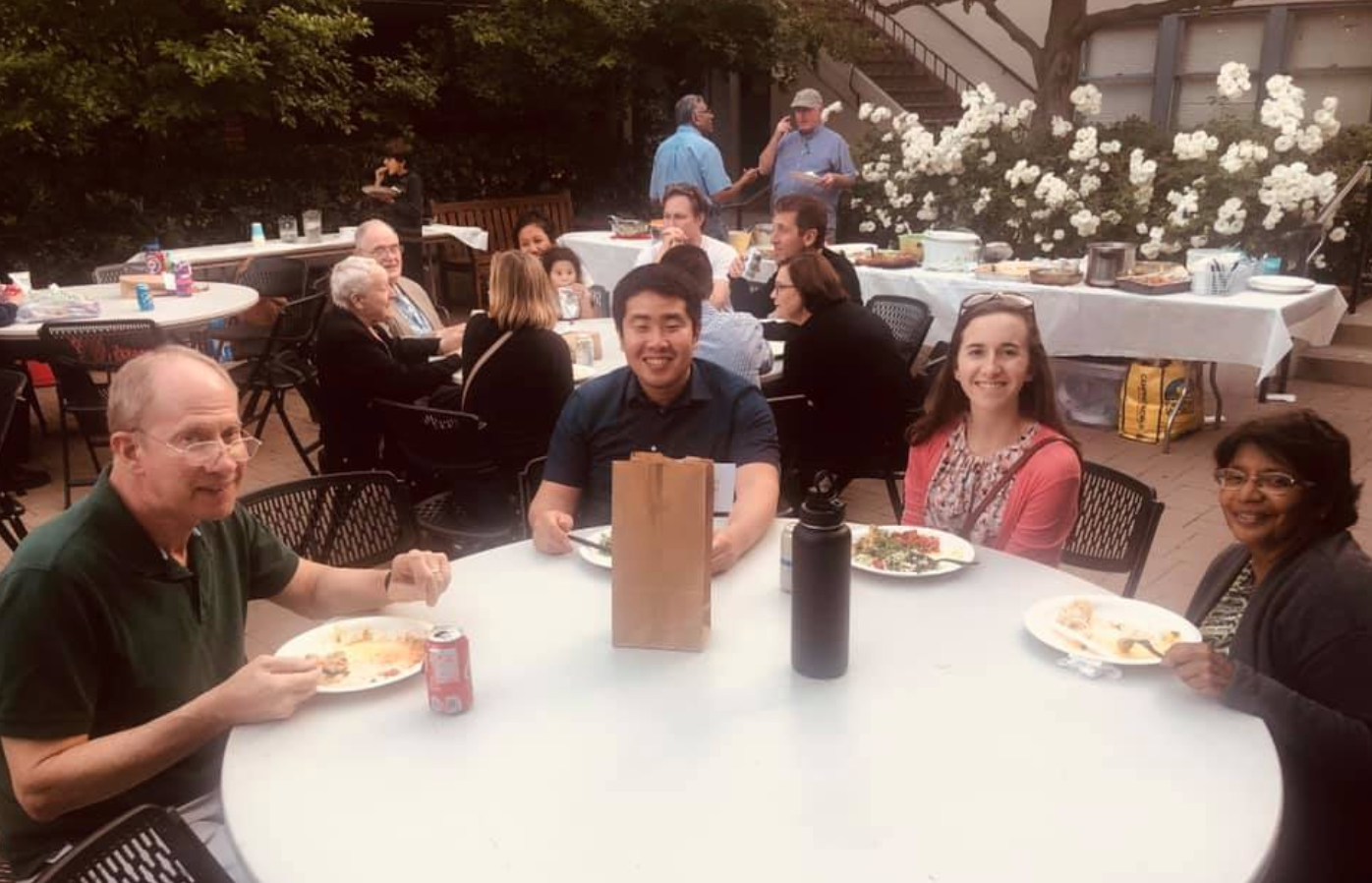
The church has also tried to build community with larger fun church events such as picnics, dinners, parties, and camp-outs. The previous post on Families also mentioned some of these special events.
Beyond 100
Our lives are busy, full, and fragmented—but our need for community remains, especially authentic community where we can be real with each other. How can the church in the next decades be a place of belonging, fellowship, friendship, and the spiritual growth that can only come when we are connected with others?
We are so grateful to the many who have sought to follow God over the past century,
and now we seek to imitate their faith for the next hundred years.
Please join us in giving to this legacy of faithfulness!
P.S.
The focus of this post has been on community and fellowship, but readers may also be interested in the content of the adult Sunday School classes.
Some classes had regular teachers who did Bible exposition, e.g., Ray Hahn Jr. (on the board at Fuller Seminary) who taught the Bereans in the 1960s, or Del Hanson (philosophy professor at Biola University) who taught the Fellowship Class in the 1970s and the Couriers in the 1980s and 1990s. John Wipf has been a recent Bible teacher for the Couriers. Other classes rotated teachers from among their members. Teachers for Joint Heirs, for example, included Warren Thomas on stewardship, Lee Purgason on being blessed to bless others, Paul Woodward on balancing work and leisure, and Carolyn Johnson on the book of Luke.
Some classes had leaders who were more discussion facilitators. Anita Sorenson led the Life Together group to read articles or chapters and then discuss topics such as spiritual friendship, contemplative practices, spiritual disciplines, community, forms of prayer, calling and mission, and liturgy.
Starting in the 1970s there have also been elective classes, taking advantage of the expertise of church members or other guest speakers such as Walt Wright, Cedric B Johnson, Leslie Allen, and Naomi Johnston. Some were on topics such as “Marketplace Christianity,” “Homelessness in Pasadena,” “Creativity in Work, Play, and Worship,” “Christian Self-Esteem,” “Sabbath Rest,” “Issues in Parenting” and “Grace.” Others were on books of the Bible (e.g., I Peter, Galatians, the Gospel of Mark, Psalms, and Minor Prophets).

Leadership
Who are the leaders who have served in and beyond Pas Cov?
Introduction
The roots of Pasadena Covenant were in home meetings where lay people sang hymns and read Scripture apart from the official state church of Sweden. While early Covenanters respected their pastors, they also valued the leadership of the laity, many of whom were responsible for the new vibrancy and spirituality of these home meetings. Shared leadership between laity and clergy became a hallmark of the Covenant denomination and led to a variety of leaders flourishing at Pas Cov.
Another factor that has led to leaders thriving in Pasadena Covenant has been the proximity of the church to Fuller Theological Seminary. Some Fuller students, attending Pas Cov while living in Pasadena, discovered our denomination. In addition, many longtime members of the congregation, not just the pastors, have had theological training, either as part of their professional training or out of personal interest, and have in this way enriched the church.
The fact that this post highlights leaders in the church and in Christian ministry does not mean to imply that they are more important in God’s kingdom than those who serve in secular jobs, or more valuable than those who have worked without receiving recognition in newsletters and annual reports. The Bible teaches that God values us regardless of what we accomplish for him and that the humble will be exalted. But the body of Christ has definitely been built up by these leaders and we are grateful for their service within, through, and beyond Pasadena Covenant.
(Scroll down to the end for a list of staff members over the decades.)


It is challenging to write about leaders in the church knowing that we can only include a few of the names of those who have significantly served here and beyond. Feel free to mention others in the comments.
leadership within the church
In this section we’ll highlight examples of people using their gifts for the sake of the church (focusing on the decades of the 1940s through 1970s because of good documentation). Some gifts were related to professional skills. For example, Bill Erickson was a general contractor who took over the construction of both Sunshine Hall and the new church plant in Monrovia. He ordered, prepared, and cut the materials and lumber for both buildings to facilitate the one-day barn-raisings. Roy Johnston was a structural engineer by vocation; he supervised building projects from Carlson Hall to the Corner House (in addition to serving in many areas such as church leadership and Sunday school).
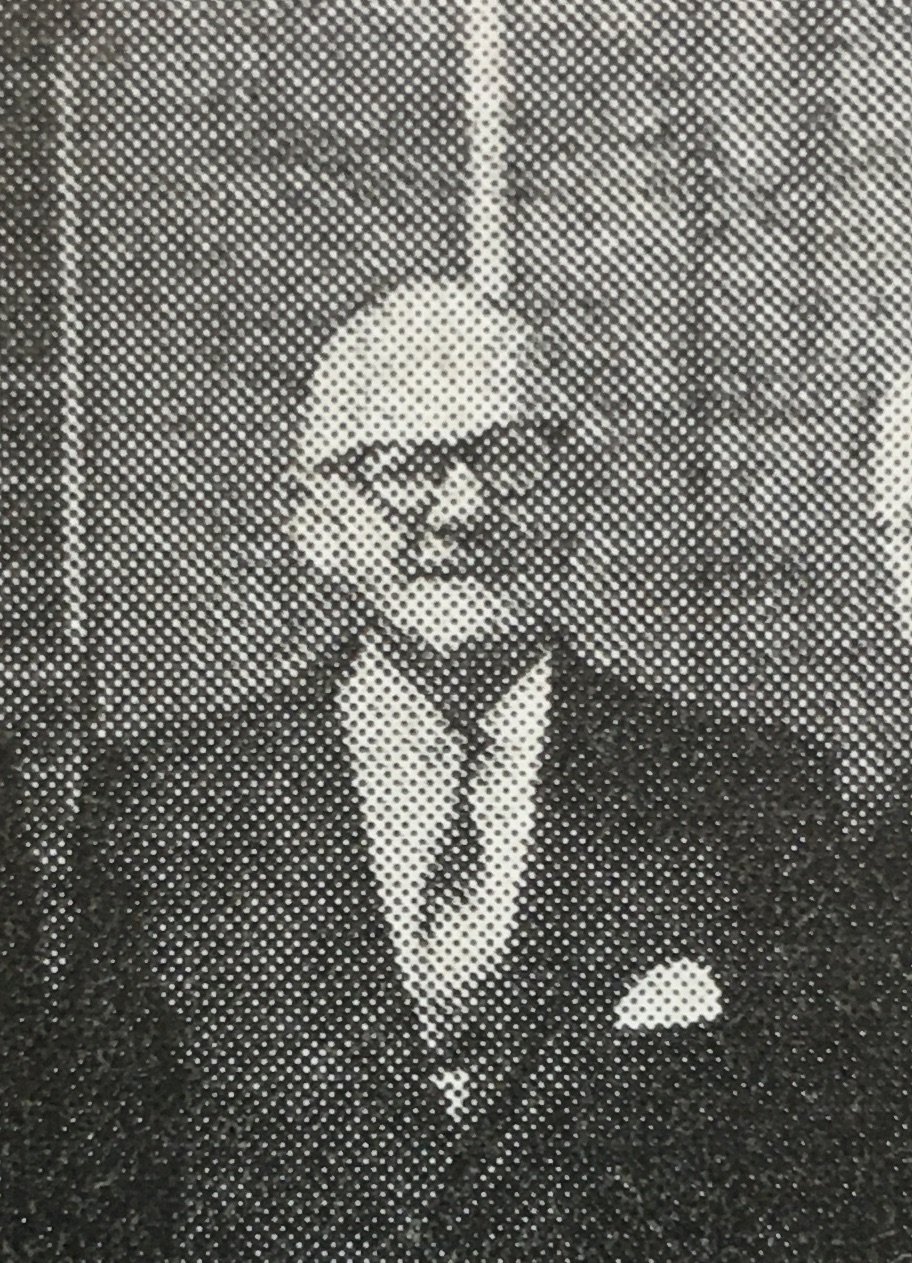
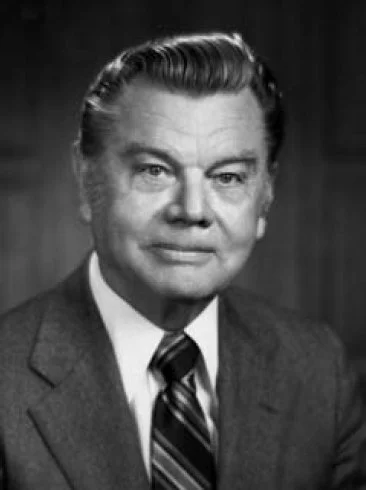
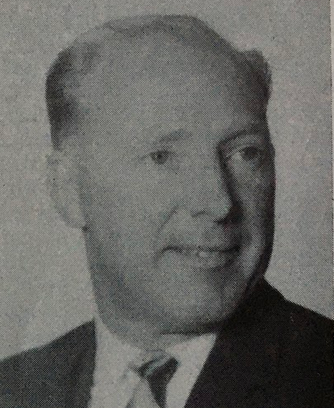
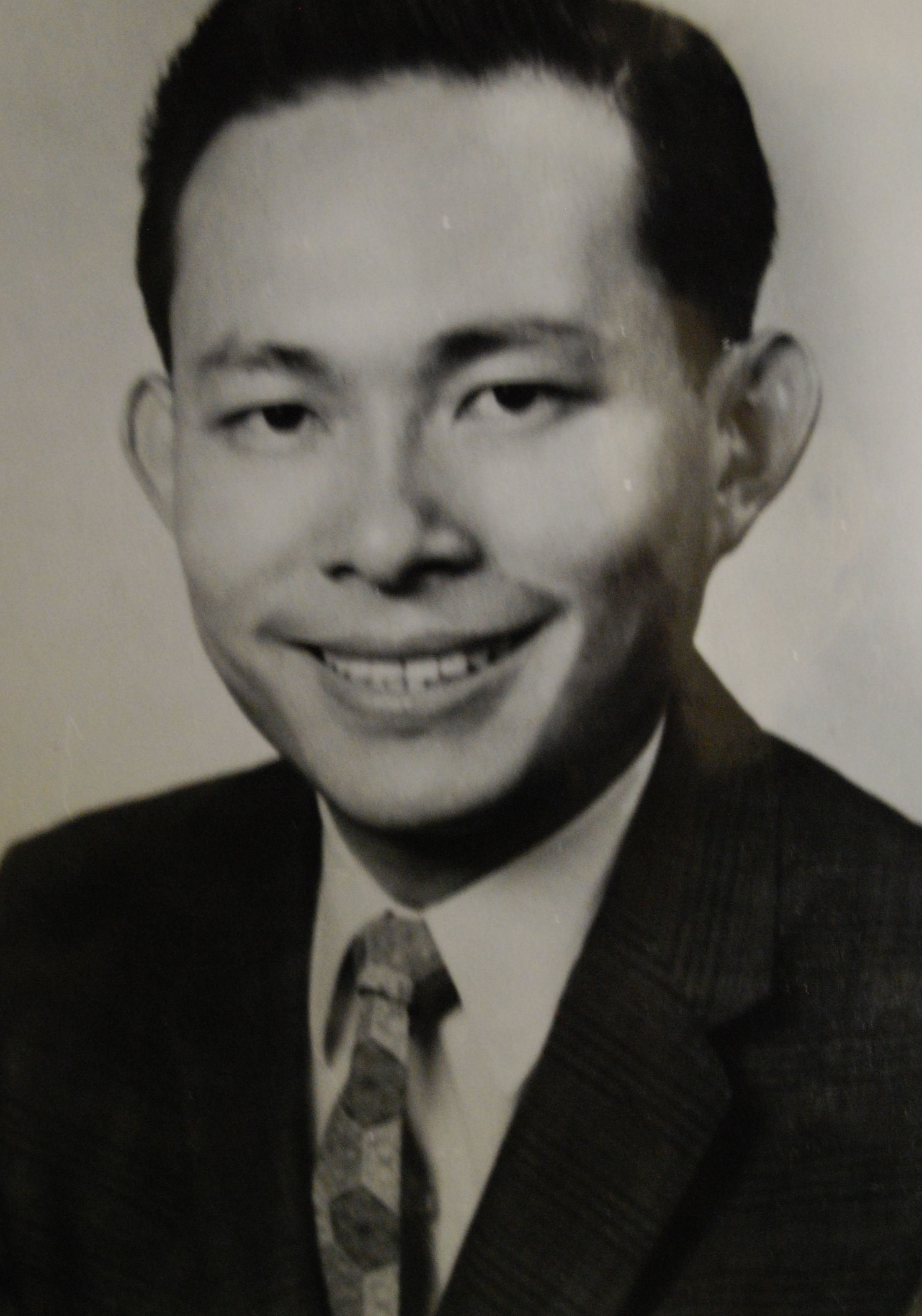
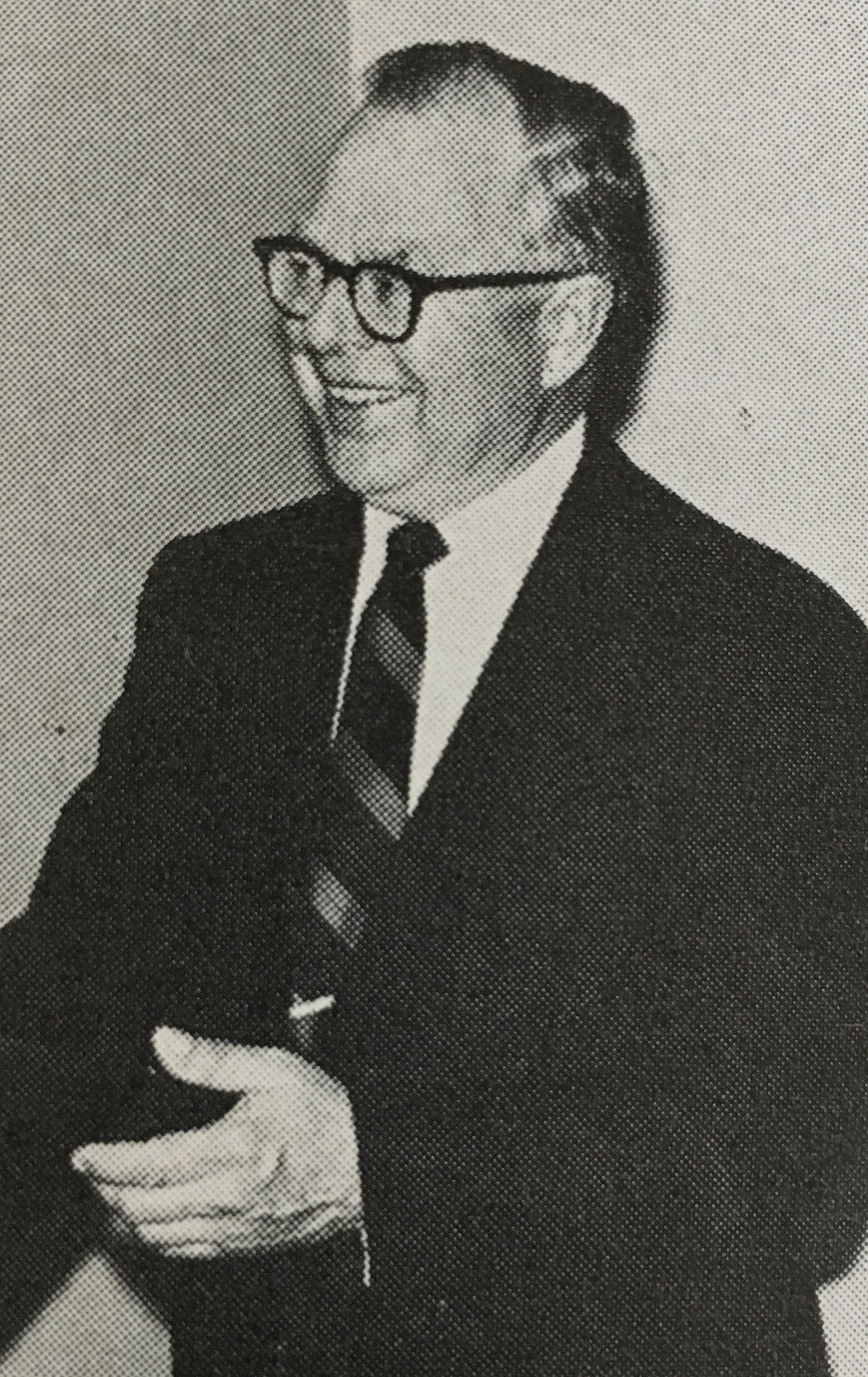
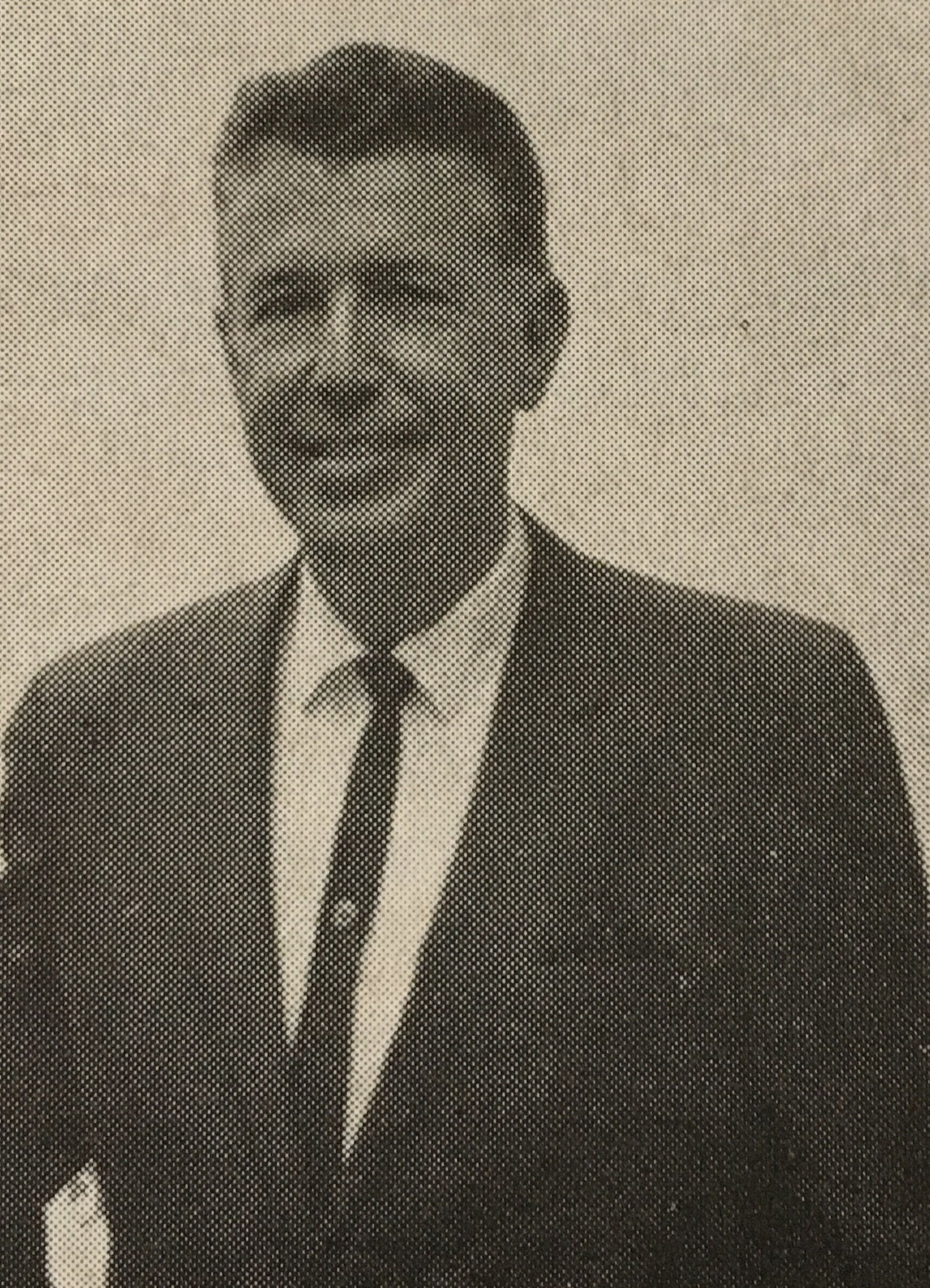
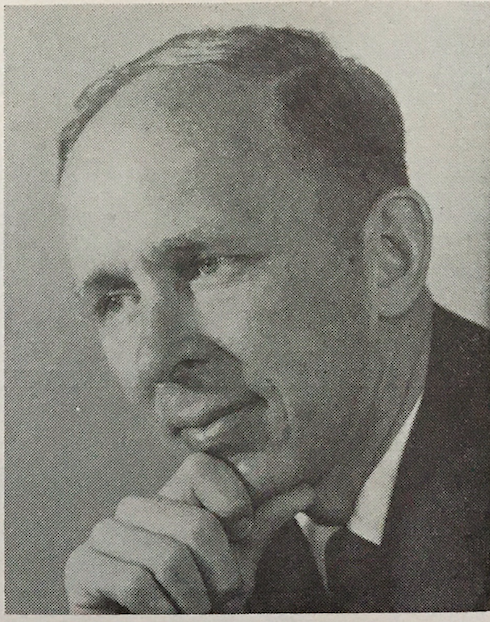
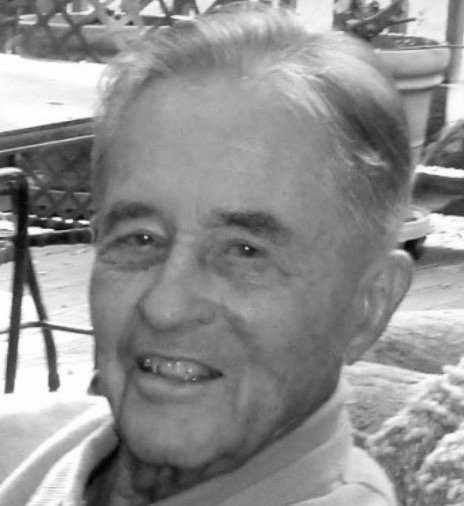
Others in the church used gifts that went beyond their weekday jobs. Bengt Junvik was the owner/operator of an aircraft parts company, but at church he chaired the Board of Trustees, served as treasurer, and much more. Gene Lowe owned a furniture business, but his work in our church involved supervising and teaching Sunday school as well as leadership in the area of missions. Harold Peterson owned a shoe store, but chaired the trustees, oversaw stewardship, and more. Ray Hahn Jr. was sales manager for Maytag appliances on the West coast, and also a beloved Bible teacher in adult Sunday school for over a decade. John Racine, a dentist, did everything from teaching Sunday school to chairing the church board. Elmer Fredrickson worked in the field of petrochemical plant design, but his church leadership included music and almost every elder or trustee office. These forefathers remind us that service in the church can be an avenue for creatively using our God-given capacities.
Women in leadership
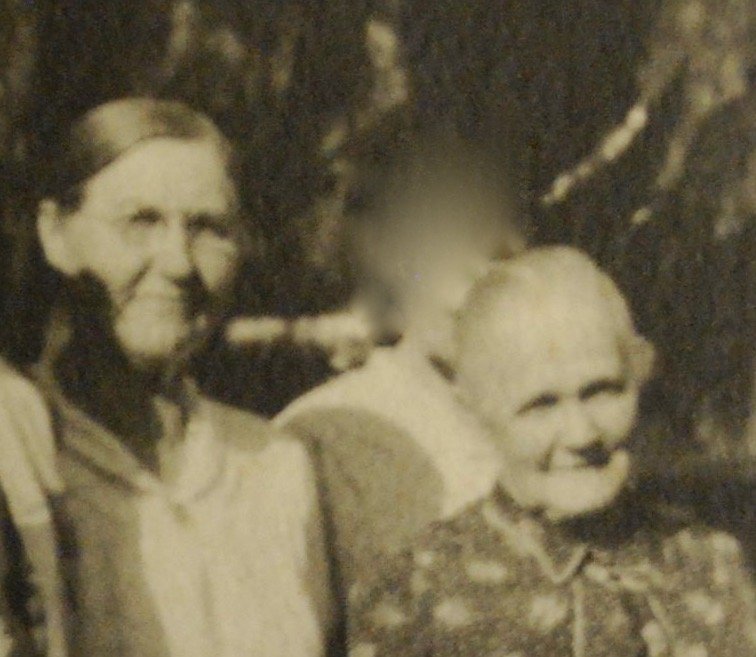
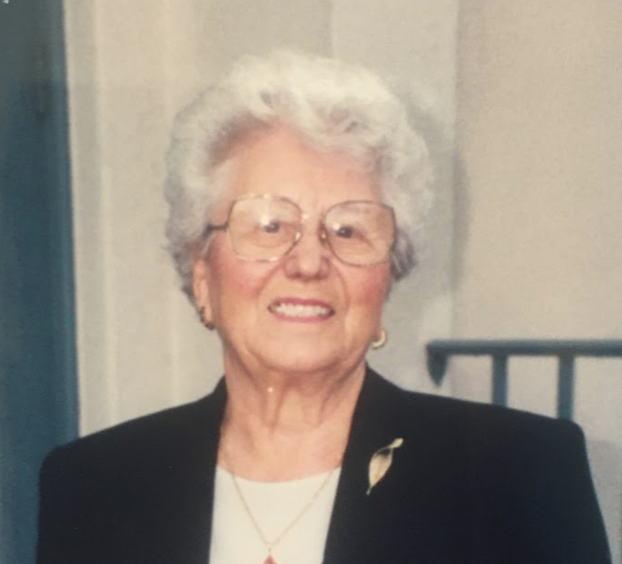
The Covenant denomination has a strong commitment to supporting and advocating for women in ministry, and Pasadena Covenant has had several outstanding female leaders across lay and pastoral areas.. You might recall that the church was founded mainly by women domestics from Sweden. Betsy Peterson and Christine & Anna Mangney did not just clean houses—they were catalysts for the birth of the church. Naomi Johnston (1916-1986) taught mothers in the Cradle Roll program, and she also taught several different Sunday school classes, including the Couriers class for young couples for 17 years. Even when it was not the norm in most churches to have women teaching men, her class had several male Fuller Seminary professors in it, and attendance was upwards to 75. Lucille Peterson Johnston (1916-2018) was an energetic leader in women’s ministry, taking charge of the Lucia breakfast, an event in December that reached close to 700 people, as well as meals for Campus Club. Lucille also had a way of seeing gifts in others and recruiting (allowing no refusal, some might say) them to serve.
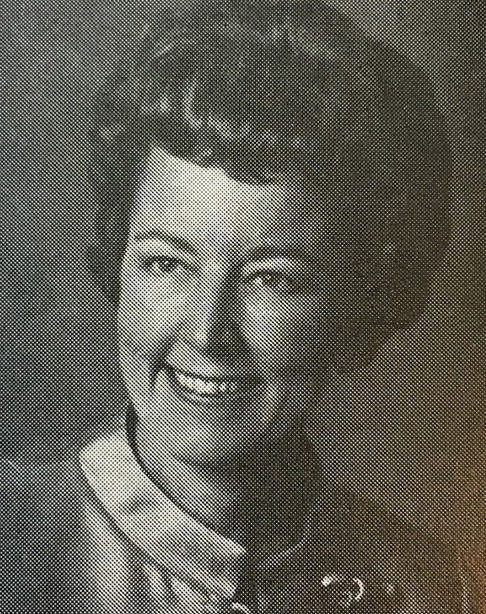
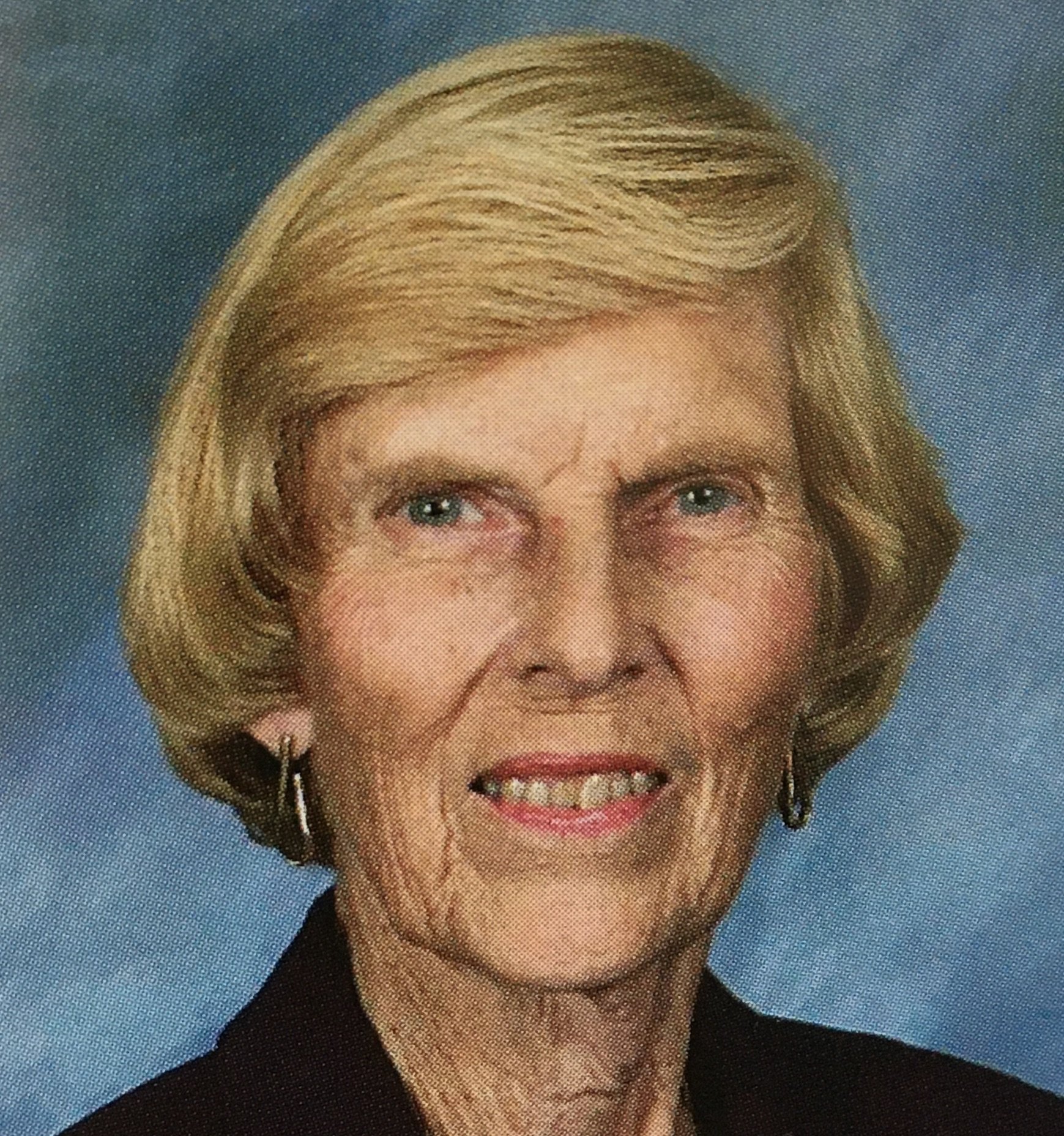
In 1984, the church elected Marilyn Nixon as its first female chair of the Trustees, the group of lay leaders that govern the church. Her administrative gifts were outstanding as she led the church through challenging times, and she is also remembered for her care for her husband Jim, after he’d had a debilitating stroke. Since then, many trustees have been women and other trustee chairs have included Diane Woods, Anita Sorenson, Jamie Knauss, and Susan Maljian.
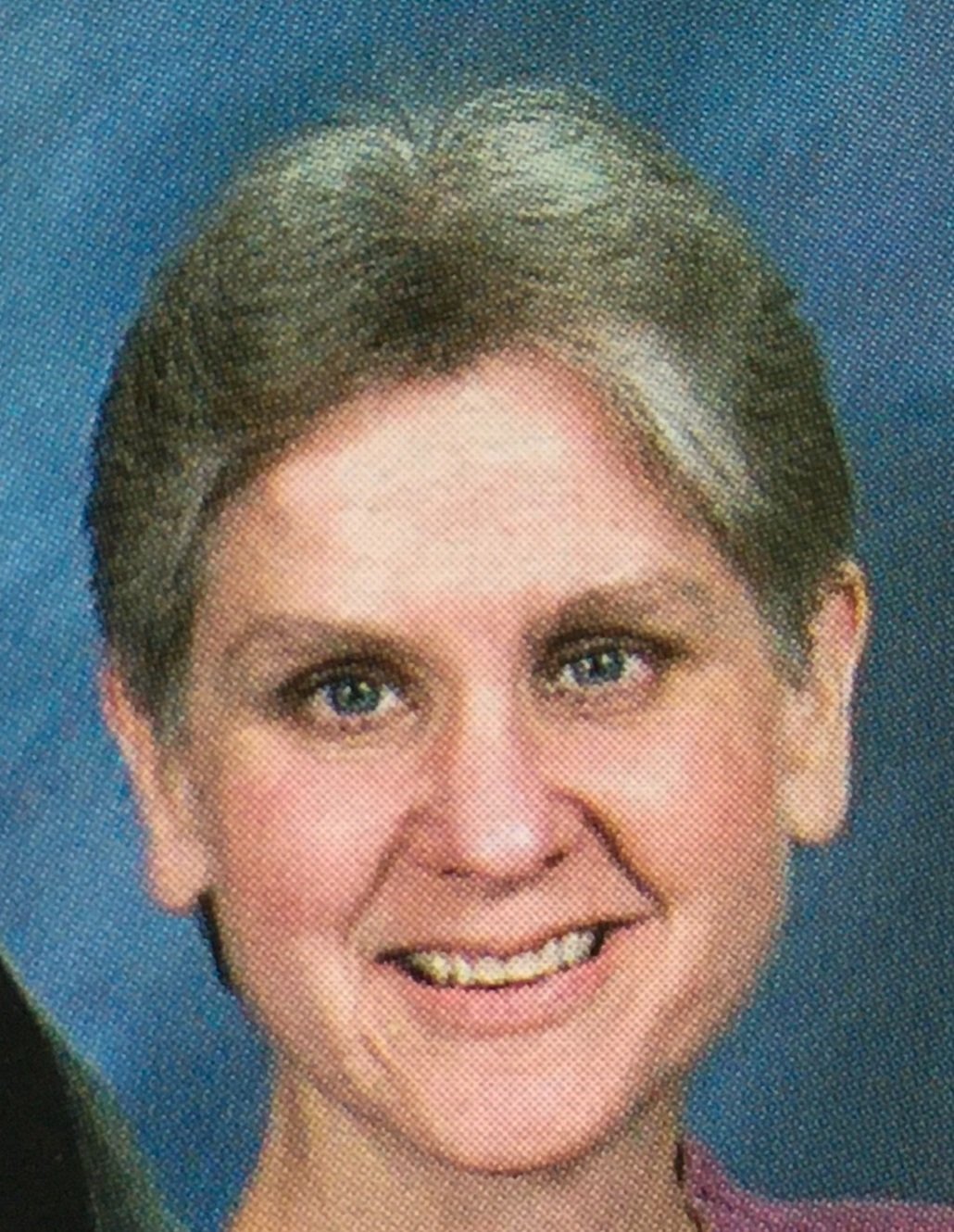
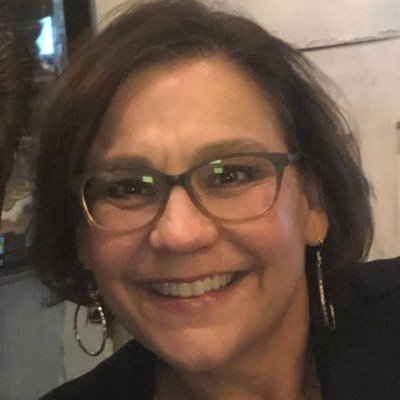
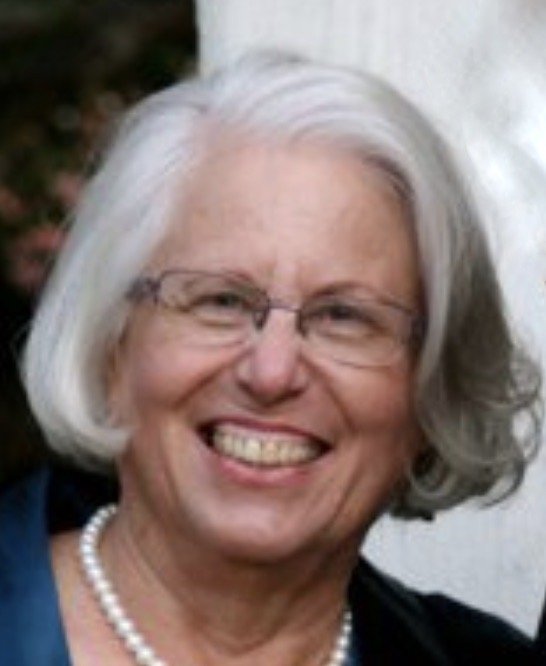
Diana Trautwein is another woman who was encouraged to assume leadership. She recounts how Lucille told her in the 1980s, “Diana, I see gifts in you. Leadership, teaching, and hospitality gifts. Would you consider joining me on the leadership team for our women’s groups?” That was the beginning of a journey that eventually prompted Diana to attend seminary and add to her service of family and women in the church, working for the church as a whole. Encouraged also by Roland Tabell, a group of female friends from the church, and her husband, Diana was ordained in 1997. She served our church as Pastor in Residence for a few years and when the Trautweins moved north, she was associate pastor at Montecito Covenant Church for 14 years.
In our own church, many women have been on our staff. To highlight but two, Laurie Cornell was associate pastor from 1992 to 2010 (and is presently Secretary of the Covenant Ministerium for our denomination), and Anita Sorenson began her service as a licensed minister in 2014, continuing our tradition of a multigendered leadership team.
Behind the scenes leaders
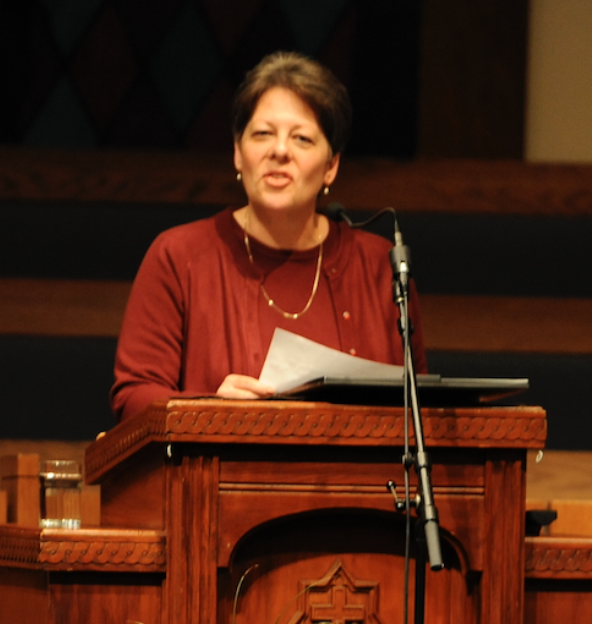
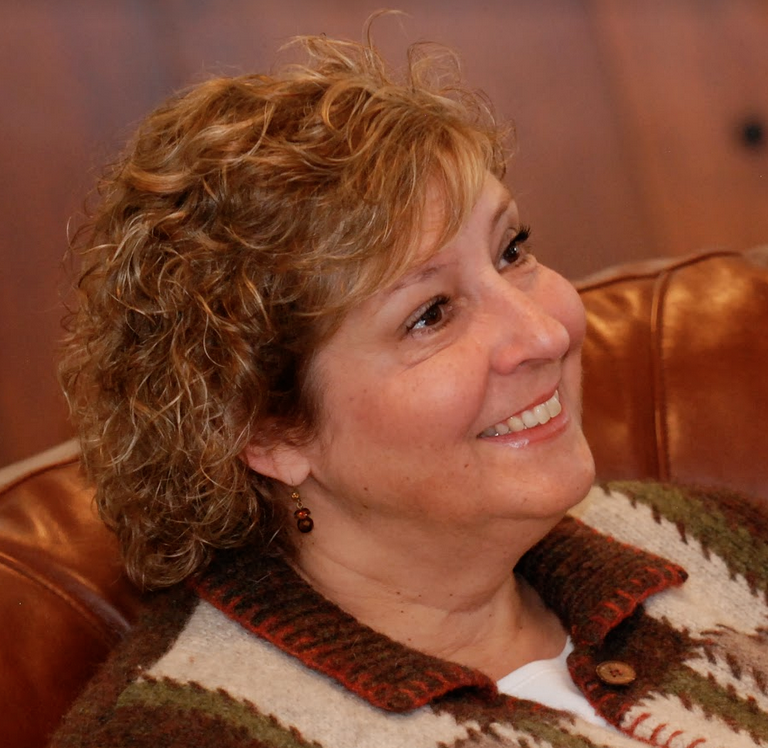
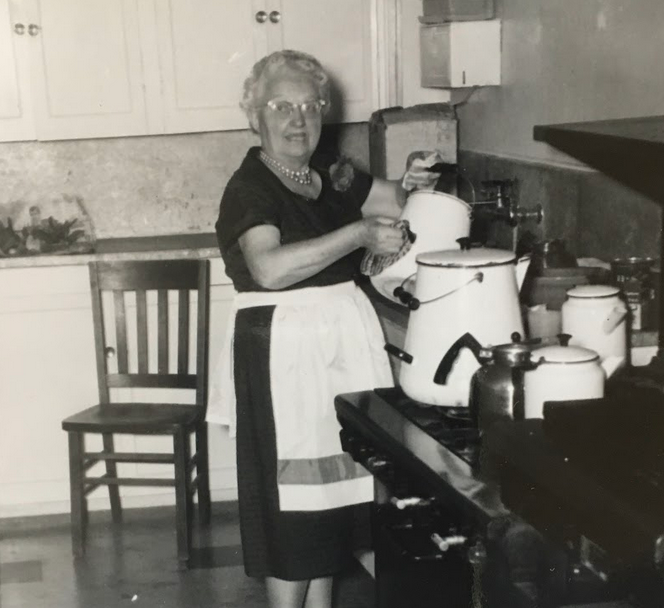
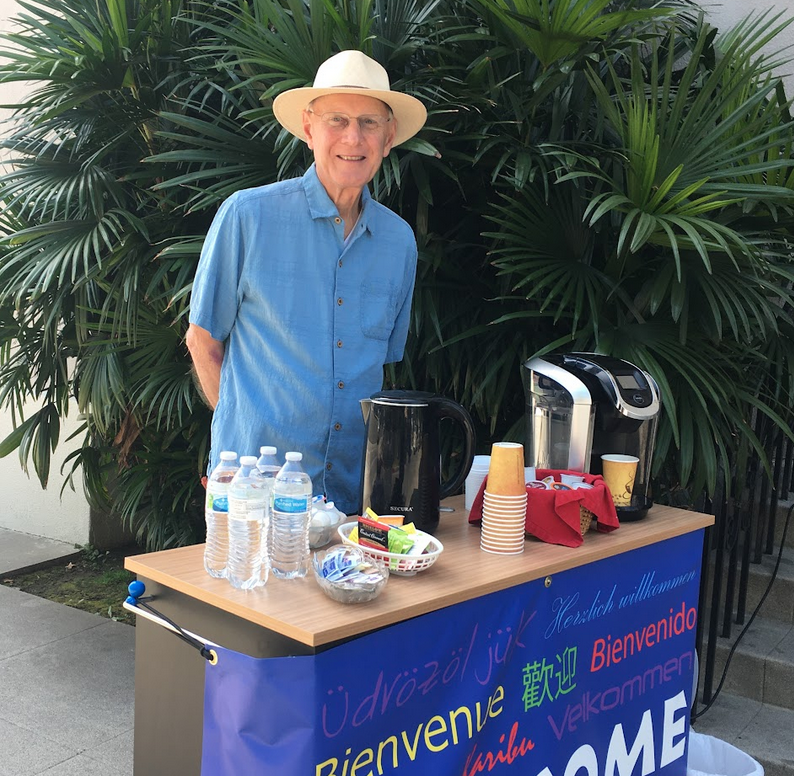
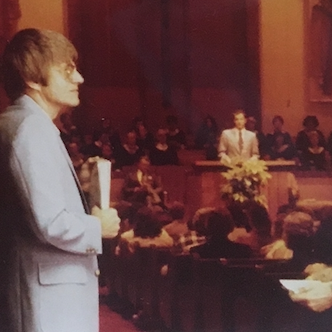
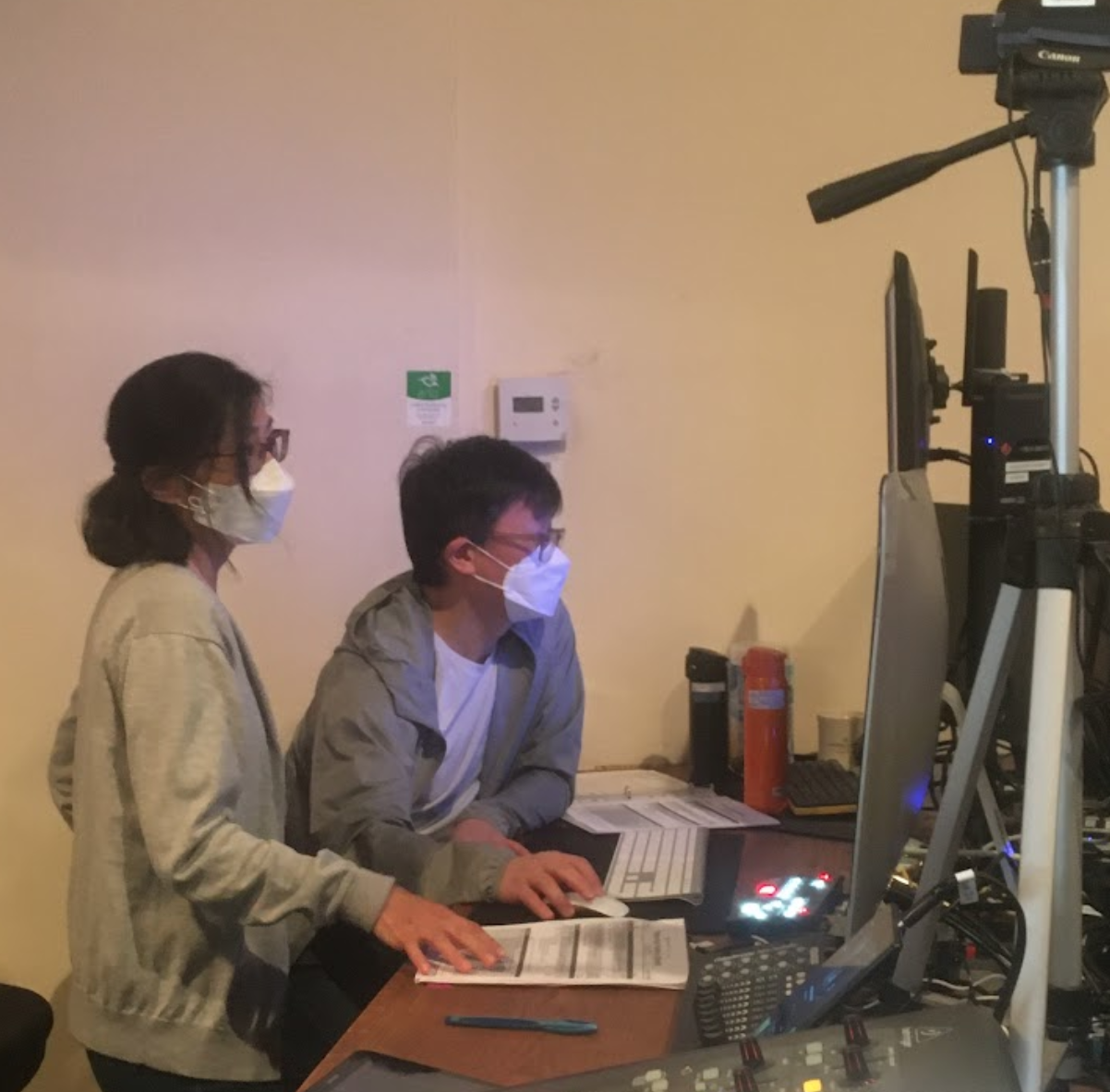
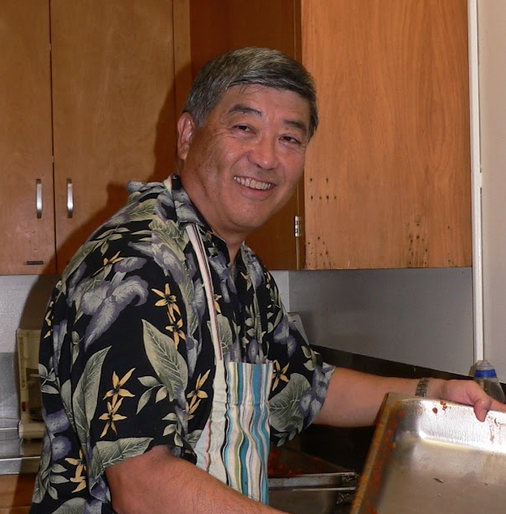
We also have people serving in the church in less high-profile but significant ways, from counting offering money to helping with kids to visiting the homebound. Without them, the church would have withered long ago. One representative quiet leader was Alice Anderson, wife of the church custodian Albert. She vacuumed, dusted, taught Sunday school, prepared meals for youth events, and made giant pots of coffee for church functions for more than 40 years. A few other leaders working with coffee, as ushers, in the sound booth, and in the kitchen are pictured here. I wish we had photos of Caryl Tyberg arranging flowers or preparing supplies for communion, Nancy Stuckey setting up for our hospitality time, Kim Dorman working in the office, John Herring moving our signs, and more. Is there someone whose service you’ve especially appreciated? Give them a shout in the comments.
Leadership flowing out from the church: through and beyond
We can be encouraged by the many people—surely more than 100—who came through Pas Cov and went on to become pastors, missionaries, and other church leaders around the country and the world.
Those who discovered the Covenant denomination here (often while studying at Fuller) and went on to serve it include Wayne & Mary Anne Weld, the first Covenant missionaries to Colombia, later teaching at North Park; Gary Copeland, who started churches in San Rafael, CA, and Arvada, CO; Ron Short who has planted and coached multiple churches in his 35 years since Pasadena; Randy Roth, who pastored in Portland, OR, and Oakland, CA, before starting a Christian nonprofit to help improve the education of children in the Oakland public schools; Greg Asimakoupolous who became a chaplain for Covenant retirement communities; Peter & Ruth Dutton who served as missionaries in Thailand and Laos as well as in denominational leadership; Joe Thackwell, now directing InterVarsity’s Faculty Ministry Leadership Team; and many others. The list could go on.
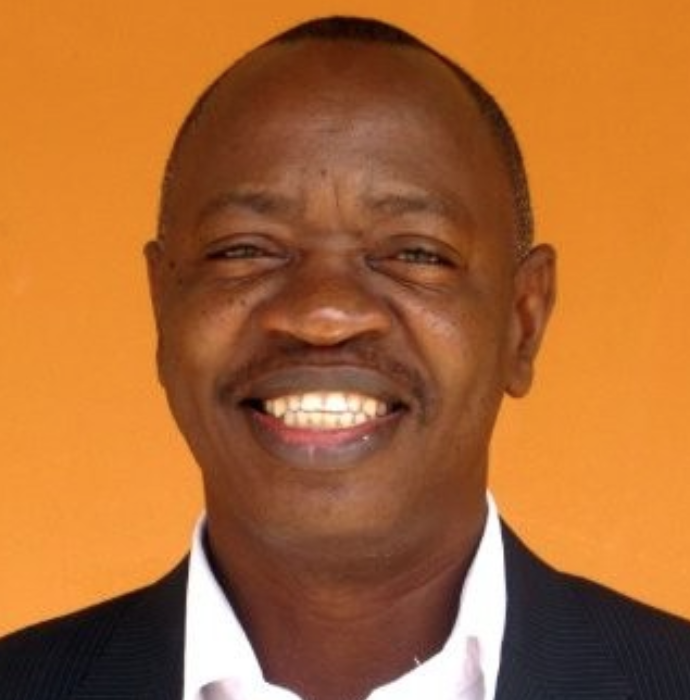
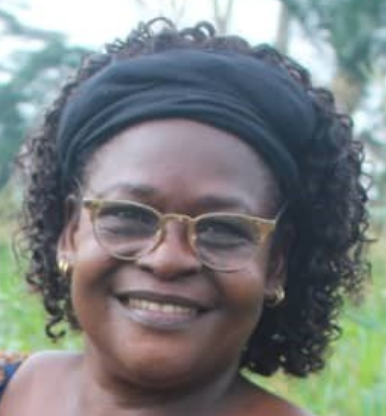
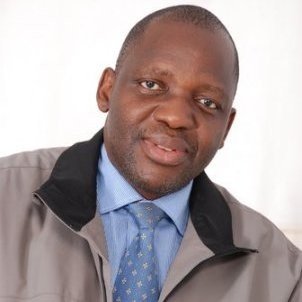
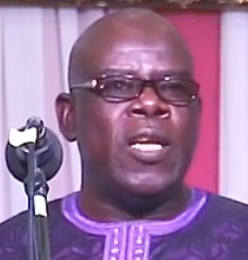
Speaking of studying at Fuller, we should remind ourselves of the international students we mentioned in a previous post who came through Pas Cov. They include Mossai Sanguma, who on his return to DRC became head of the Congo Covenant denomination (CEUM) from 2003 to 2012 and is now rector of Ubangi Protestant University. His wife Sabuli founded Congo Voice, which supports orphans. Bitrus Audu is director of Christ Missionary Outreach, serving with his wife Monica, in Nigeria. Bitrus Sarma is president of ECWA Seminary; he and his wife Sanatu have recently also been serving those affected by terrorism in Nigeria.
There is also an impressive list of our church’s own youth who have been called into full-time ministry.
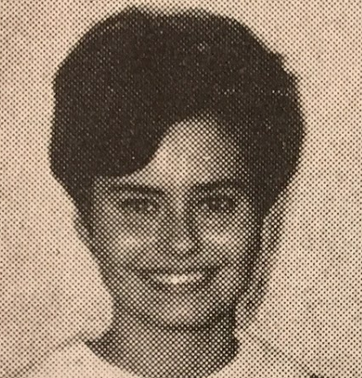
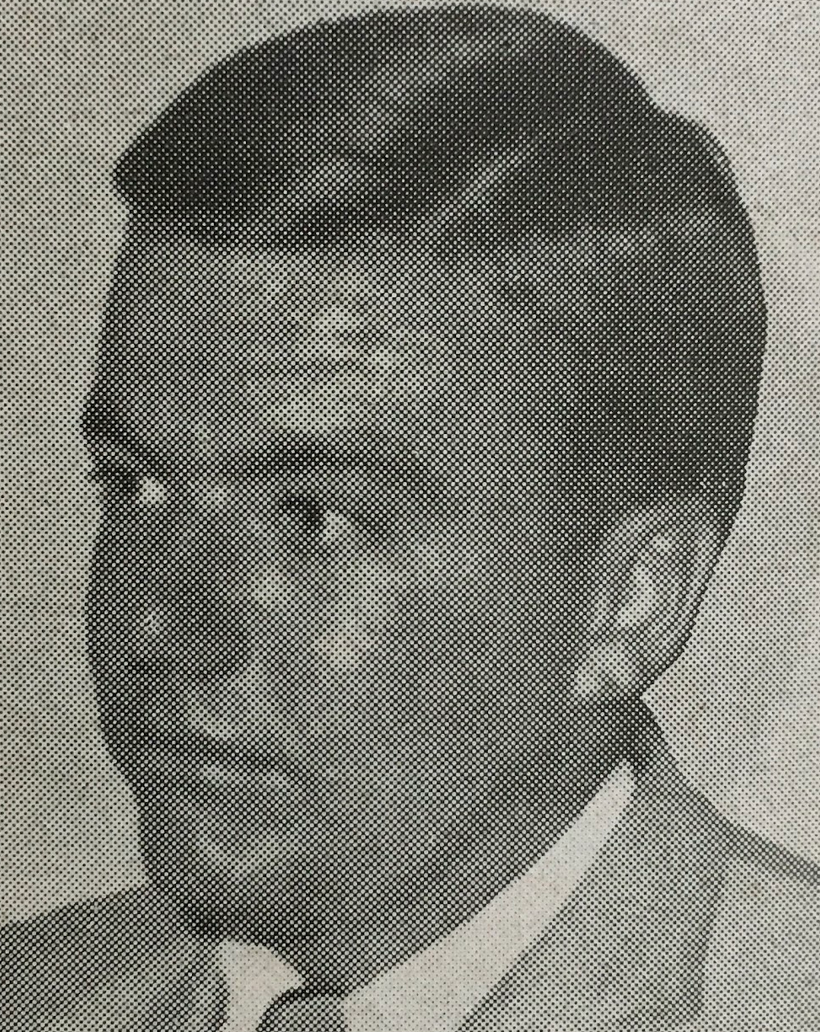
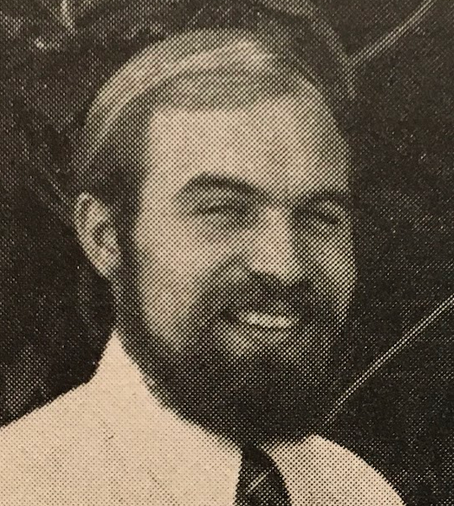
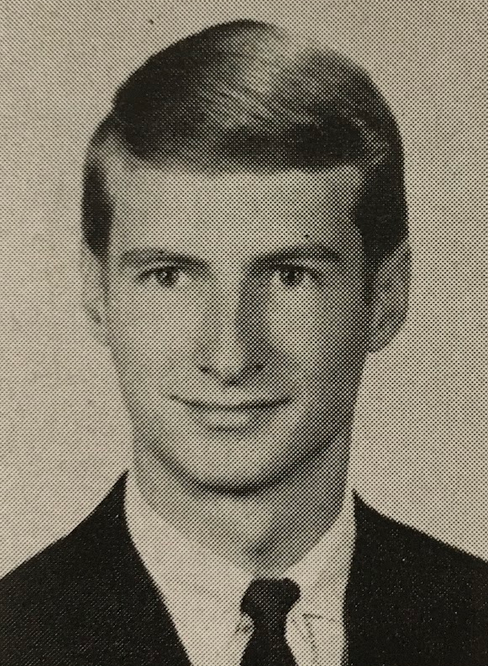
One we mentioned in an earlier post about cross-cultural ministry was Joan Christensen Gustafson, who went to Thailand with her husband Jim. Many of the young men were called through the discipling ministry of Warren Thompson. Here are a few examples of Thomps’ influence on people, each with their own wide circle of influence for Christ: Rob Johnston was the provost and dean of the seminary at North Park University, the Covenant’s school for educating church leaders. Curt Peterson pastored Montecito Covenant before becoming the head of world mission for the Covenant denomination. Dave Hicks has just retired after a career as a leading pastor of youth and adults in several different churches. Ken Larson pastored several Covenant churches, most recently Faith Covenant in Michigan. Burton Swardstrom became pastor of the large Covenant church in Rolling Hills. Cliff Bowman is pastor of Glendora Alliance Church. John Nyquist was head of Campus Crusade in Europe before becoming the evangelism professor at Trinity Evangelical Seminary. Jeff Maljian was our youth pastor for eight years before becoming a public school principal.
More recently, we can point to Anna Cornell Maloney, pastor of student and family ministries at Bloomington (Minnesota) Covenant Church, and Ryan McAnnally-Linz, associate director of the Yale Center for Faith & Culture.
Leaders in other professions
Others in the church exercise their leadership in fields such as education, art and design, medicine, health, media, fitness, finance, law, science, engineering, business, transportation, and the home. Although we haven’t recounted their impact on their professions, workplaces, and colleagues here, they too are living out Colossians 3:17: “And whatever you do, whether in word or deed, do it all in the name of the Lord Jesus.”
Conclusion
Pasadena Covenant has been known for decades as a church with both strong pastoral leadership and strong lay leadership. The vocation—the calling—of both these clergy and lay leaders has been the same: to love our Lord Jesus Christ by helping to build the Kingdom of God through servant leadership in the church and in the wider society.
Beyond 100
What kind of leaders will be needed—both in the church and in the world—over the next 100 years? Ryan McAnnally-Linz writes, “Pas Cov was such a formative community in my life. It’s where the heart of my theological vocation took shape.” How can we ensure that everyone who passes through our church cultivates their God-ordained vocation here? How will we develop and support them as leaders of all ages and for all contexts?
We are so grateful to the many who have sought to follow God over the past century,
and now we seek to imitate their faith for the next hundred years.
Please join us in giving to this legacy of faithfulness!
Bonus history lists
Lead Pastors
(the number of dashes approximates the length of their time in the position)
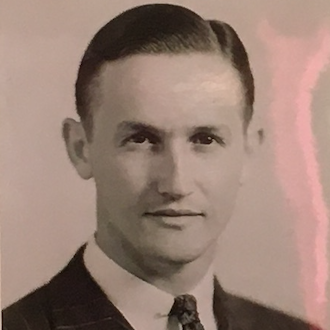
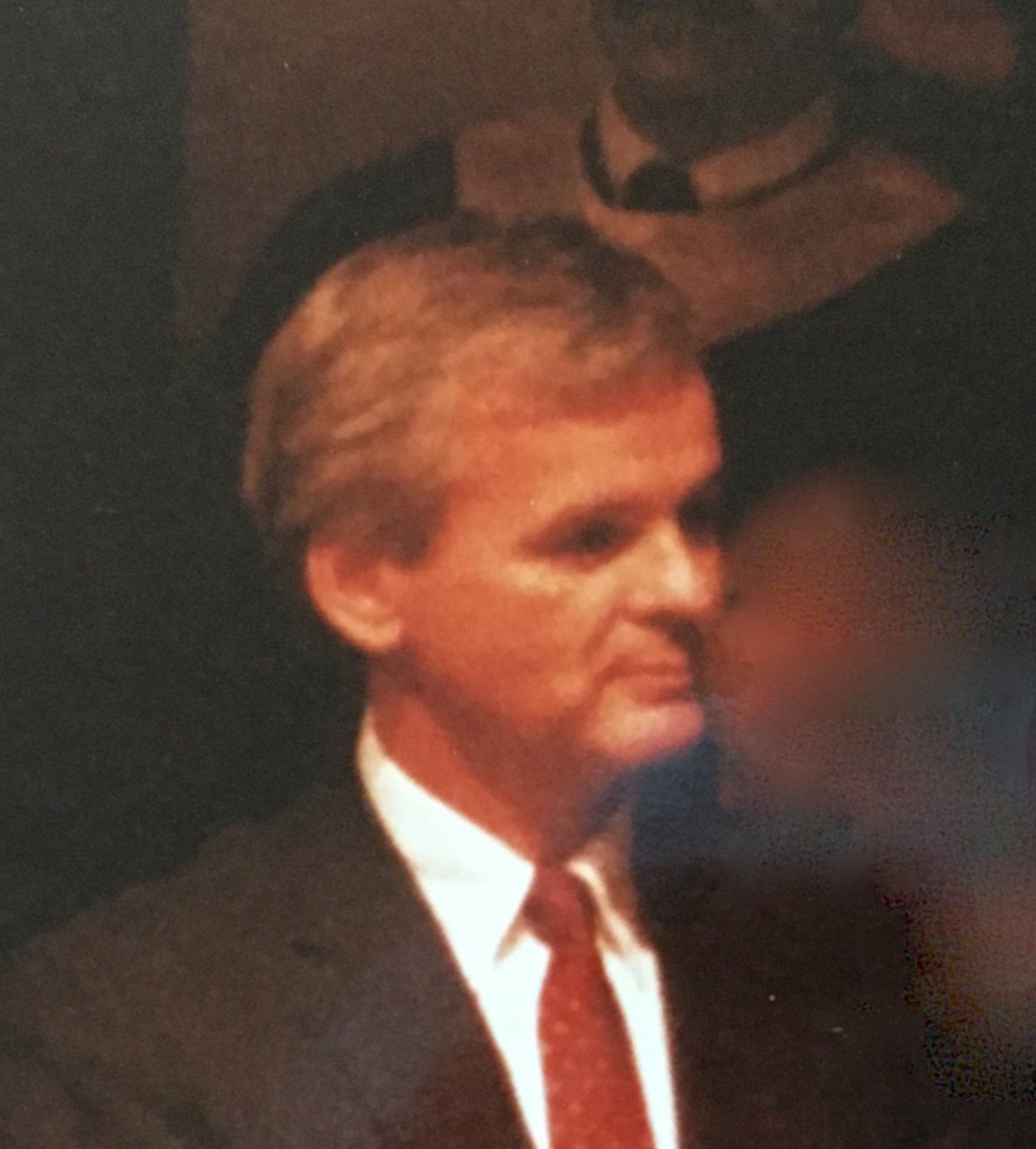
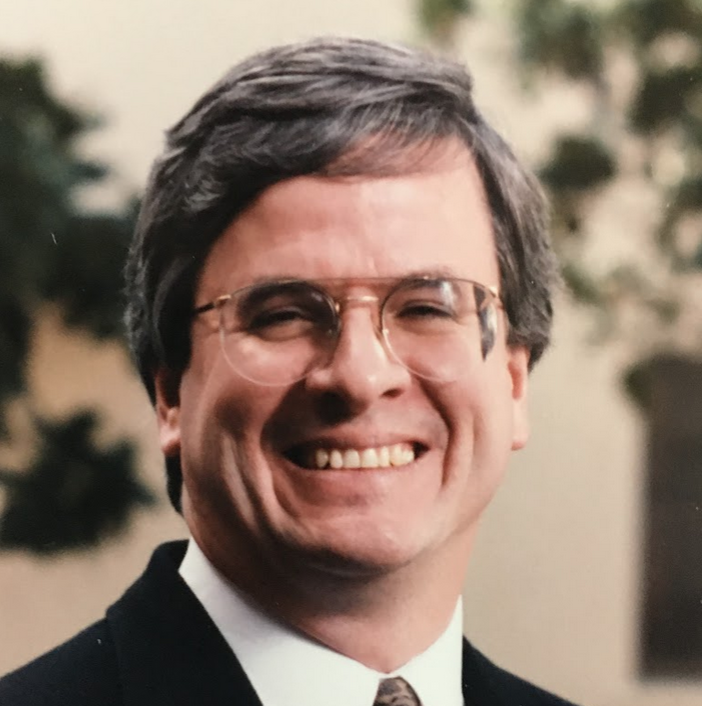
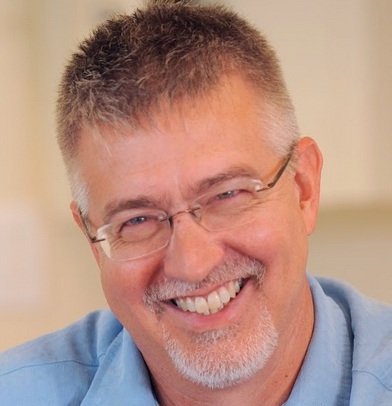
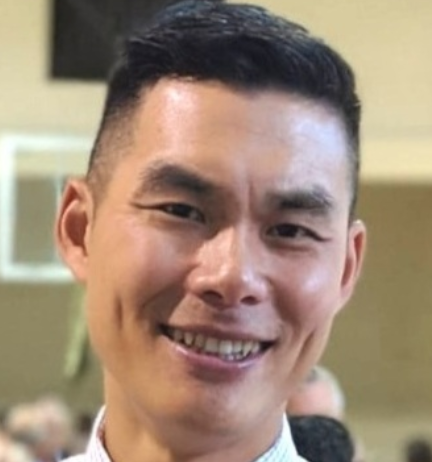
Axel G. Sporrong 1923--------1930
Reuben C. Dahl 1931-----1935
C. J. Ledin 1936-1937
Mel Dahlstrom 1938------1943
C.G. Westerdahl 1944—1946
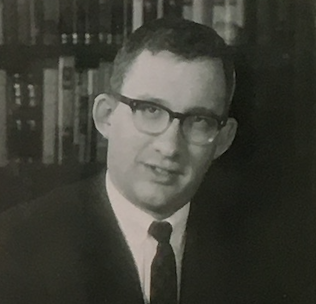
Arvid Carlson 1946-----------------1963
Paul E. Larsen 1964--------1971
R. Neiman 1972
Mel White 1974---1976
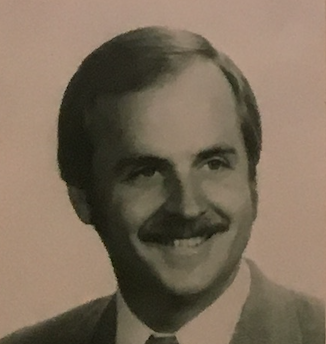
John Bray 1977--------1984
Michael A. Halleen 1985-----1990
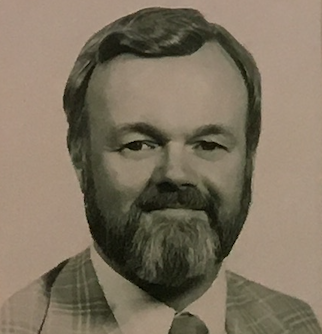
Charles Barker 1991------------------2008
Tim Dally 2011------2016
Steve Wong 2018-----now
Other Pastoral Staff (associate, visitation, administrative, outreach, etc.—partial list)
D. H. Scott, Edwin Cory, Norm Crider, Kurt Miericke, Robert Verme, Richard Sandquist, Wayne Carlson, David Mark, Sharon Smith, Laurie Cornell, Warren Thompson, Diana Trautwein, Jim Tyberg, Anita Sorenson
Ministers of Worship and Music (partial list)
Les Hedman, Norm Johnson, Roland Tabell, Joan Reeve Owens, Thomas Hale, Dan Radmacher, Dan Huang, Mindy Gustafson. For more see this post.
Pastors and Staff who have Served in the area of Youth, Children, or Family (partial list)
Worth Hodgin, Jon Braun, Don Erickson, Gary Copeland, Curt Peterson, David Hicks, Jim Larson, David Stoop, Charles Barker, Laurel Morrison, Ed Simonson, Judy Bareman Wipf, Jeff Maljian, Susan Aoki, Barb Pettit, James McMillan, Brittany Burian, Tami Millard, Joel Harrison, Vikki Randall, Mindie Moore, Dave Rinker, Christy DePree, Andrew Mark

Neighbors and Service
How have we helped our neighbors and served the community in which we are located, fulfilling Jesus’ Great Commandment?
Over the last 100 years, Pasadena Covenant has helped our neighbors in many and varied ways. Specific programs have ebbed and flowed, depending on both staff and congregation as well as community needs. All these activities grow out of our commitment to obey the command in Scripture to “love your neighbor.” We believe service is a way to embody the presence of Jesus Christ and is interwoven with our proclamation of good news.
1. Earliest Days
Even before the first pastor of our church was called, there was a group focused on service. The founding women formed a Ladies Aid Society in 1919, later called the Phoebe Society, that blossomed into the church. They raised money for the needy, visited the homebound, and engaged in sewing for local and foreign groups. This commitment to helping people in the community was one of the reasons the church switched from Swedish to English. With such a beginning, it is no wonder that serving our neighbors has been important to the church in all the decades since. This post will focus on the last 50 years.
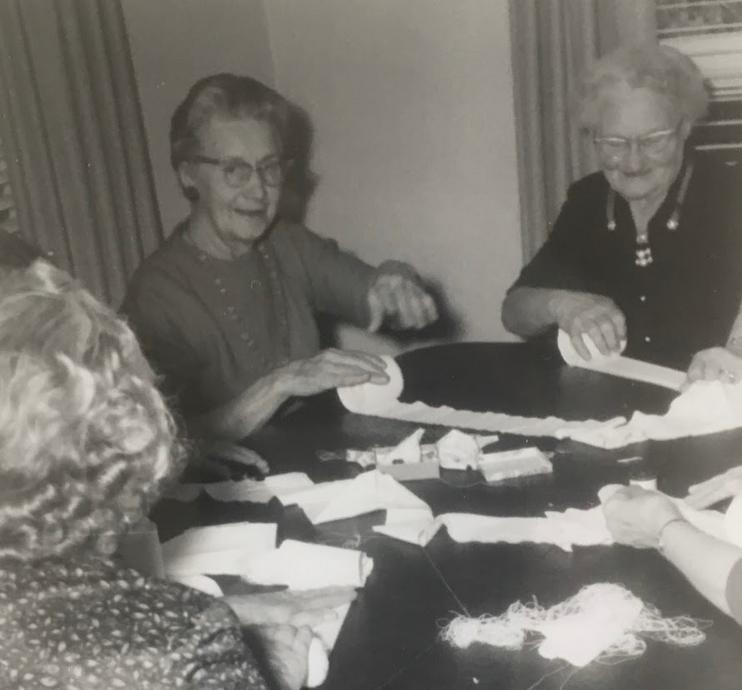
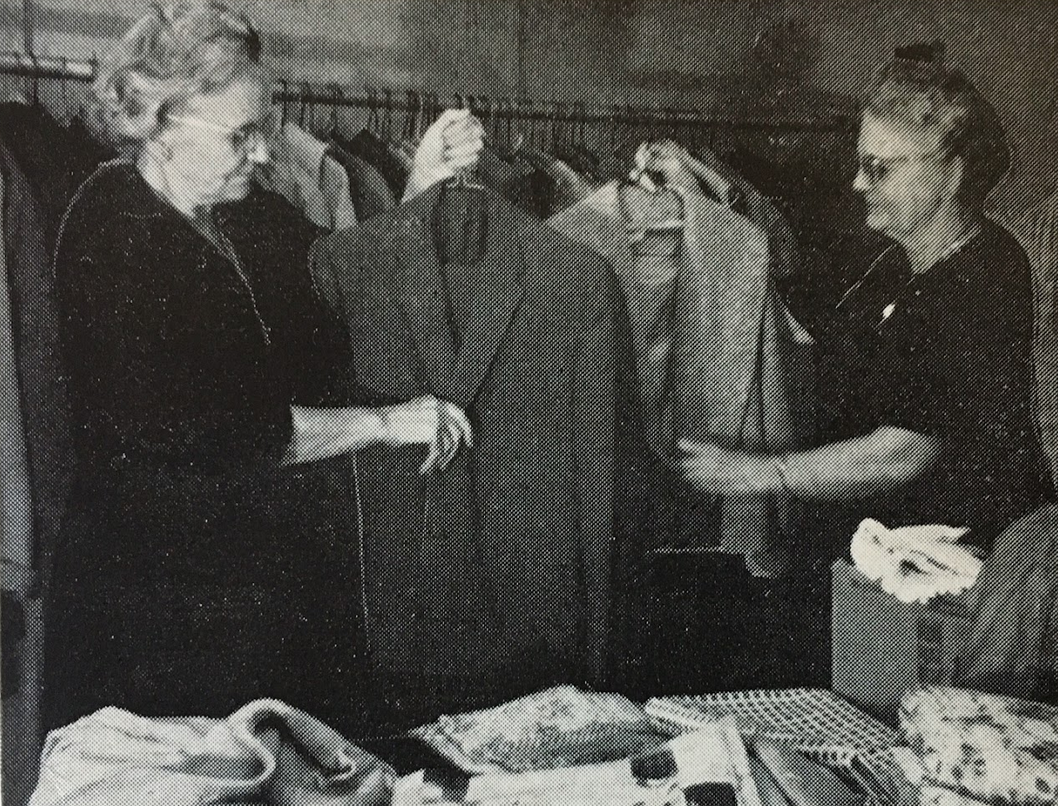
Covenant Women rolling bandages, ~ 1950s
2. The 1960s and 1970s
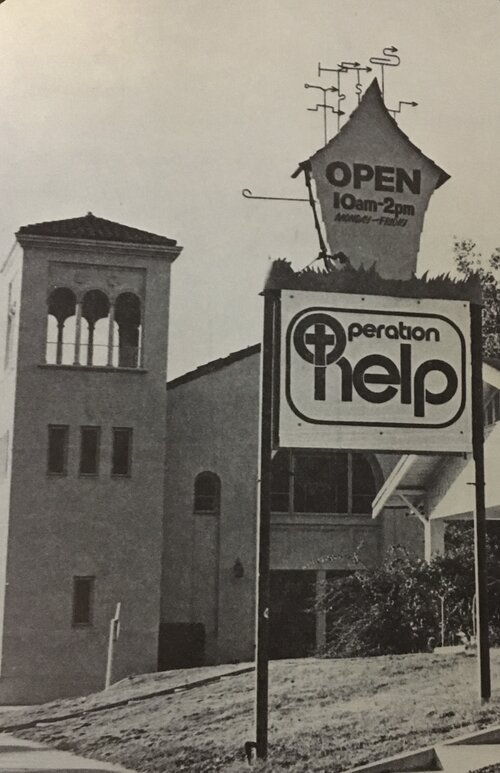
As Pasadena began to change from a wealthy Los Angeles bedroom community to a unique city with new freeways, a convention center, hotels, and high-rise business buildings, urban problems also emerged: poverty, joblessness, hunger, and addiction. Operation Help was an “expanded ministry of benevolence and evangelism” begun in 1969 to meet these new needs. It offered rides; housing assistance; references for legal advice, jobs, or counseling; food; clothing; and prayer. A canvas of the neighborhood was conducted to acquaint the community with Operation Help and find out more about local needs. Services became more accessible to the community in October 1970 when the church decided to use a Lake Avenue-facing house on its property for the program (where the former “youth building” is). Three young men who were Campus Club counselors (David Hicks, Curt Peterson, and Dennis Dawson) rented the second floor of the house, providing income for the program (along with donations from the church’s high school and college groups). The first floor of the house held a clothing and food commissary and receptionists who fielded calls to the program’s number, 449-HELP. When a stalwart volunteer, Edith (Mrs. Knute) Johnson, died in 1975, however, the program proved difficult to maintain.
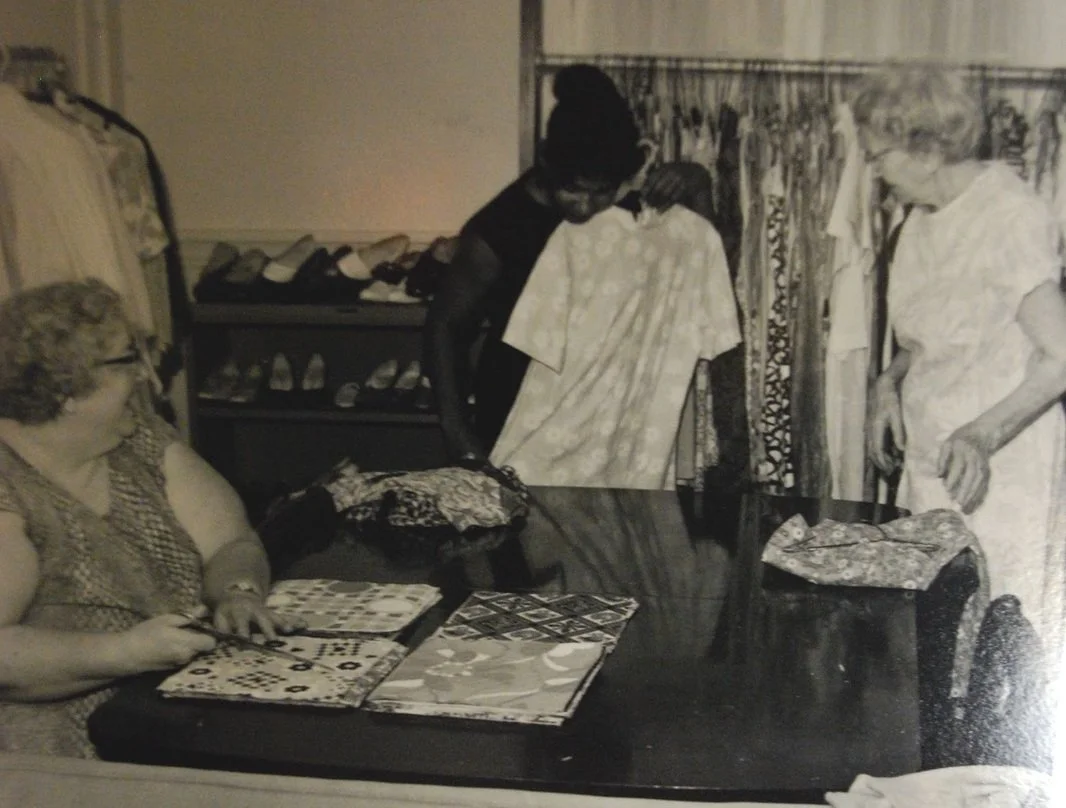
Another issue at the time was race. The path of the 210 freeway built in the 1950s and 1960s unequally affected African Americans. Furthermore, in 1970, the Pasadena School Board was under a court order to desegregate schools and a program of forced bussing was instituted. White families with means moved to other nearby cities or sent their kids to a growing number of private schools.
The church’s response to these changes was in part expressed through the work and interests of individual members. One of these was Albert Lowe, church member and advocate for public schools. He was on the Pasadena school board at the time and tried to build bridges between the interests of white and black parents.
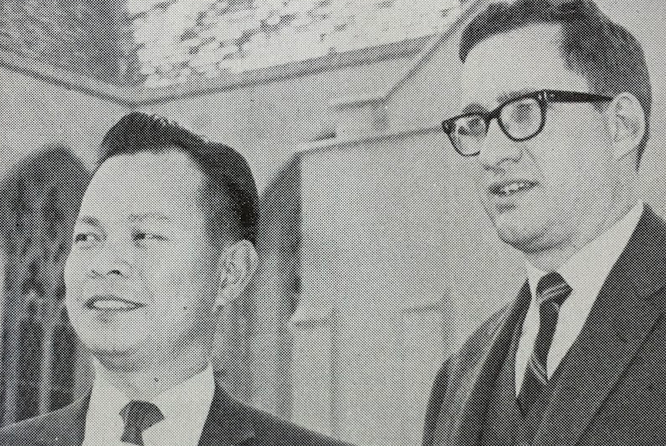
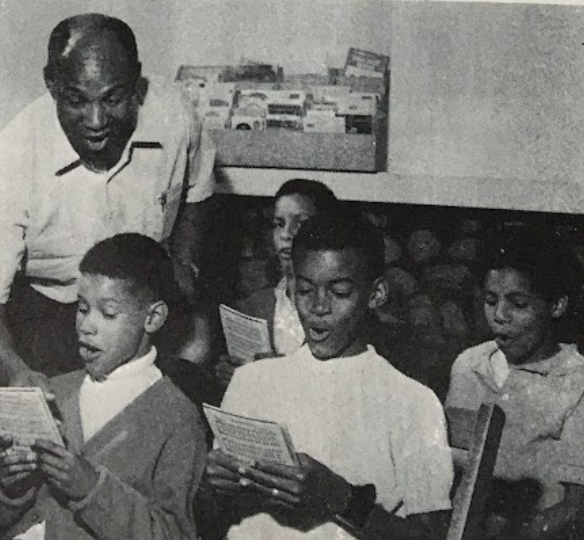
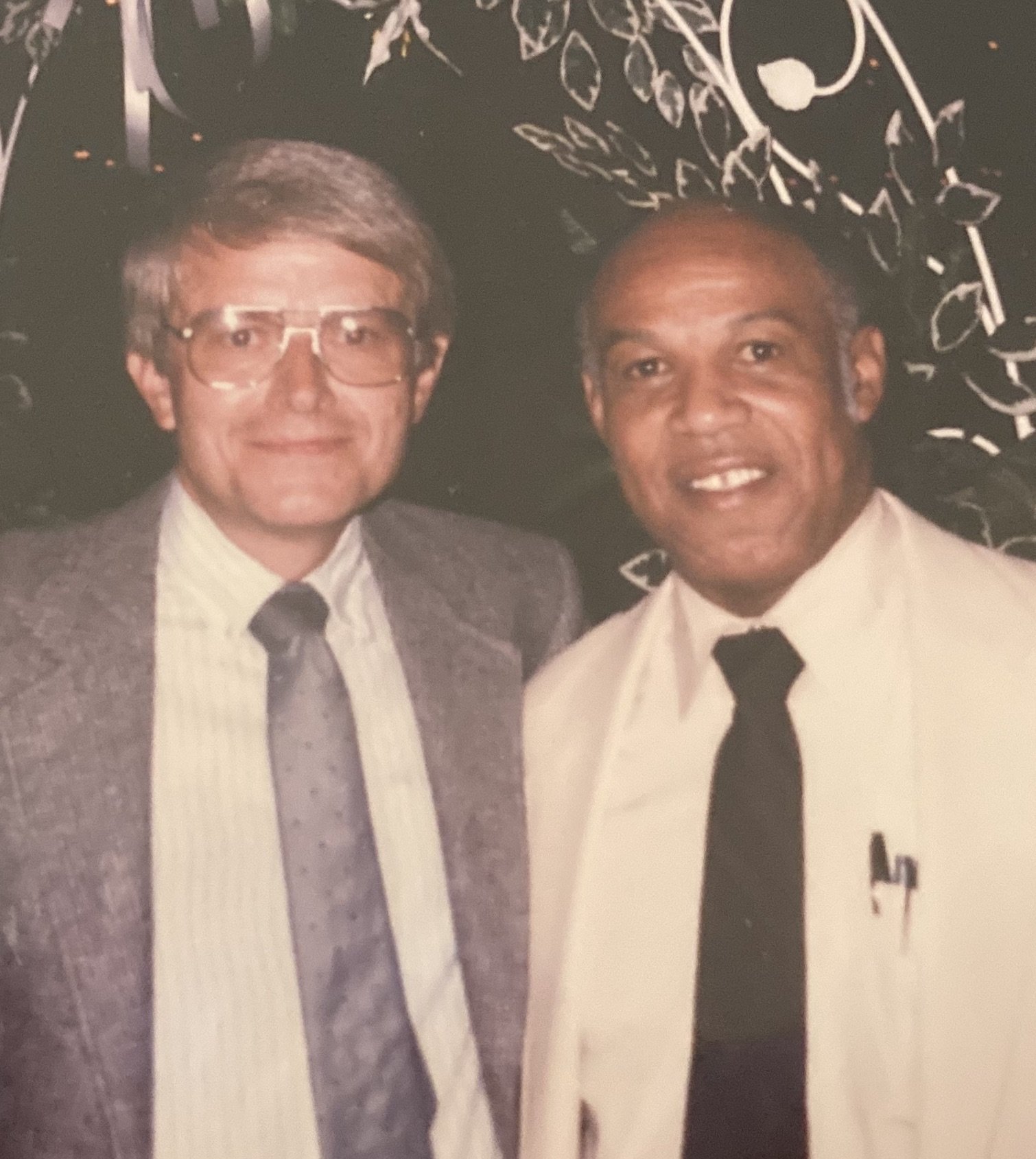
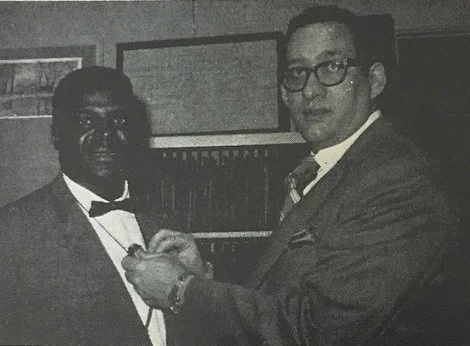
Another was Roy Bicker, active in Pas Cov since he was a teenager, and a public elementary school teacher. He was a friend of Ed Bryant, a prominent African American in NW Pasadena. Ed’s job was court liaison between juvenile defendants and the prosecutor, but his heart was in the Pasadena Youth Christian Center, which he had founded in 1965, to stop those juveniles from getting into the court system in the first place. Roy supported the PYCC as a board member, encouraged Pas Cov to put it in the budget (where it was until 1998), and arranged for church members to become tutors at the center.
Pas Cov also responded along with the larger Covenant denomination to the 1969 “Black Manifesto” call for reparations from American churches. They agreed to additional giving to “help lift the burden of indignity imposed on the black communities of America.” More on this piece of Covenant history can be found here. The first offering for this cause was taken in an evening service at Pas Cov in February 1970 in which the invited speaker was Robert Dawson, the first African American member of the Covenant’s ministerium, and pastor of Grace Covenant Church in Compton (a building which is now the home of CHET, the denomination’s Hispanic Bible institute).
3. 1980s and beyond: Community outreach
In 1979 Dave Mark was brought on staff at Pas Cov as Minister of Community Outreach. Serving until he and his family moved to Mexico in 1983, he helped the congregation understand “The Church’s Mission in a Changing Community,” the title of a talk he gave at an evening church service. Sharon Smith was on staff in a similar role from 1984 to 1989.
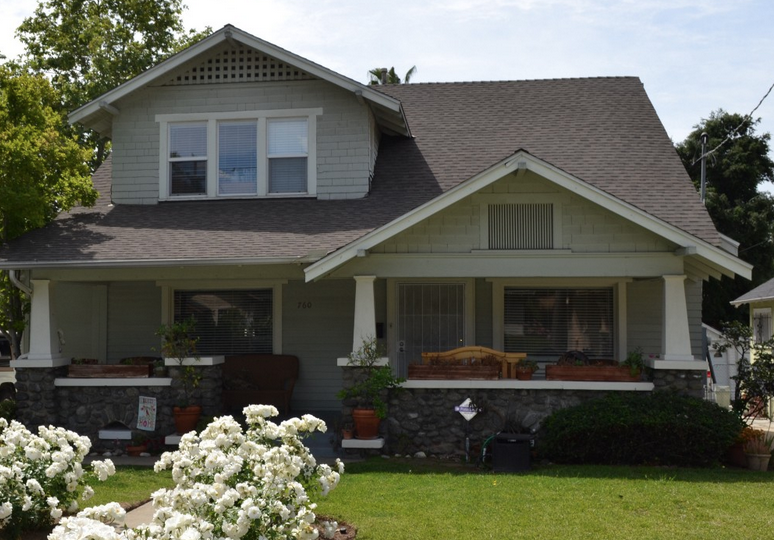
One of the ways this mission of the church was carried out was through a house at 760 Santa Barbara St. The details of ownership, rental, use, and acquisition are complicated—suffice to say that Pas Cov was able to use it as an outreach base starting in the mid-1980s. The house had room for five adults, and church members such as Jim Crapson, Todd & Karie Shorack, David & Lori Vriend, Edgar Castillo, Dan & Diane Moore, and others lived in the Community House until 1990, engaging in the challenges of life together and reaching out to the neighborhood.
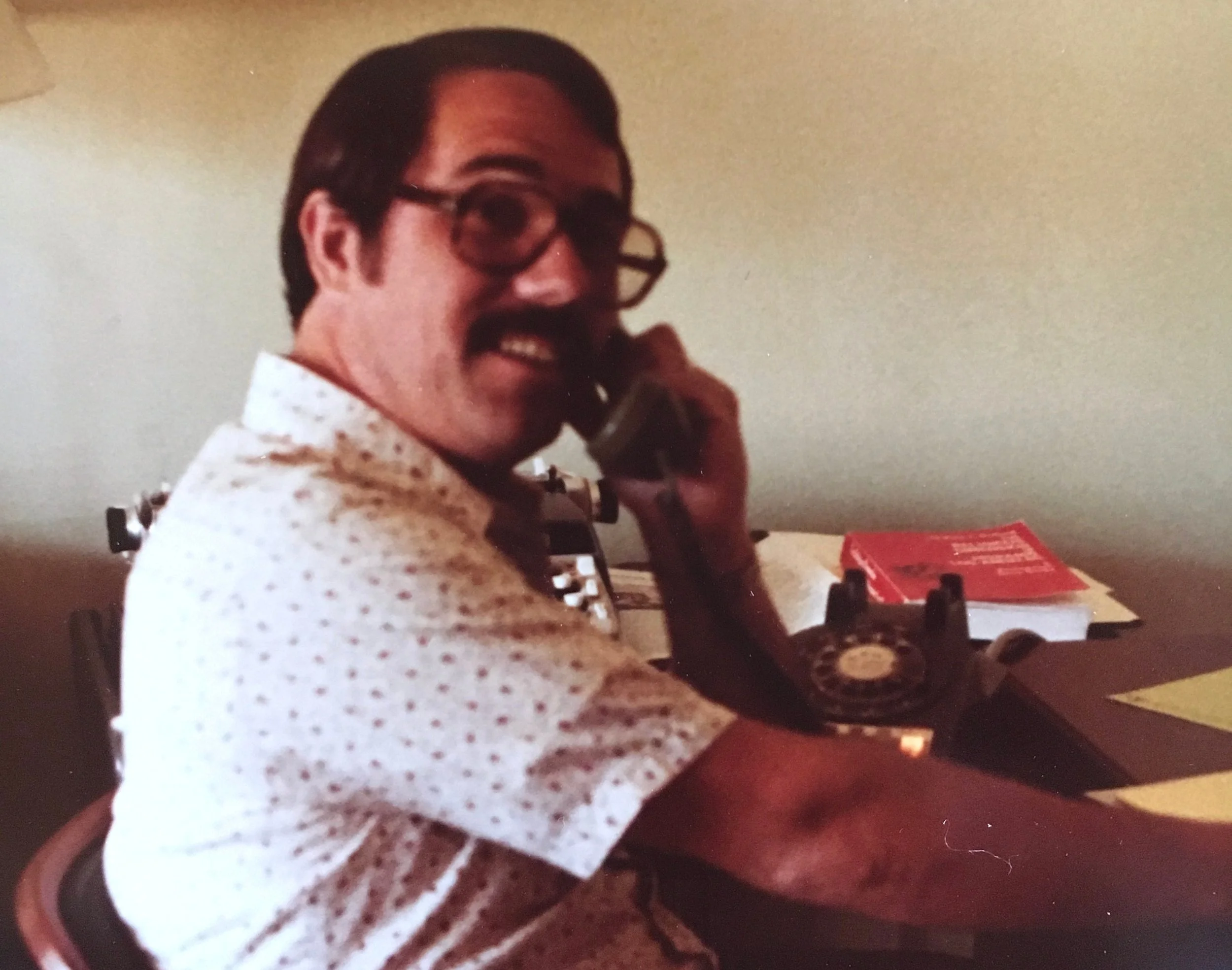
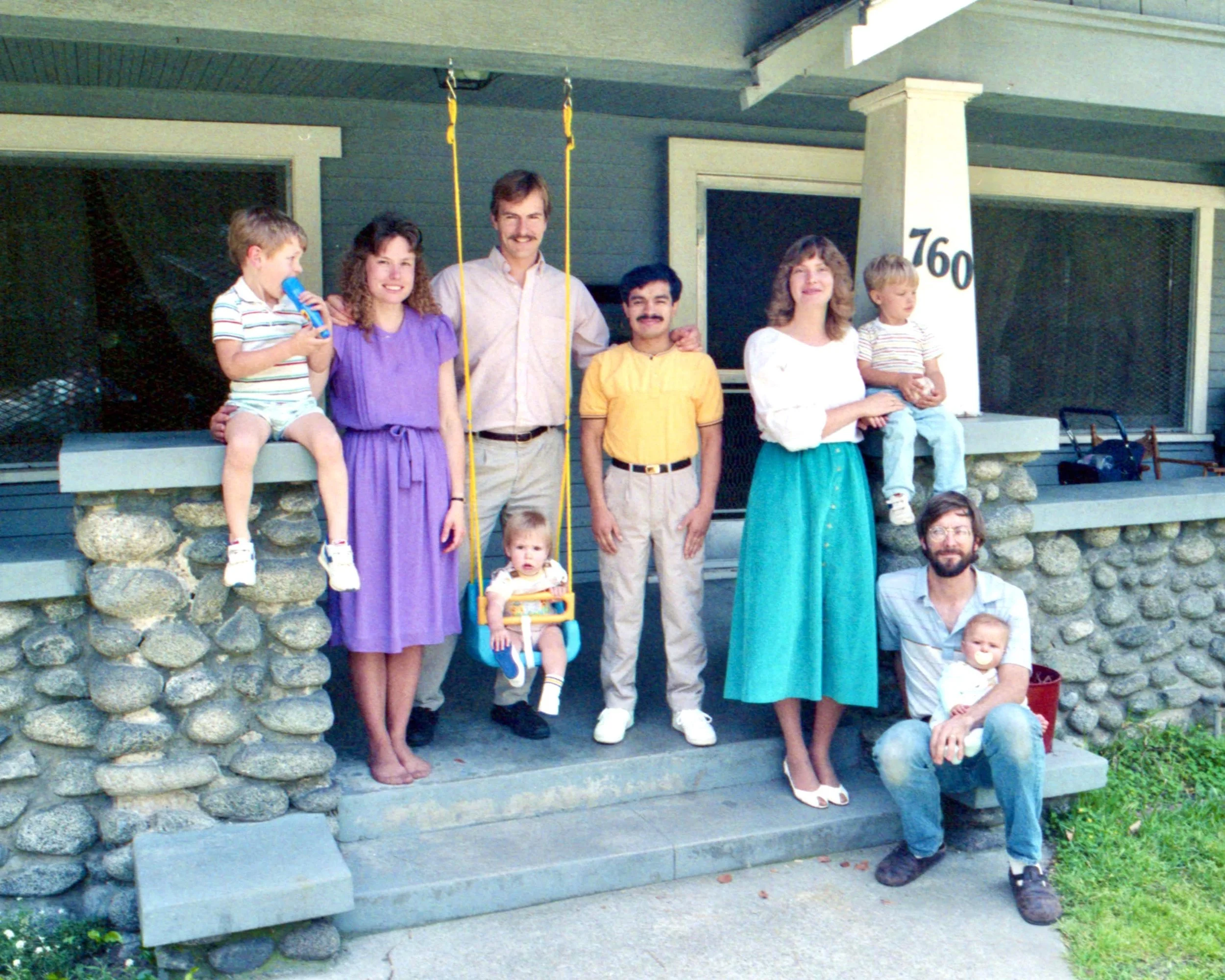
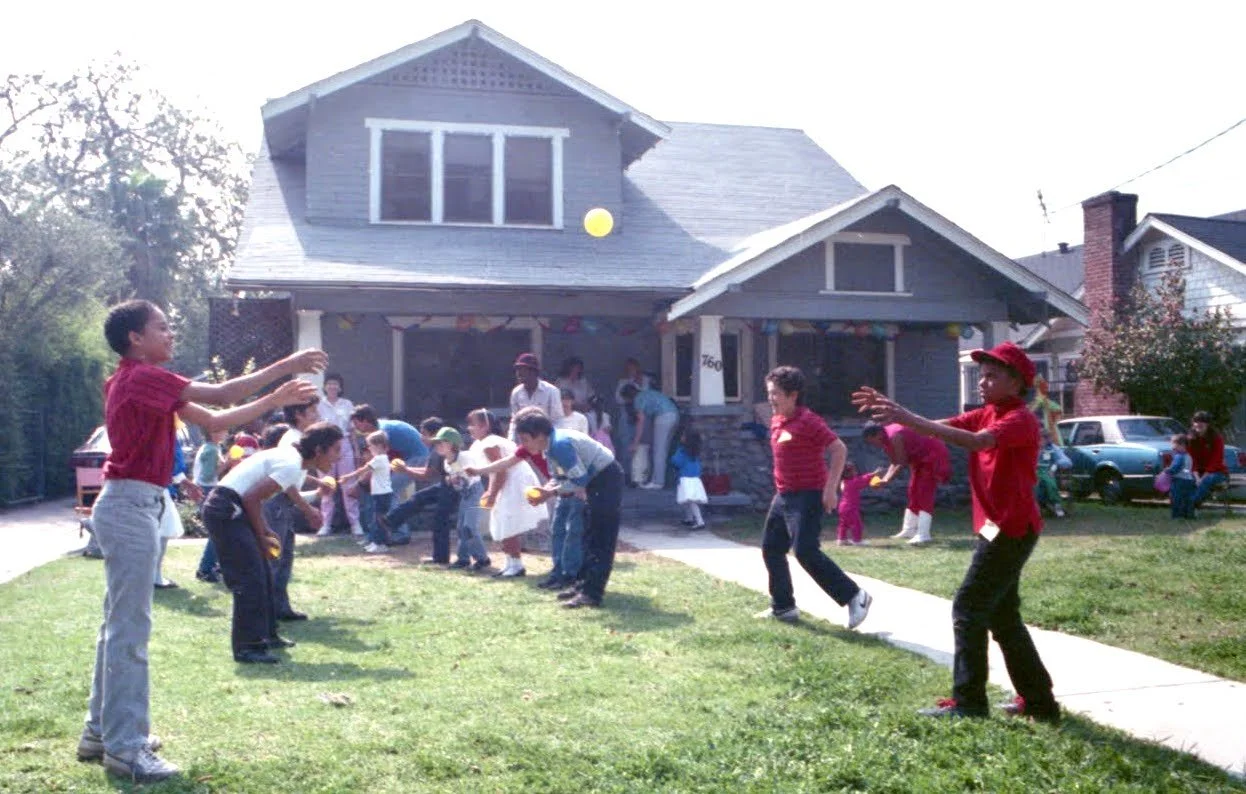
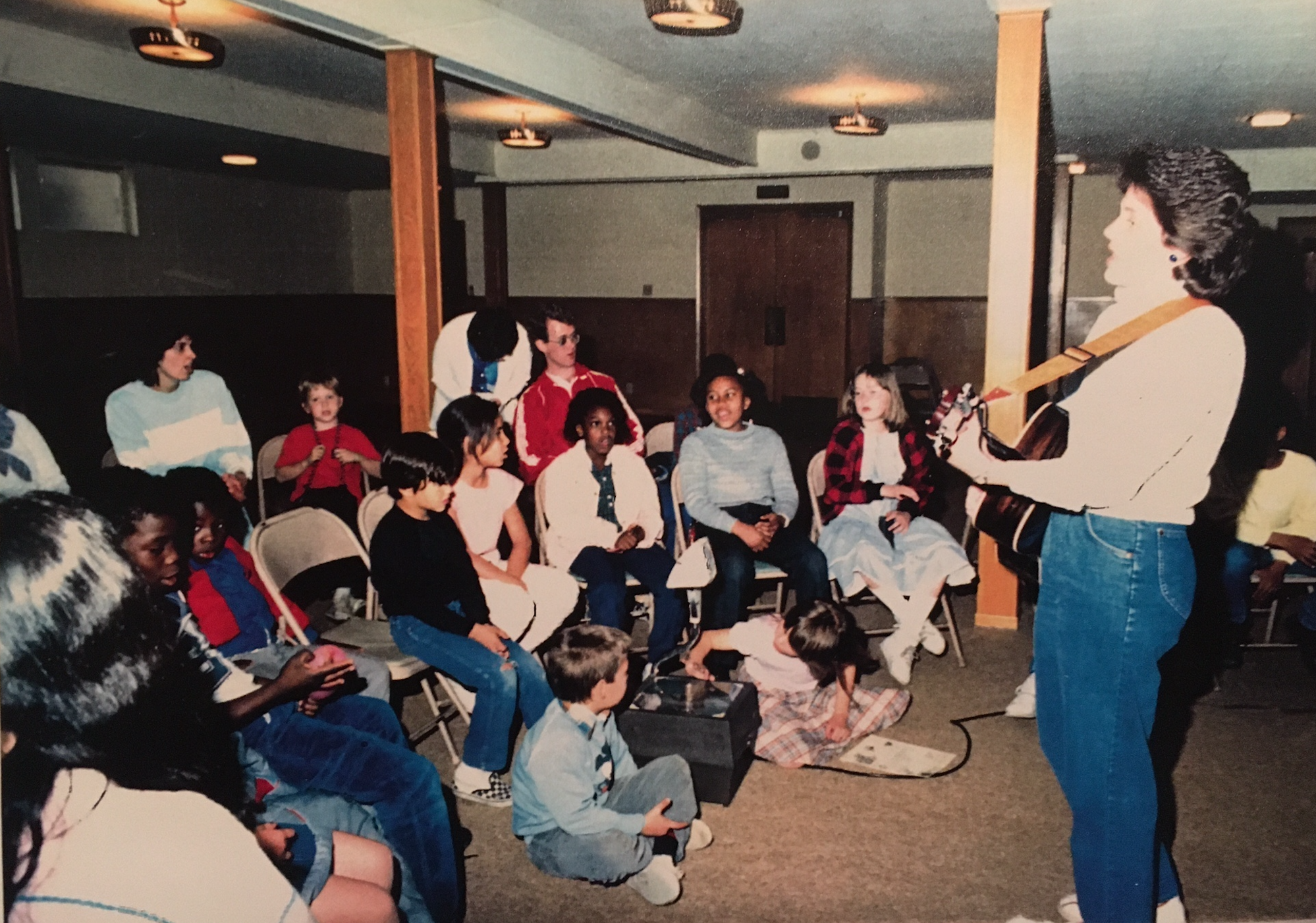
Most of what the Community House residents did was to be good neighbors, from sharing dinner to giving rides, discussing parenting, and celebrating kids' birthdays in the front yard. But there were related ministries at the church as well. One of them was Kids Club. Volunteers gathered the kids and brought them to the church one afternoon a week for a meal, games, crafts, and Bible stories. At some point the Pioneer Club curriculum was used. More tutoring options were added as well. (Here is a more detailed account of the Community House.)
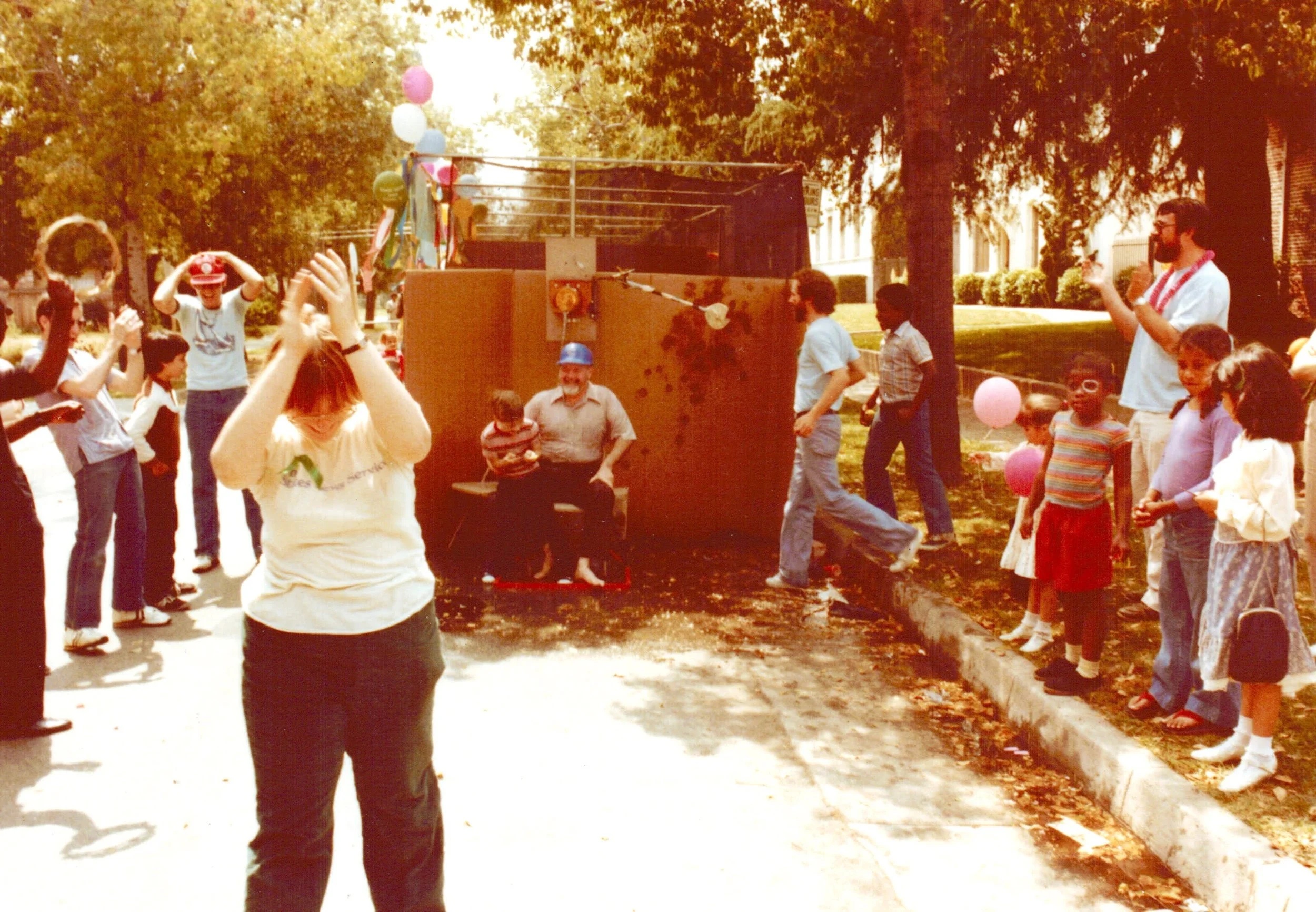
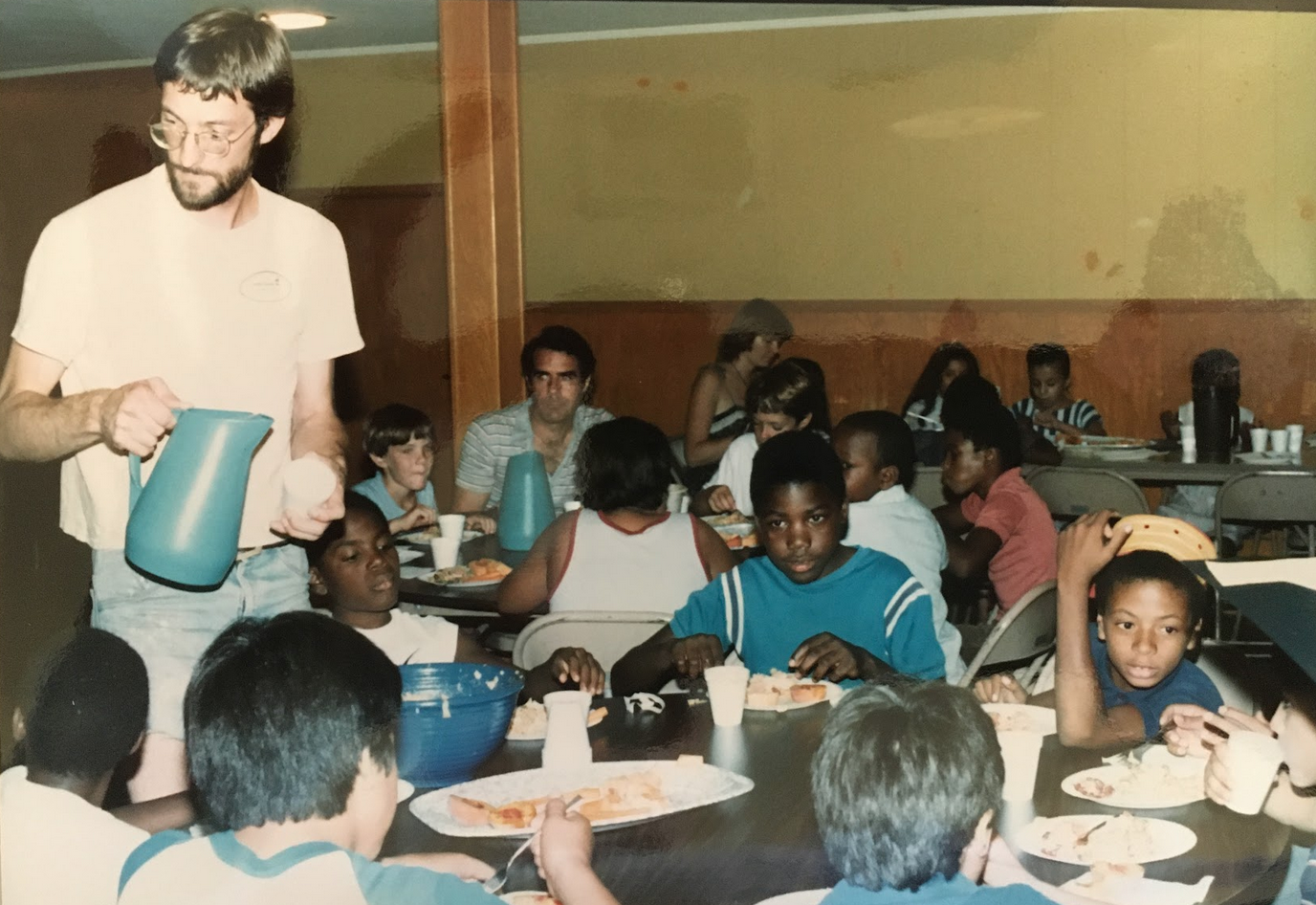
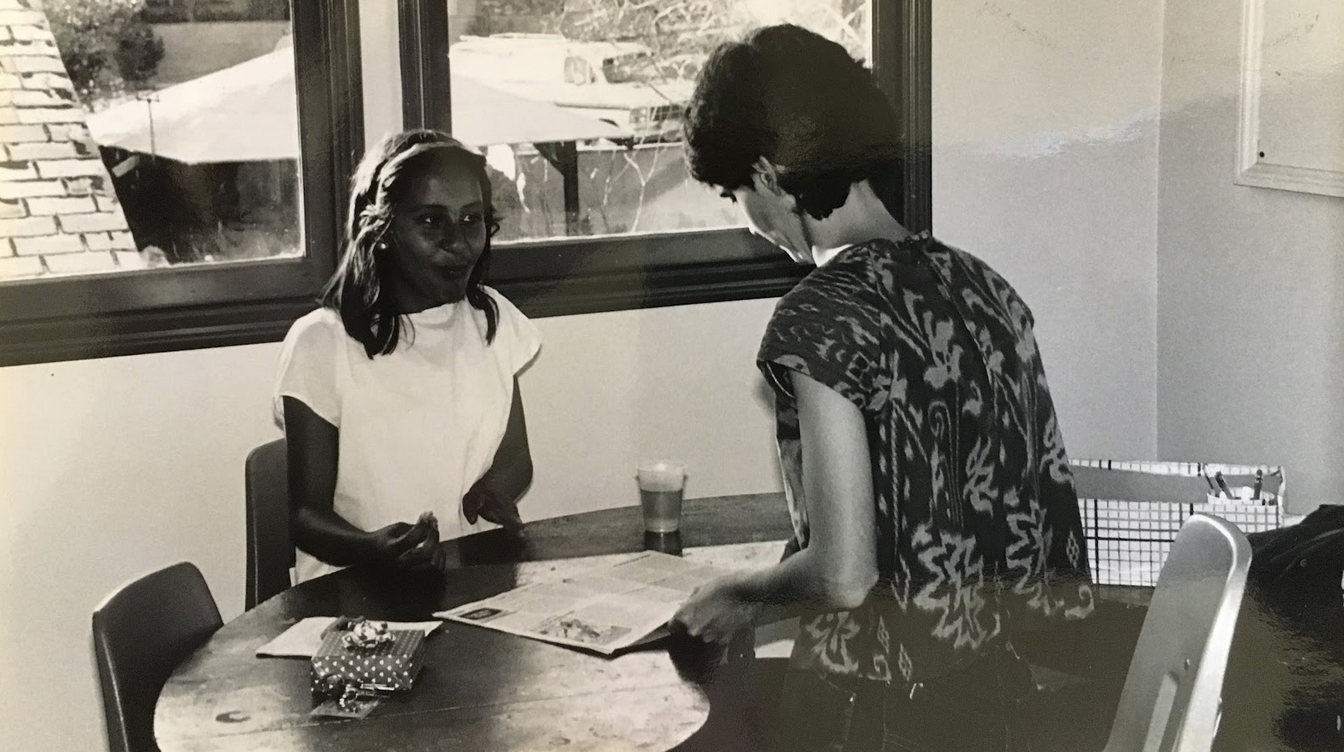
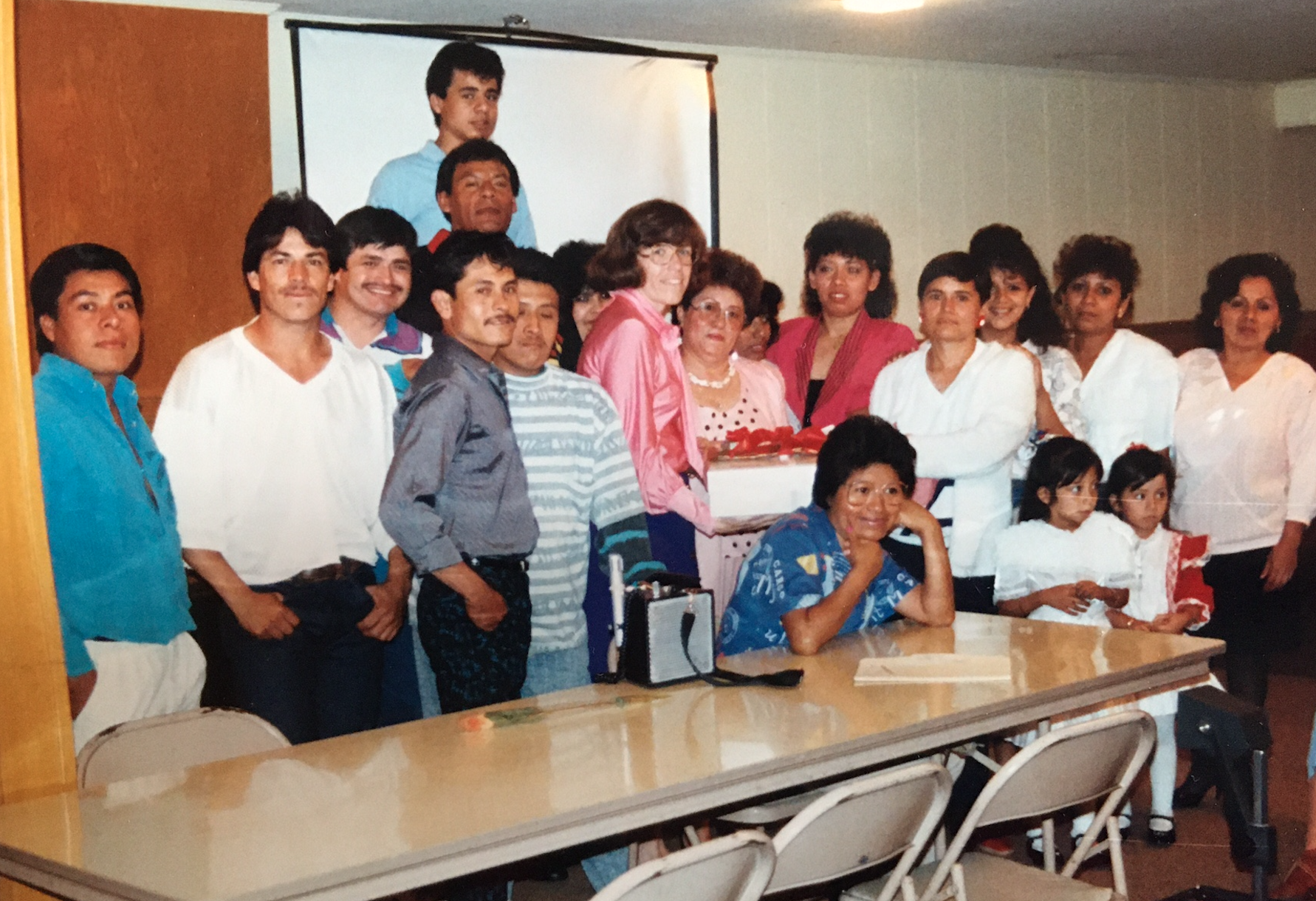
English as a Second Language (ESL) classes at the church for adults were also part of the outreach mix during the 1980s and 1990s. In 1987, there were about 80 students. After an immigration reform bill from President Reagan, demand for ESL classes spiked and Pasadena City College’s Community Skills Center used the church as a satellite site. In 1989-90 there were up to 200 students in four different classes. Local pastors such as Marcelo Alvarado came to give short devotionals during the class break. After that surge, the program was smaller and more informal, led in large part by PCC teacher and church member Ellen Herring.
There was also a focus on Spanish speakers and church. In 1984, with the help of Los Angeles Covenant, a Spanish Bible study and a fellowship evening began at the Community House. By 1988 there was a Hispanic worship service in Pas Cov’s Fireside Lounge. However, after Sharon Smith left staff in 1989, the small congregation was entrusted to others, such as Pastor Marcelo.
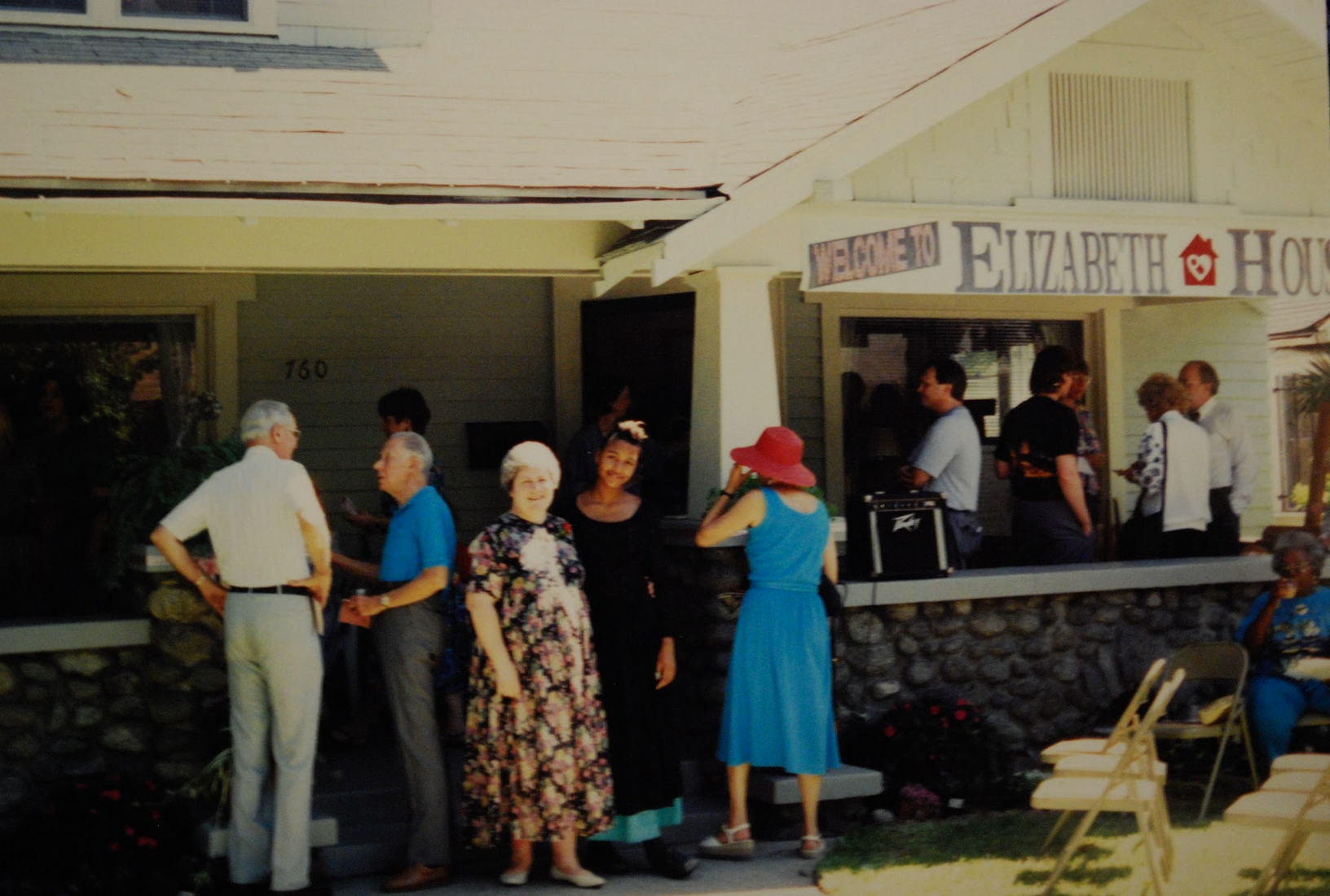
The role of the house at 760 Santa Barbara St. also shifted in 1990. The new vision emerging for this house was for it to be a home for women in crisis pregnancies. It took several years for the vision to become a reality, but in 1993 Pas Cov member Debbie Unruh became executive director of Elizabeth House and in 1994 the church readied the house with furnishings and prayer for its first resident. Owning the property was a condition for Elizabeth House to get some grants, so the church developed a way to sell the property to EH and then provide financial support (2005-2015). Since its founding, Elizabeth House has seen over 340 women come through its doors, has supported over 800 children, and has now expanded to a second house for women who need support but not necessarily shelter. (Here is more of Debbie Unruh’s story related to Elizabeth House.)
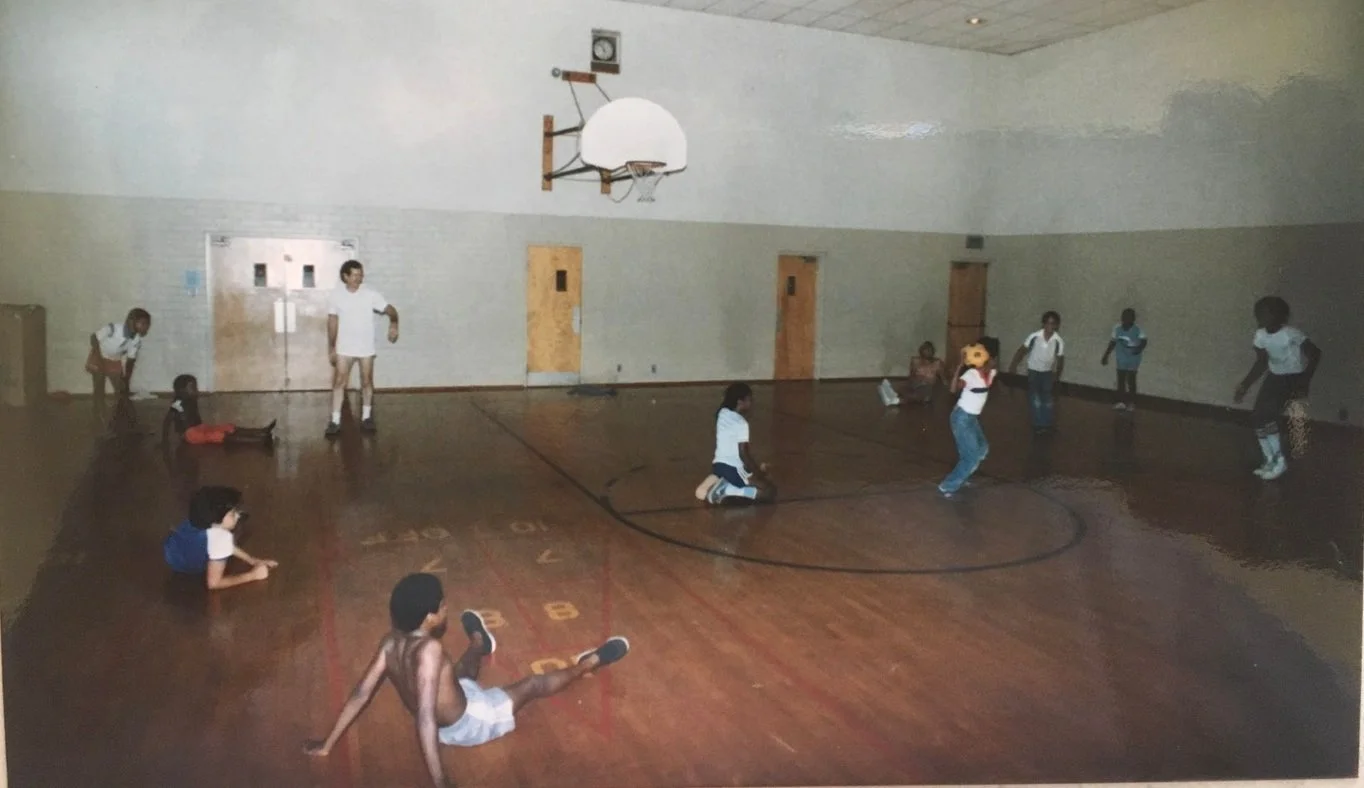
Another periodic ministry has been basketball in the gym. In the late 1980s, Kevin Brooks and Todd Shorack opened the gym for neighborhood players, mostly African American young men. Todd ran the program for the three years he lived in the Community House. His dad had died in combat in Vietnam, and he writes, “Many of us missed our own fathers and were trying to figure out how to be fathers ourselves. So, praying, ‘Our Father, who art in Heaven…’ each week was standard.” In the early 2000s, James McMillan and Kyle Michealsen started playing basketball with students from the church youth group and their friends. As time went on, the players were more and more students whom Kyle taught at Pasadena High School and students from the neighborhood. Kyle writes, “I felt like if a high school student never stepped foot in a church, but their experience of Pas Cov was one that welcomed them in with no questions asked, it was a win.”
Our work with Church of the Redeemer between 2003 and 2008 provided another opportunity for many Pas Cov families to be involved in community service. Our activities there have been described in the post about Families and the post about Evangelism. The following photos are from Vacation to LA 2008 and include Jamie Knauss, Mary Barkman, Jennifer Mawhorter, Emilie Still, Becky Still, and others.
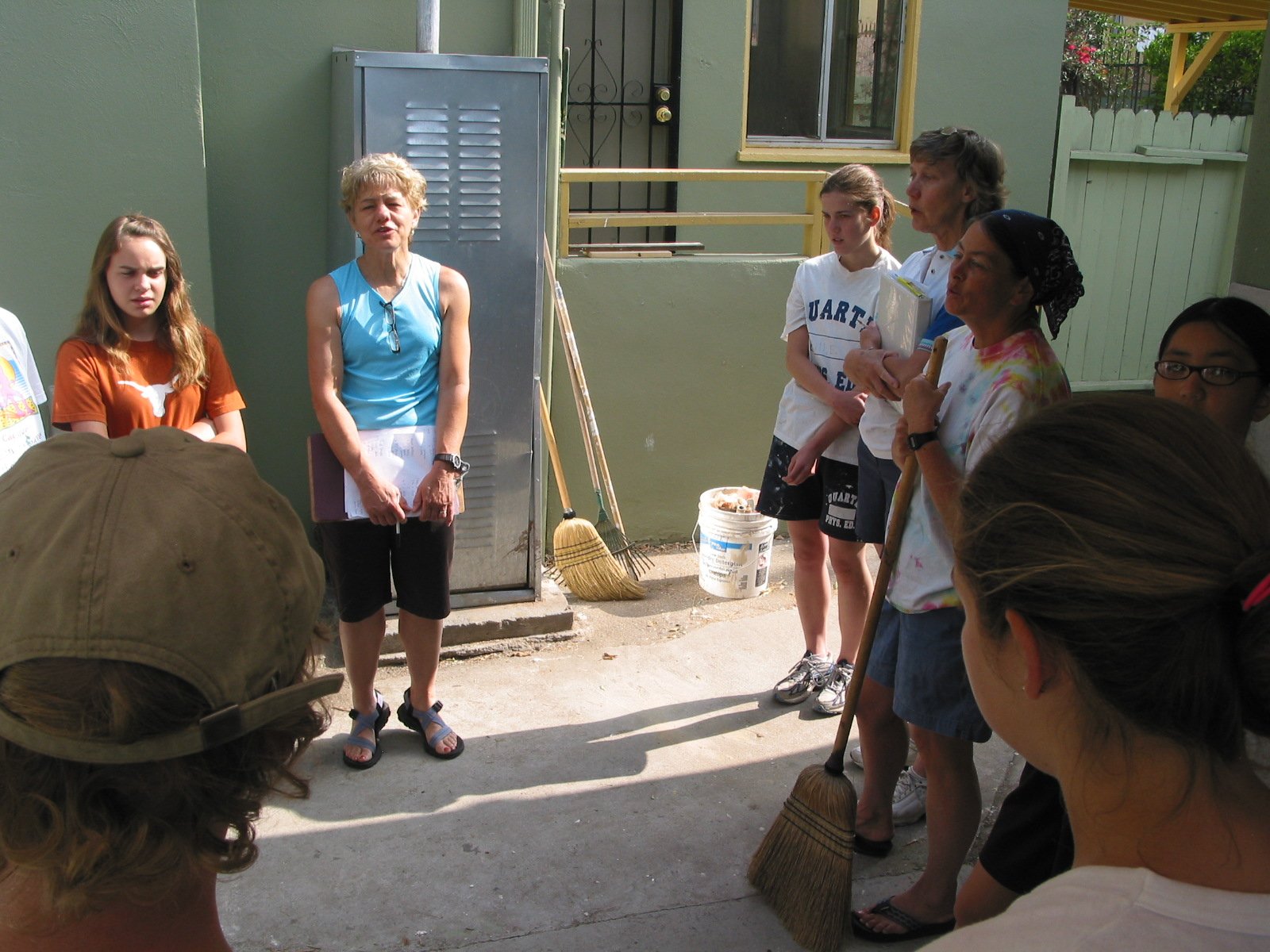
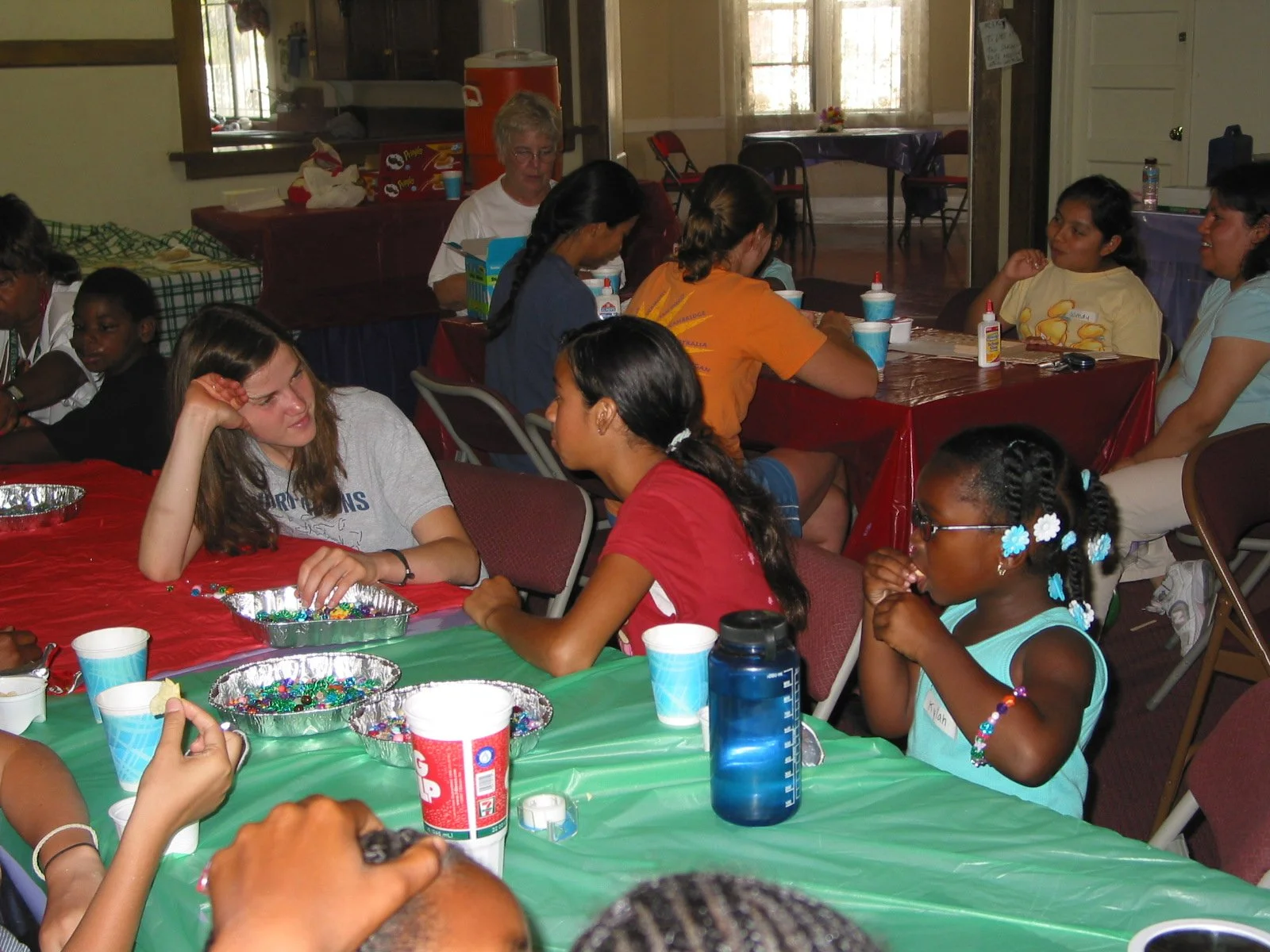
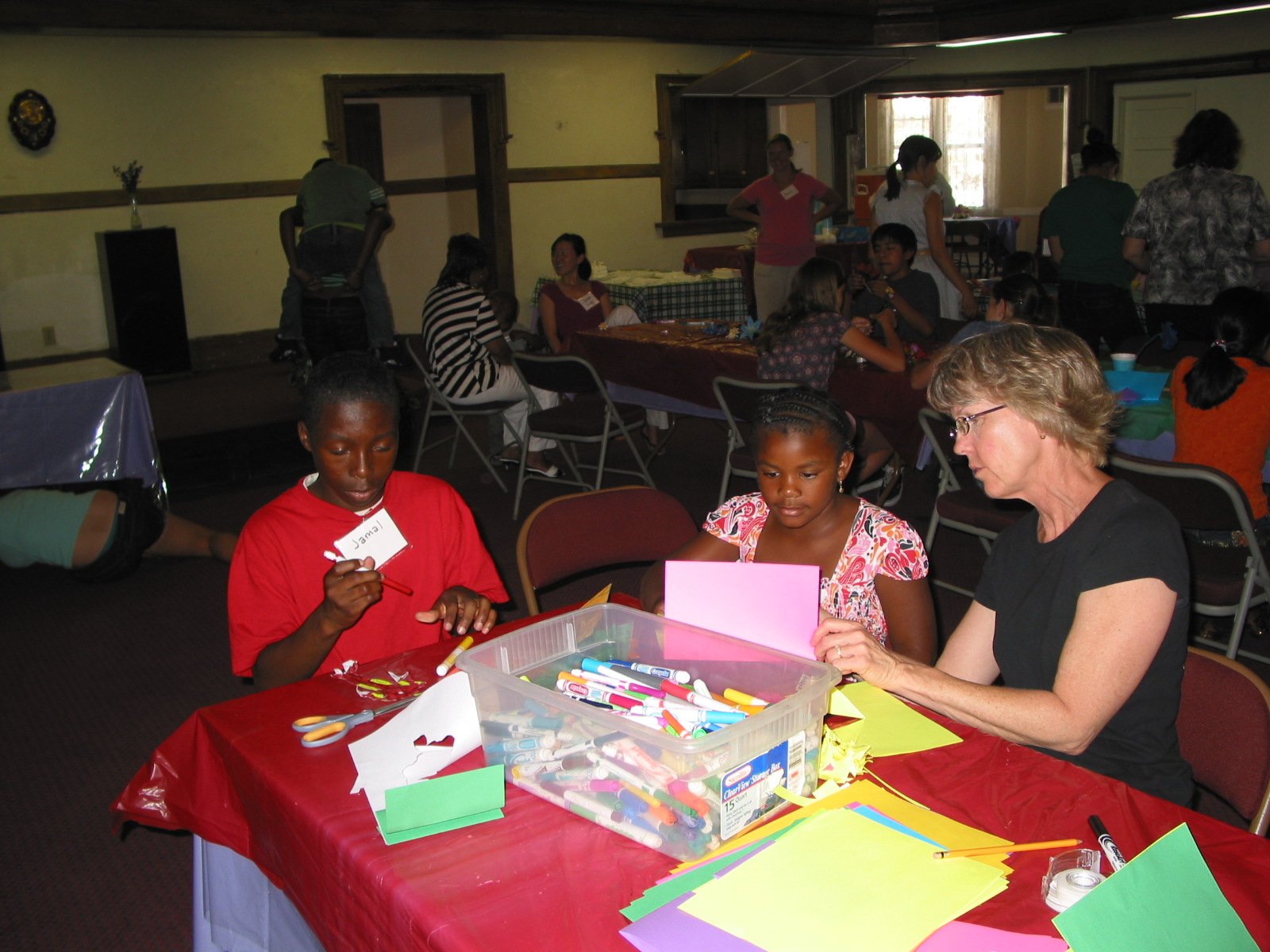
Later, closer to home, our community outreach was done in partnership with Madison Elementary School. In addition to food donations, people like Dorothy Patzia, a former school librarian, were regular tutors there from 2011 to 2018.
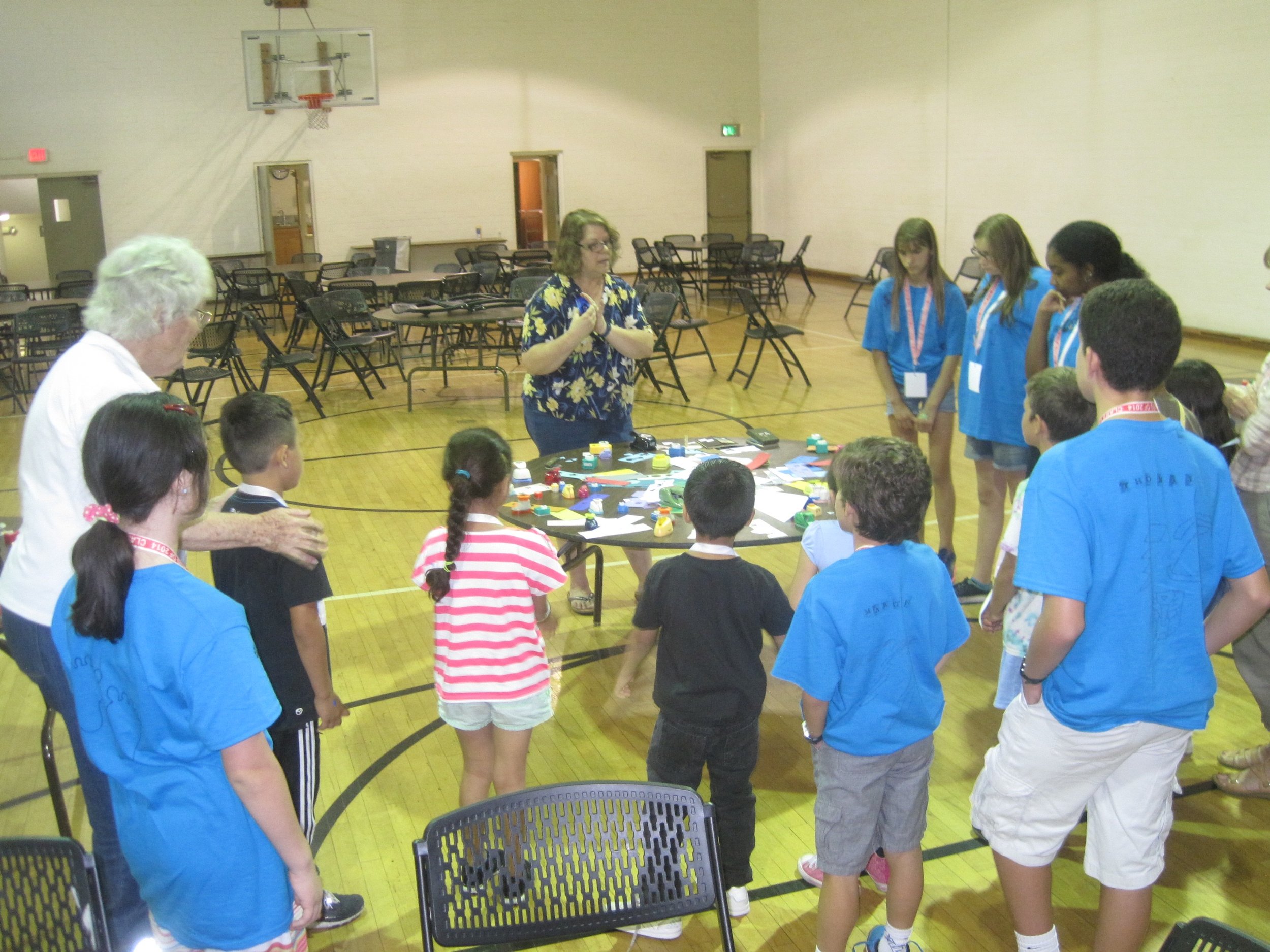
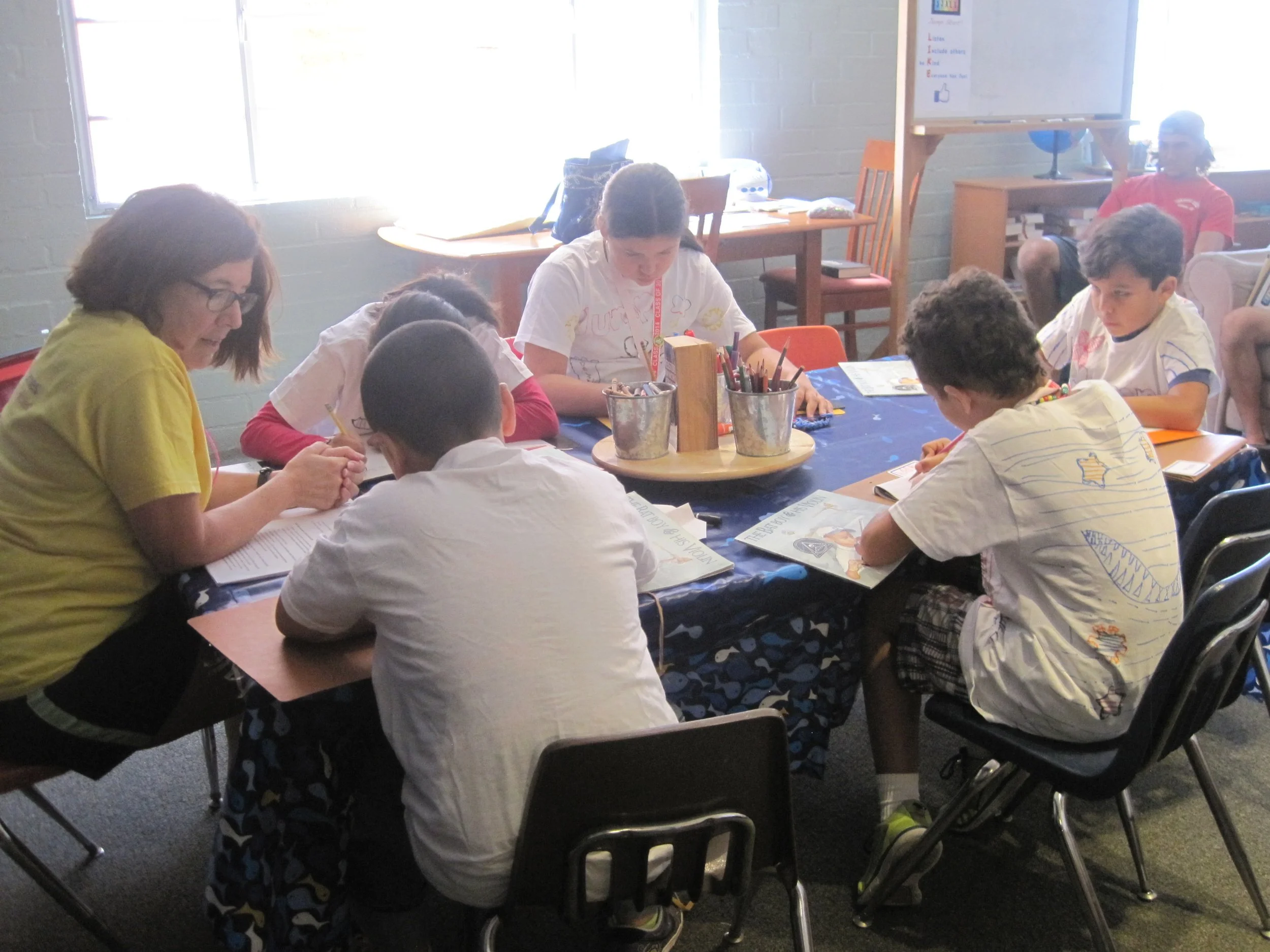
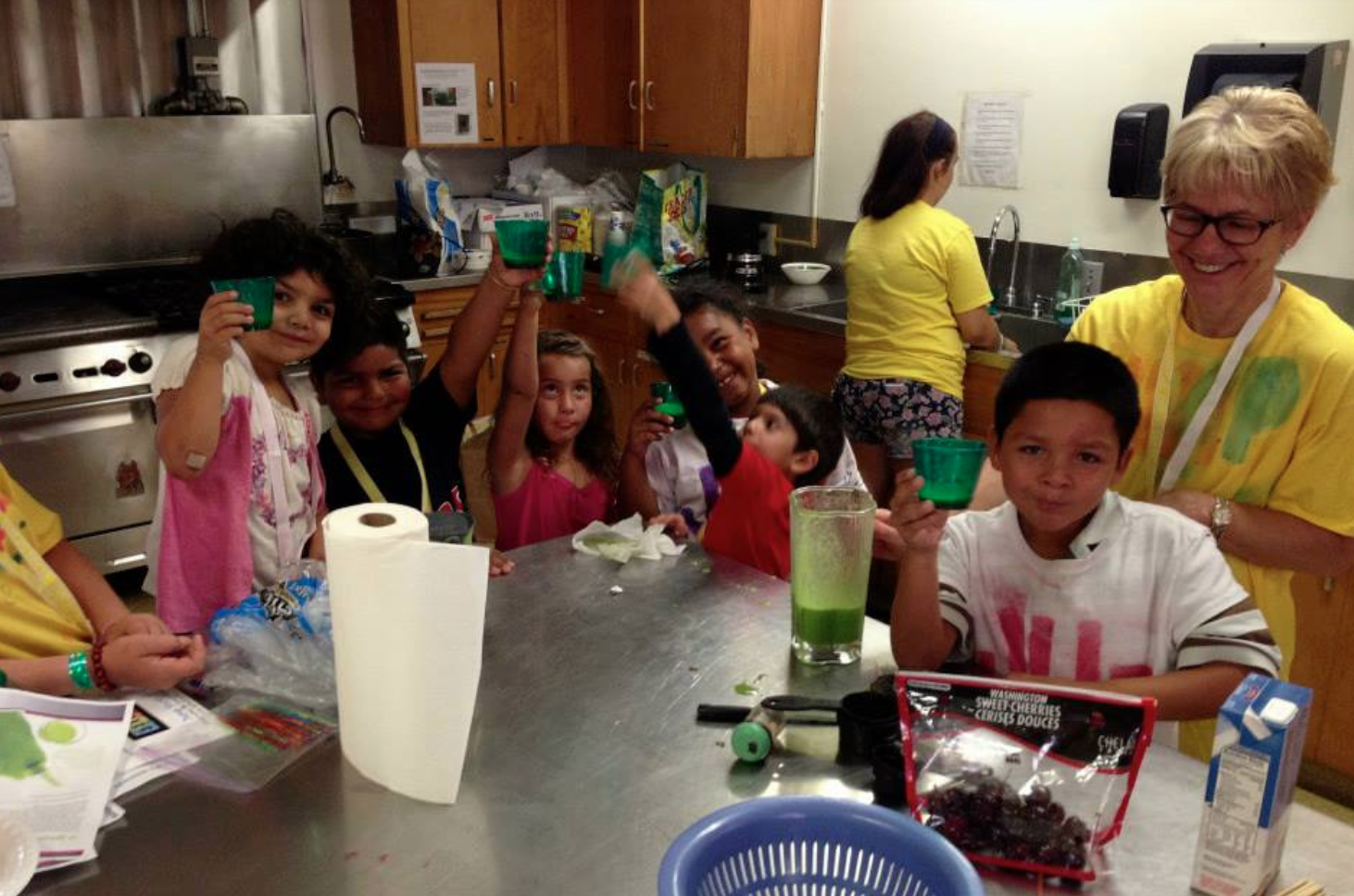
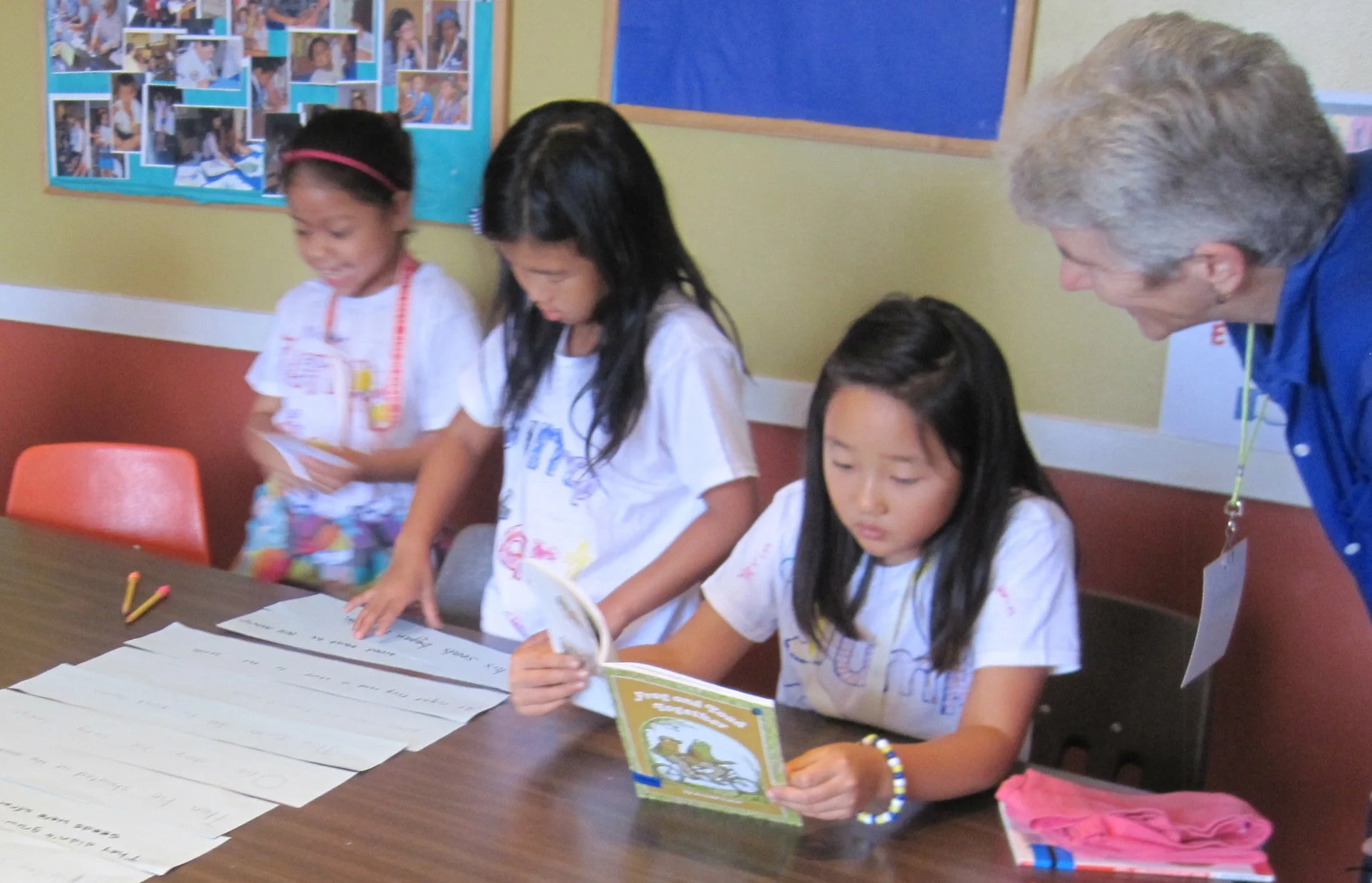
Another recent program was Jump Start. Pastor Vikki Randall led these week-long day camps to get neighborhood kids ready for school after the summer vacation in August from 2013 to 2018, supported by many church volunteers.
4. Bad Weather Shelter
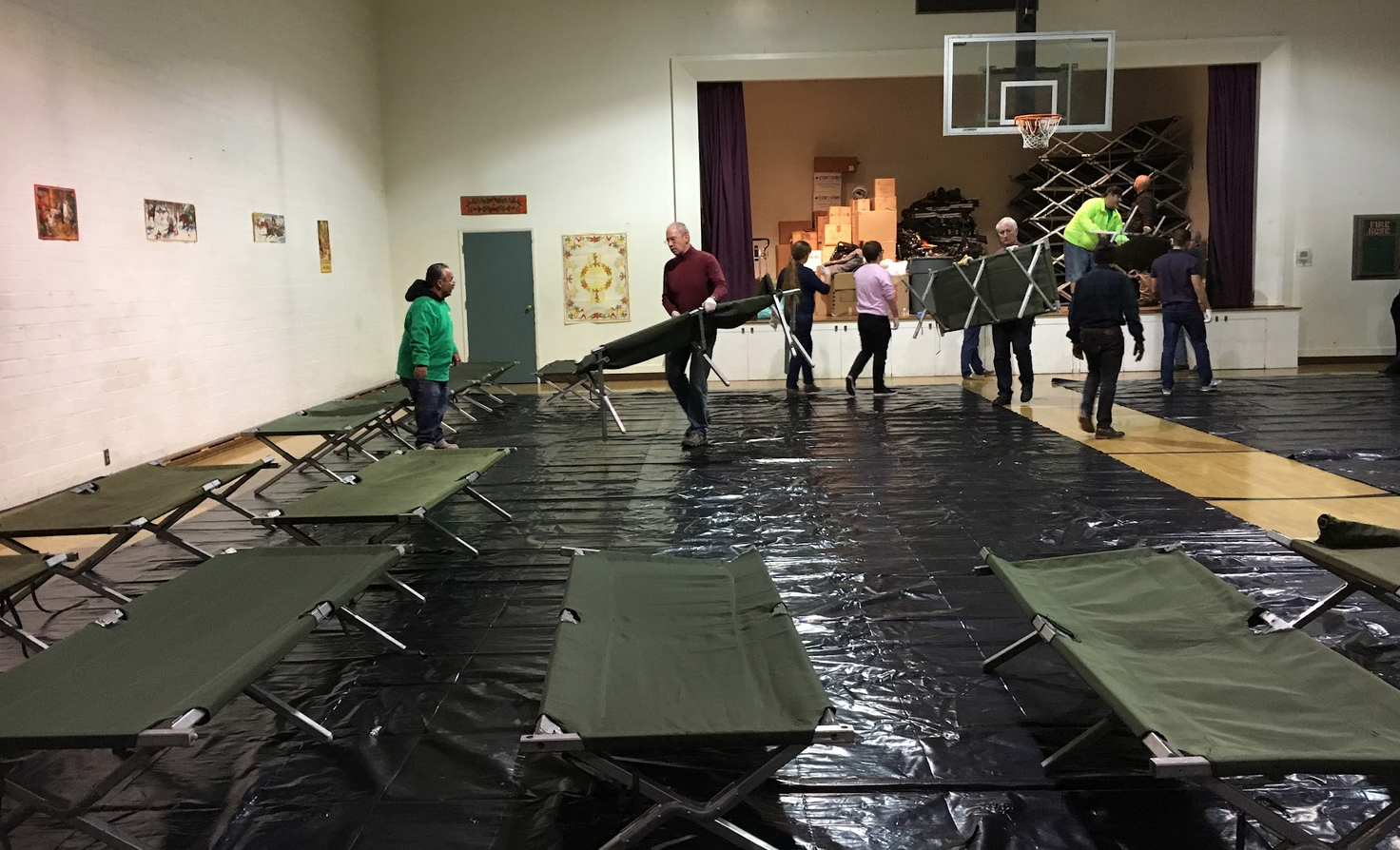
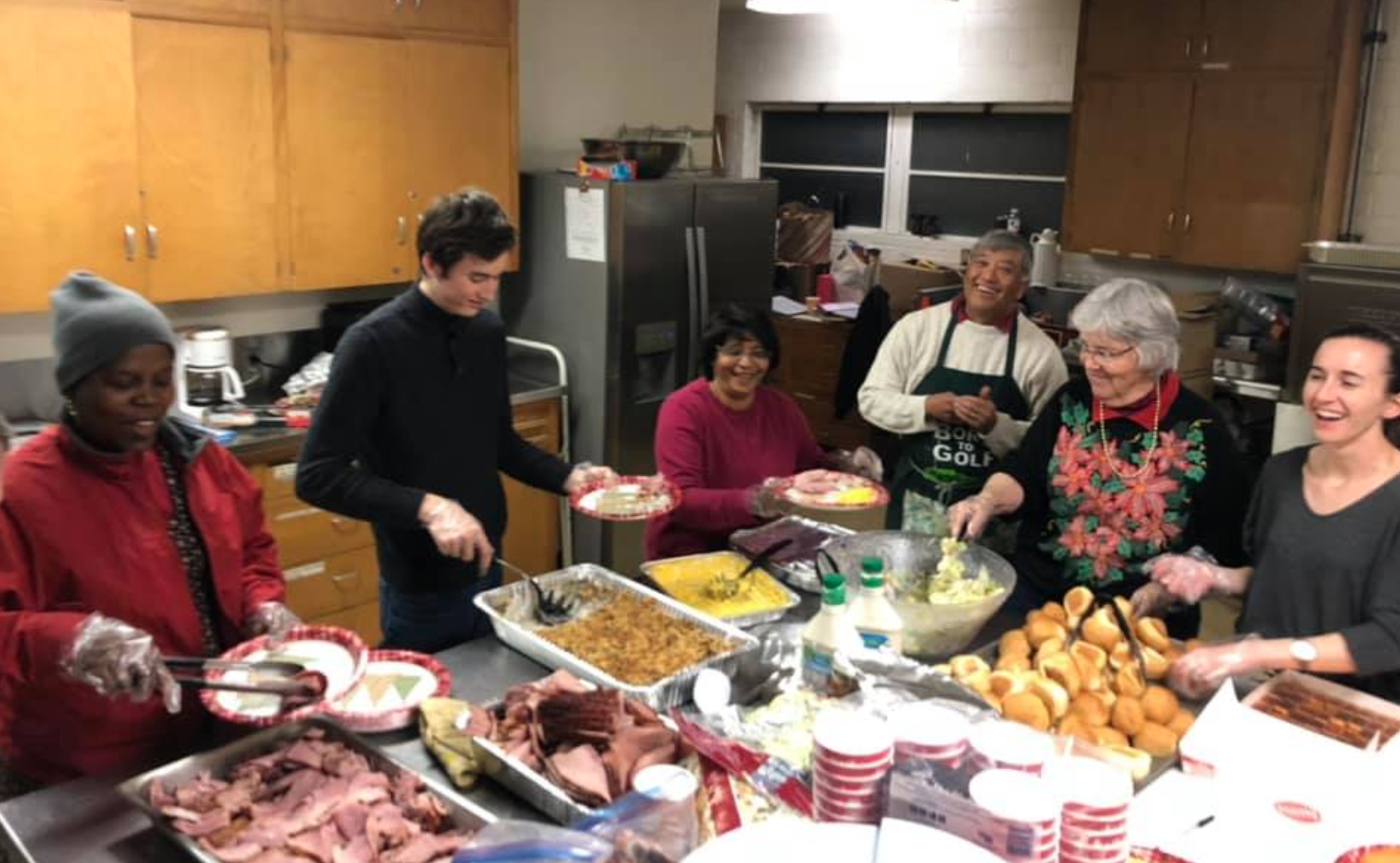
A very significant commitment to our neighbors was our hosting of the Bad Weather Shelter in the gym from 1989 to 2019. This program was overseen by the organization Ecumenical Council/Friends In Deed to offer shelter to homeless individuals, at first during the entire winter and in later years when the weather forecast was for rain or cold. At its peak, over the course of a typical winter season, the church opened its doors 77 days and hosted upwards to 4,370 people. Nurse clinics, foot washing, gift bags, and special meals were included at some points. Key lay people overseeing this ministry were Don Bosch and then Wayne Walker, though many volunteers were involved on Wednesday nights when Pas Cov people joined Friends In Deed staff as hosts. Climate change and drier weather, new city and non-profit services, as well as changing attitudes in the city about how to help the unhoused, were factors that led to the end of our involvement in hosting the BWS, but the impact during those 30 years was great both on those who were served and those who served. Hundreds of Pas Cov people gave money, time, and attention to ensure the security and health of thousands of people experiencing homelessness over the years, putting into practice the service Jesus asks for in Matthew 25.
5. Refugees
In 1980, the church helped sponsor a refugee family from Vietnam, the Trans. In 2018 the Peace and Justice ministry team was again led to focus on refugees. Pas Cov helped a family from Honduras seeking asylum here move from a converted garage to a real apartment; they also gathered household goods to donate to other families through the organization Catholic Charities where Pas Cov member Brenda Thomas works. When the flow of refugees slowed, attention shifted to visiting detainees at the ICE detention facility in Adelanto. Dozens of volunteers drove out to the facility over several months and listened to detainees’ stories. In July 2019 some also gathered at a candlelight vigil to protest inhumane conditions there. The pandemic ended this ministry to these marginalized and vulnerable people.

Melissa Heuer & Viann Duncan at Adelanto vigil, 2019
6. Food
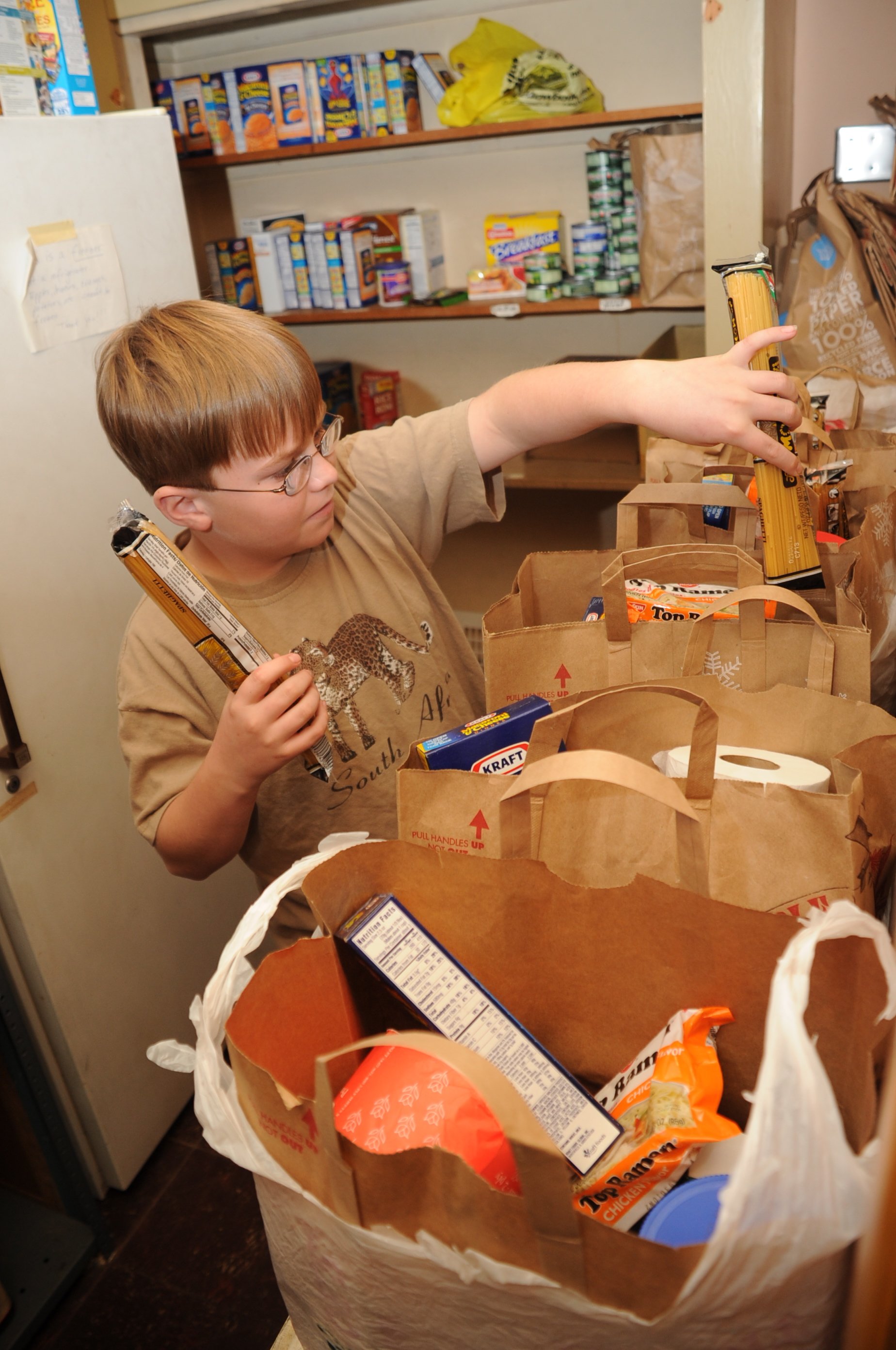
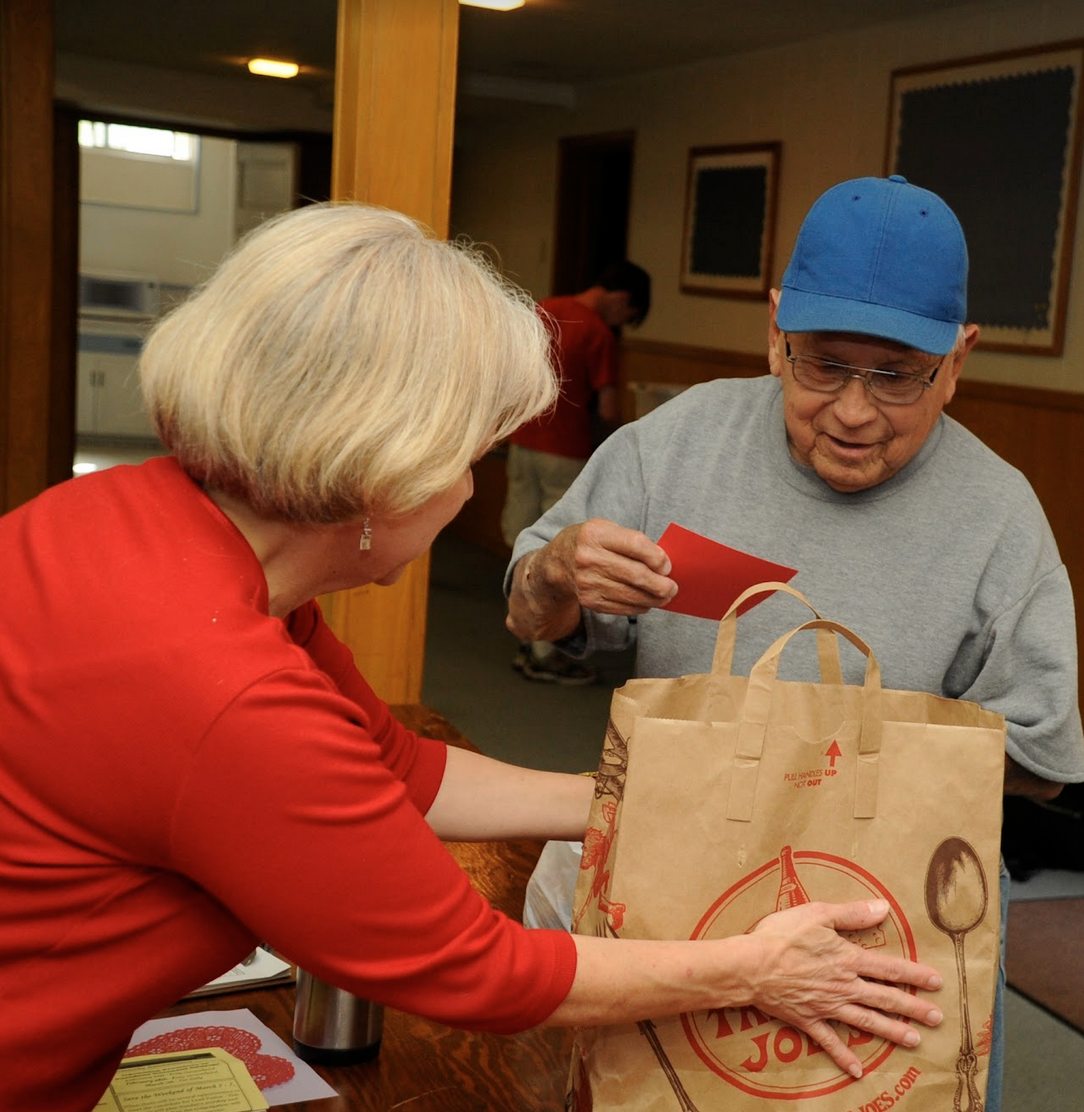
Food was distributed via Operation Help in the 1960s and 1970s. In the late 1980s, food again became one of the ways we served the community. At first, there was a “food closet” in the church, with donations solicited from both the congregation and local grocery stores. In 2011 the service was moved to the Madison Family Center at Madison Elementary School (until 2018). Among the many who dedicated hours to the Food Closet, Lois & Bob Bascom deserve recognition.
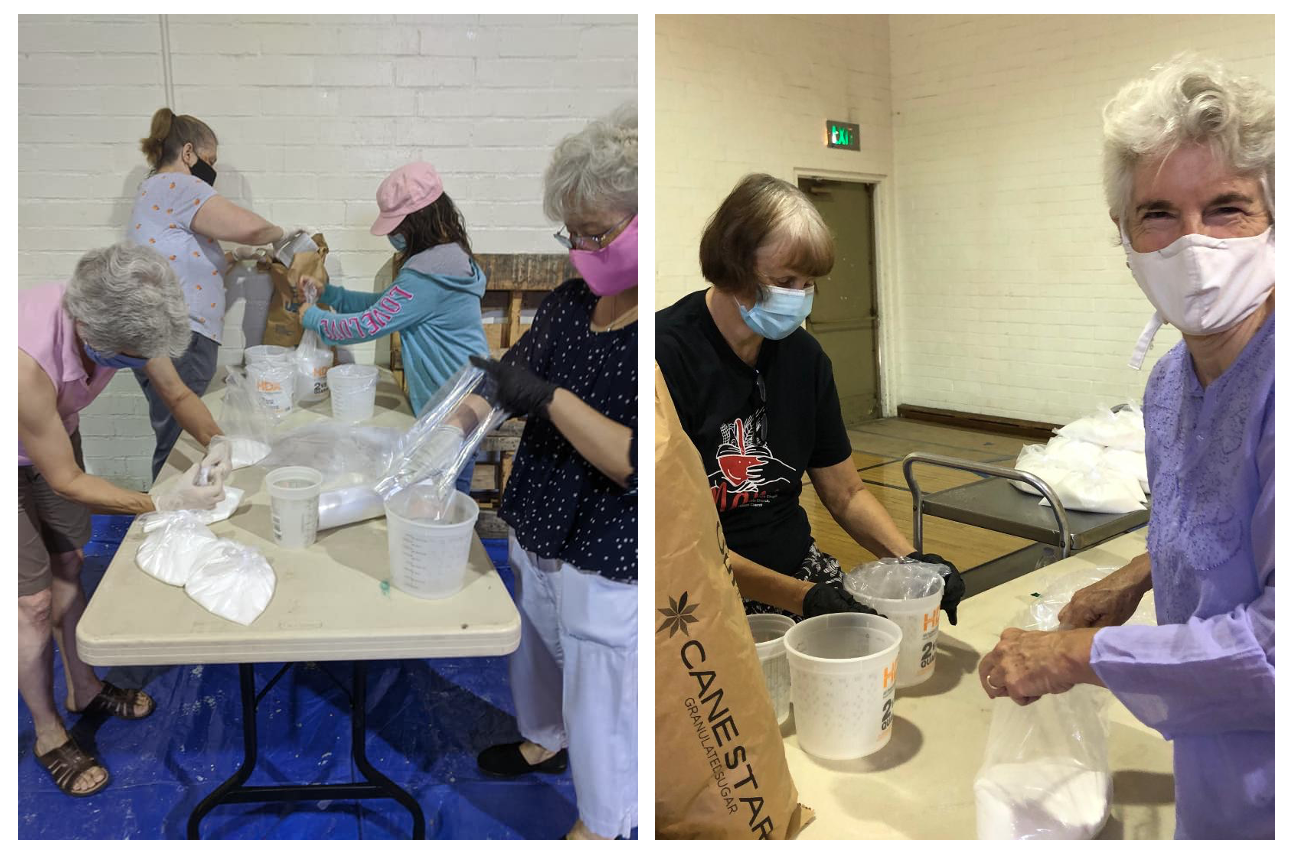
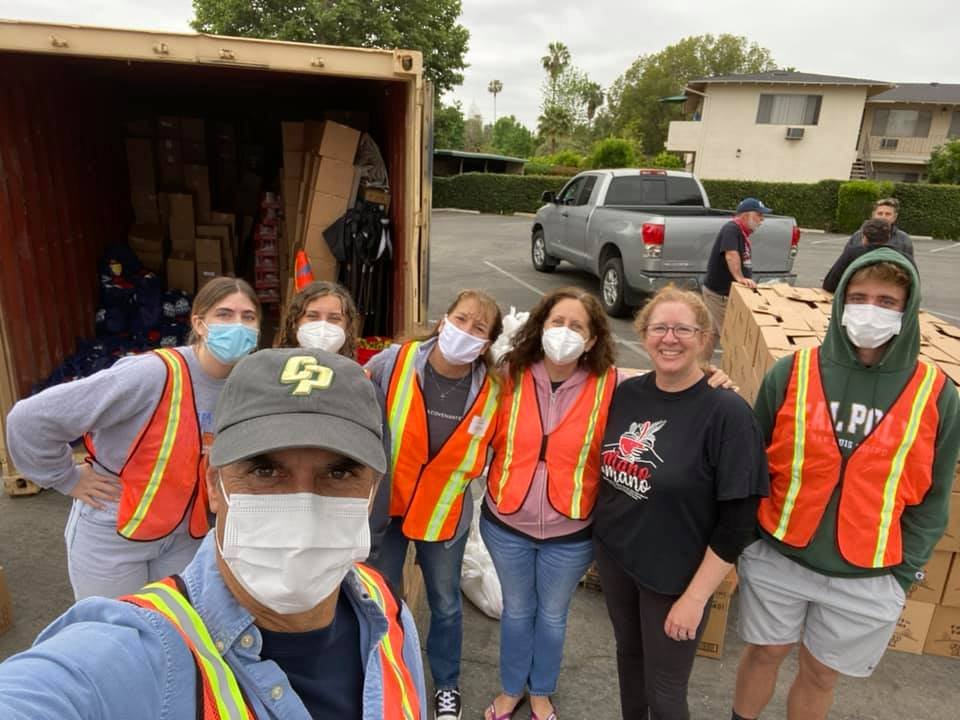
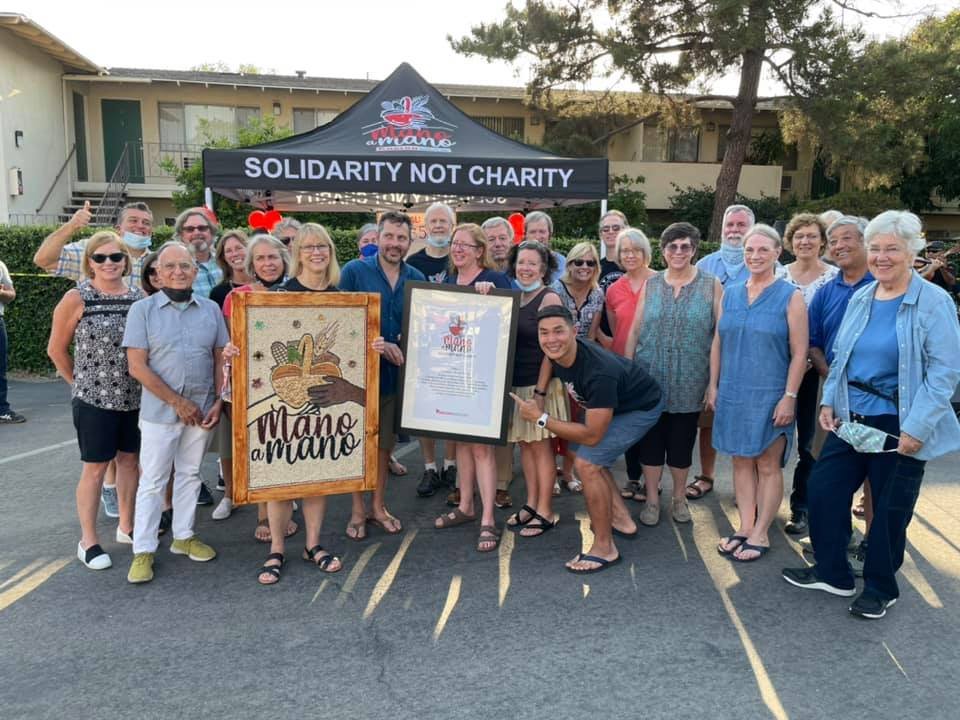
In March 2020, during the pandemic stay-at-home order, the Pasadena Community Job Center, located across from the church, approached Pastor Steve Wong about emergency food distribution. They were concerned about day laborers in Pasadena who had found themselves suddenly out of work, and their families, especially those who were undocumented and didn’t qualify for any government benefits. The Center could get donations from the Los Angeles Food Bank, but there were space requirements, and they wondered if the church could help. As a relatively new pastor here, Steve had been praying about local ministry outreach and received their inquiry as an answer to prayer. Mano a Mano (“hand to hand”), launched in April 2020, and delivered food to about 240 households in the Pasadena area with the help of 40 volunteers. As the pandemic waned, Mano a Mano has evolved. At the beginning volunteers packed bags of beans, rice, and other staples in the church gym; now the work is done in the Job Center. Drivers still deliver to about 35 elderly or disabled recipients, but others pick up food themselves. More workers come from the ranks of the Job Center now, but Pas Cov still provides regular volunteers coordinated by Marianne Haver Hill. (Here are more details about our involvement with Mano a Mano.)
7. The next generation
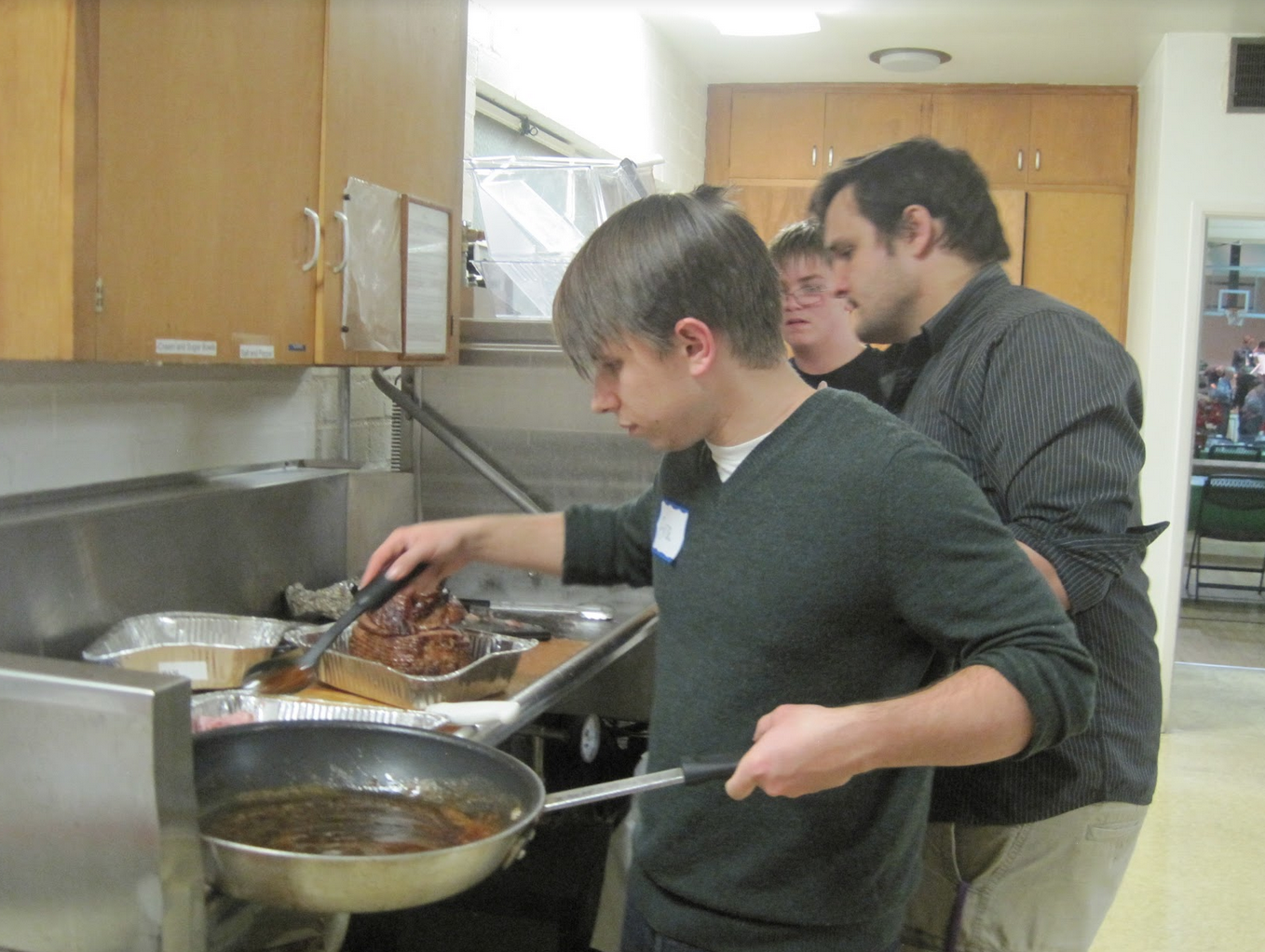
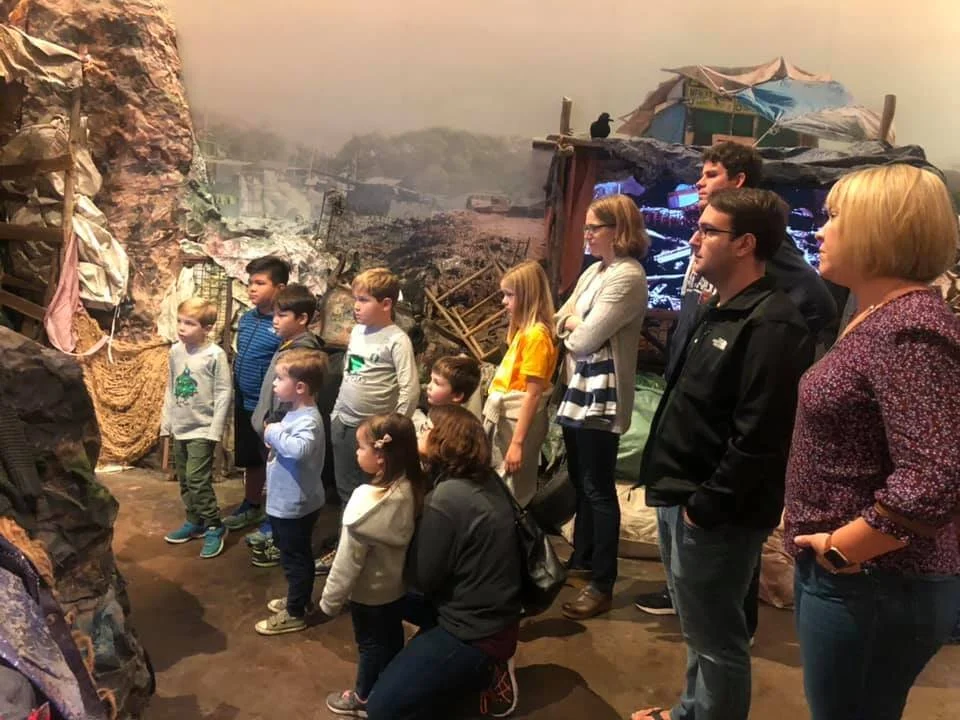
Pas Cov is committed to raising young people to serve, so projects like Church of the Redeemer and the Bad Weather Shelter incorporated our youth (more photos here). Other youth- or family-focused activities that helped the church learn about and empathize with others have included World Vision’s 30-Hour Famine and Poverty Encounter by Children’s Hunger Fund.
Conclusion
The specific services and ministries our church has been involved in have varied over the years. We have hosted I-CAN, a mental health program; CAN-DO Kids, an after-school program for the neighborhood; and a shower program for homeless men. Union Station, Door of Hope, Habitat for Humanity, WorkNet, Harambee Ministries, and Northwest Neighbors have been other programs we have supported directly or indirectly. Organizations have opened and closed, volunteers have come and gone, and interest in particular areas has waxed and waned—but the church has consistently been committed to serving its neighbors. We are grateful to everyone–serving both as leaders and behind-the-scenes helpers–who have kept the priority of loving mercy and doing justice central for our church.
Beyond 100
Who will our neighbors be in the coming decades? What will they need? How can we serve them in the name of Jesus?
P.S.
John Stott writes: “We have two instructions of Jesus – a great commandment, “love your neighbor,” and a great commission, “go and make disciples.” What is the relation between the two? Read the entire article here.
We are so grateful to the many who have sought to follow God over the past century,
and now we seek to imitate their faith for the next hundred years.
Please join us in giving to this legacy of faithfulness!

Worship: The Word
How has the church valued the Bible and used it in preaching and teaching?
When many people think about “church,” it’s Sunday morning that comes to mind. In this series of reflections on the heritage of Pasadena Covenant, we’ve looked at the music of the Sunday worship experience and the arts and media used in worship. This post looks at preaching and at the church’s commitment to God’s word as an element of worship and as a guide for life.
PasCov has followed the denomination’s view of Scripture, described in a resource paper which is excerpted here:
The Preamble to the Covenant Constitution affirms the centrality of the Bible for faith and practice by saying, “the Holy Scripture, the Old and New Testament, is the Word of God and the only perfect rule for faith, doctrine, and conduct.” This conviction is repeated four times in Covenant Affirmations. Both Testaments, the sixty-six books of the Protestant canon, are together embraced and understood to provide an overarching account of God’s revealing and redemptive work begun in creation, continued in Israel, and culminating in Jesus Christ. With such a commitment to Scripture, early Covenant people constantly asked the question, “Where is it written?” when dealing with questions of doctrine or practice. This was not mere proof-texting; it was a determination to understand the intent of the whole of Scripture and the way it should be appropriated for life and thought. That question still guides us. In all we believe, do, and say, we place ourselves under the authority of God’s written word and seek its direction. Scripture itself is our compass, not formulations about Scripture or about its inspiration. Our great passion is constantly to renew our commitment to the authority of God as revealed in the Scriptures.
Covenant people, then, read and listen to the Bible: 1) faithfully, with a deep understanding of the power of God’s word and our differing interpretive lenses, which requires humility; 2) communally, with the understanding that interpretation calls for the help of both the Holy Spirit and the entire community of faith, including the historic church represented in the common Christian creeds; 3) rigorously, with the knowledge that the Bible comes to us across a distance of time and culture that calls for study and careful thought; 4) charitably, with regard to differing interpretations of Scripture; 5) holistically, with the belief that it is the movement of the whole Bible that guides us.
Covenant people also read with essential commitments to grace, because grace expresses the very character of God; to transformation, with a profound desire to be changed by our encounter with Scripture; and to mission, because valid reading leads us to join Jesus in the work that he is now doing in our world.
Central to PasCov's commitment to the Word has been its excellent preaching, something the church has long had a reputation for. Looking back on sermons gives us an idea of how much of the Word we have listened to at PasCov.
• In 1961, Arvid Carlson did a series from Matthew entitled “With the Master on the Mount.” His exposition of Jesus’ teaching was spread over 30 Sundays between January and October.
• In the second half of 1965, Paul Larsen preached 15 sermons on James and in 1970 he spent the fall on the first half of the book of Romans.
• Mel White preached twelve sermons on Peter, “The Man Who Knew Jesus Best,” in 1976.
• A chapter-by-chapter series on the book of Revelation was done by John Bray in 1981. His 20 sermons were supplemented with teaching during the evening service on sticky questions about topics such as the millennium.
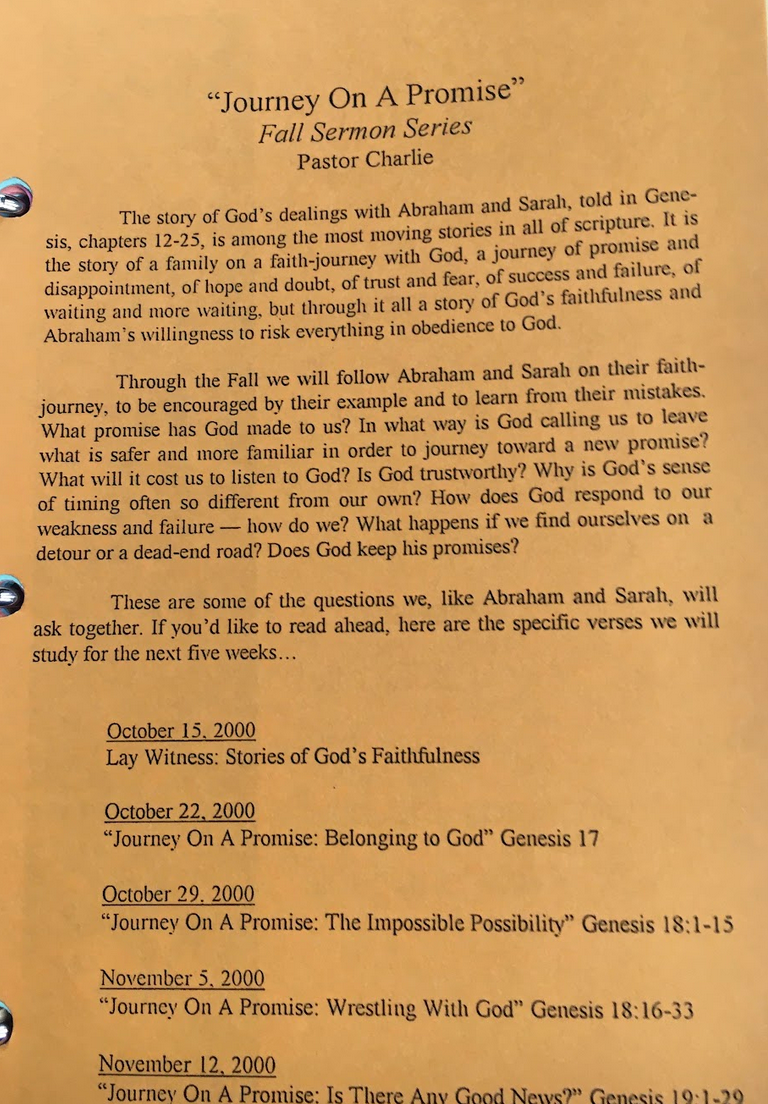
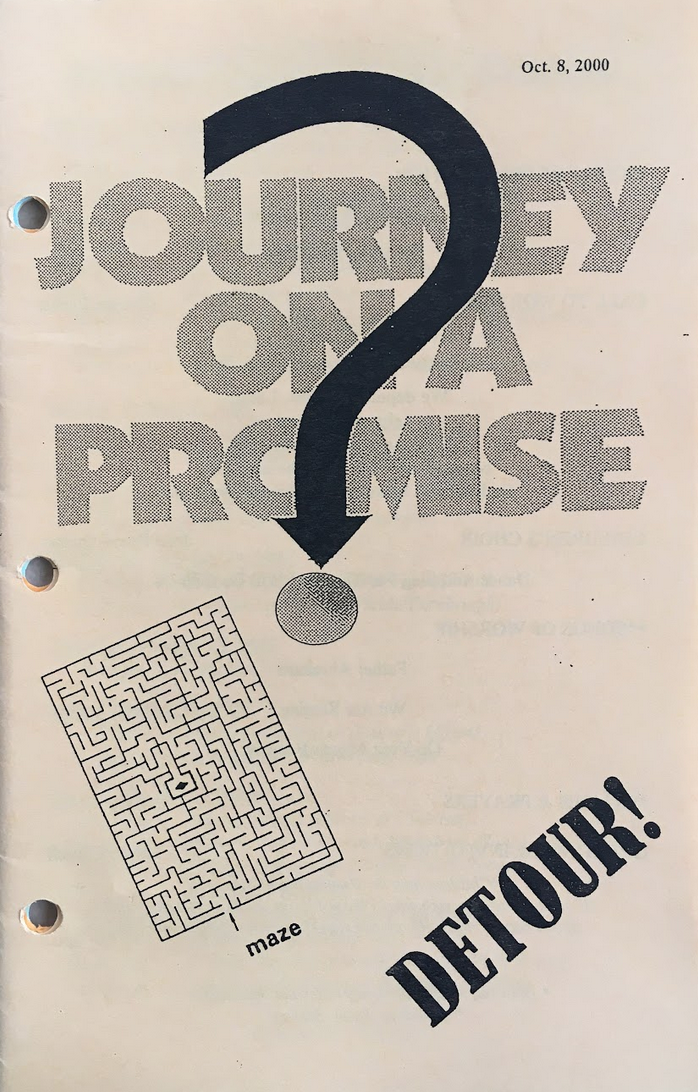
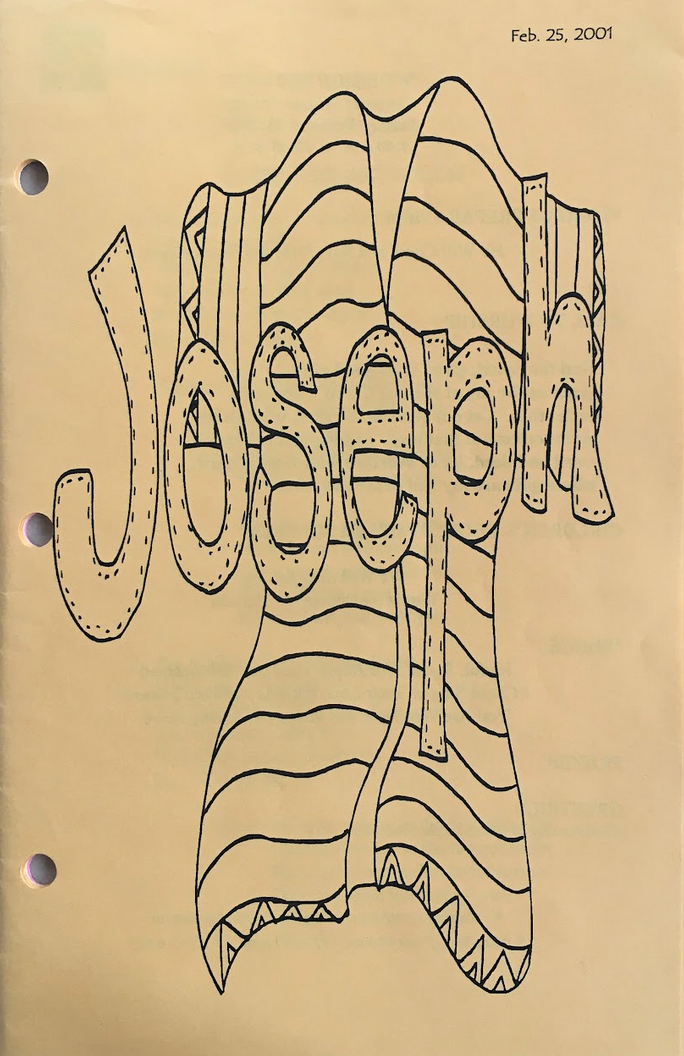
• Charles Barker preached on Genesis in 2000-2001. In the fall, he covered Abraham’s story from Genesis 12 to 25, “Journey on a Promise.” He continued the next spring with the story of Joseph from Genesis 37 to 47, “The Hidden Call of God.”
• “The Brilliance of God’s Multiethnic Kingdom” was the focus of Steve Wong’s sermon series in 2020-21. In the fall, he took the congregation through Scripture from Genesis to Revelation. In the winter and spring, the texts were the teachings of Jesus, all showing the beauty of God’s intention for diversity, unity, and reconciliation as an expression of God’s wisdom.
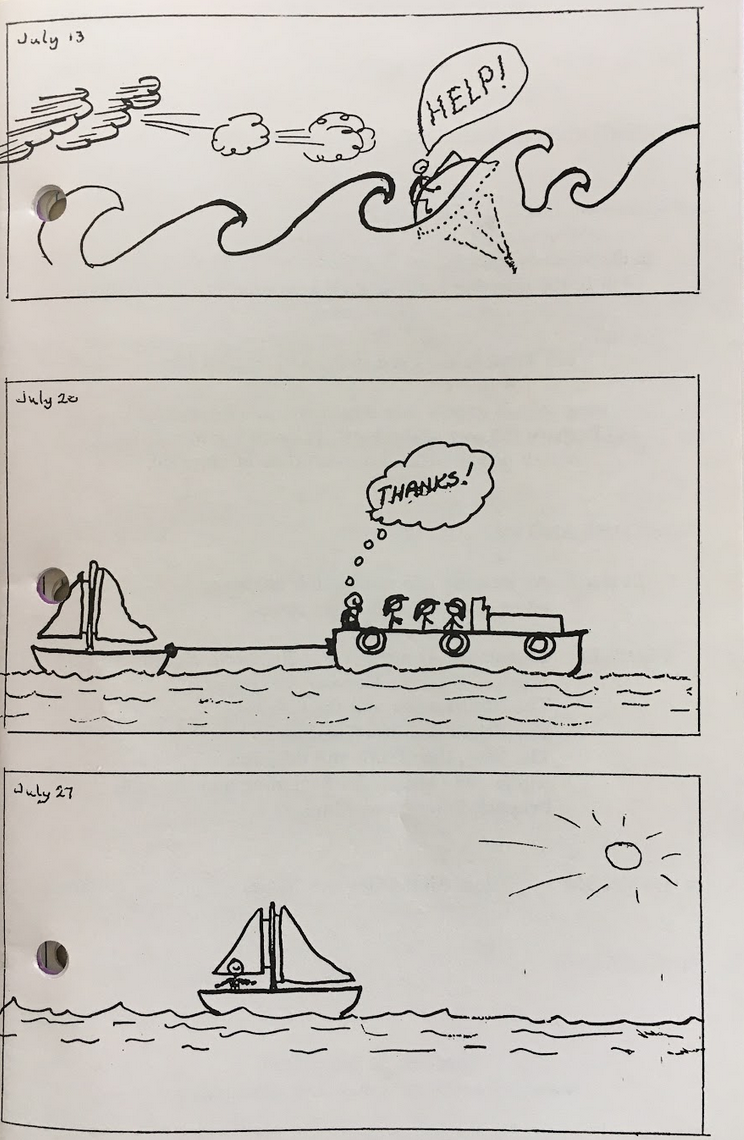
We have also been blessed with memorable sermons from guest speakers. One person remembers a Pastor Klingberg, speaking in the late 1980s on “God Loves the Holy Fray.” The communion servers were hardly able to contain their tears after the sermon. Many visiting preachers have been from Fuller Seminary. One congregant remembers Leslie Allen’s series in 1997 on psalms of disorientation, reorientation, and orientation (see bulletin cover above). Another recalls George Ladd preaching a memorable sermon in the 1960s when the city was facing racial tension. One of the sermons of Bill Pannell, a regular guest in the 1970s and 1980s, referenced the famous African American preacher S.M. Lockridge: “It’s Friday, but Sunday’s coming!” There have been many others.
Our commitment to Scripture has also been evident in Sunday school classes, small groups, and children’s ministry. A previous post described how confirmation classes were a time for junior high students to study both the Old and New Testaments. During the 1950s and 1960s, when Bible memorization was encouraged with prizes, 4th through 6th graders were encouraged to learn long portions of Scripture, for example Psalm 23, John 1, and Romans 8. A more recent example is that in 2019 the church’s adult small group program started a series of inductive Bible studies on the parables of Jesus. Rich Lamb, a church member and InterVarsity Christian Fellowship staff leader, prepared the leaders. The books of I & II Kings, Habakkuk, John, Philippians, and Nehemiah have been subsequent focuses.
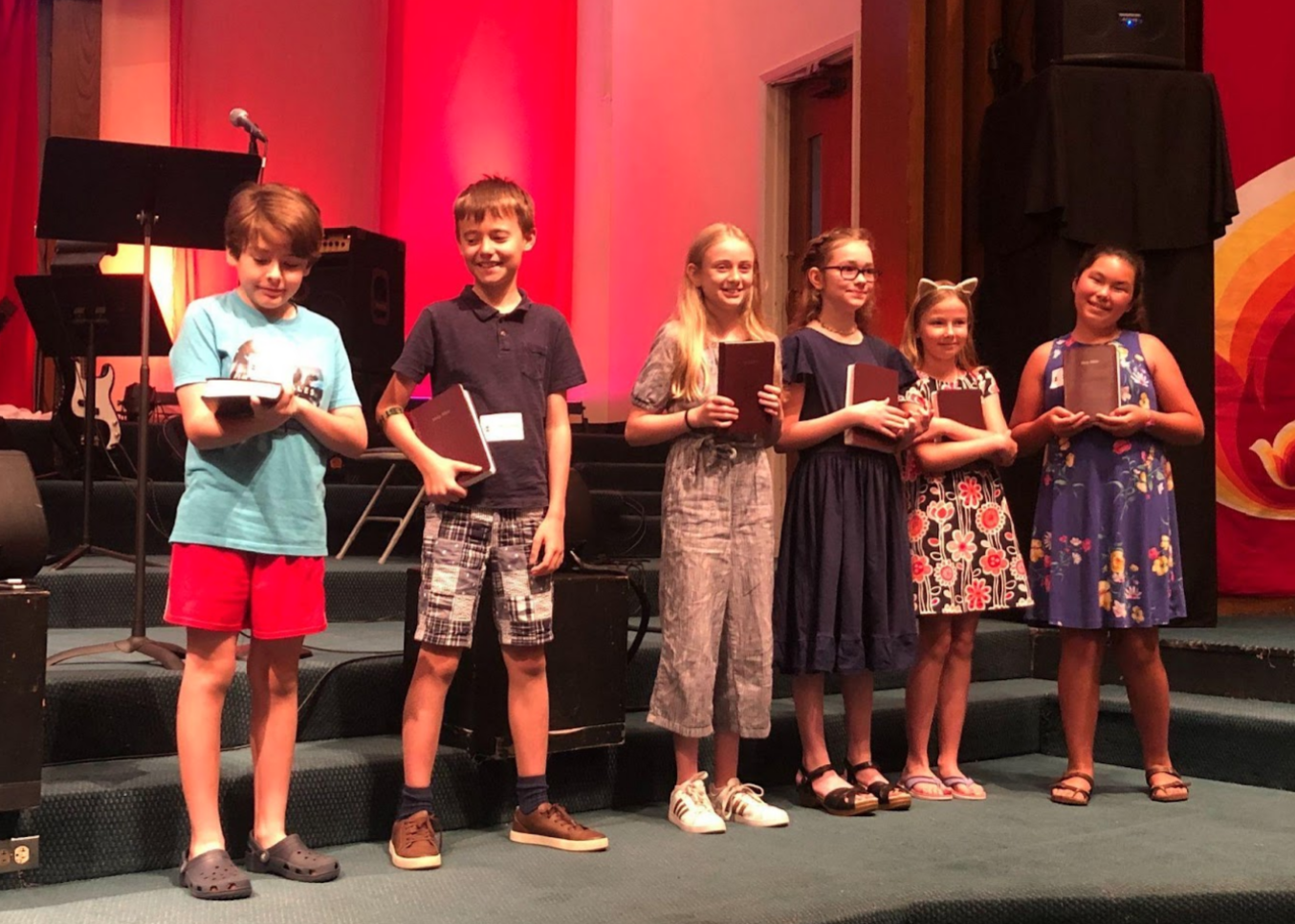
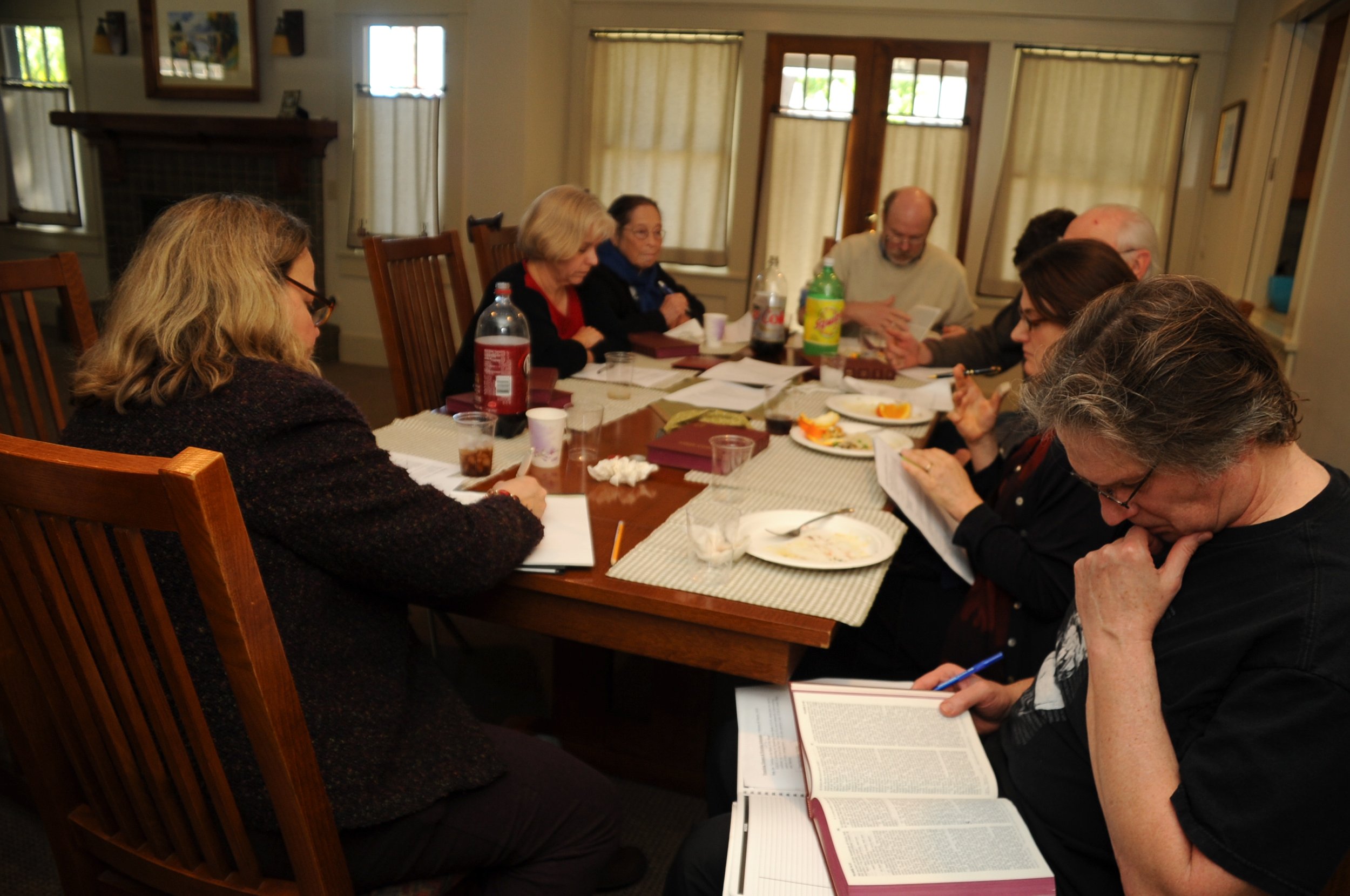
We have been blessed at PasCov to have gifted preachers, lay leaders, and congregants committed to God’s word. Preaching styles may change, but at the heart has always been the Bible. If over the last ten decades there has been good fruit in our lives and the communities in which we live and work, it is surely because we are responding to God’s word. The Lord, through the prophet Isaiah, says, “The words I speak are like that. They will not return to me without producing results. They will accomplish what I want them to. They will do exactly what I sent them to do” (Is 55:11 NIrV).
Beyond 100
What are the circumstances in the next decades in which we will need a “light on our path” as Psalm 119:105 describes God’s word? How will people in the next hundred years engage with Scripture? What challenges will there be to reading the Bible faithfully, communally, rigorously, charitably, and holistically?
We are so grateful to the many who have sought to follow God over the past century,
and now we seek to imitate their faith for the next hundred years.
Please join us in giving to this legacy of faithfulness!

A Slight Detour: Hard Stuff in our History
We have been celebrating our church, but when we review history, there are also reminders of times that sadden us and of things that threaten the church. Here are four examples from the past. Perhaps readers can think of other hard stuff. The biblical story of God’s people also includes failures, flaws, reversals, detours, and disappointments. Thankfully, God is faithful. How can these incidents remind us that God always fulfills his purposes?
1. Personal preferences and hurts
In 1931, the pastor was R.C. Dahl, who had come to Pasadena from a church in Illinois. Dahl received an anonymous letter from a woman attending the church (not a member) criticizing his wife for being too worldly in her use of cosmetics. Dahl took this hard. He pressed from the pulpit for a public confession, and when it wasn’t forthcoming, announced that “God’s spirit had left the church.” He invited some select members to a group that would pray for the church. In 1935 he resigned to form a new church in Pasadena, and 25 members, mostly from that prayer group, left the church to join him. The close social fabric of friendship among the Swedish immigrants was torn; close friends ended up not talking with each other. Eventually, personal reconciliation happened under the leadership of the next pastor, C.J. Ledin, an older man with 40 years’ experience. When Dahl’s church folded after nine months, this time the Pasadena church was able to give their blessing to their friends from the prayer meeting when they decided to join a Swedish group on the west side of town (eventually Eagle Rock Mission Covenant Church).
This is a story of petty criticism and personal hurt. How can we do better in thinking the best of others, not the worst? How can we pursue reconciliation when there’s been a rift?
2. Differing convictions, passions, and agendas
In the 1960s the charismatic renewal movement was starting to spread, causing churches to wrestle with new ideas and practices. Father Dennis Bennett, priest at an Episcopal church in Van Nuys, was a seminal figure in the movement. Several families from Pas Cov went to his meetings and were drawn to what he spoke about: an empowering experience of the Holy Spirit subsequent to conversion, one that included speaking in tongues and exercising the gift of healing. Twenty-five or more from Pas Cov at various times attended meetings hosted by our members that focused on the gifts of the Spirit and this “second blessing.” Insisting that all Christians should have this empowerment, this group of members affected the church so much that the deacons (equivalent to today’s trustees) spent several months in 1963 preparing a more nuanced statement on the Holy Spirit as well as meeting with leaders of this group. The issue still threatened to divide the church and in fact, some people ended up leaving. However, loving and humble teaching from the pulpit on the power and gifting of the Holy Spirit, together with, over time, the gentle experience of the Holy Spirit’s gifting through people like Roland Tabell (in worship) and Chuck Kraft (through healing prayer), allowed Pas Cov to open its doors to renewal in a way that was biblically rooted, theologically nuanced, and Spirit affirming.
What are today’s issues that spark theological tension and threaten to create opposing groups? How can we hold fast to the Bible's authority in our lives and be open to our freedom in Christ about differences in interpretation and practice, while always maintaining the essentials of our faith, especially love? Who are the gentle, peace-loving, and prophetic leaders who can help us today?
3. Pastoral transitions
Pasadena Covenant has been blessed with many wonderful pastors, but they do not stay forever. The transition to a new pastor can be hard. One especially difficult transition was in the early 1970s. Arvid Carlson had pastored the church for 17 years, and then Paul Larsen for nine years when he left in 1971 for Peninsula Covenant in Redwood City. After this long period of stability, there were two years of challenge. The debacle began when the pastoral search committee had their first choice scuttled and then settled on their second choice too quickly. Coming from a smaller town in the Pacific Northwest, this new pastor found Pasadena much more urban than he and his family were comfortable with. To compound the difficulty, the congregation found his preaching insipid after the previous two decades of strong exposition. He lasted less than a year. But the damage to the community was done, and many people left the church. However, God was faithful again and this sad period in Pas Cov’s history was reversed when Mel White became the new pastor in 1974; the church grew to record attendance under his exciting preaching and worship leadership.
For better or for worse, we rely on a pastor. We expect warm pastoral care, excellent biblical preaching, and effective leadership. How should we respond when those expectations aren’t met? Walk away? Try something new? But the church is not a brand or product. The church is the people of God embarked on the mission of God. How can we better live into this identity, especially in times of disappointment with a pastor?
4. A changing city
The 1970s were a time of social change, as noted by a report from the Church Study Committee and included in the 50th anniversary brochure of Pasadena Covenant in 1972. The report referred to troubled times in the nation (changes in morality, an unpopular war, and student unrest) and declining church membership everywhere. It also described changes in Pasadena, including racial unrest, loss of tax revenue, underfinancing of public schools, more apartments vs. stand-alone houses, and white flight. The report asked a crucial question: “If our heritage tells us anything, it says that our predecessors were willing to change in order to reach out. They gave up a language and a cherished culture to reach their children and neighbors for the Lord. Can we do likewise?” This was written 50 years ago and it’s clear that Pas Cov answered this question with a yes; the church did change and continued to thrive. But each generation faces their own version of cultural and situational change.
What changes in our city, region, and nation are we experiencing now? How can the church respond to them, not with human reactions, but with confidence that God is present and working through every change?

Evangelism
How have we shared the good news with those around us, seeking to fulfill Jesus’ Great Commission?
Evangelism as a Priority
The Covenant denomination doesn’t have a long “statement of faith”—just a short list of affirmations. One of them is: “We affirm the necessity of the new birth.” The description of the affirmations goes on to state: “The earliest name attributed to Covenanters was ‘Mission Friends,’ people who covenanted together for the purpose of common mission both far and near. They understood the work of mission to be evangelism and Christian formation, as well as the benevolent ministries of compassion and justice in the face of suffering and oppression.” While other posts in this series will deal with the compassion and justice component of this statement, that is, demonstration evangelism, it’s proclamation evangelism that is our focus in this post. (The time frame detailed in this post is mostly from the 1950s on, because less documentation is available from previous decades.)
Rallies and Altar Calls
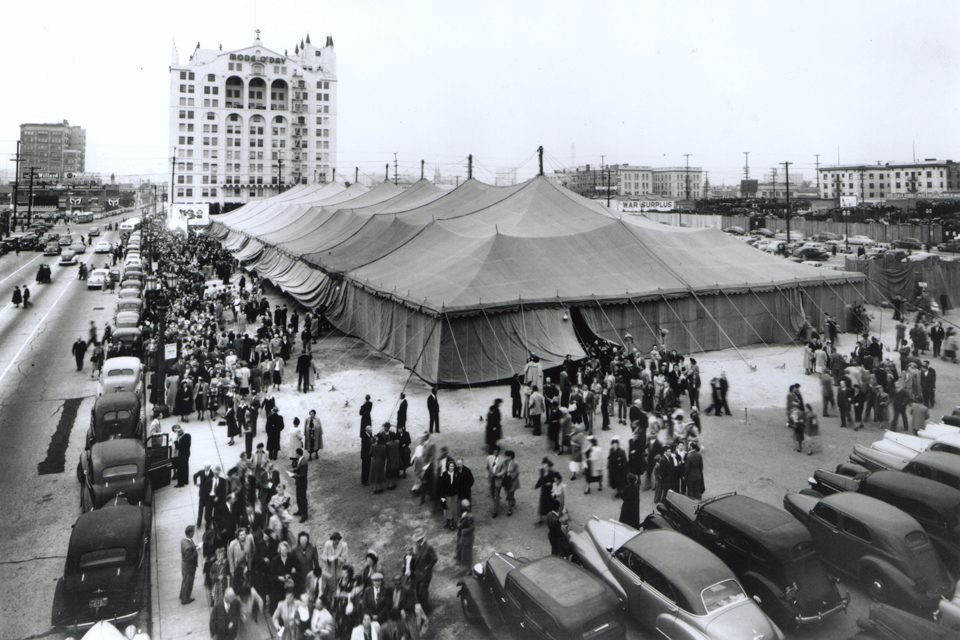
Evangelism in the 1950s and 1960s was often done by means of big campaigns and rallies to reach the “masses.” Pasadena Covenant was no exception. Church reports mention the first Billy Graham Crusade held in downtown Los Angeles in 1949, as well as subsequent crusades. Members of Pasadena Covenant were encouraged to attend, invite friends, and volunteer. Sometimes pastors traveled to do evangelistic campaigns for each other. Pasadena Covenant welcomed, for example, Edwin S. Johnson, pastor of the Covenant church in Oakland, for an “evangelistic campaign” in 1951 and George Bostrom, pastor of the Covenant church in San Francisco, for a campaign in 1961.
Evangelism also took place within the church itself. Arvid Carlson was a pastor who gave altar calls, especially during the Sunday evening service. That is, from the altar at the front of the church, he called on people who wanted to turn their life over to Jesus to give a public sign that they had done so, by raising their hand or coming up to the front. Confirmation class, when young people met with the pastor for two years , also gave youth a chance to publicly choose Jesus as Lord and Savior. Youth camps were also expected to be places for such decisions.
Supporting New Covenant Churches
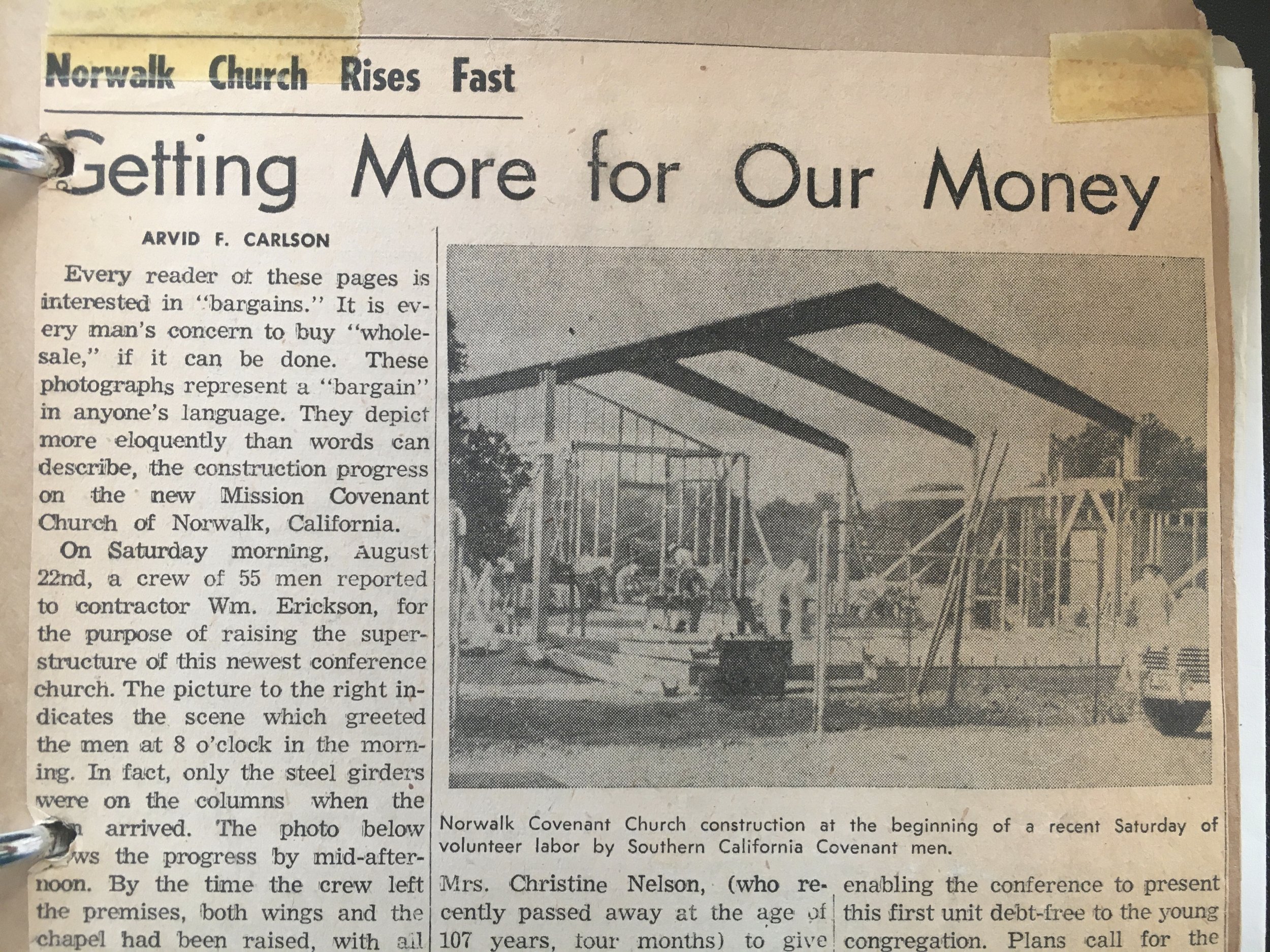
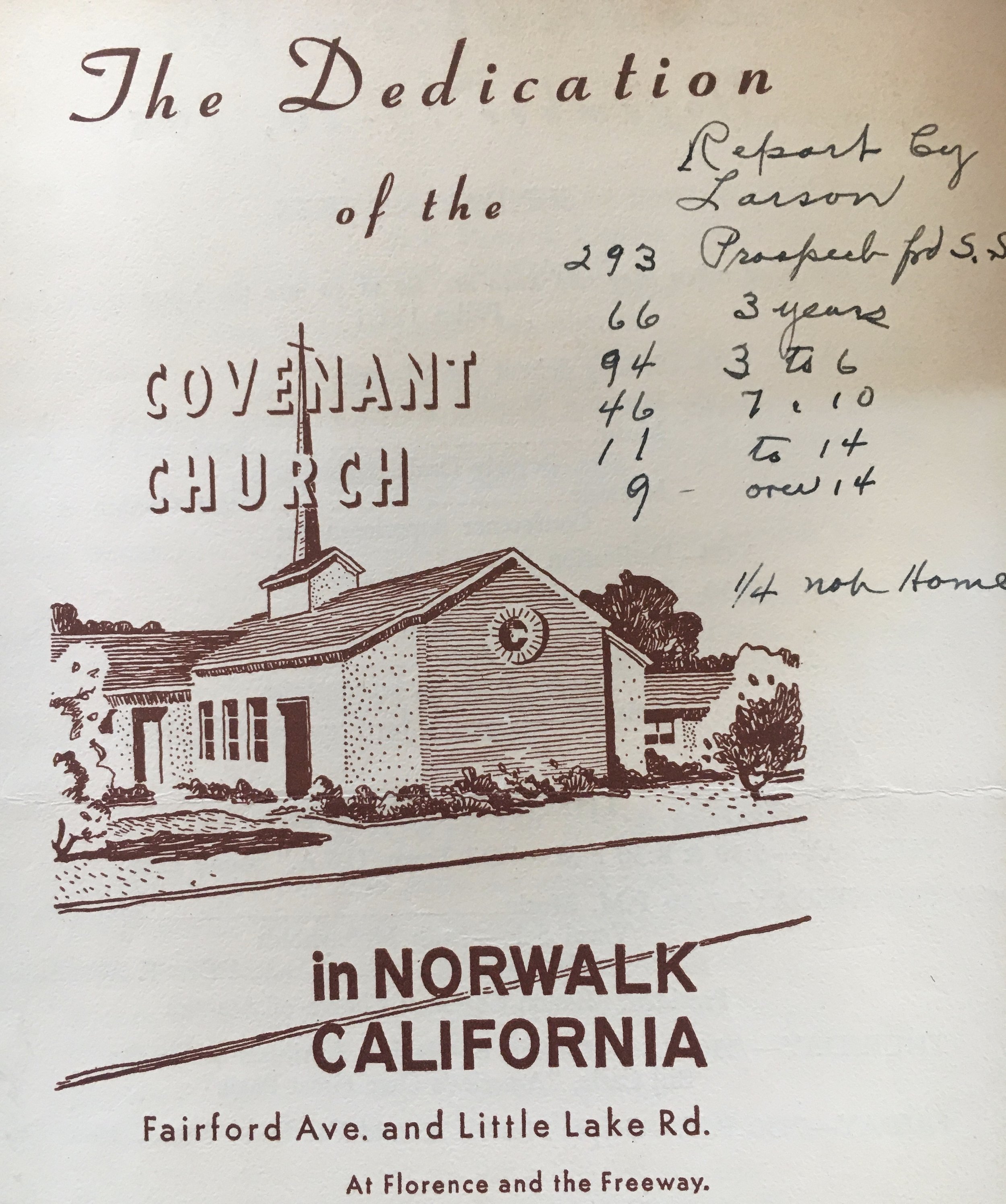
But the church also engaged in another kind of evangelistic activity at the time. The 1950s were a time of population growth and land development in Southern California. Looking back at how the church in Pasadena had at first received help from the Los Angeles Covenant Church and looking ahead to the spiritual needs of young families moving into expanding housing tracts, Pastor Arvid Carlson led the congregation to support regional church planting. Some of this was accomplished directly. For example, in 1951 a church in Monrovia was started with $17,000 in financial support, a couple of days of volunteer building labor, and 22 charter members including a new pastor, all from Pasadena.
Another means of supporting new churches was through the denominational Covenant Church Extension Fund. Over the course of the next ten years the church gave tens of thousands of dollars, along with people, to support six more new churches from San Diego to Azusa to Santa Barbara. There were a couple of additional reasons Pas Cov spun off daughter churches. One was that Arvid Carlson didn’t want to dilute the church’s capacity to be a caring community by growing beyond 500 congregants. Another was a commitment to evangelism and a belief that young churches would more easily attract new people to hear the good news. The next pastor, though equally committed to evangelism, had different priorities, especially reaching young people. But before we get to that, there’s one more bit of history on how Pas Cov has supported other churches.
After a denominational planning process called Vision to Action, and getting the sense that God was calling us to “do something big beyond the walls of our own church for the sake of God’s kingdom,” in 2003 Pas Cov decided to partner with a church planting effort in South Los Angeles, Church of the Redeemer. This entailed contributing $100,000 over the first three years through the denomination (later extended for another three years), as well as sending volunteer help. The volunteers included teams for summer service projects (2003-2009), a worship band leader in 2006, food for after-church hospitality, and a board member for Redeemer’s nonprofit community-development arm. Many people were involved, but Jamie Knauss, John and Mary Barkman, and Jim Tyberg deserve special mention.

Summer service with Church of the Redeemer, 2007
Campus Club
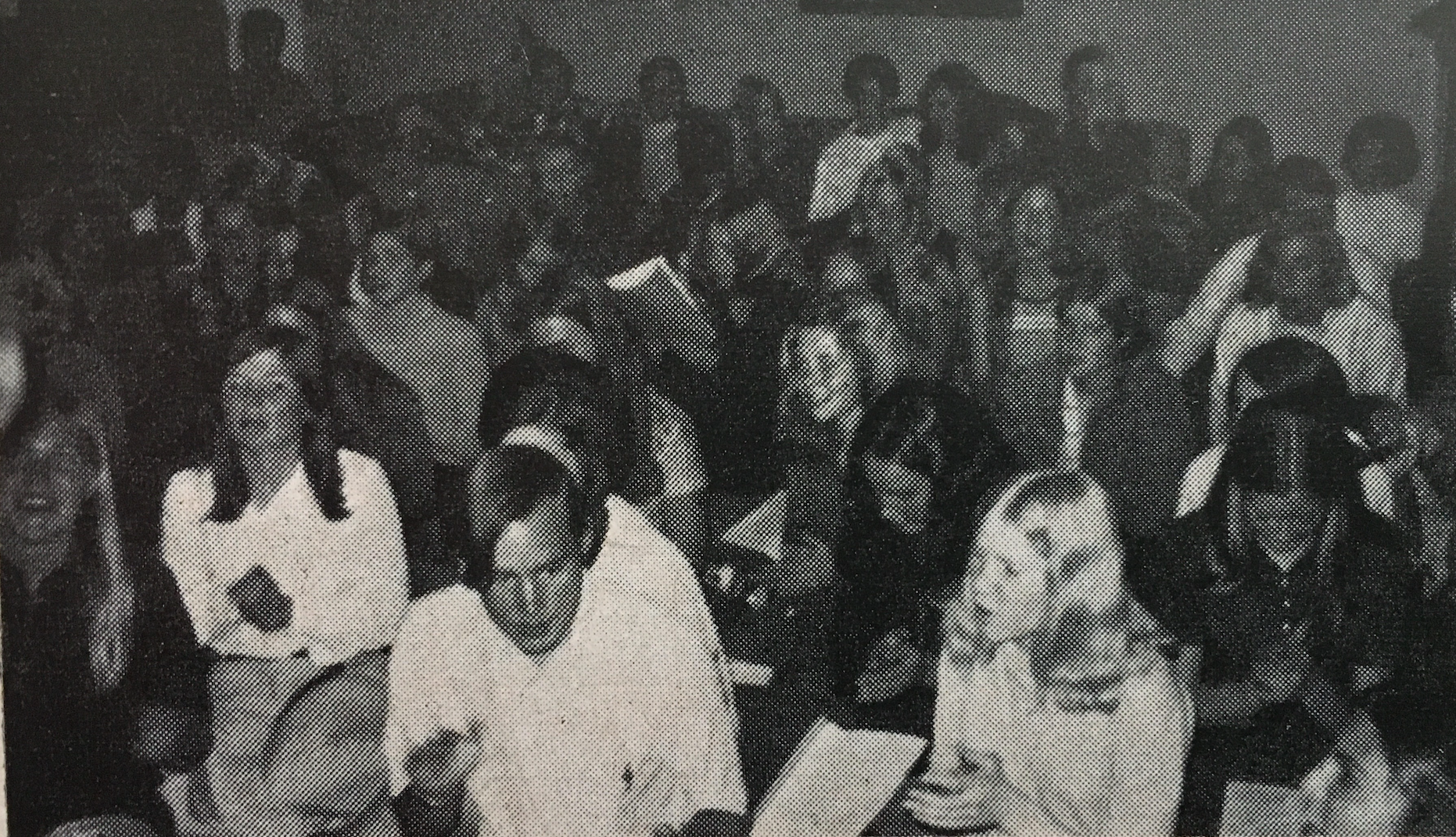
The church’s ministries to families, which we talked about earlier, often had evangelistic purposes. Cradle Roll was envisioned as a way of reaching young families for Christ. Vacation Bible School was for unchurched children as well as those in the church. Another such ministry with a strong evangelistic focus in the later 1950s and 1960s was Campus Club for senior high students. This was an outreach-oriented group that met mid-week. It included afternoon games, conversation, and rooms for study; dinner; and an evening club meeting with singing, skits, and a talk. It was undergirded by a prayer team who met weekly, by another team of volunteers who cooked and served dinner, and by a series of youth pastors and lay volunteers. Started in 1956 by youth pastor Jon Braun, its peak years were 1964 to 1971. A church newsletter article in 1967 wrote, “The dynamic young director [Gary Copeland] convinced students that Campus Club was a means of bringing friends to know more about the claims of Christ. Under his guidance the club’s attendance soared to 80 and 90+. We are expecting even more growth under the enthusiastic leadership of Rob Johnston.” The year 1968 included evangelistic training by Campus Crusade staff; winter camp saw 138 young people attending.
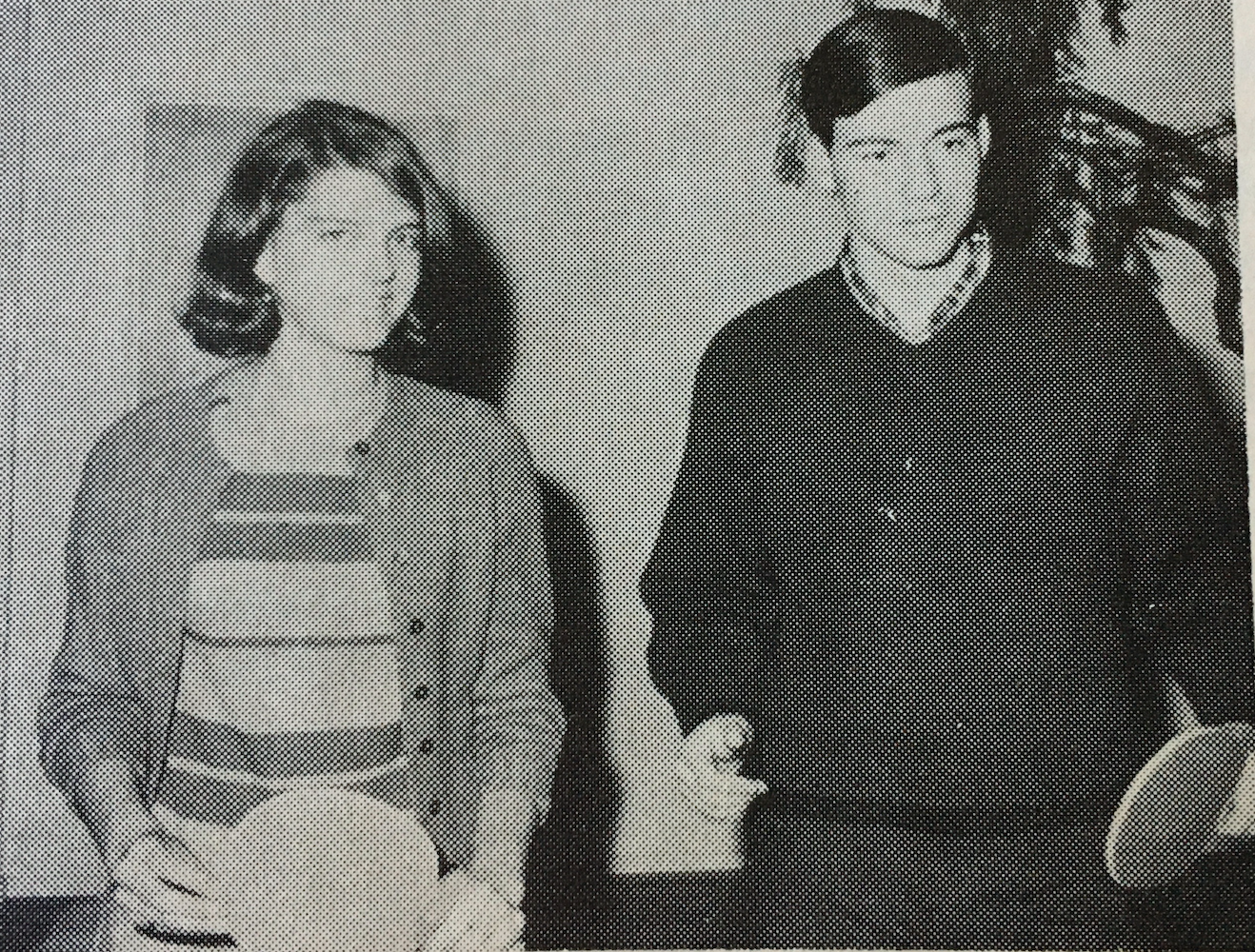
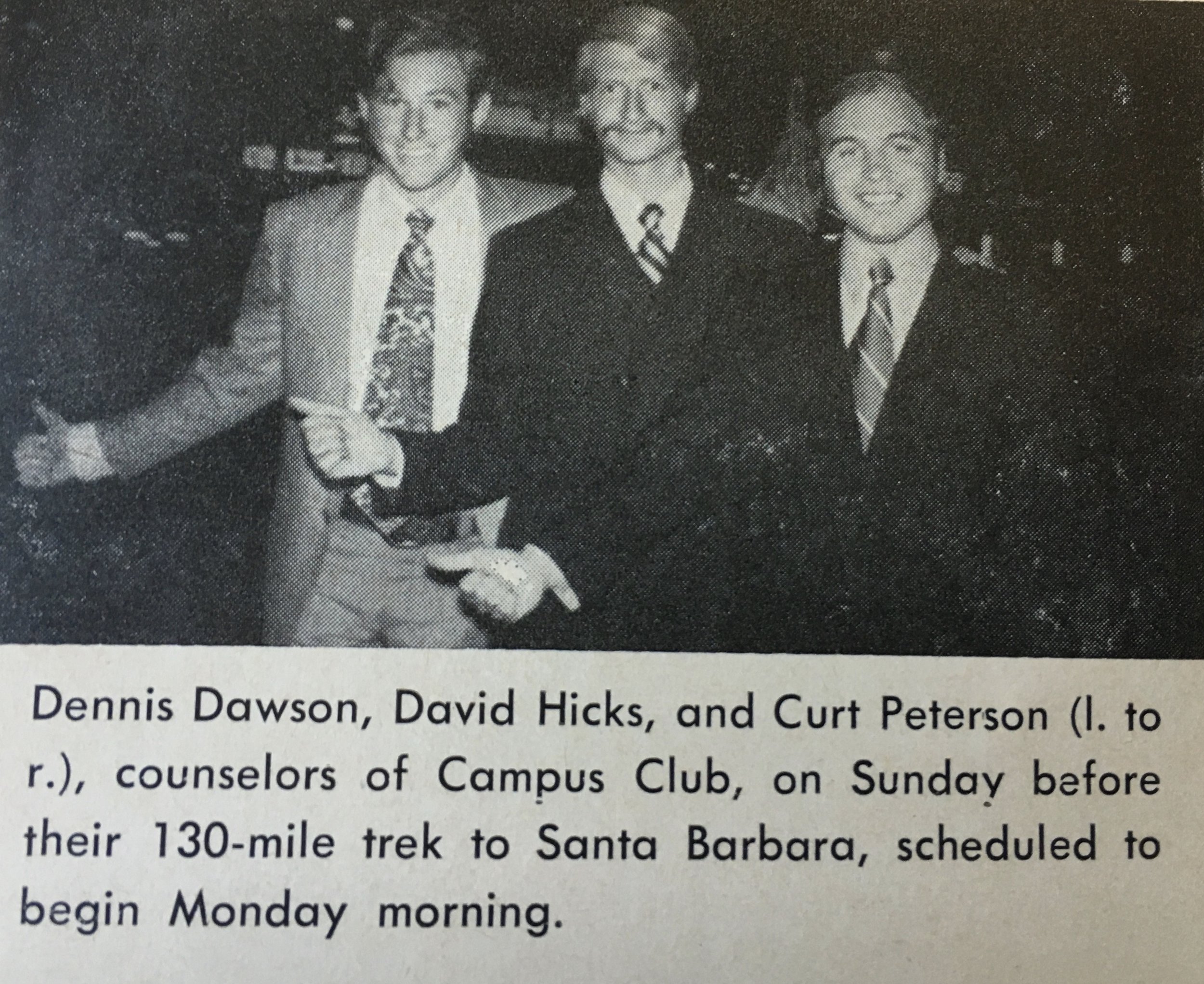
In 1969, Dave Hicks, who had grown up in the church, became director of senior high ministries at Pas Cov. He continued the passion for outreach. A teacher at Pasadena High School allowed him to visit classes once a semester and answer questions about religious concerns. Dave organized the youth into action groups at Muir, Blair, Pasadena, and Arcadia High Schools. The Sunday evening youth meetings often focused on discipleship training. More than half of Campus Club attendees were from outside the church. In 1970 Dave, along with Curt Peterson and Dennis Dawson, pledged to walk a mile for every new person brought to Campus Club in a month’s period, with extra miles for those who attended all month. The gym was filled with 130 high schoolers during the last week of the contest. “More than half a dozen have already committed their lives to Christ as their Savior,” read the report, which then described how Dave and his team fulfilled their pledge by walking 120 miles from Pasadena to Santa Barbara.
Our current Director of Student Ministry, Christy DePree, has an approach to being present in local high schools that works for today–such as volunteering at the Pasadena High School Green Club. She is also collaborating with other churches on the “Pasadena Youth Coalition” that puts on joint quarterly events for students throughout Pasadena.
Special Events
Although we have covered music and the arts in previous blog posts, it’s worth mentioning the evangelistic role they have played in the church. Roland Tabell envisioned all the concerts and musicals done at church as a means of outreach. In 1971, he formed Sonlight Singers [link] as a way for high school and college students to combine music and evangelism during concerts and tours. Children’s choir too has been a way to invite neighbors to participate in the life of the church.
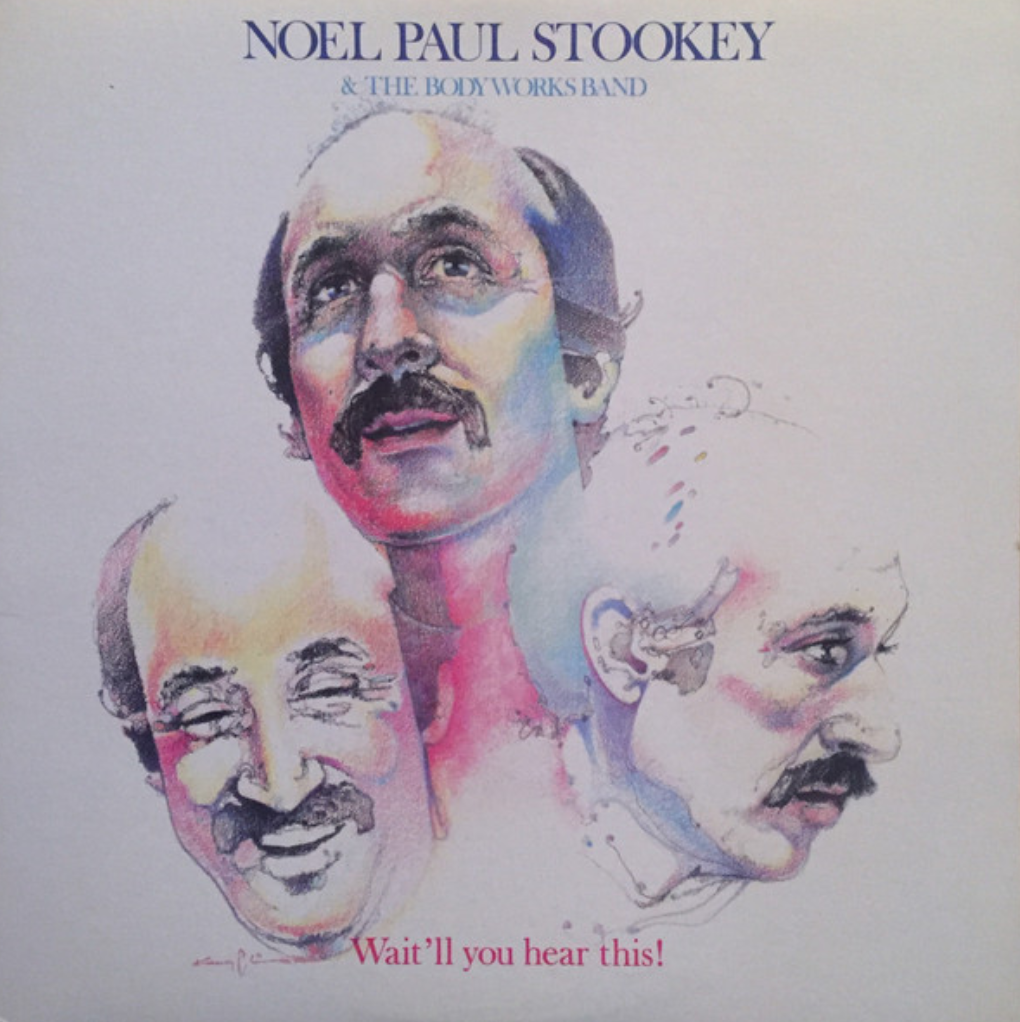
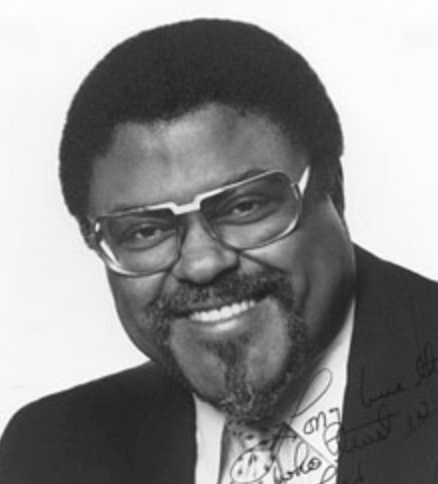
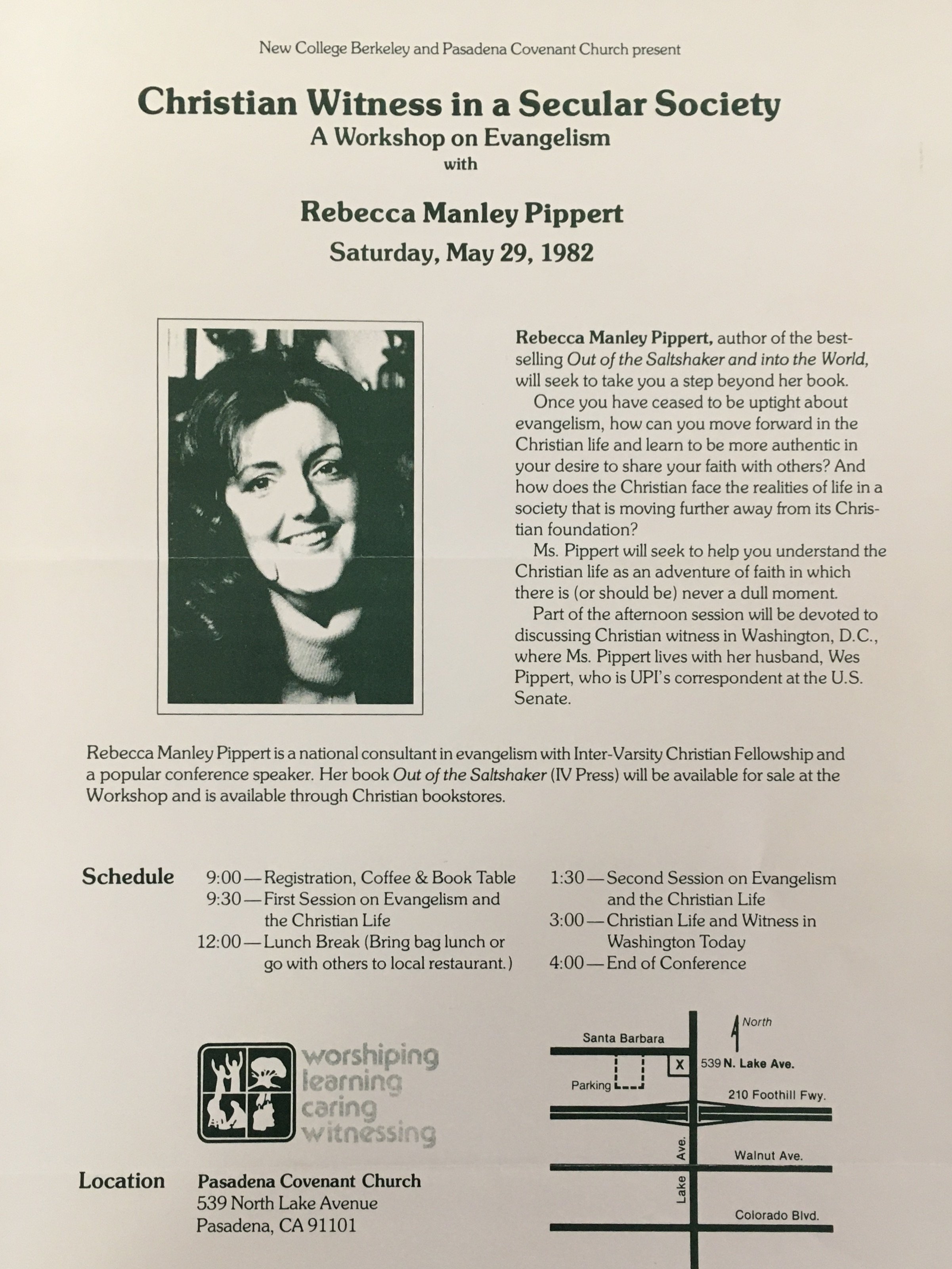
Dave Mark, Minister of Outreach at the time, arranged for Noel Paul Stookey (of the popular folk trio Peter, Paul and Mary) to give a concert at church in 1981 because of the way the singer had of talking about the “spiritual dimensions of life in a non-threatening way.” Half of the audience were not part of the church family. The following year, the pre-evangelism event was pro-football player and actor Rosey Grier. This was supplemented with a 1982 workshop by noted evangelism expert and author of Out of the Saltshaker, Rebecca Pippert.
Do you remember other concerts, plays, and events we were encouraged to bring neighbors to?
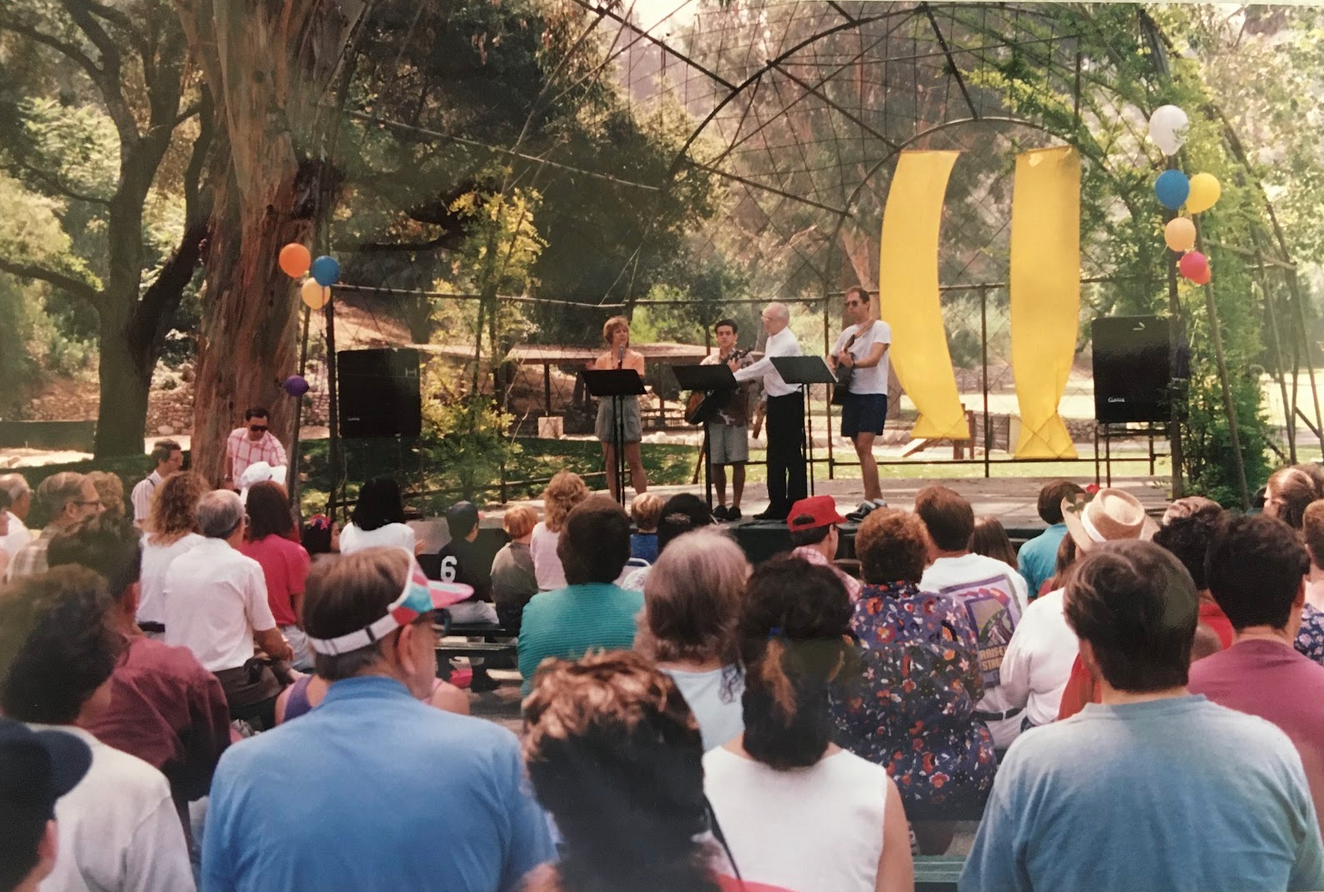
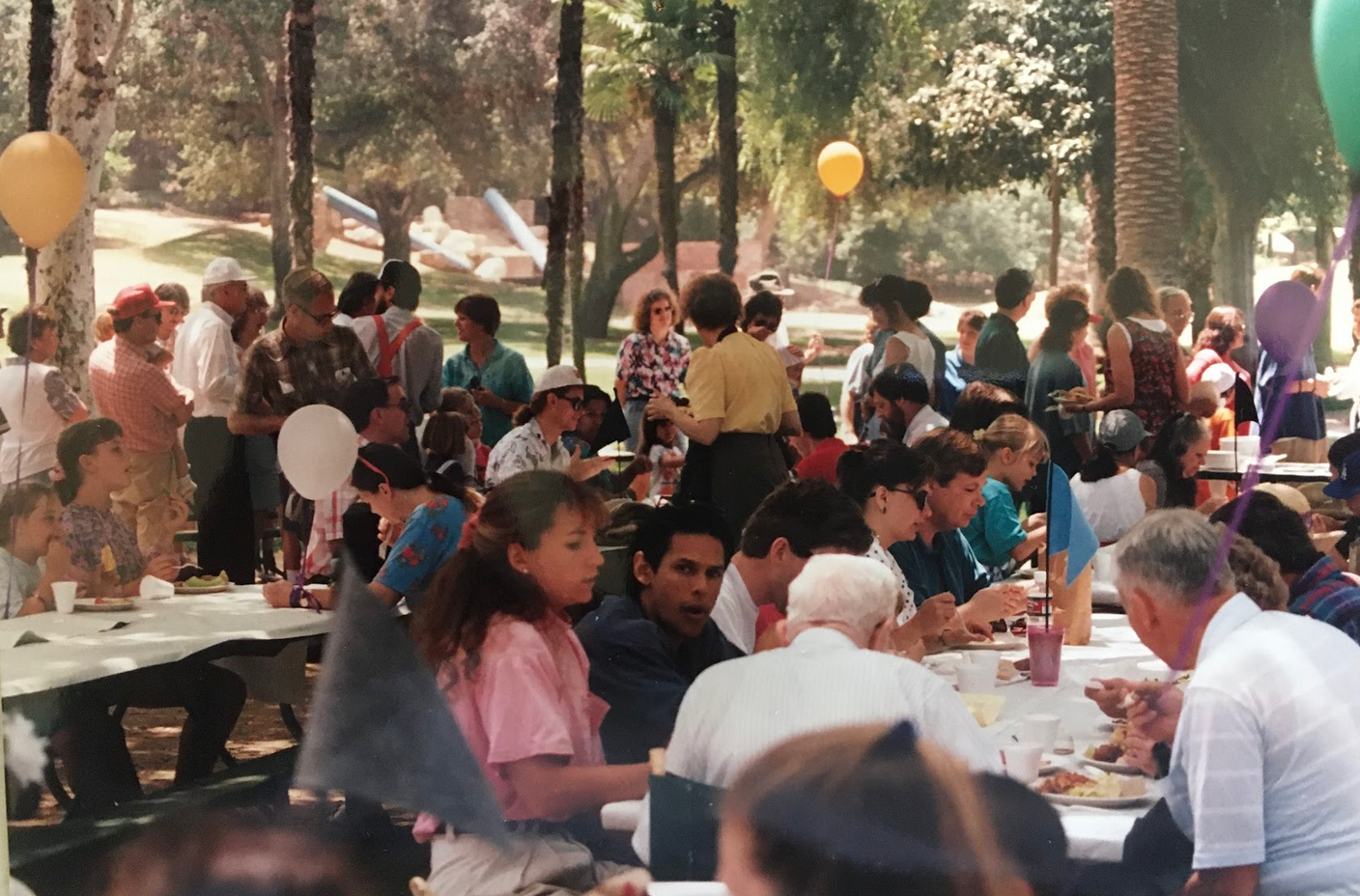
Events such as Lucia Fest and church in the park were also envisioned as occasions for inviting friends who might otherwise not be interested in church.
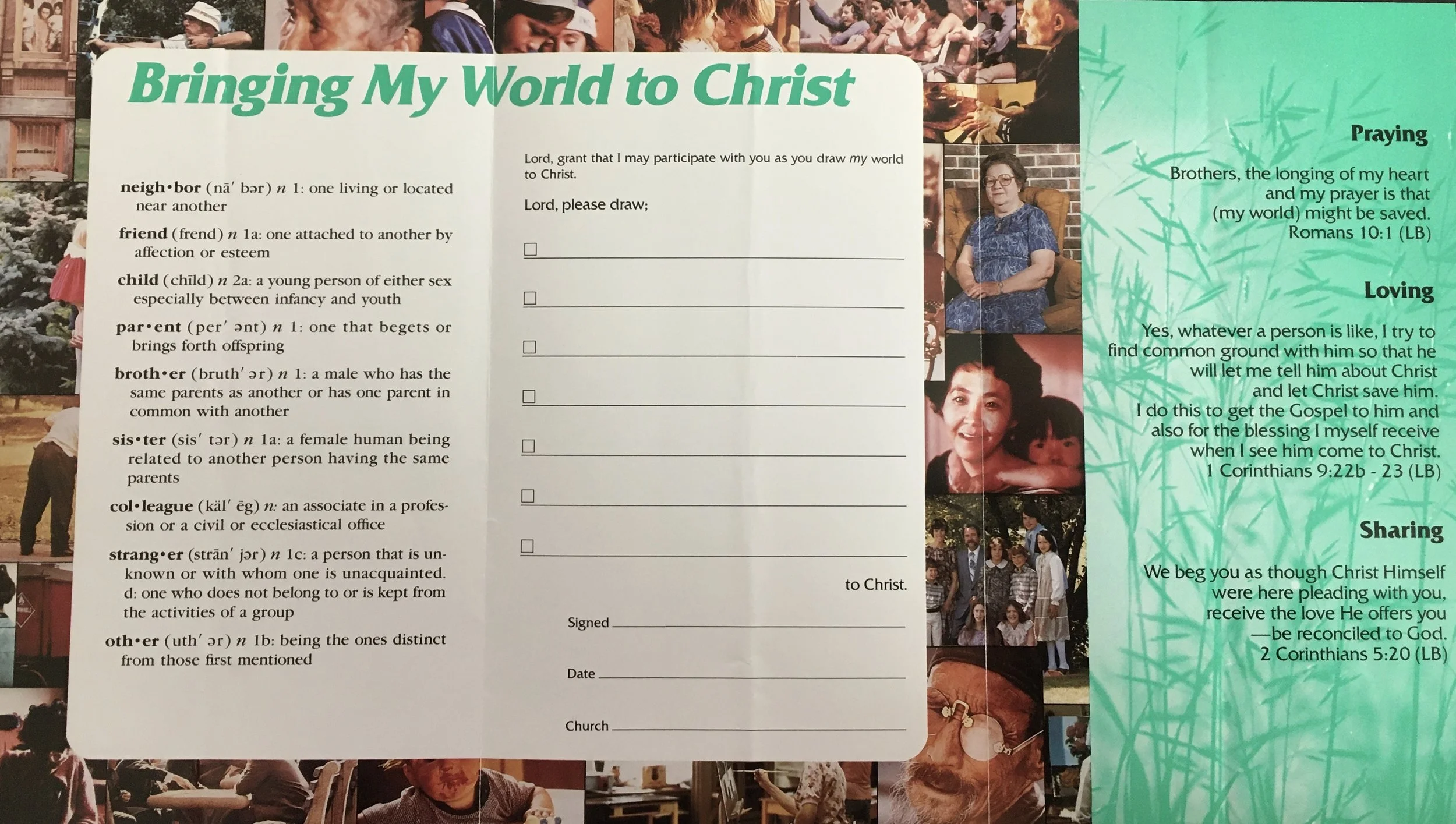
Bringing My World to Christ brochure, ~ 1990
Another low-key kind of evangelism was “Bringing My World to Christ,” a Covenant denominational initiative started in the 1980s encouraging people to evangelize with “prayer—care—share.” Often there was a designated Sunday in which the congregation would write the names of those they committed to pray for over the next year.
Alpha
After learning about Alpha at a conference, Pastor Charles Barker formed a group to discern whether Pas Cov might host an Alpha course—a ten-week practical introduction to Christian faith especially designed to be safe for seekers with doubts and questions. Randy and Marianne Hill have been spearheading Alpha at Pas Cov since then, but many, many volunteers helped to host meetings, prepare meals, host discussion groups, and more. The first course was held in 1998. Randy writes, “It was a truly remarkable experience as we watched the participants go through a transformation facilitated by the word of God, prayer, and the Holy Spirit speaking into all of our lives.” Between then and 2017 about 20 Alpha courses have been held at Pas Cov, including one especially for high school students, as well as two specialty courses led by Lina and William Myrvold, Alpha Marriage and Alpha Parenting.
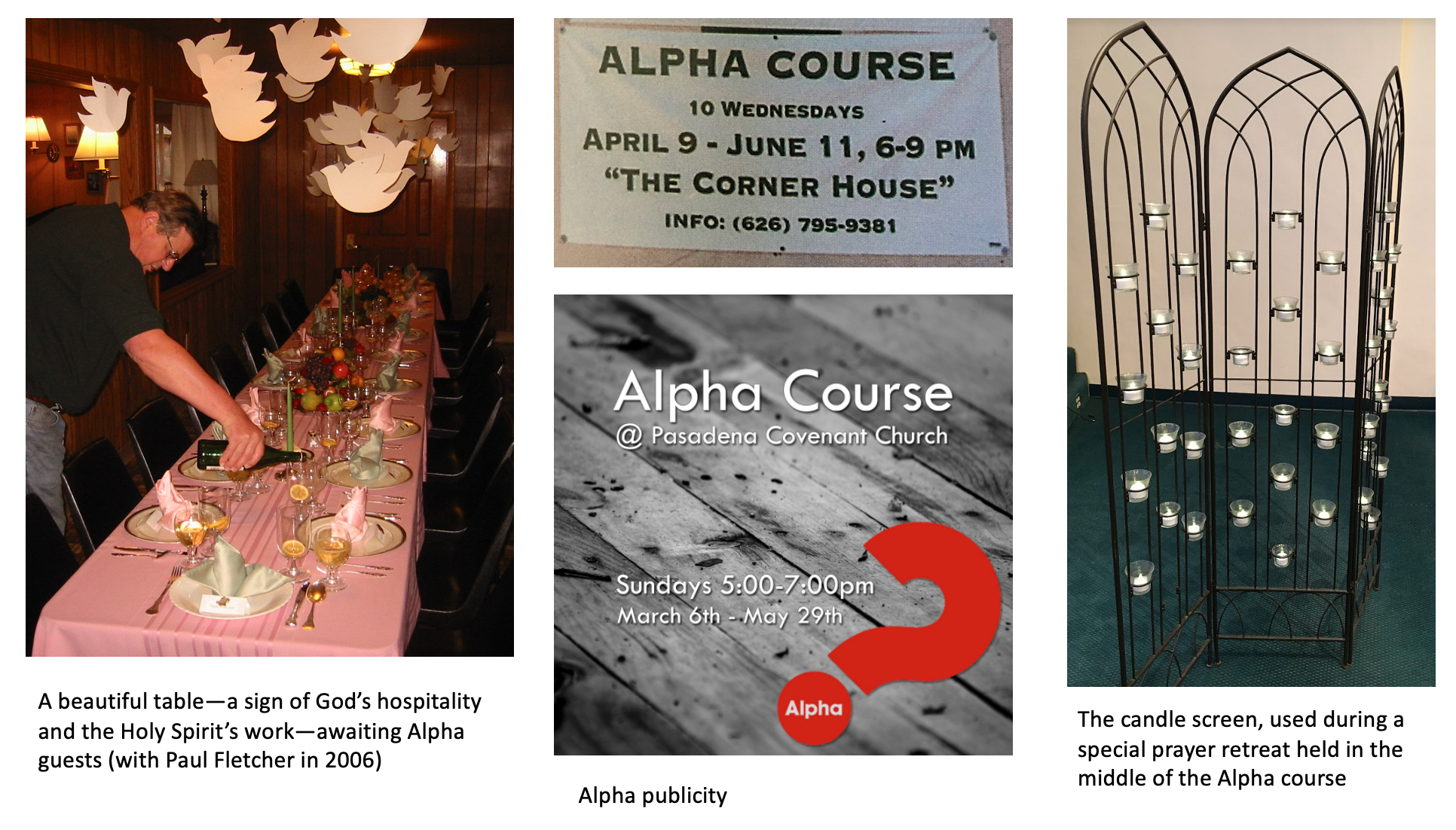

2002 Thoughtful Journey brochure
In addition, the Alpha team initiated a speaker series called The Thoughtful Journey—easy to invite unchurched friends to, and scheduled to allow interested guests to sign up for the next Alpha. Calling on the expertise of people in the congregation, the talks in 2002, 2003, 2004, and 2006were:
• Experiencing the Spirit, Hollywood Style (Rob Johnston)
• Building Resilient Relationships (Jack and Judy Balswick)
• The Transcendent in Modern Studies of the Universe (Richard Doyle)
• Following the California Dream: from Buffalo Chips to Bungalows (Tom Andrews)
• Images of Pasadena (Joe Stoddard)
• Knowing God through our Psychology (Randy Sorenson)
• Virtual Humans and Video Games (Randall Hill)
Summary
Different kinds of evangelism have been encouraged at different times, from Cradle Roll to new church planting to Bringing My World to Christ to Alpha. In this post we’ve remembered some of them. Even more will be covered in a future post about service to our neighbors, since demonstration and proclamation are integrally linked as we share the good news.
Beyond 100
Ways to evangelize change over the decades, but the command of Jesus in Matthew 28 to “make disciples” is still the same. And people will always yearn to live a good life, in every sense of the word. How will Pasadena Covenant invite future generations into the good life in Christ?
Interested in the current Covenant denominational evangelism initiative, BLESS? That stands for Begin with prayer, Listen with care, Eat together, Serve in love, Share your story.
P.S. John Stott writes: “We have two instructions of Jesus – a great commandment, “love your neighbor,” and a great commission, “go and make disciples.” What is the relation between the two? Read the entire article here. And to read more about how Pas Cov has tried to love our neighbors, look for a post coming in July.
We are so grateful to the many who have sought to follow God over the past century,
and now we seek to imitate their faith for the next hundred years.
Please join us in giving to this legacy of faithfulness!

Worship: Arts and Media
Learn about how Pasadena Covenant has incorporated visual and dramatic arts as well as media into worship over the decades.
Note: viewing this post on a wide screen will enable readers to see the full photo captions.
The role of music in worship at Pasadena Covenant was covered in a post back in December. But what about other forms of art? The church began to incorporate visual images and media into worship in the mid-1970s. Since then, congregants have come to expect that artistic and dramatic elements will make worship and teaching come alive, and creative people have felt free to use their gifts to honor God here.
The Beginning
The catalyst was the appointment of Mel White as pastor in 1974. Mel had founded a studio that produced television documentaries and movies; he had degrees in communication, film, and religious studies; and he was adjunct professor of communication at Fuller Seminary. An example of how Mel brought this together as pastor at Pasadena Covenant was a series of Sunday evening services on Psalm 23, featuring documentaries he had produced and directed. The congregation grew substantially during his time as pastor, with lots of young people joining.
Ministers in the Arts and lay contributions
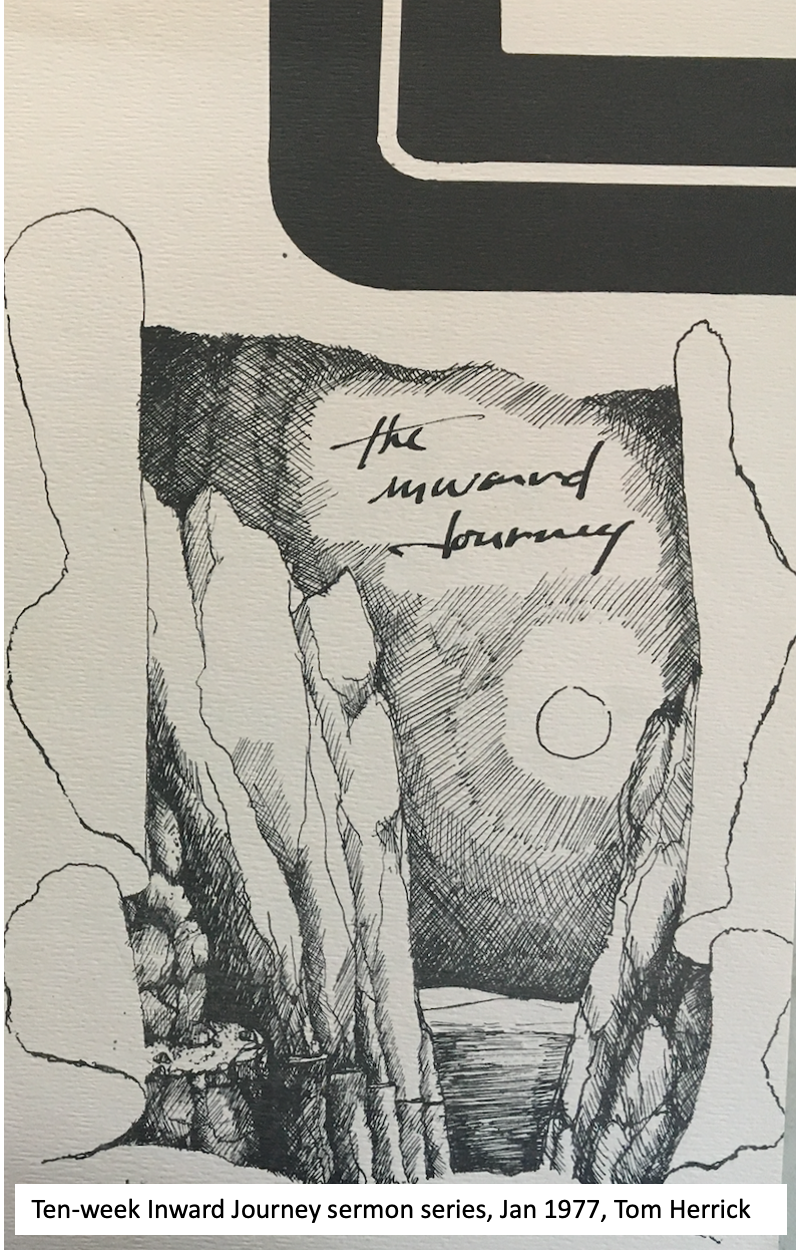
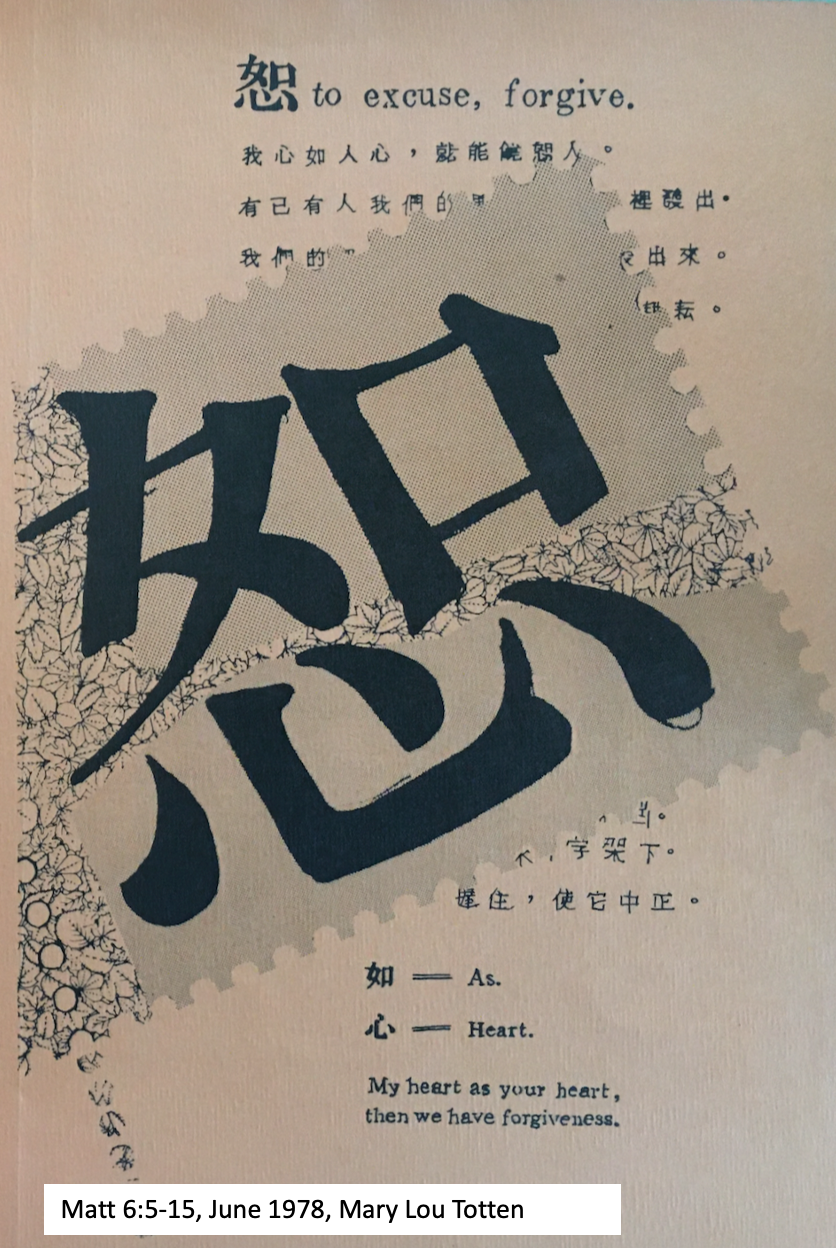
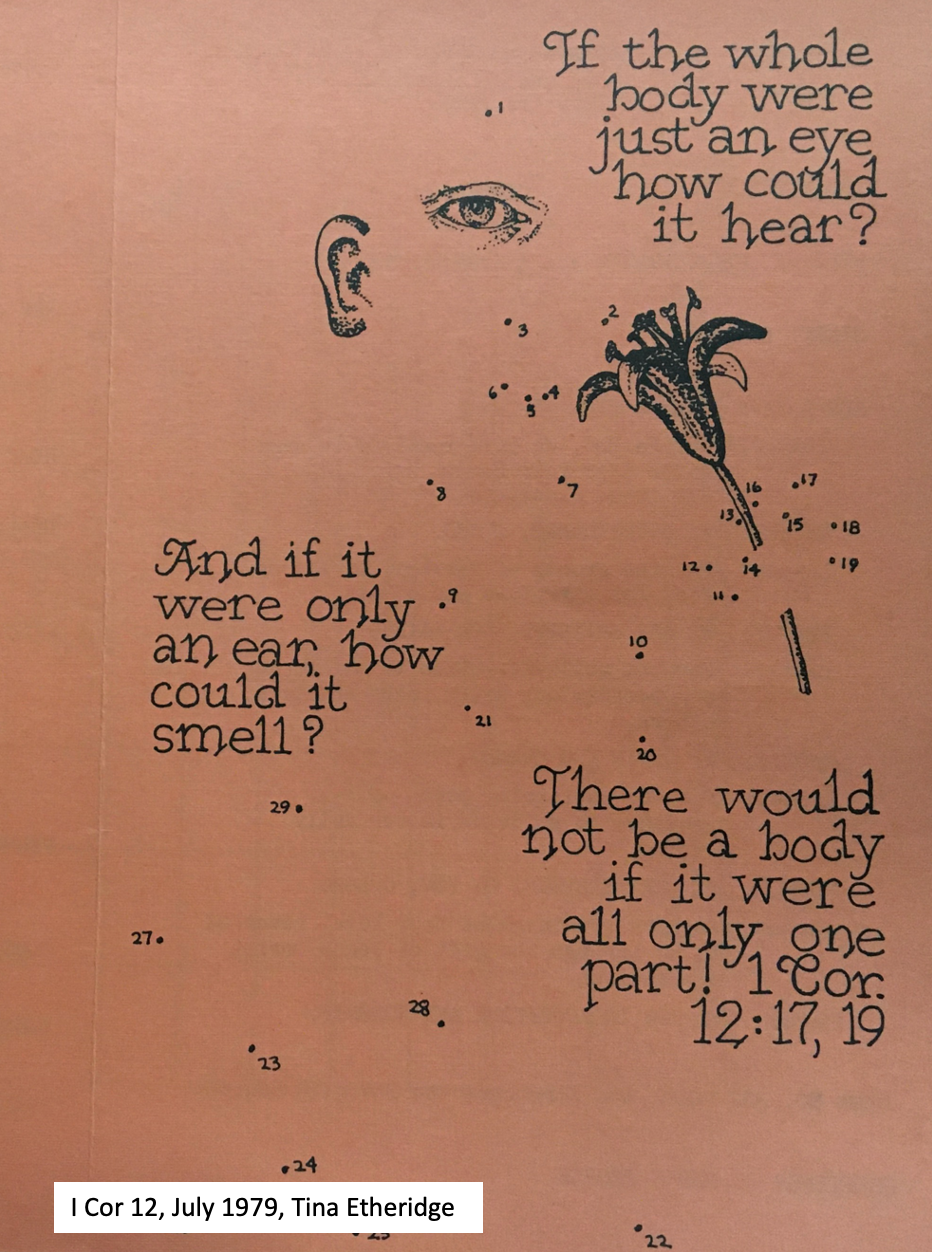
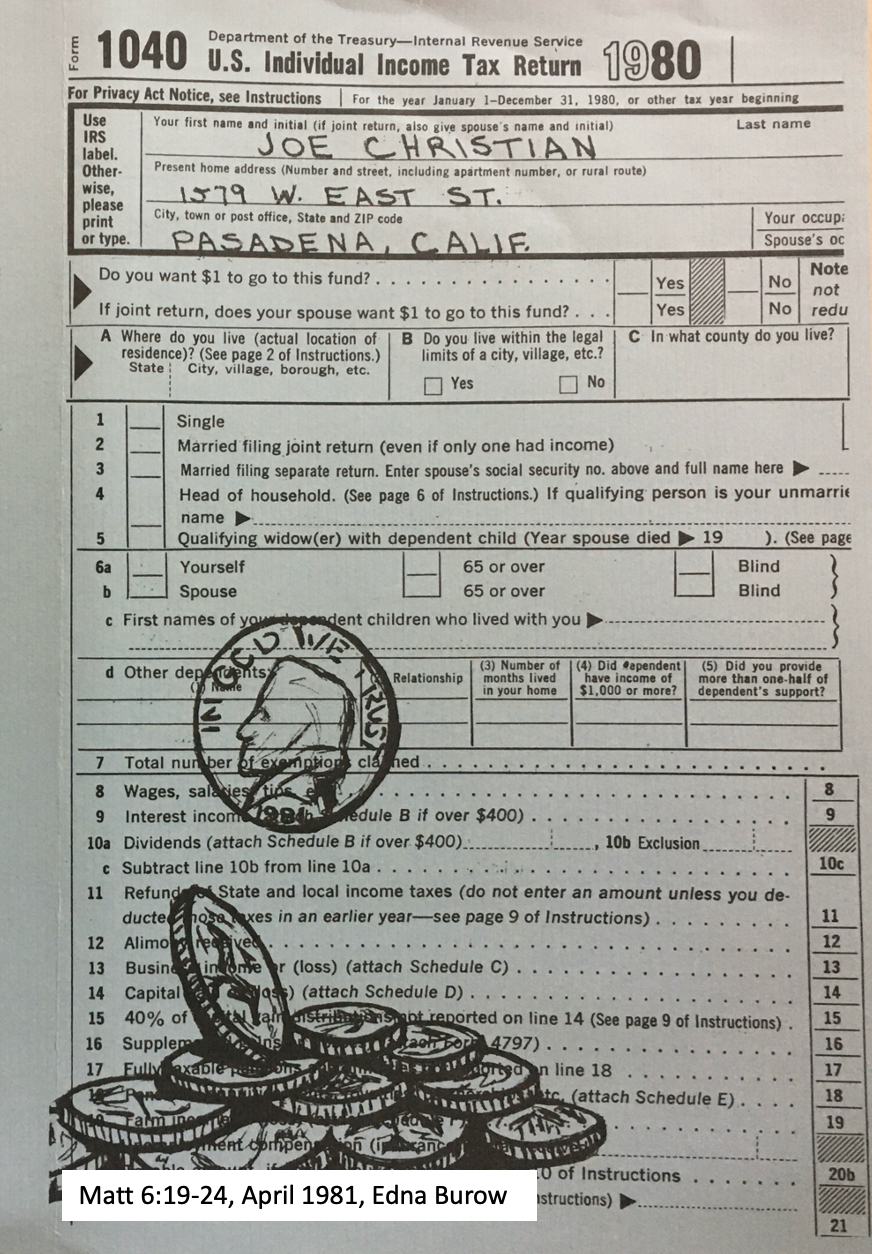
Mel White attracted creative people to the church, including Gene and Mary Lou Totten. They were officially on church staff as “Ministers in the Arts” starting in 1977. In addition to working with the children’s choir, participating in musicals, directing dramatic sketches, and much more, they encouraged a large team of visual artists to create bulletin covers. In the 1970s and 1980s especially, sermon themes were vividly illustrated in this way.
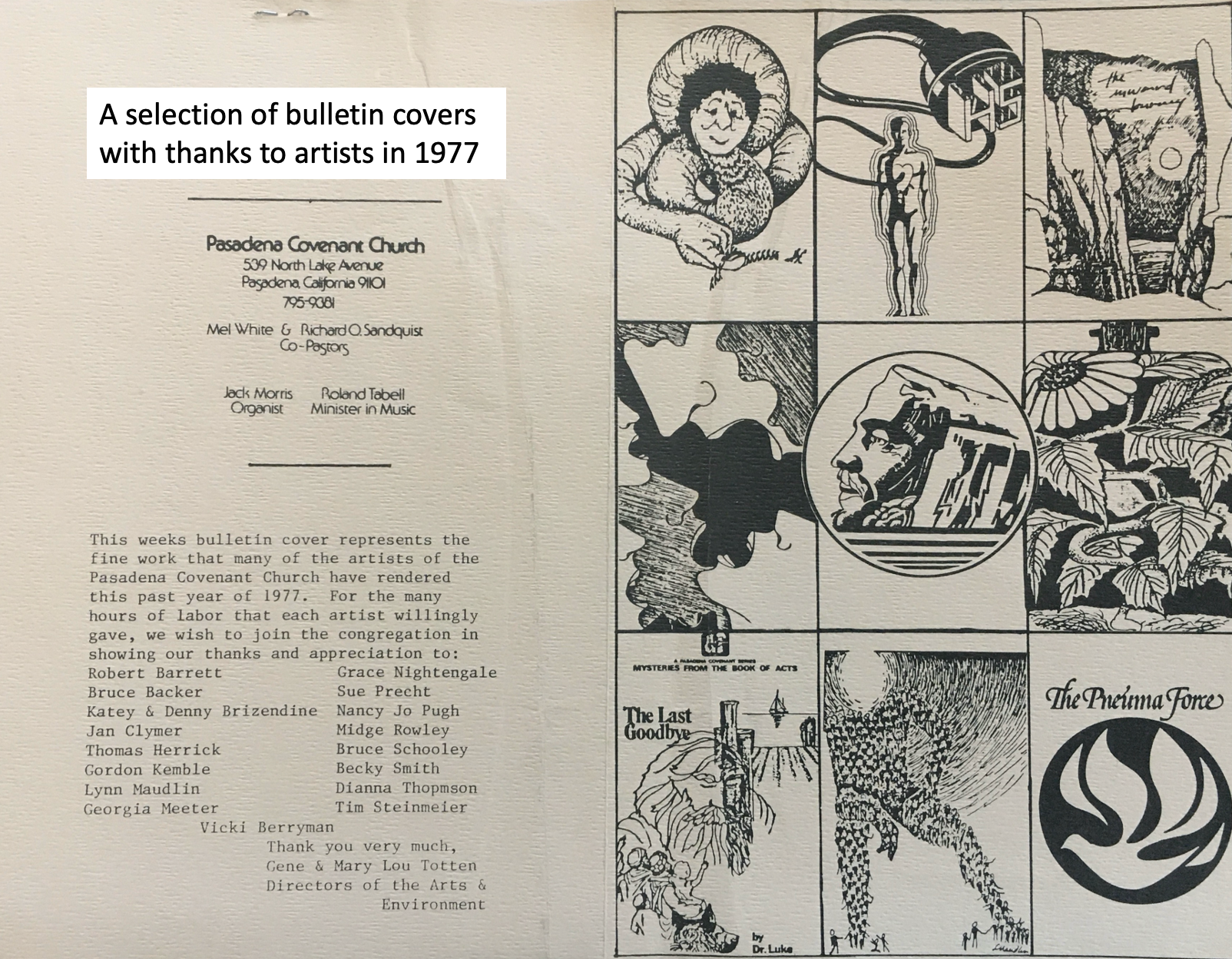
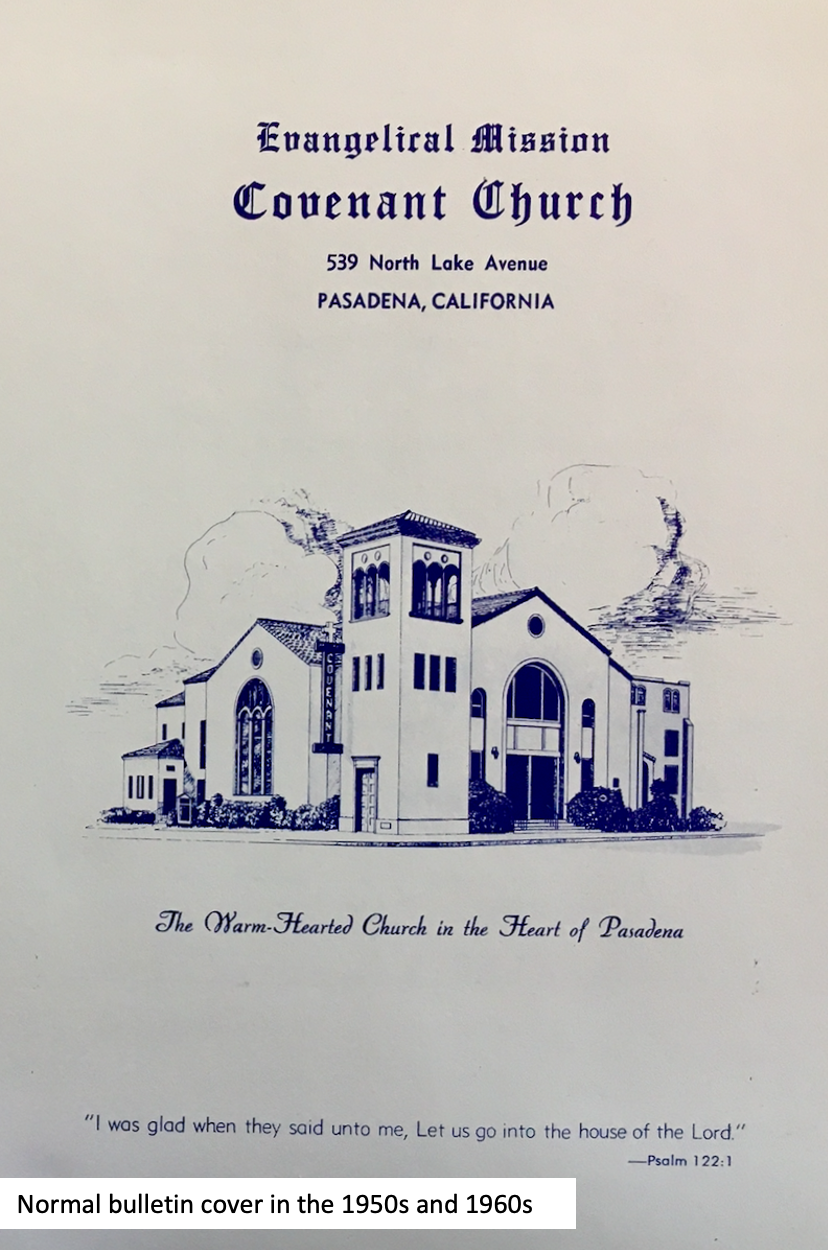
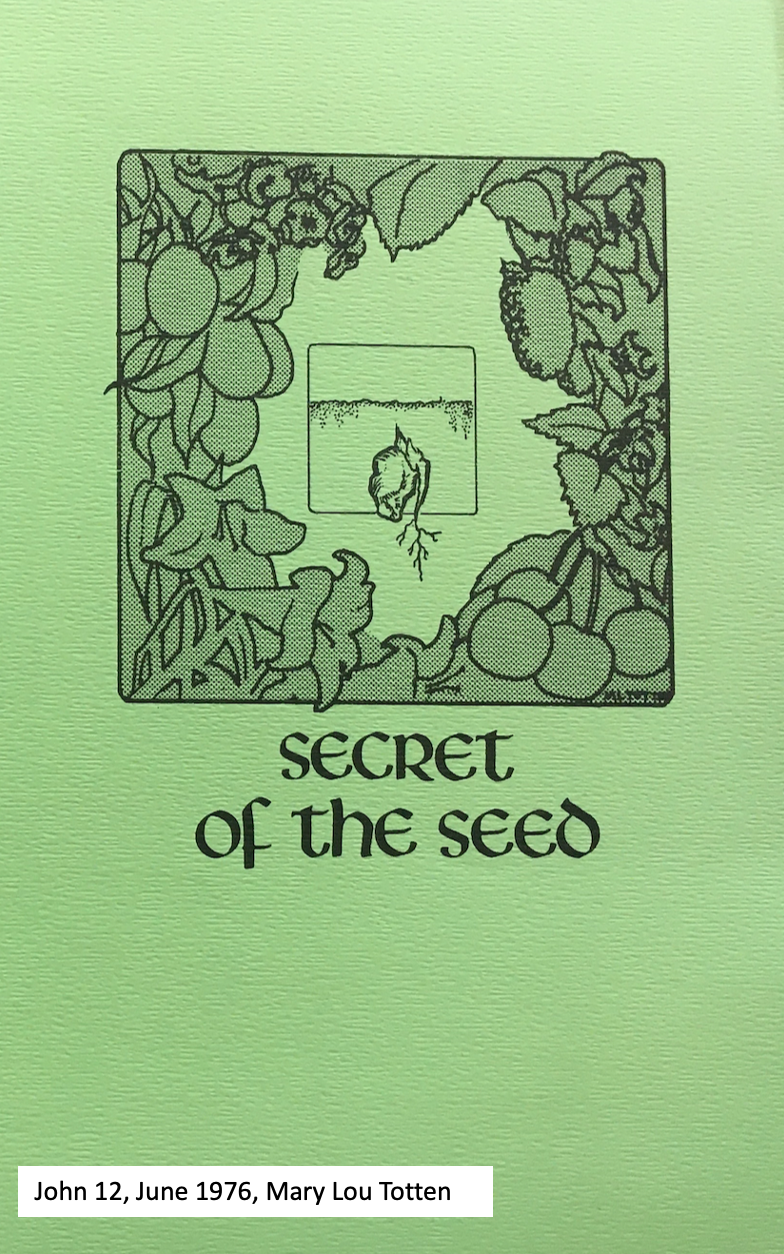
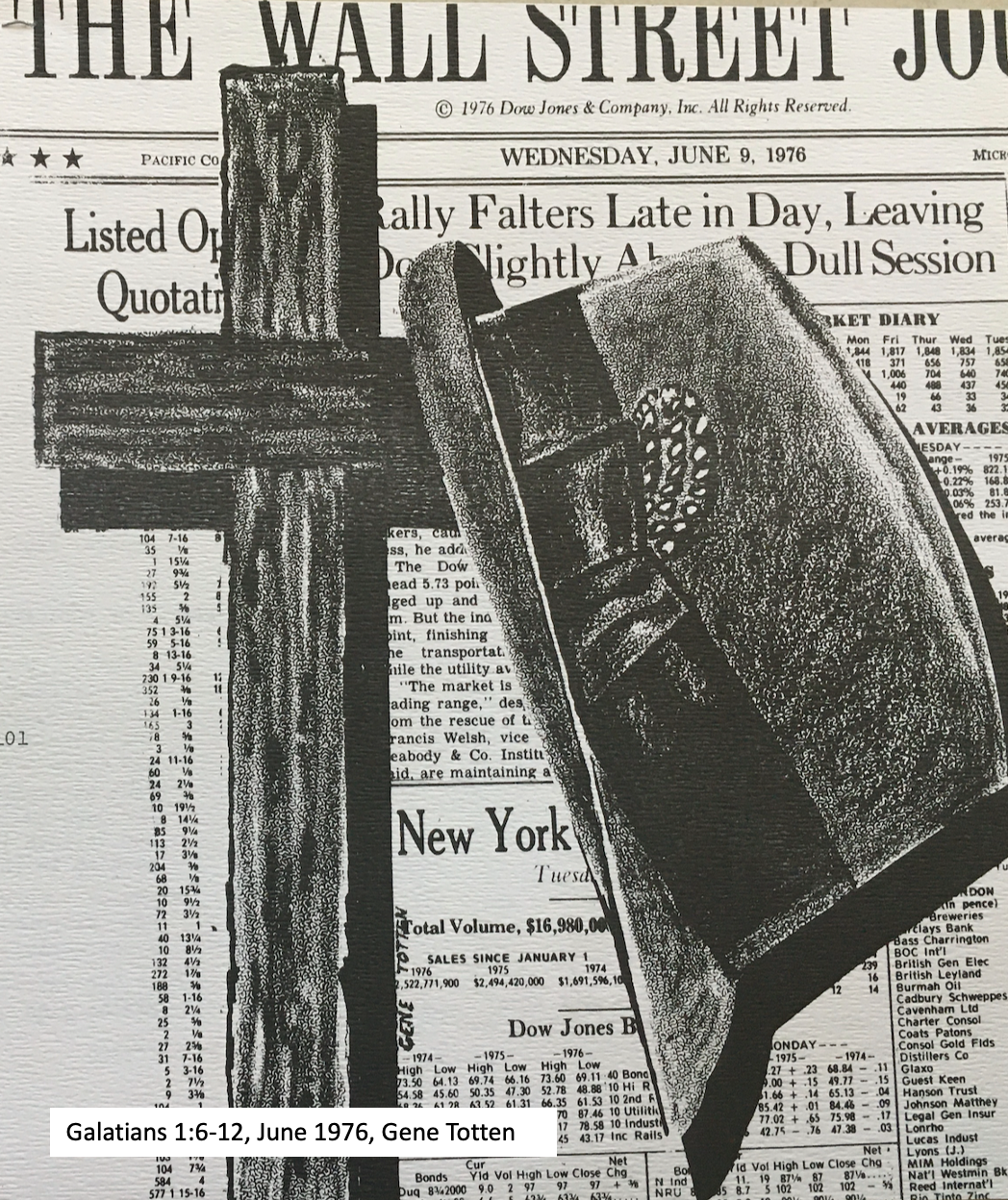
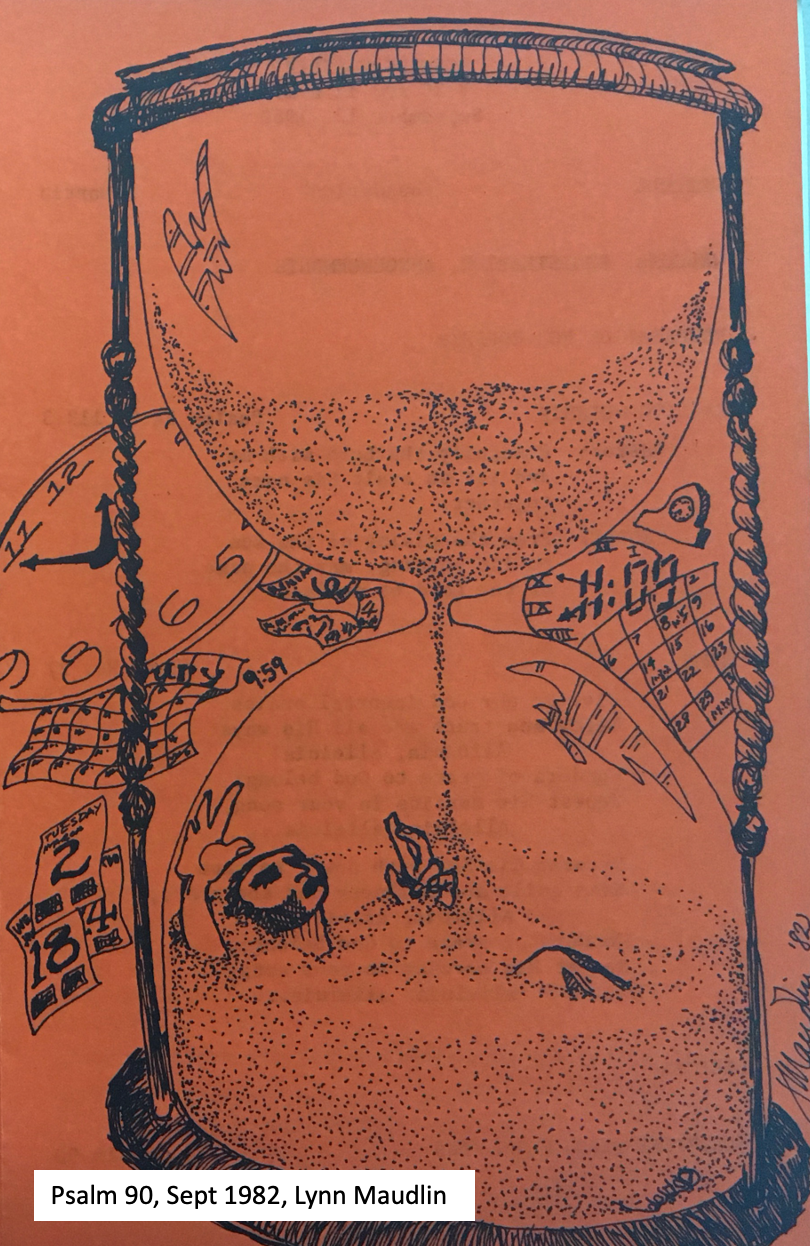
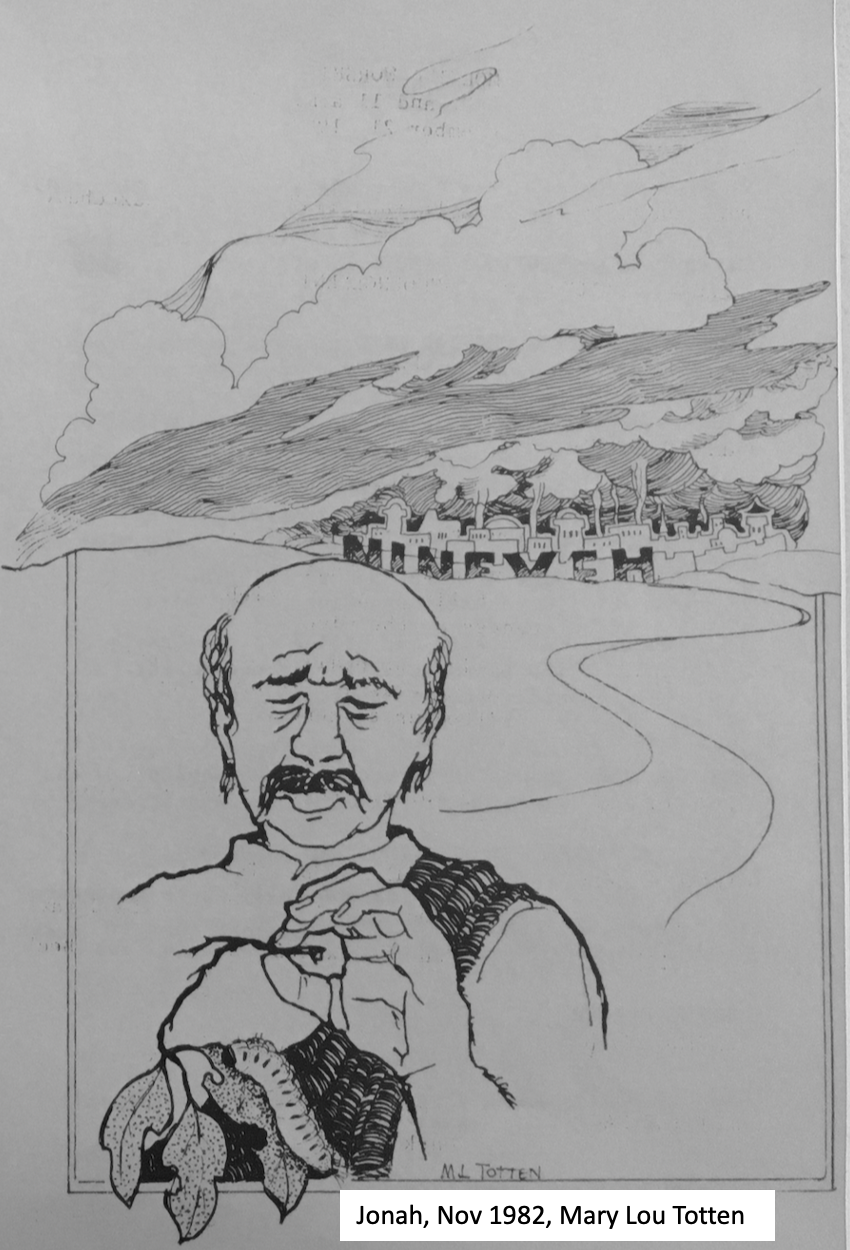
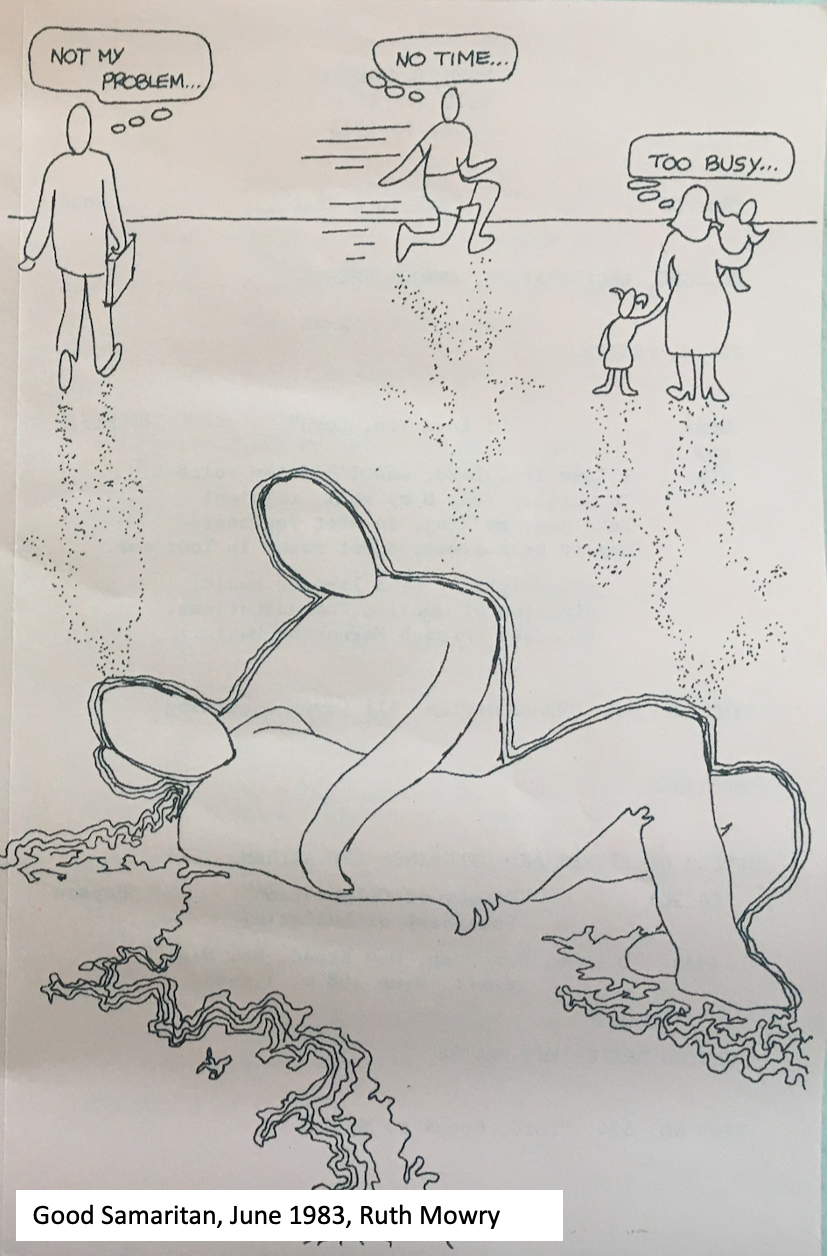
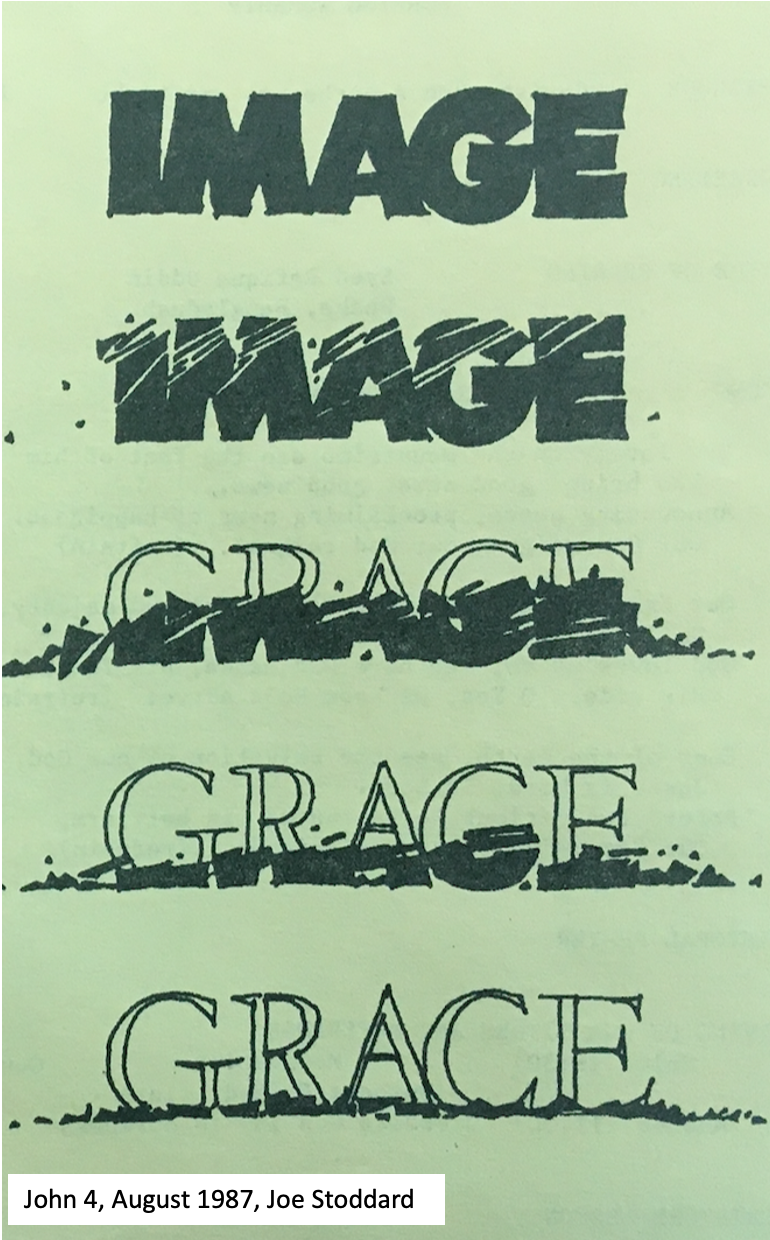
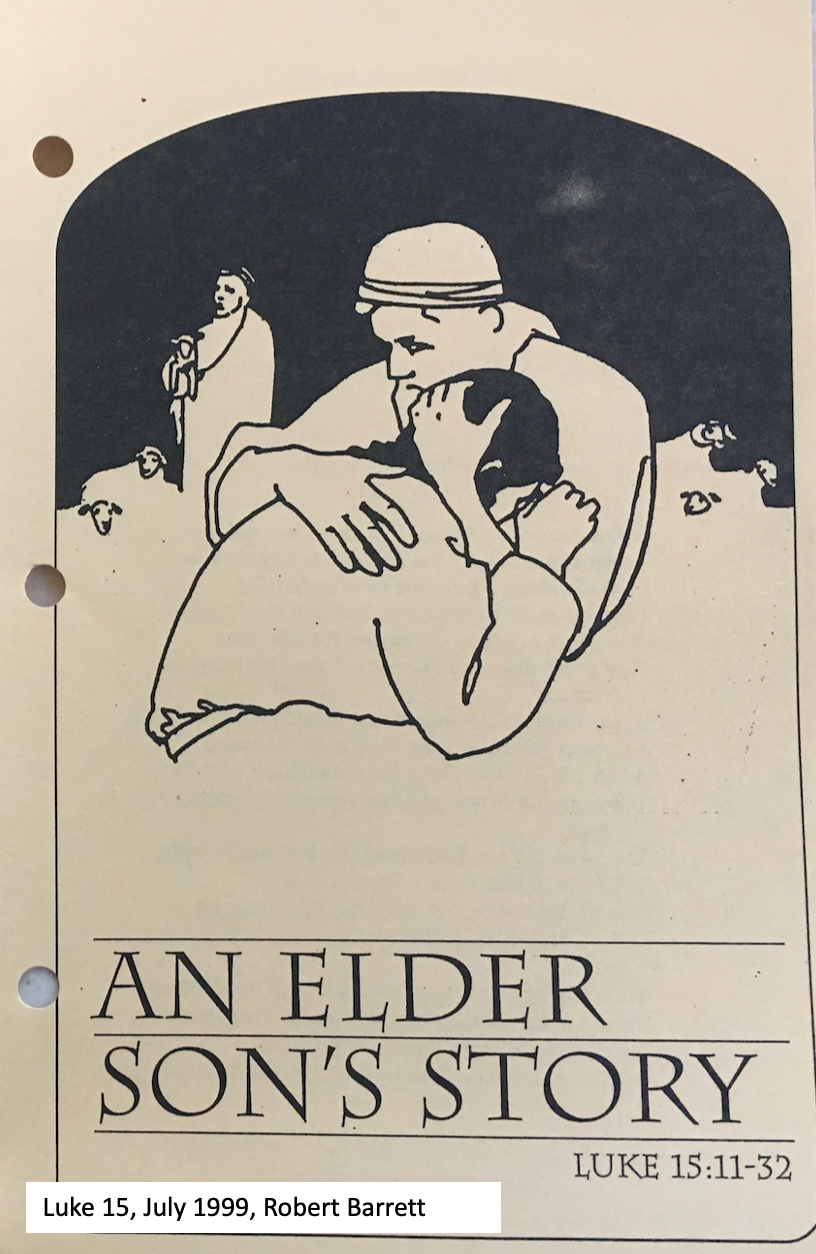
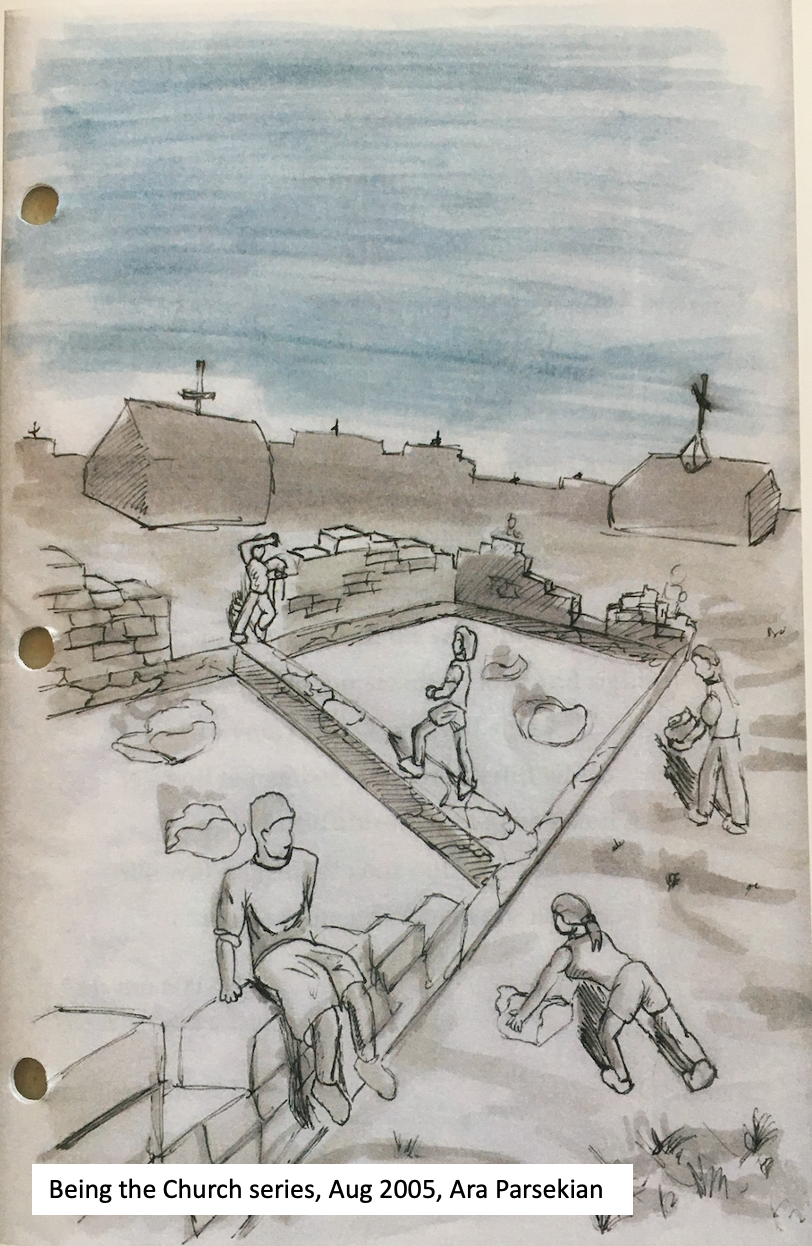
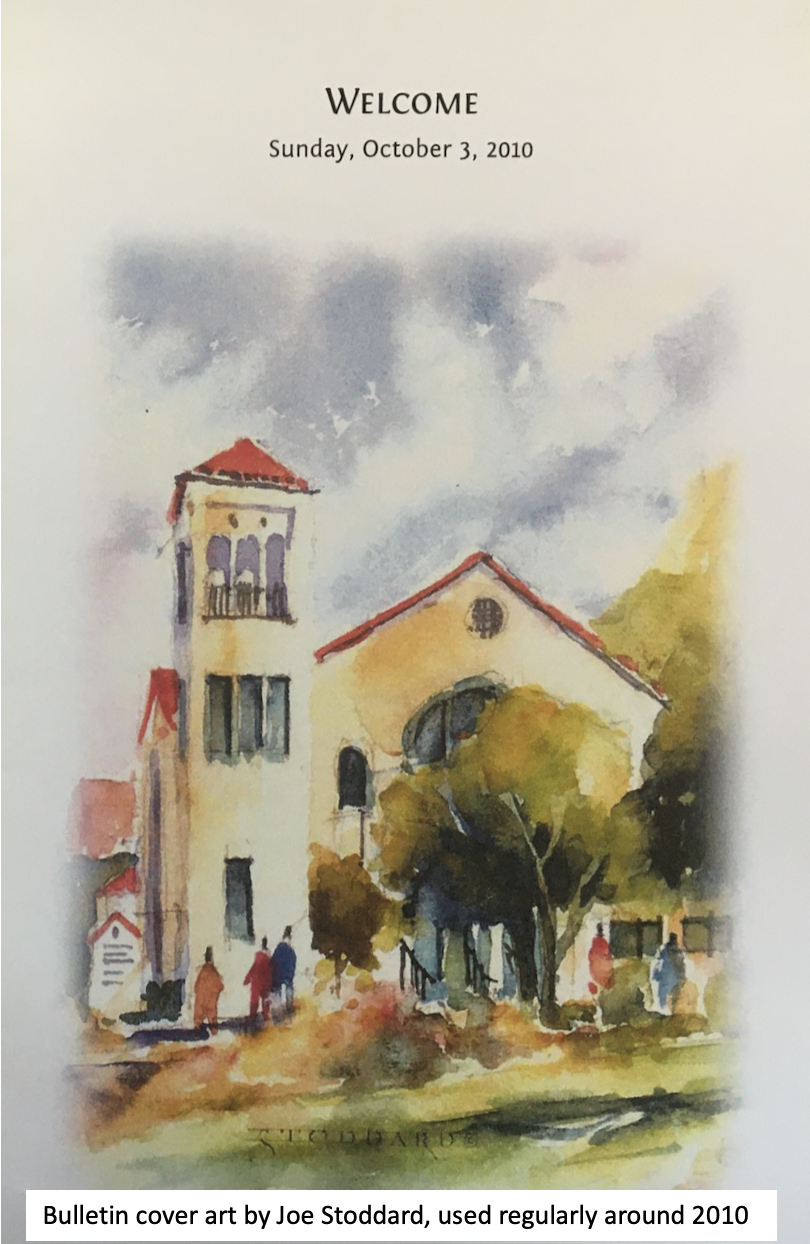

Mary Lou & Gene Totten, 1988
By 1983, the Tottens were no longer on staff, as they had founded the Fellowship of Artists for Cultural Evangelism or FACE. This mission organization focused on communicating the gospel through local art forms; much of their research was in the Navajo nation, Alaska, and China. But Gene and Mary Lou were still members and volunteers at Pasadena Covenant, active in many arts endeavors.
Among the endeavors was the creation of banners. Hanging in front of the church, they added visual interest, color, and thematic or seasonal elements to the sanctuary.
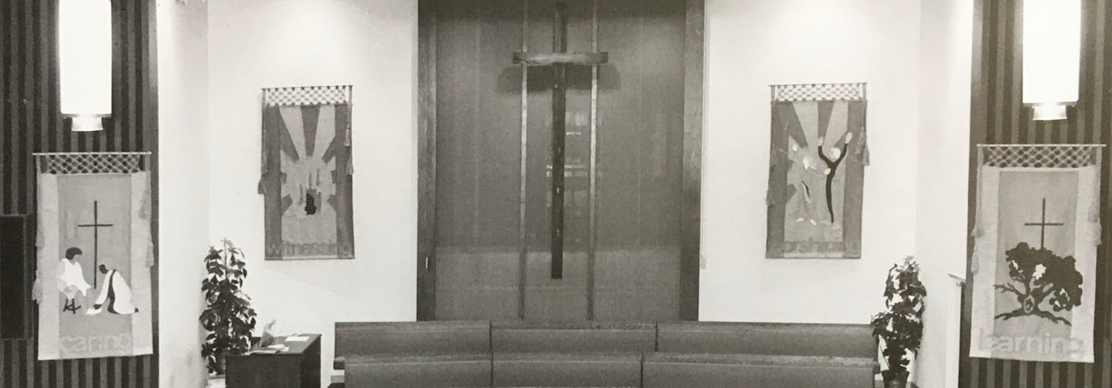
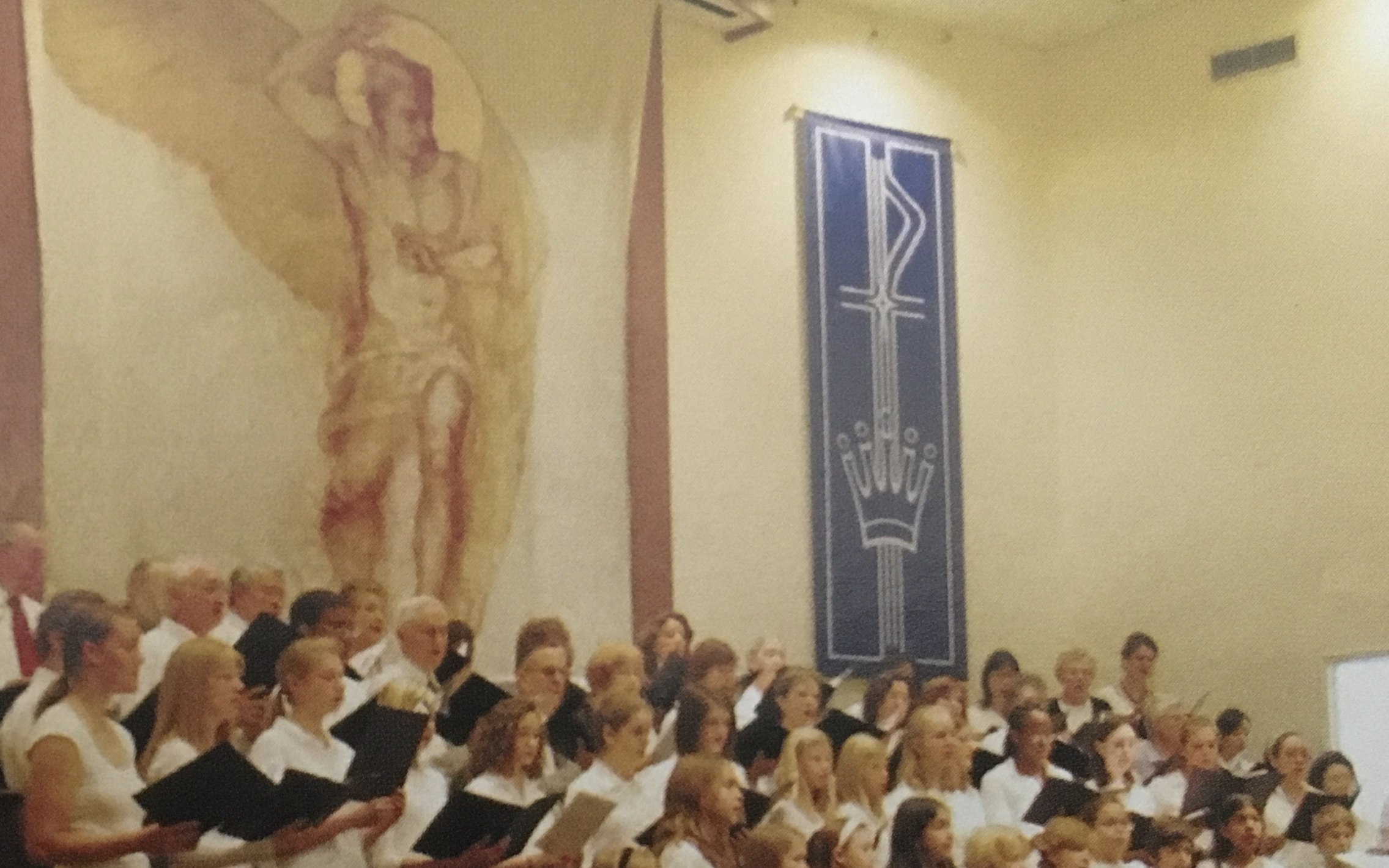
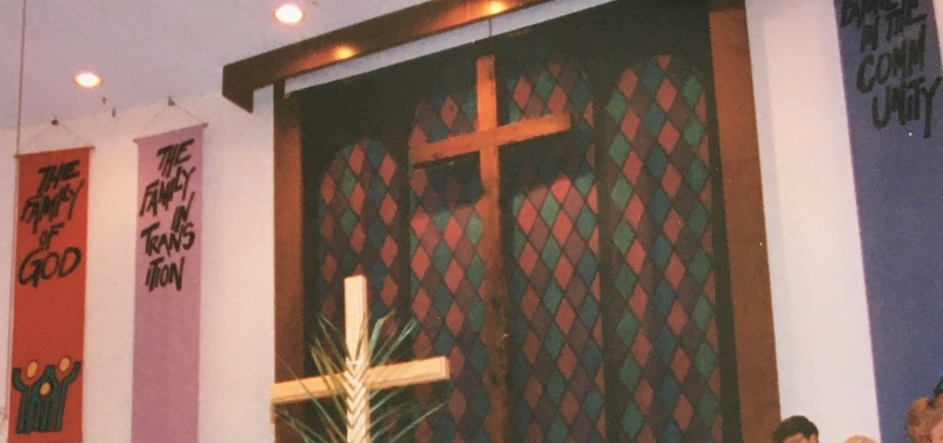
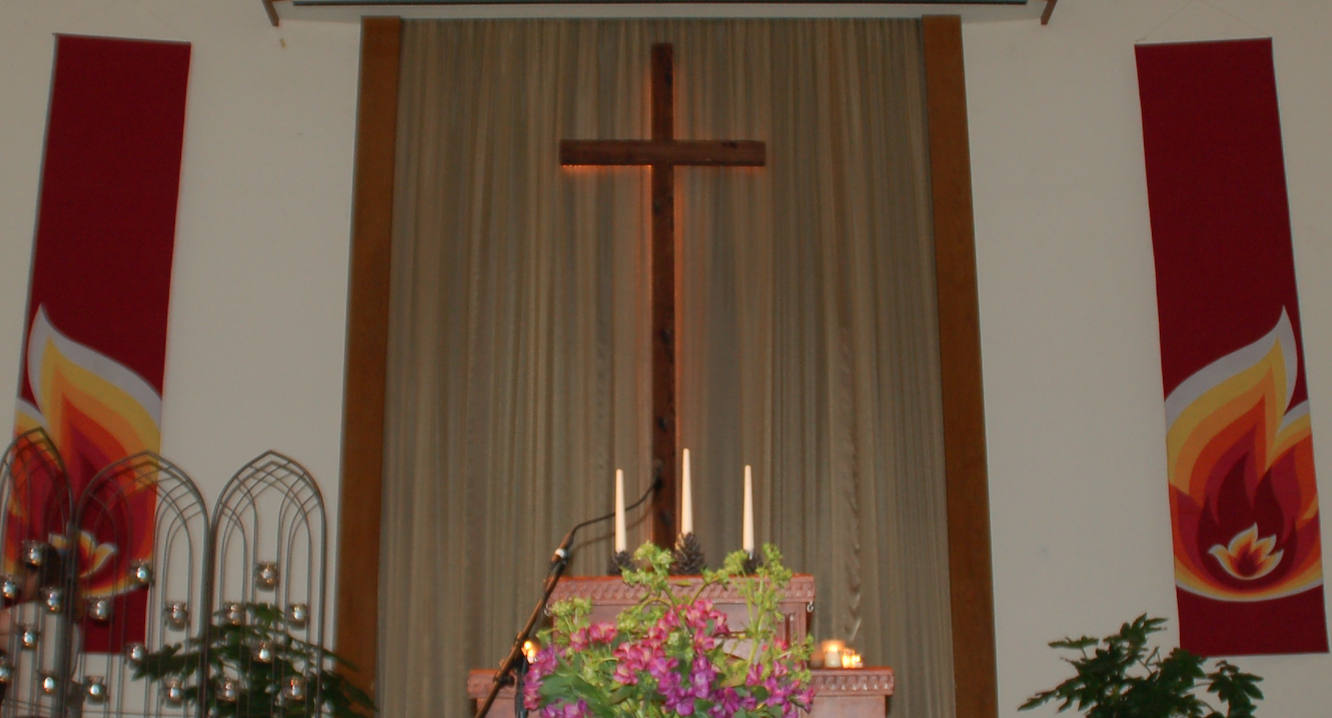
Roland Tabell (on staff 1961-1999), though a musician, was also instrumental in bringing a variety of art forms into worship and encouraging creative people in the congregation. He formed a Worship and Arts Committee that met monthly to come up with artistic elements to incorporate into worship services. They wrote scripts for dramatic readings and skits, created visual art for the sanctuary and lobby, put together slide shows or videos, and researched published art forms that might be used.
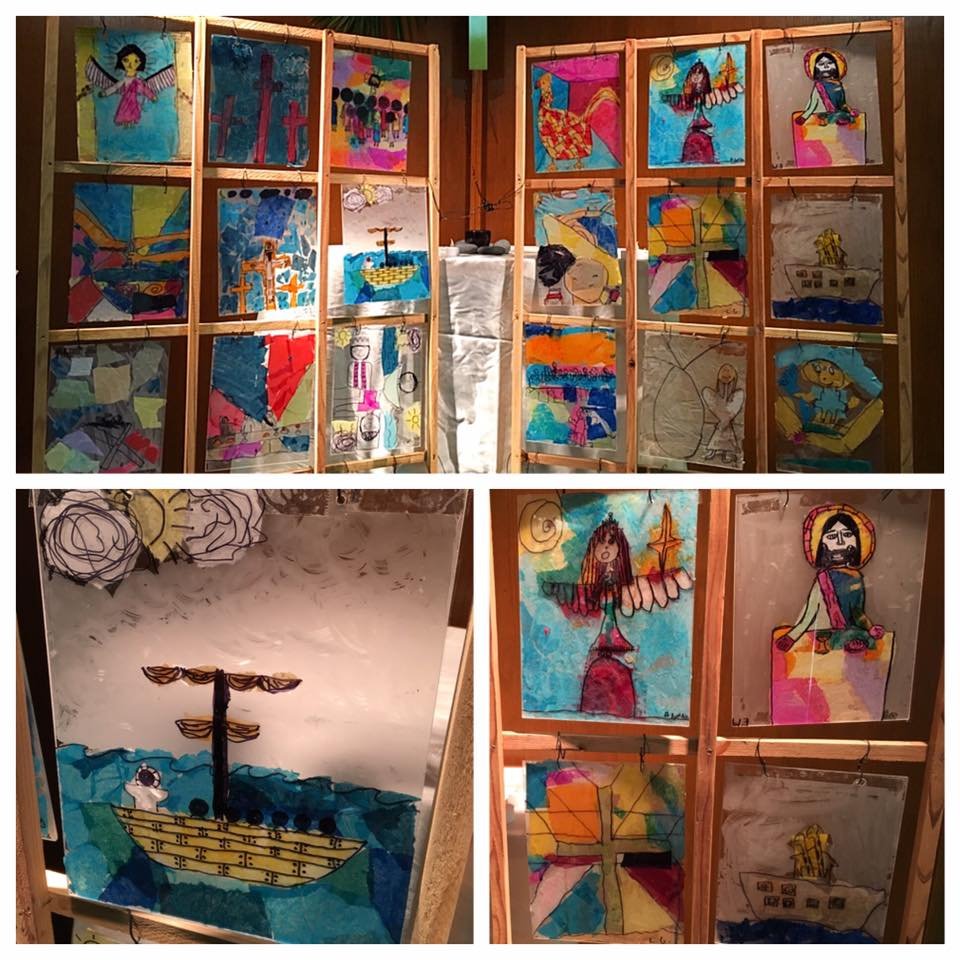
Pastors like Joan Reeve Owens (on staff 2001-2010) and Thomas Hale (2011-2017) also envisioned ways the arts could enhance the church’s worship experience. The following are photos from evocative sanctuary displays in 2015-16, illustrating contributions from people like Deb & Thomas Hale, Megan Dally Lamme, Savannah & Nate Smith, Mel Ahlgren, Joanne Doyle, Eva Webb, and Lisa Thackwell.
The process:
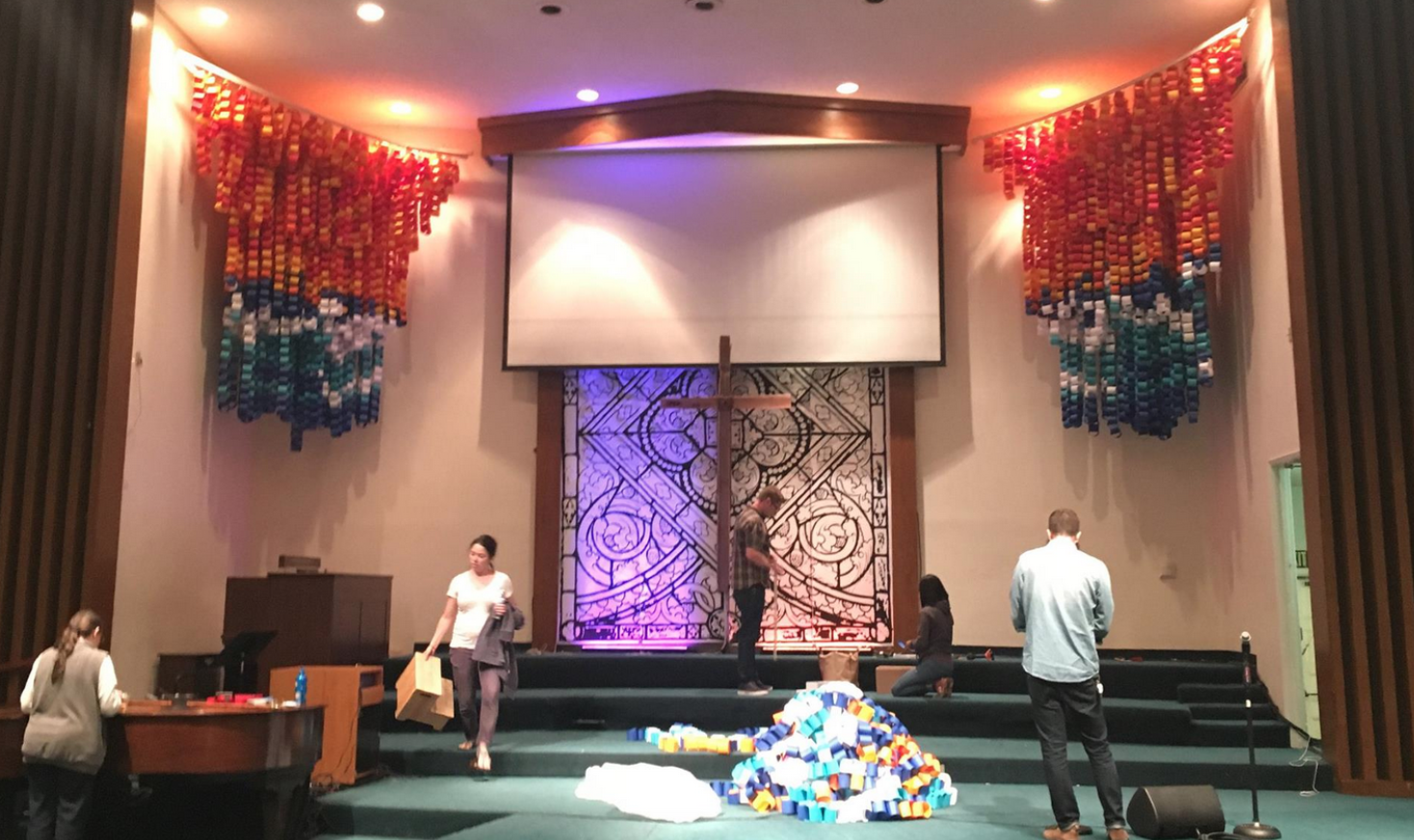
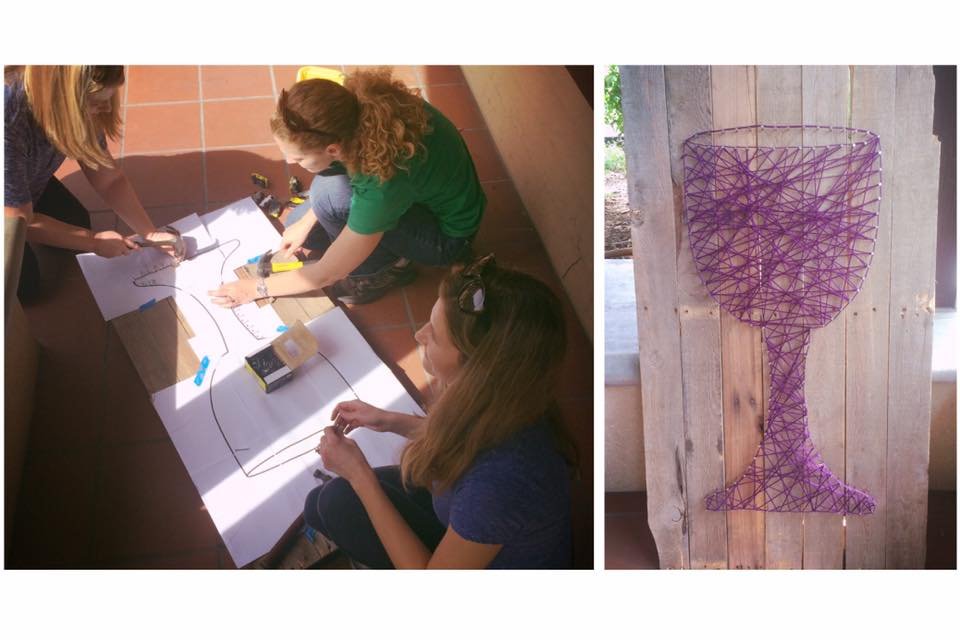
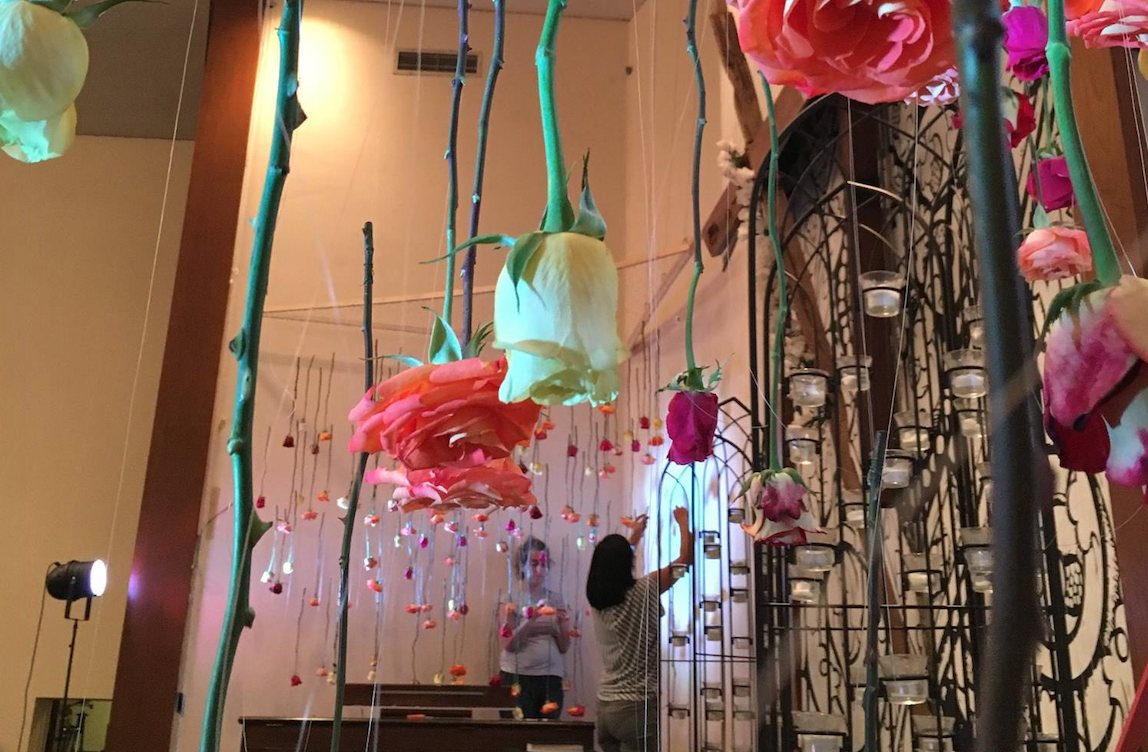
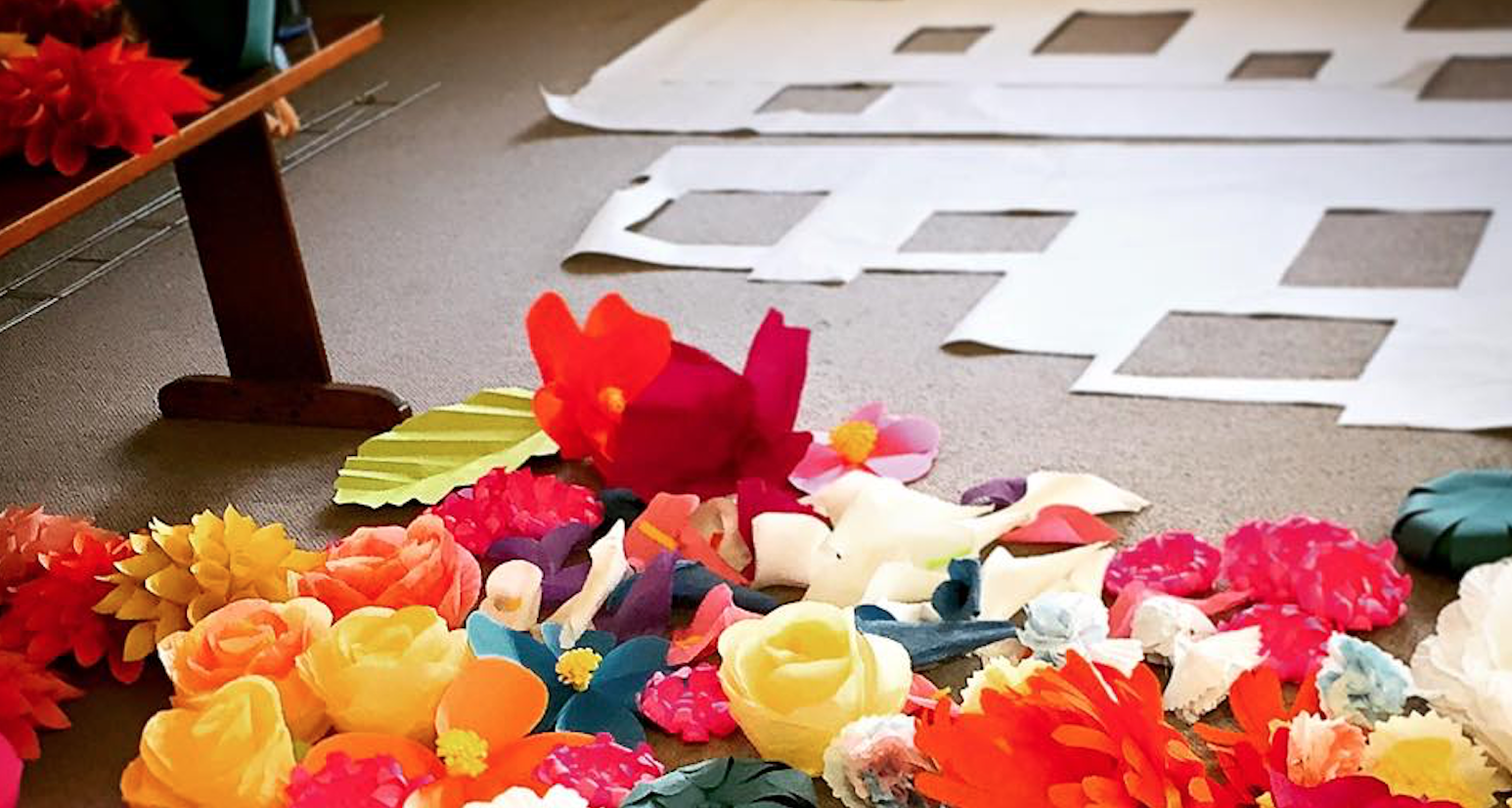
The sanctuary:
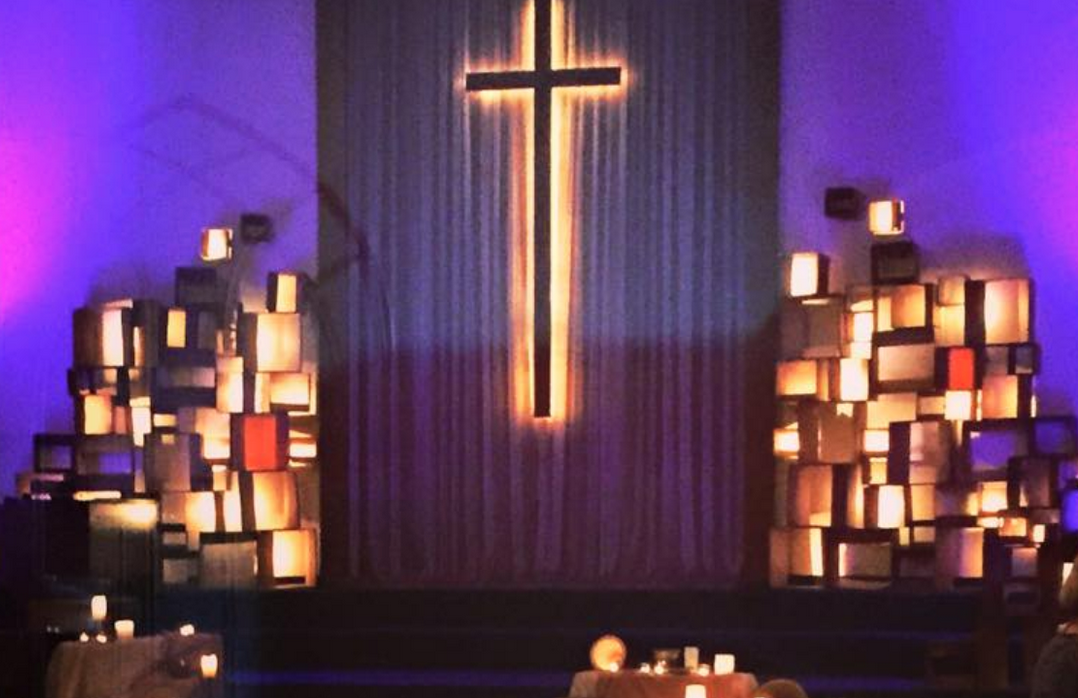
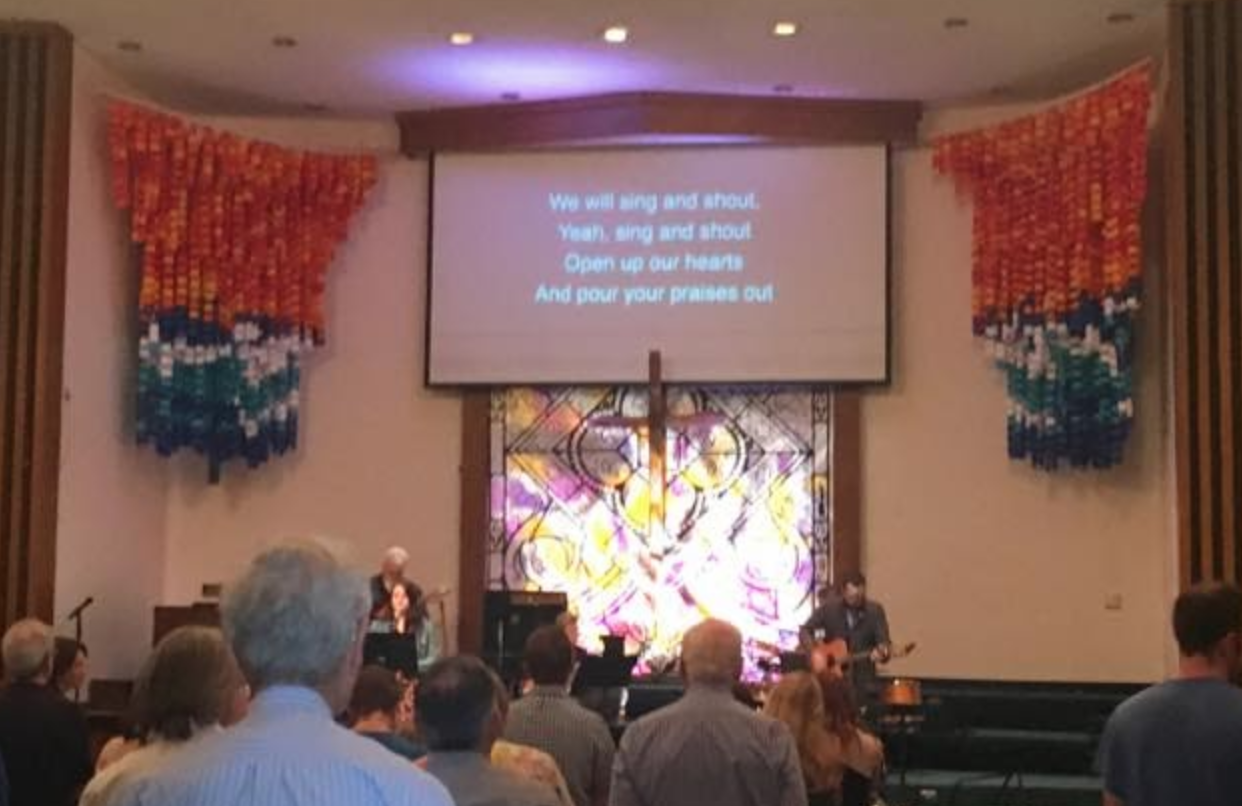
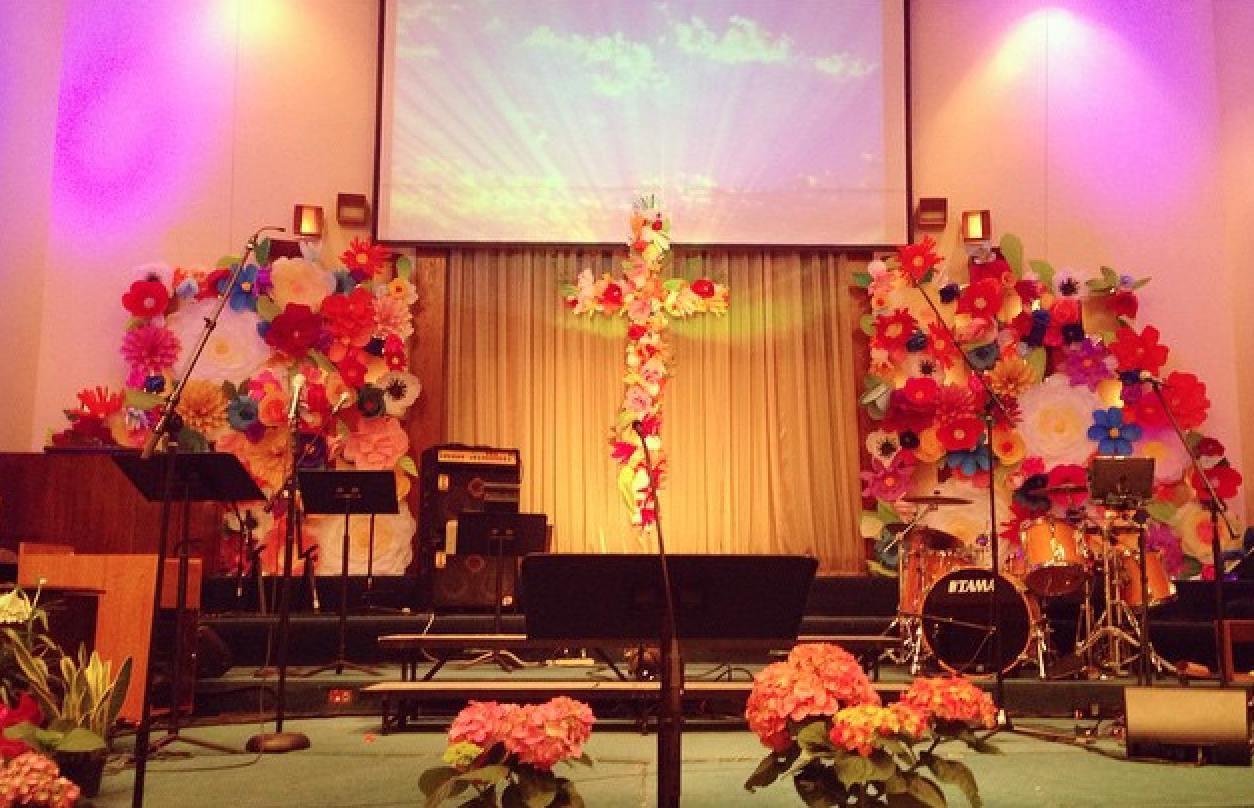
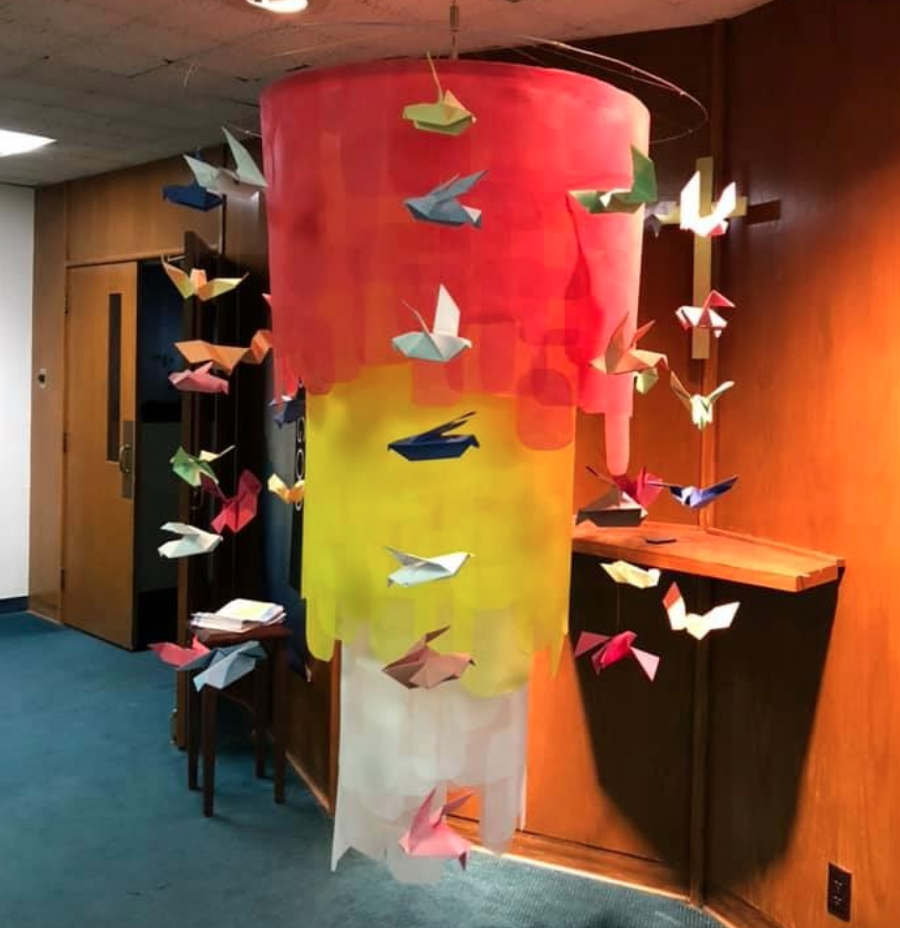
Recently there has been art in the lobby too. These photos show the contributions of William Myrvold, Richard Parsekian (and Pas Cov kids), Dan Huang, Joanne Doyle, and Edna Burow (and seven other quilters).
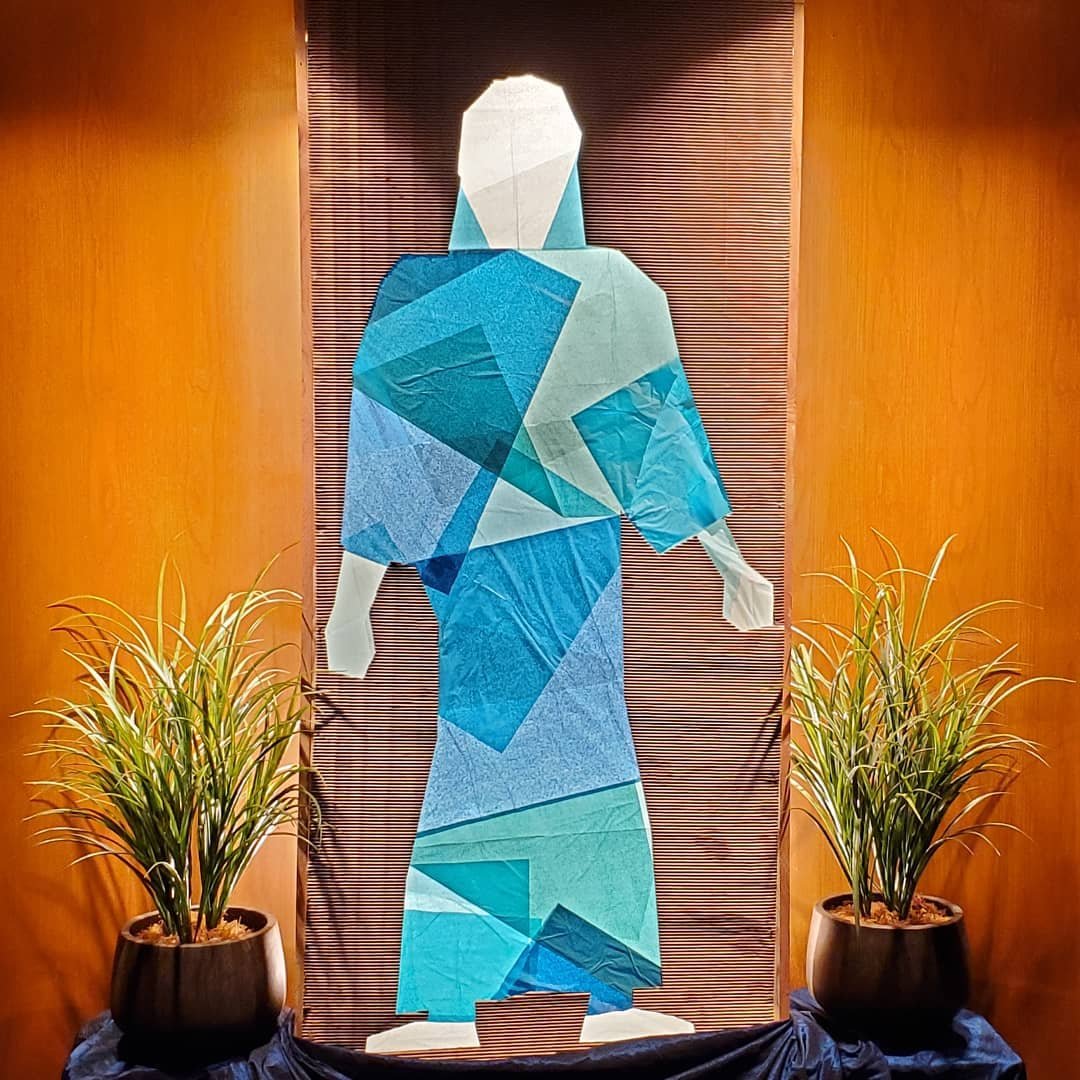
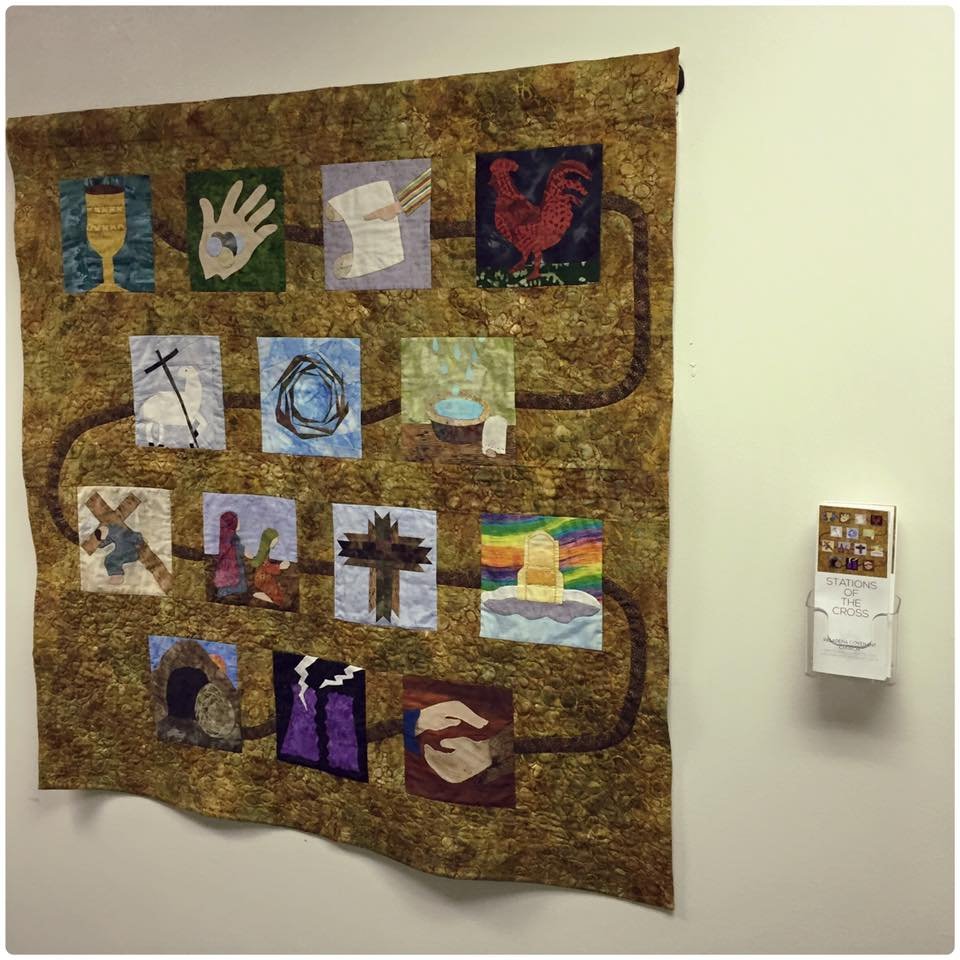
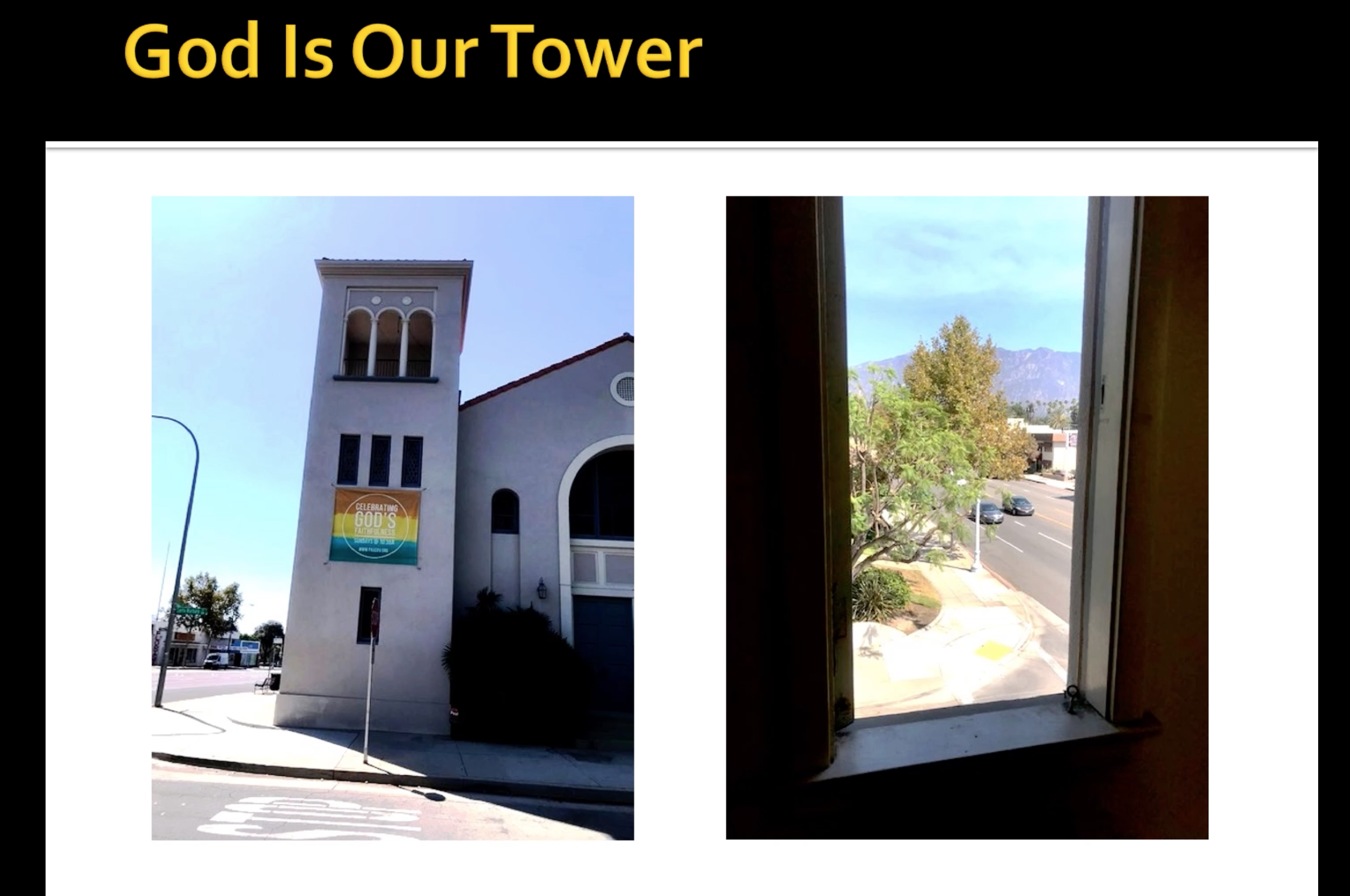
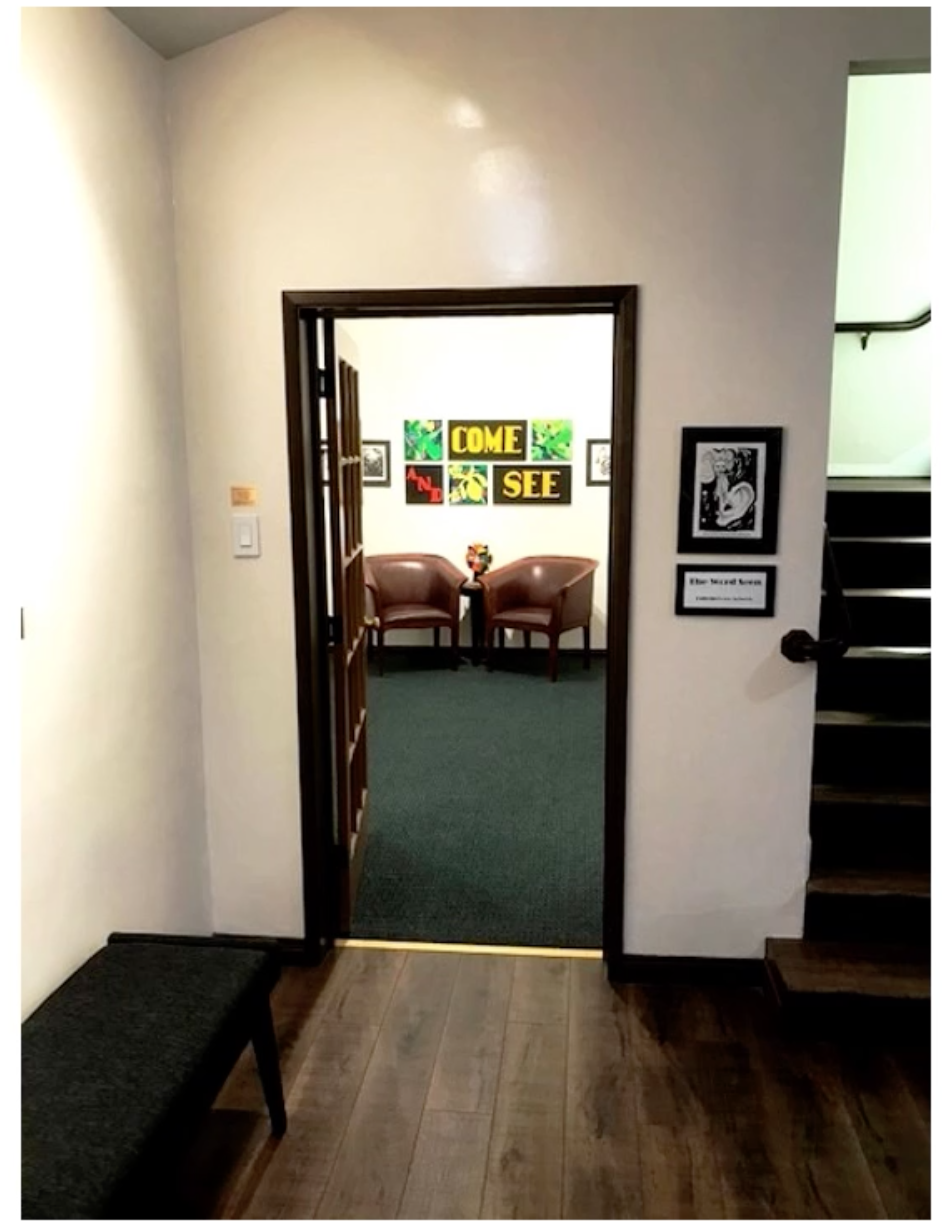
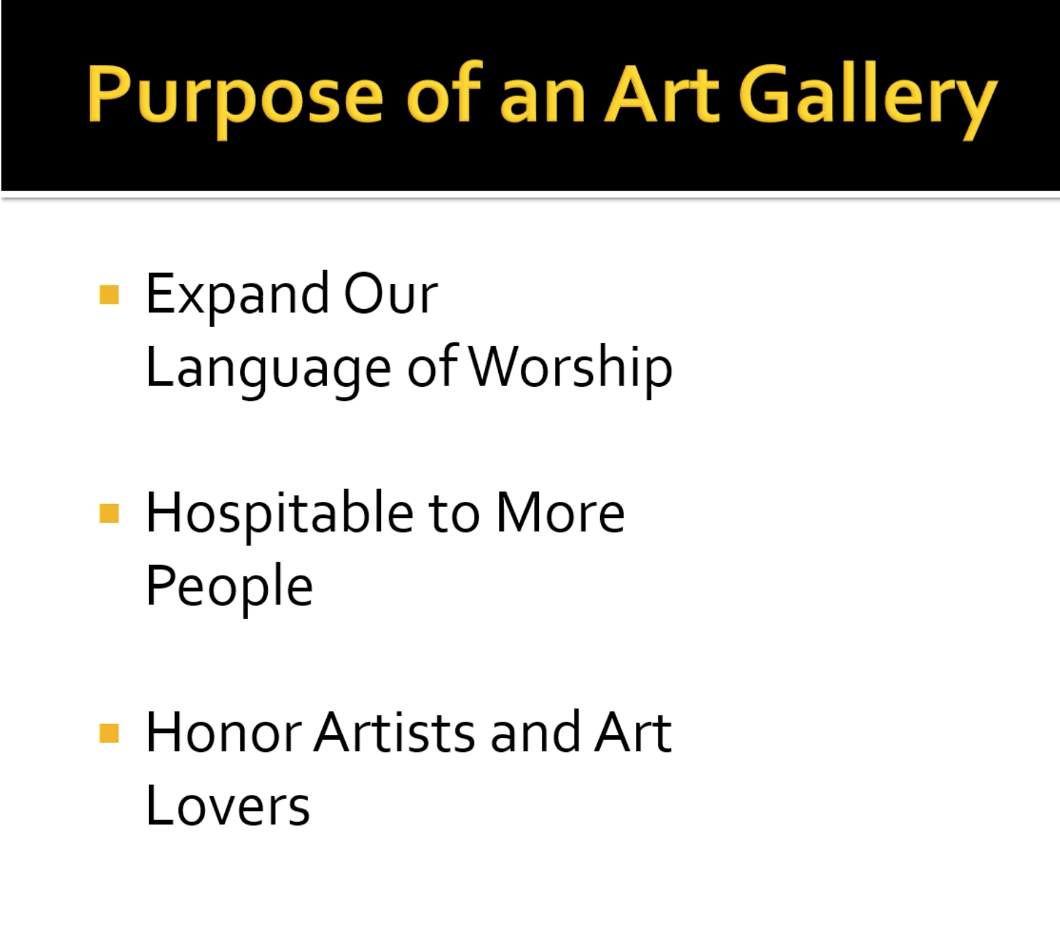
Even more recently, a small room off the lobby has been dedicated to art. These photos are of a Lent 2020 show by Steve Stuckey, related to the story of Jonah.
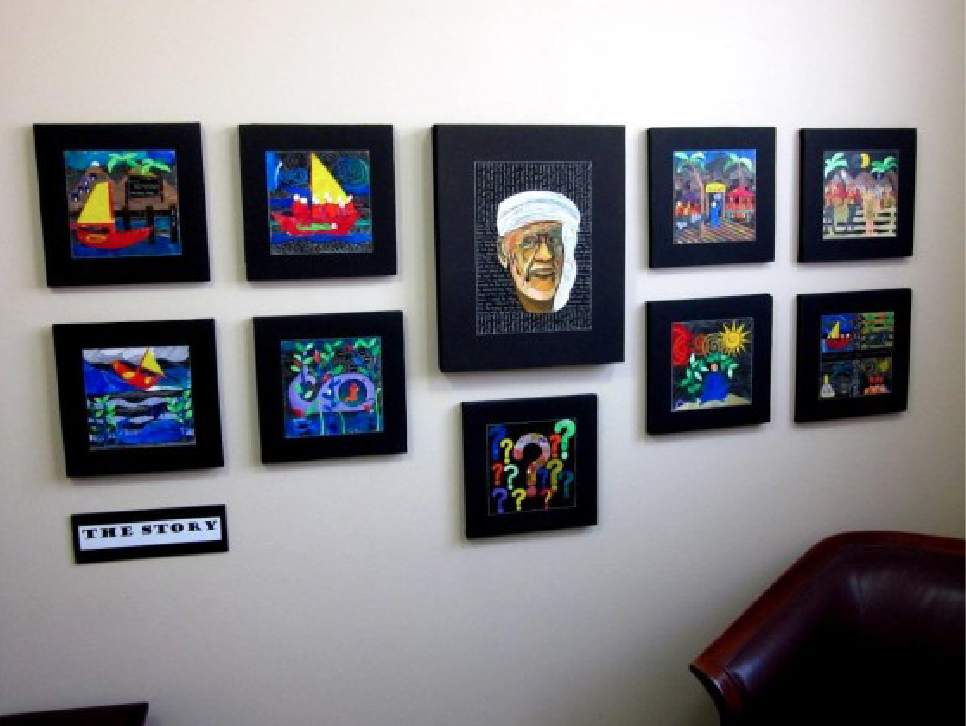
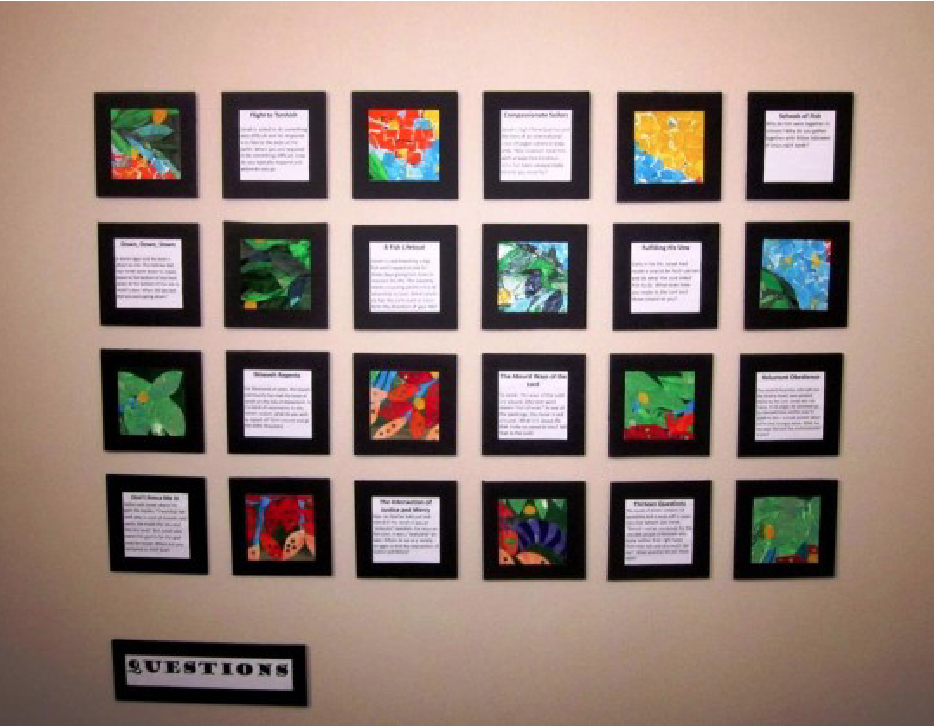
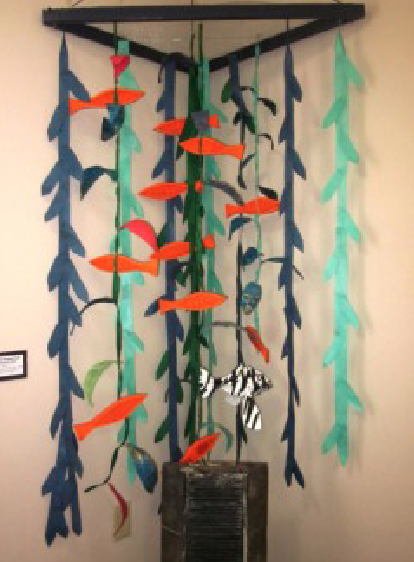
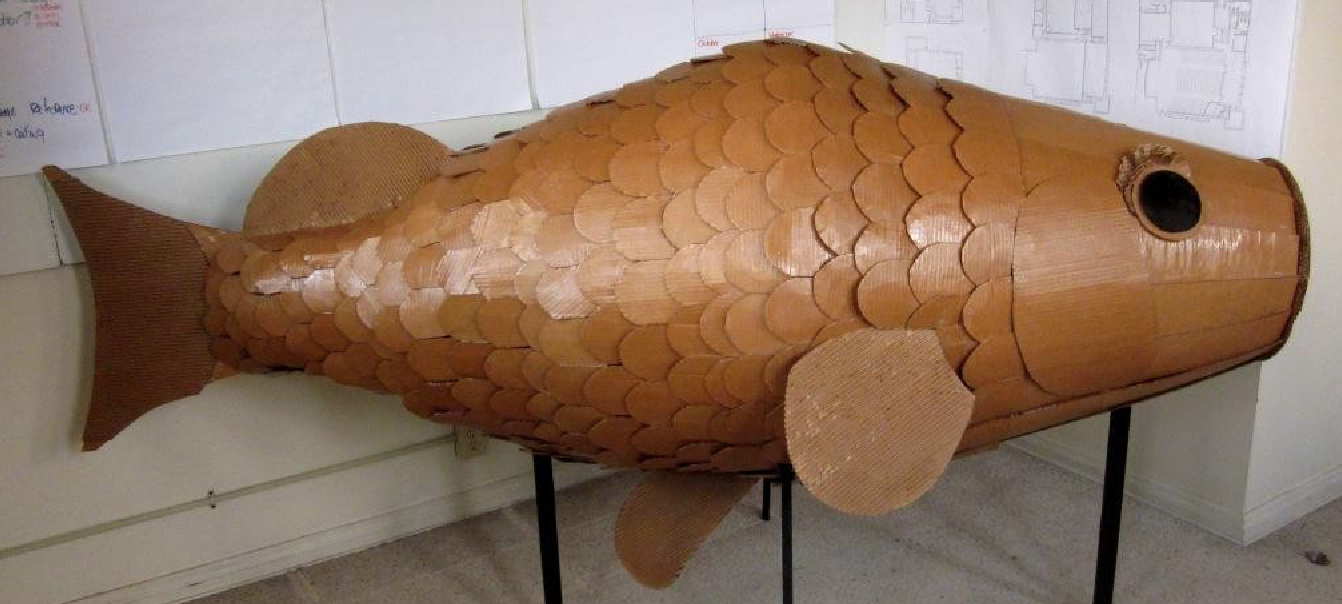
Visual art has also been used to illustrate sermons. For example, Tim Dally preached a series on community in summer 2012—talking about listening, open doors, and stars—featuring three Van Gogh paintings.
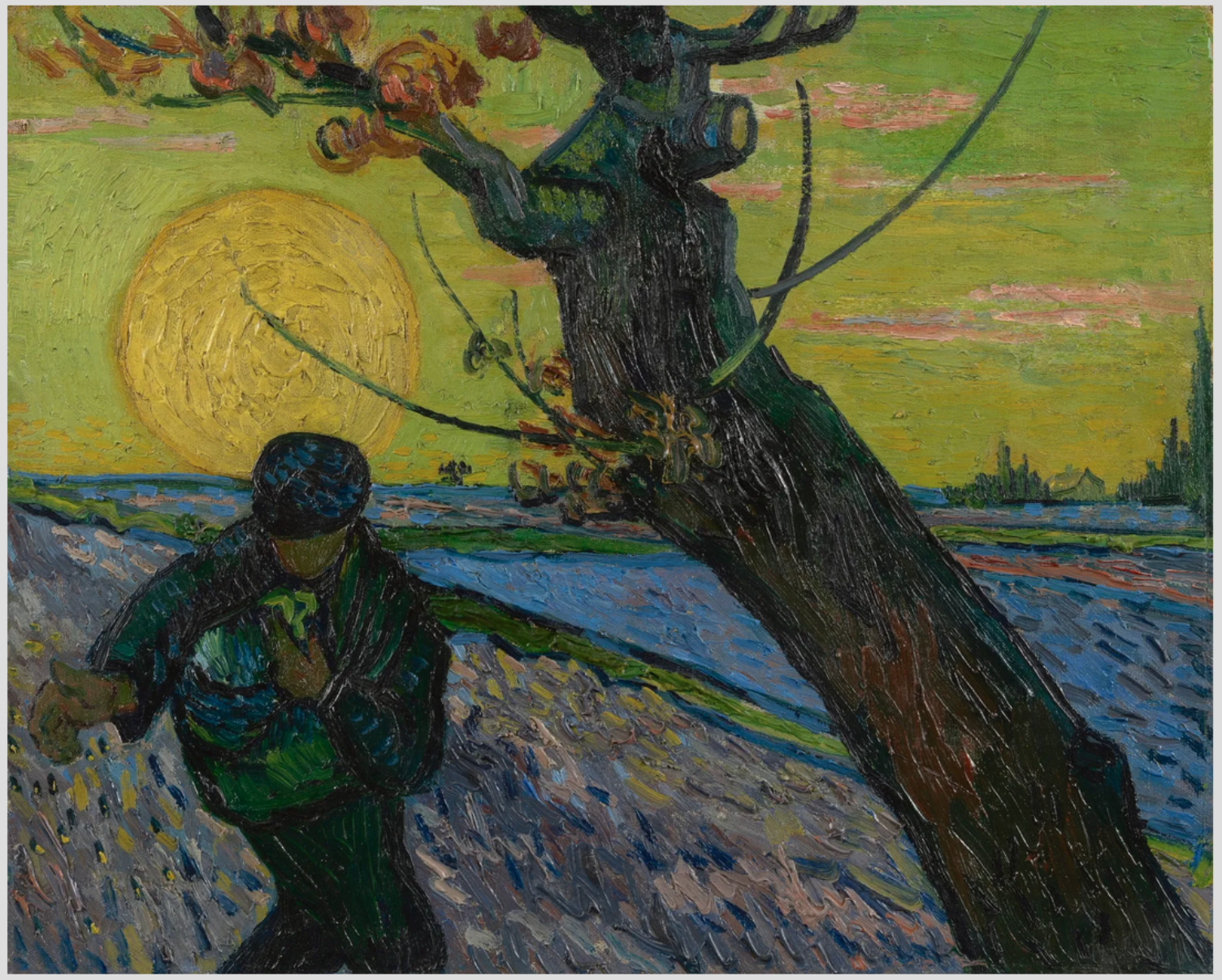
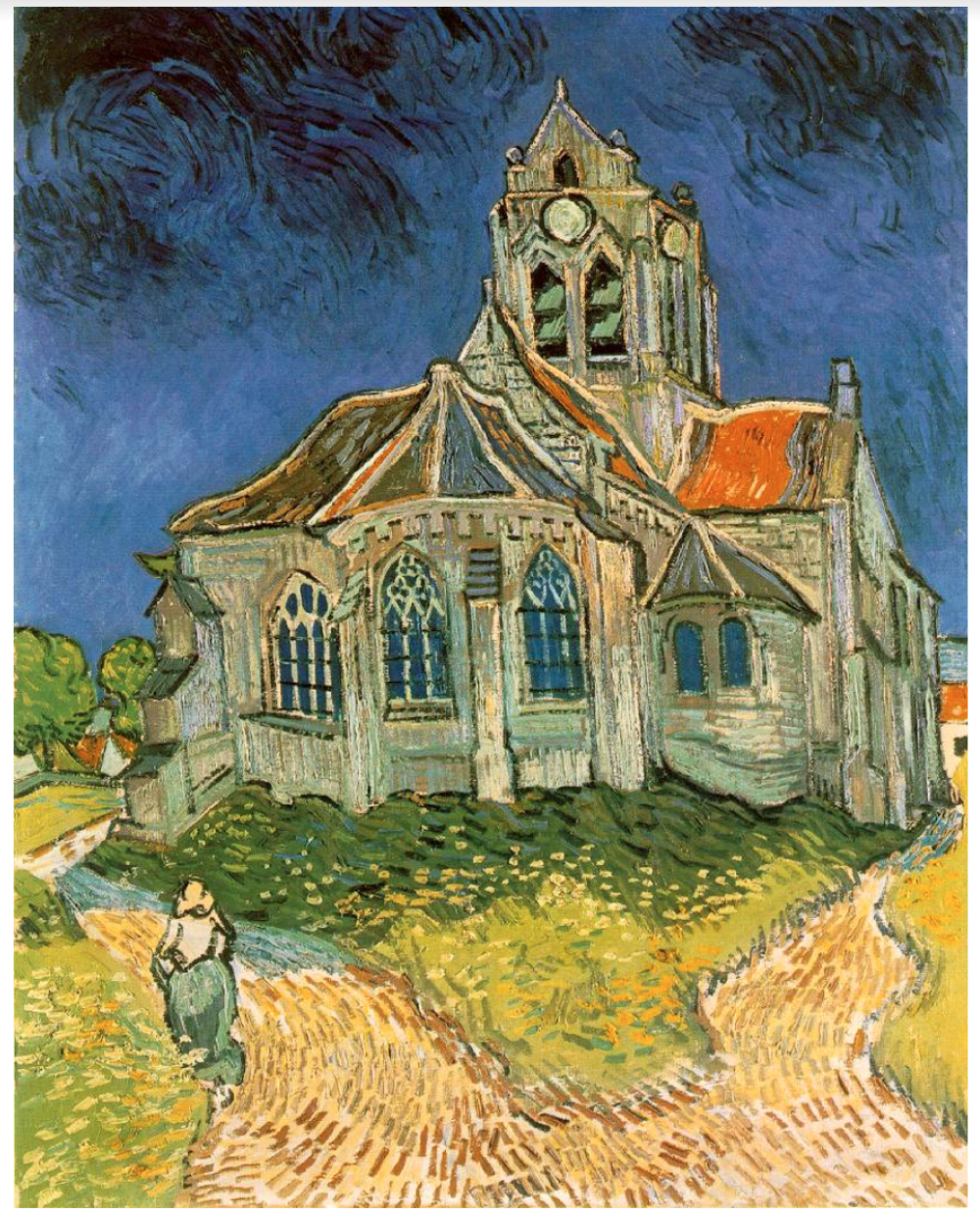

Notable watercolor artist Joe Stoddard once painted the resurrection in front of the congregation with our children watching from close up.

Joe Stoddard & Brittany Burian, Easter, 2019
As part of Pastor Steve Wong’s December 2021 series on the Magnificat, these visuals accompanied one of his points.

Images selected by Steve Wong, backdrop banners by William Myrvold, 12/19/21
Drama, dance, multimedia experiences, creative writing
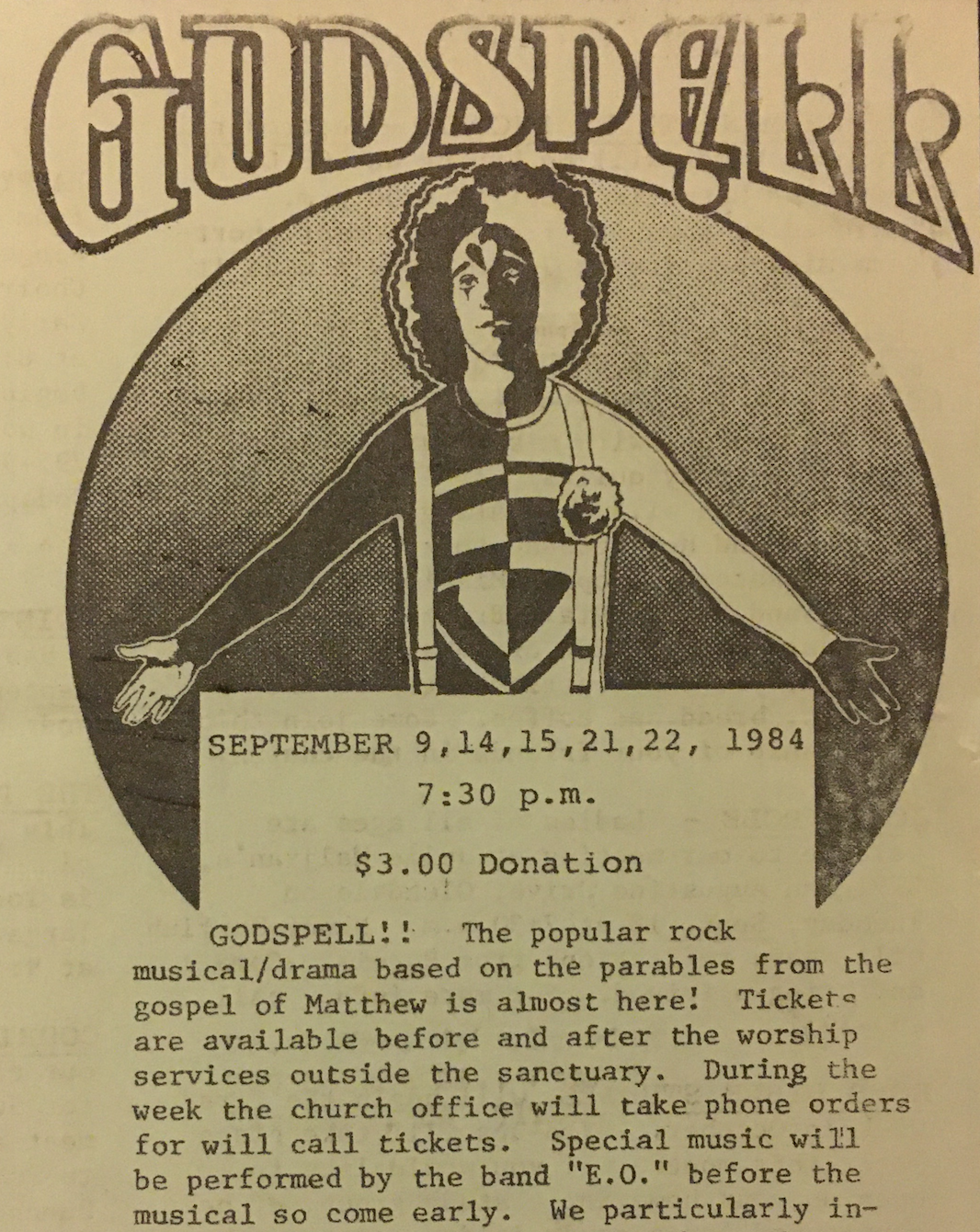
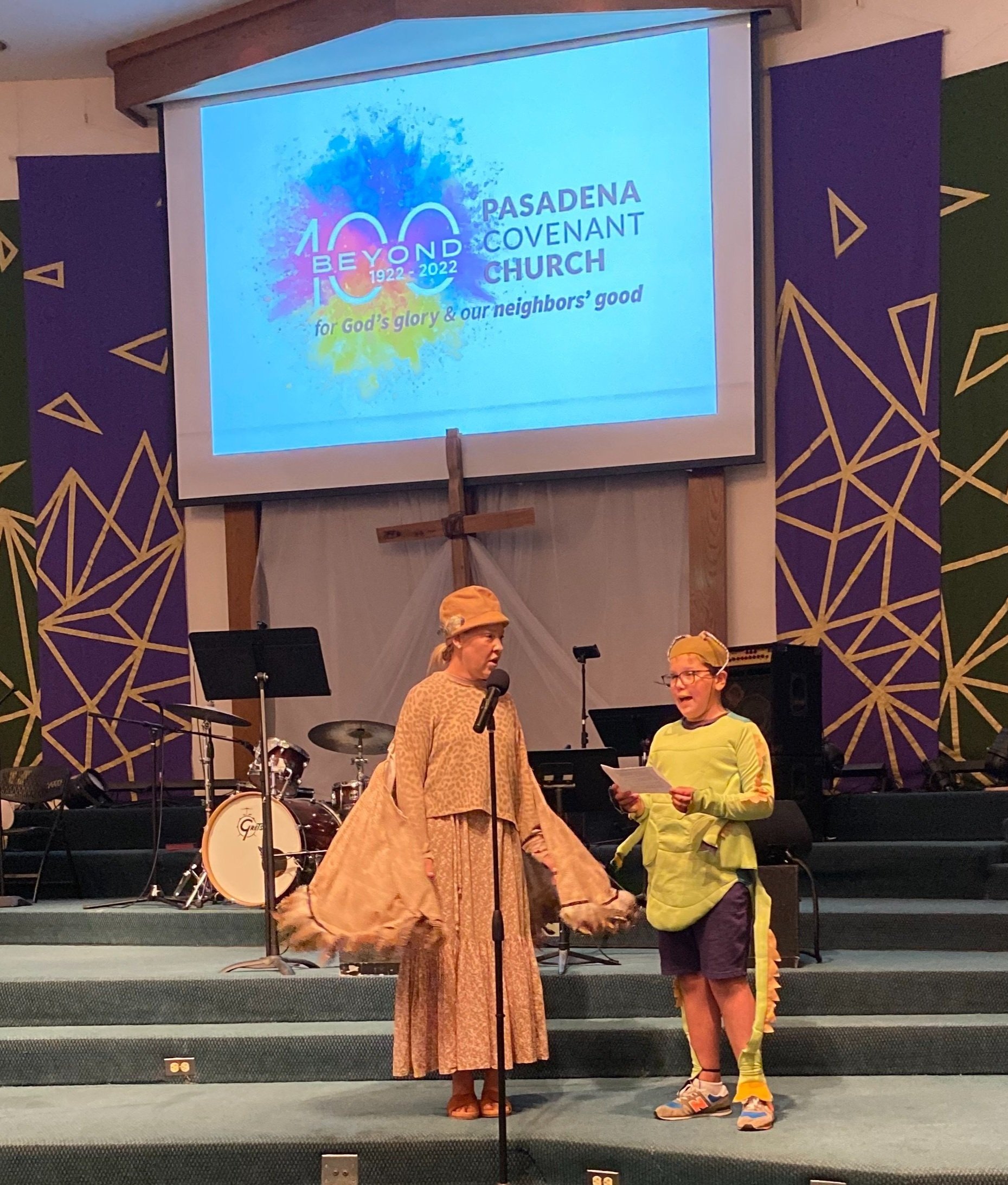
In addition to visual arts, dramatic arts have flourished. In the 1980s the Worship and Arts committee oversaw a group called the Tower Players. One of their performances in 1984 was Godspell. They also ran Saturday workshops to encourage the congregation to use dramatic skills to the glory of God. The Players are no more, but since then, on Sunday mornings, scripture has been read by people dressed as biblical characters. Readers’ theater has brought the Bible to life. Christmas and Easter stories have been dramatized.
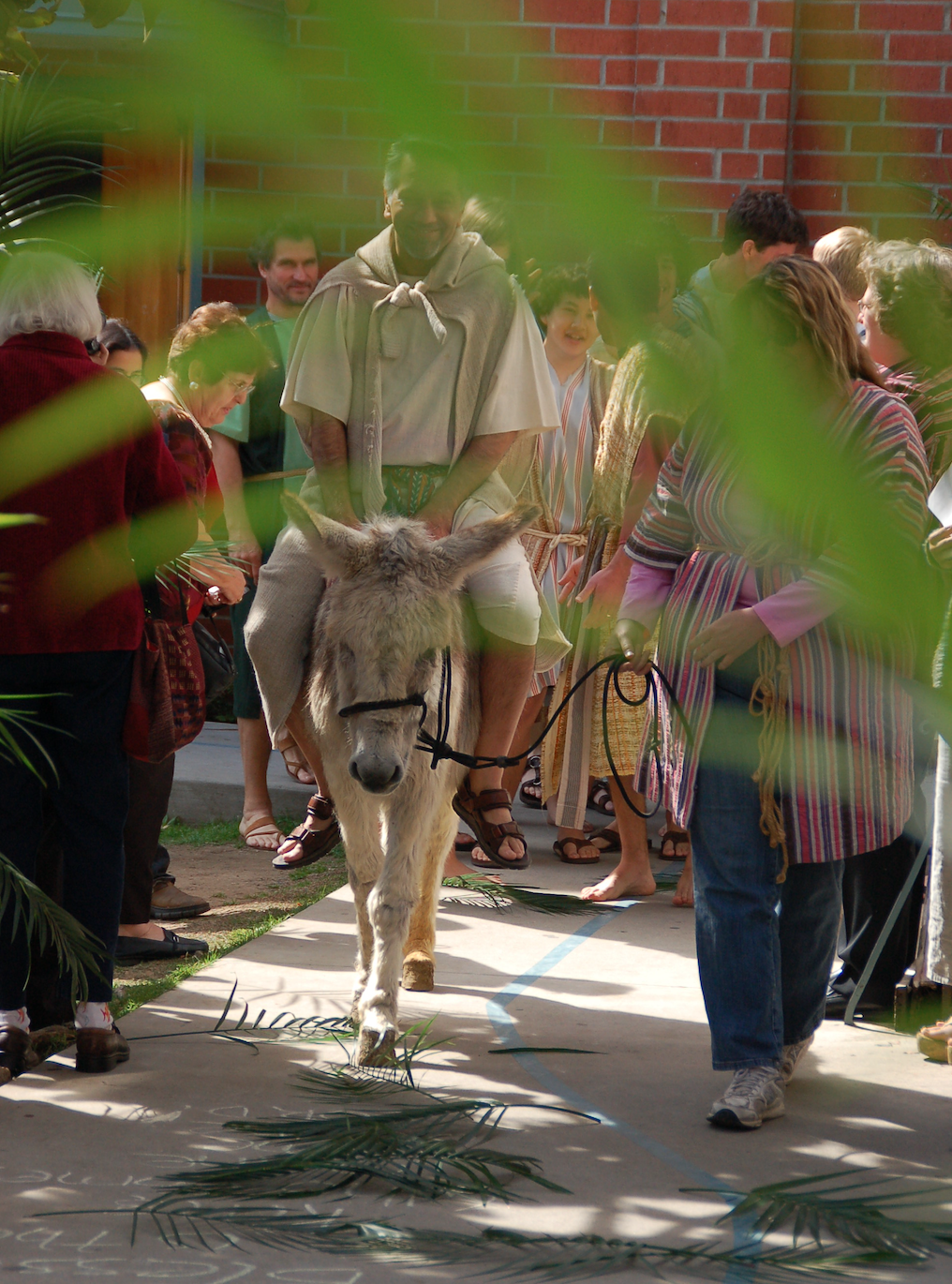
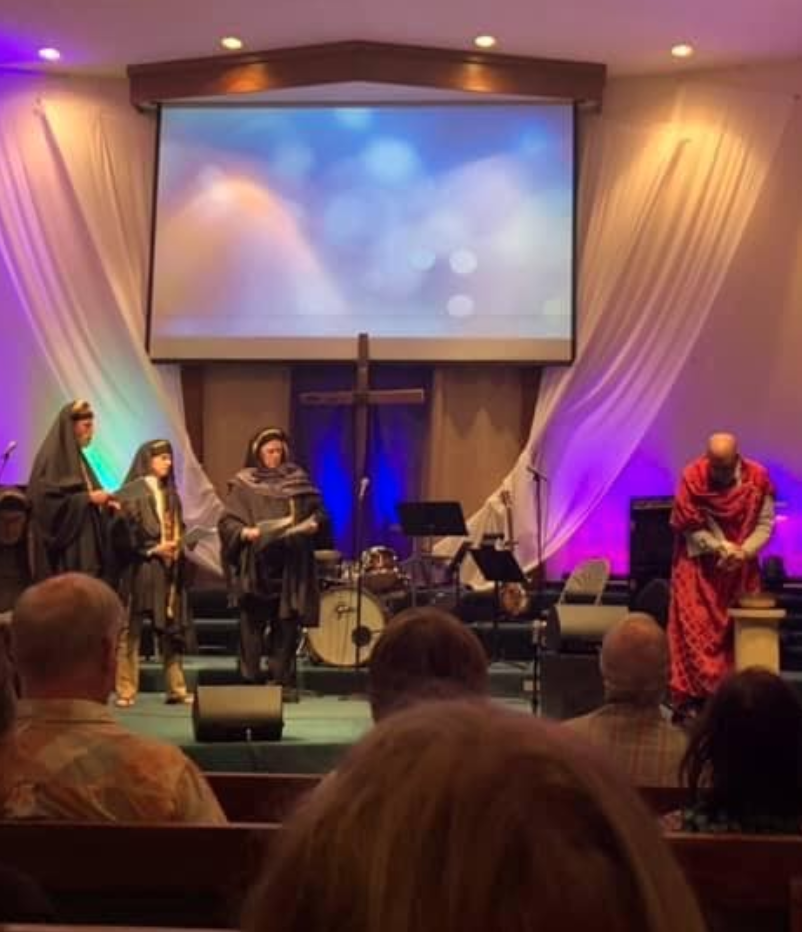
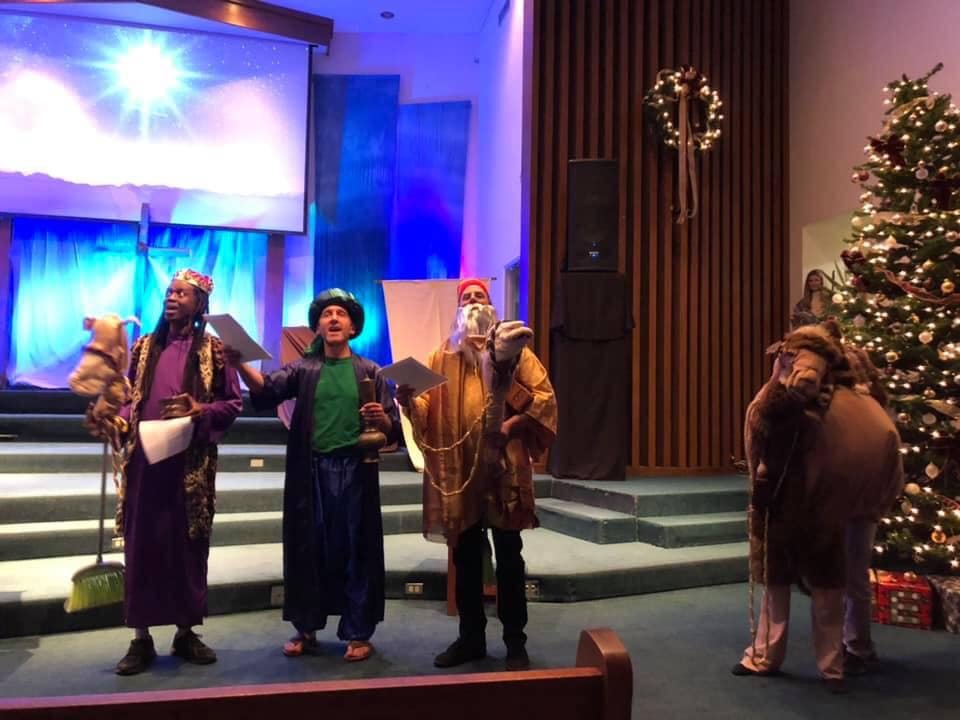
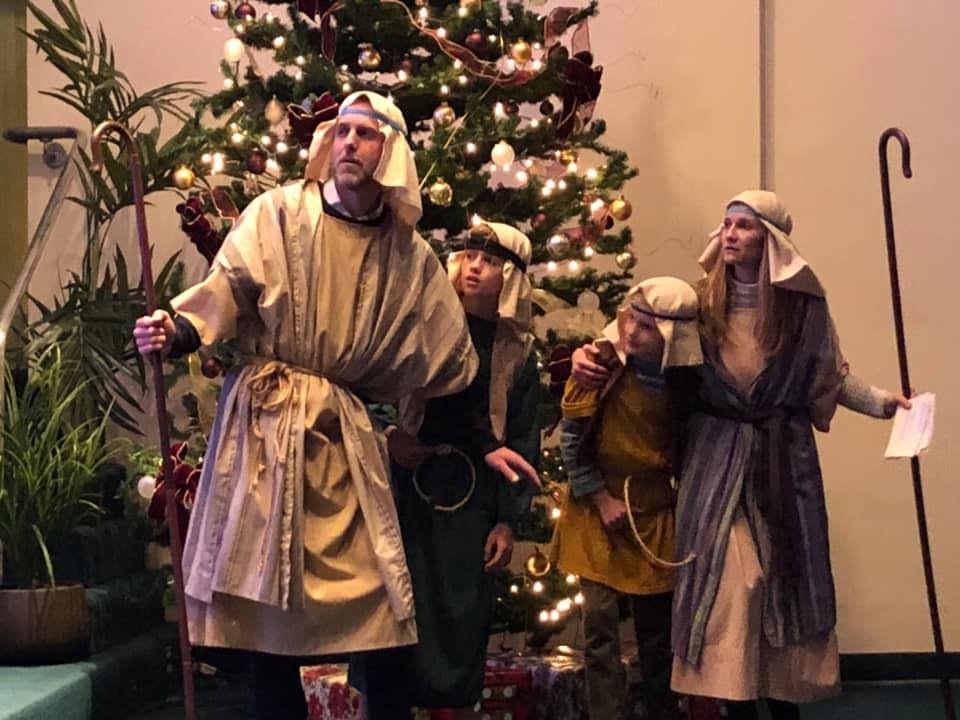
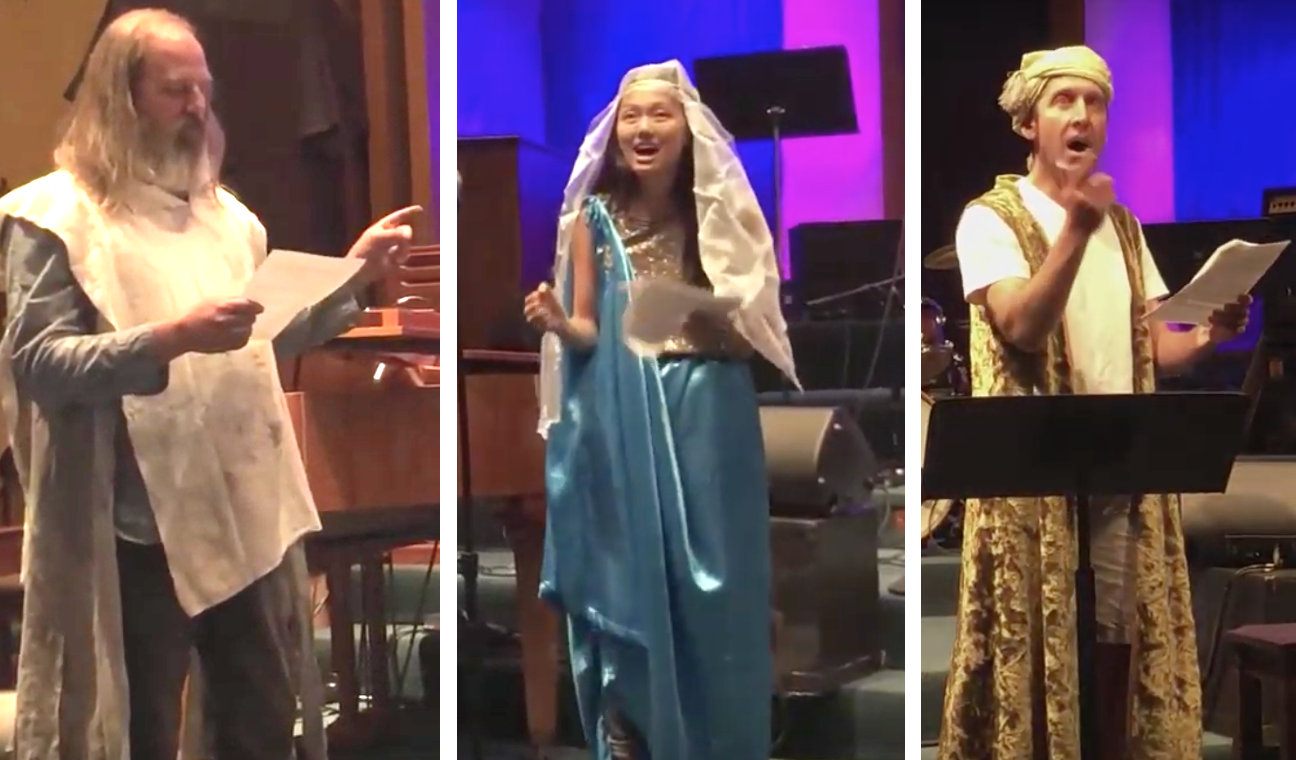
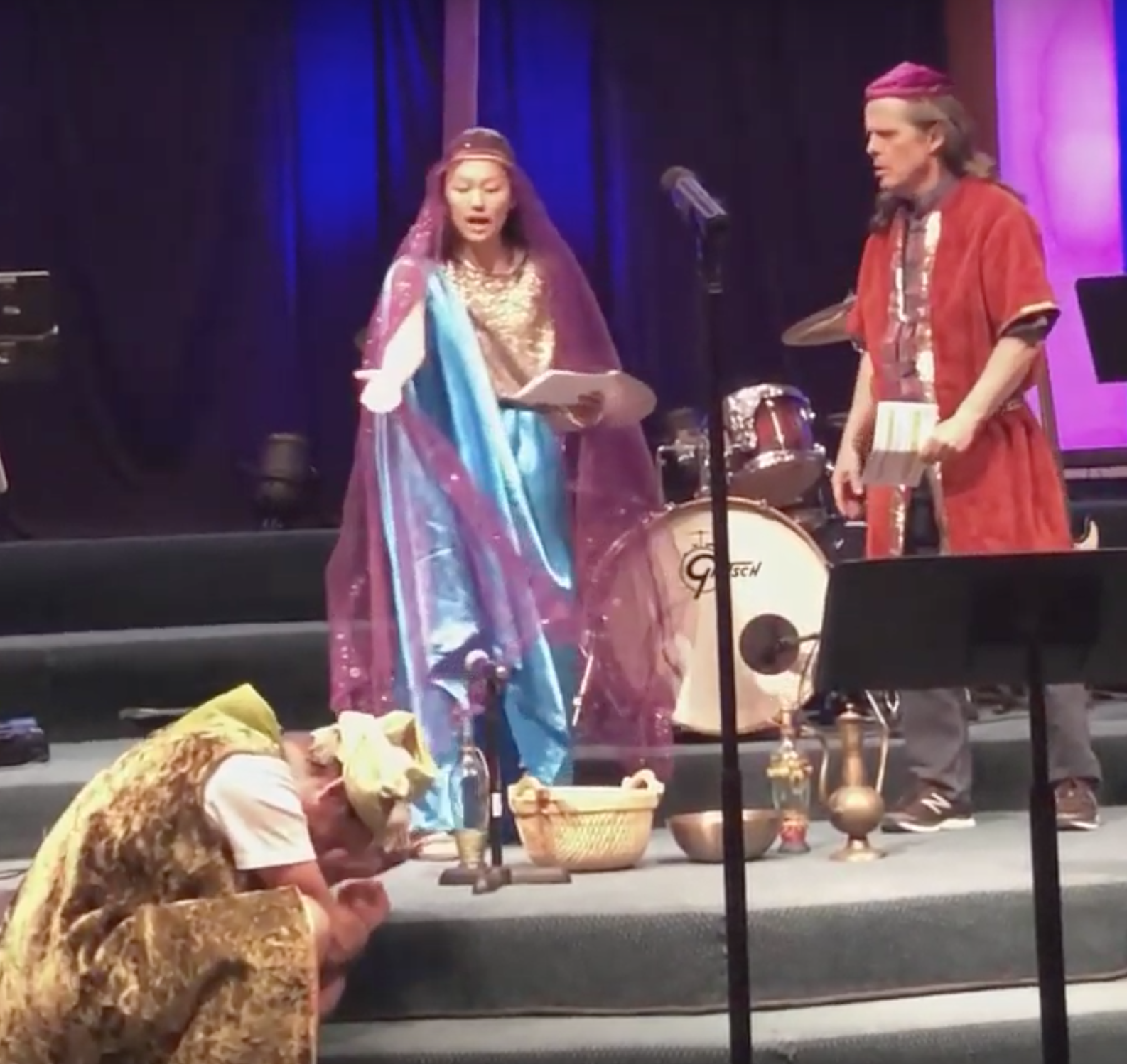
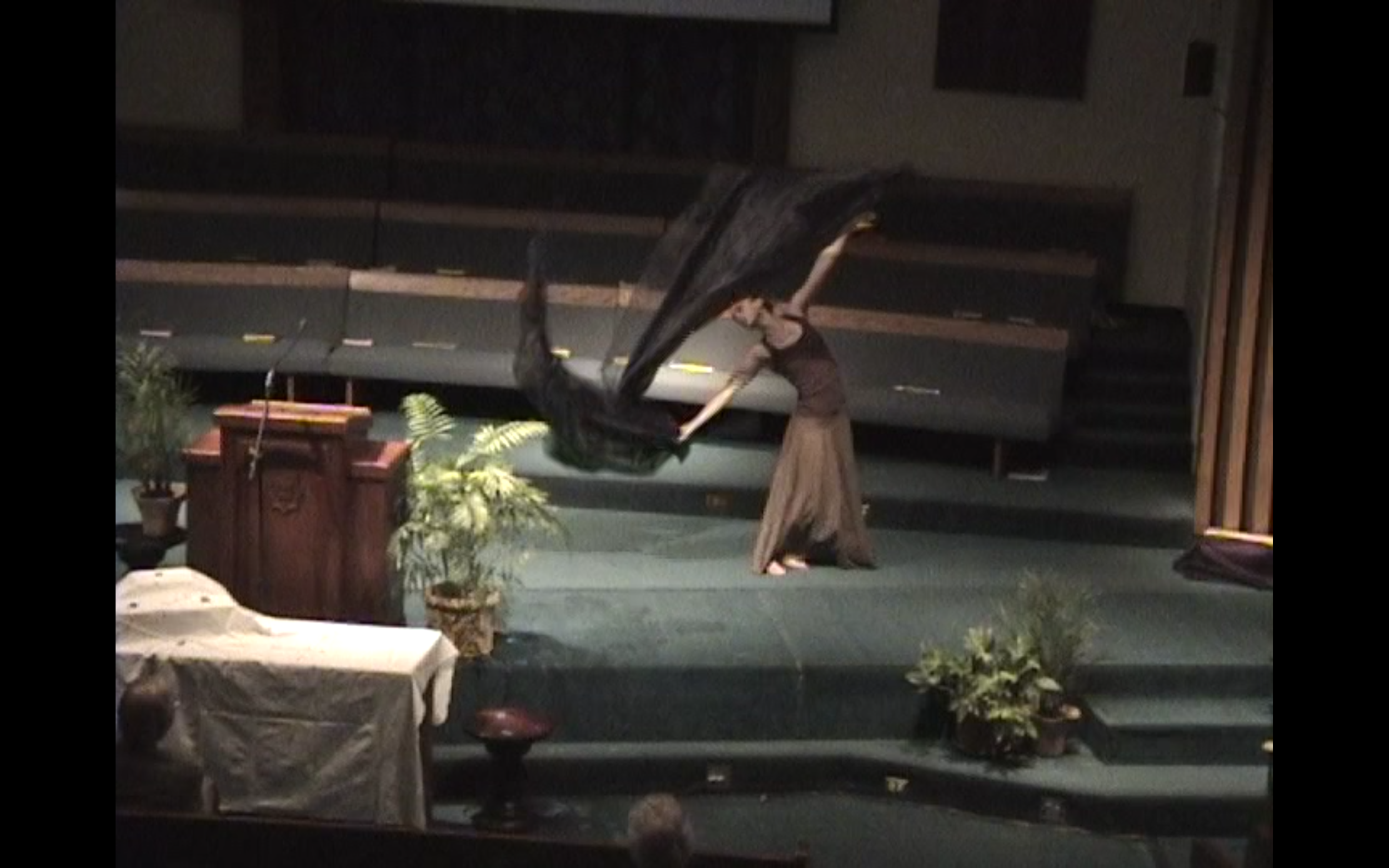
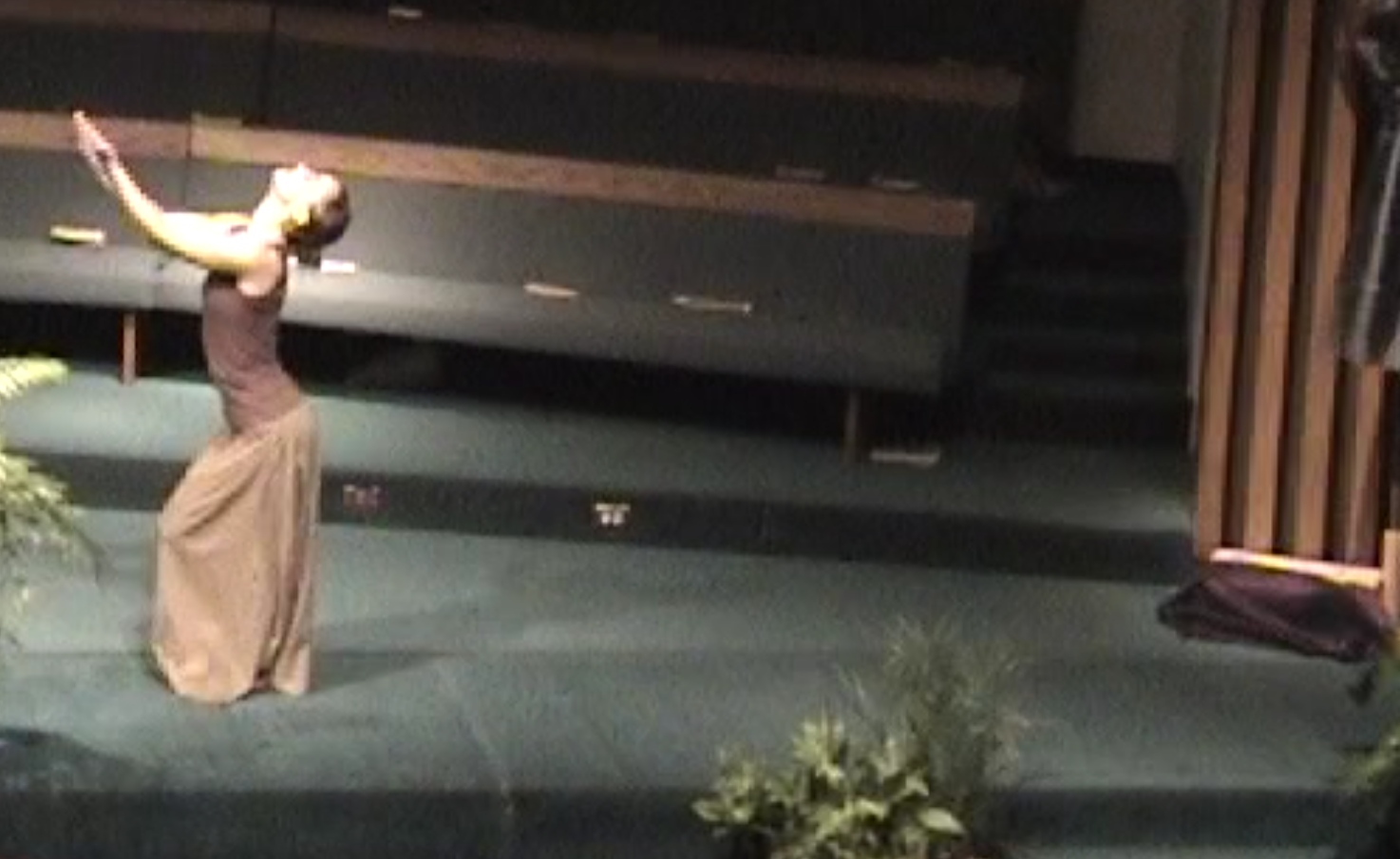
Liturgical dance has contributed to worship services as Roland Tabell and Joan Reeve Owens encouraged young dancers like Laura Allen, Jenica Wozniak, Ashley Thaxton, and others.
The congregation has also been led in reflections for Ash Wednesday, Lent, Easter, and Advent with multimedia installations and experiences.
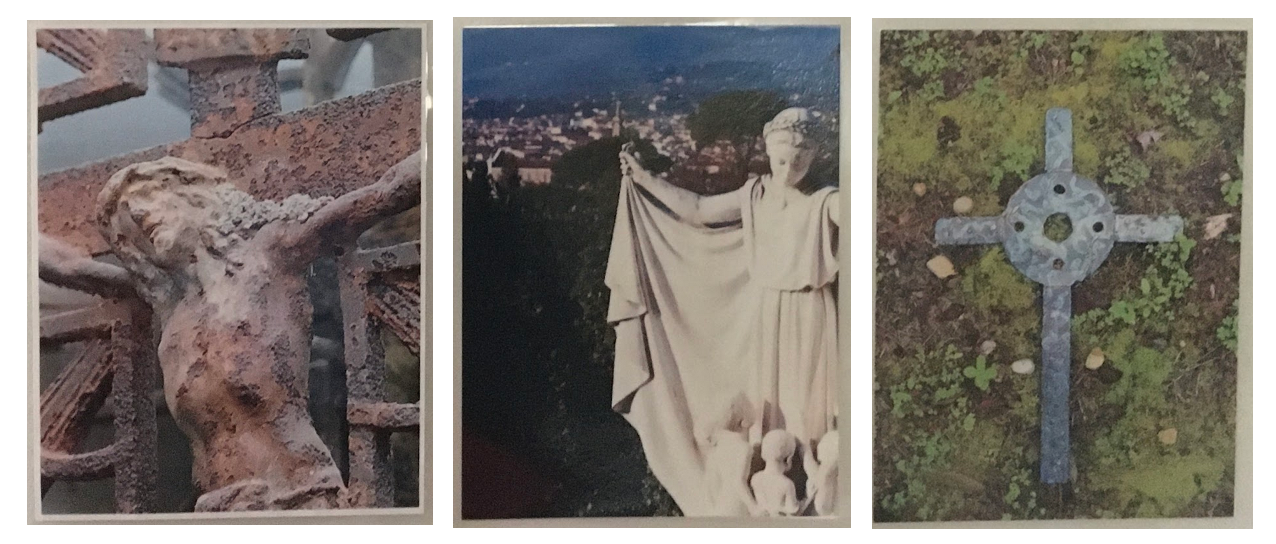
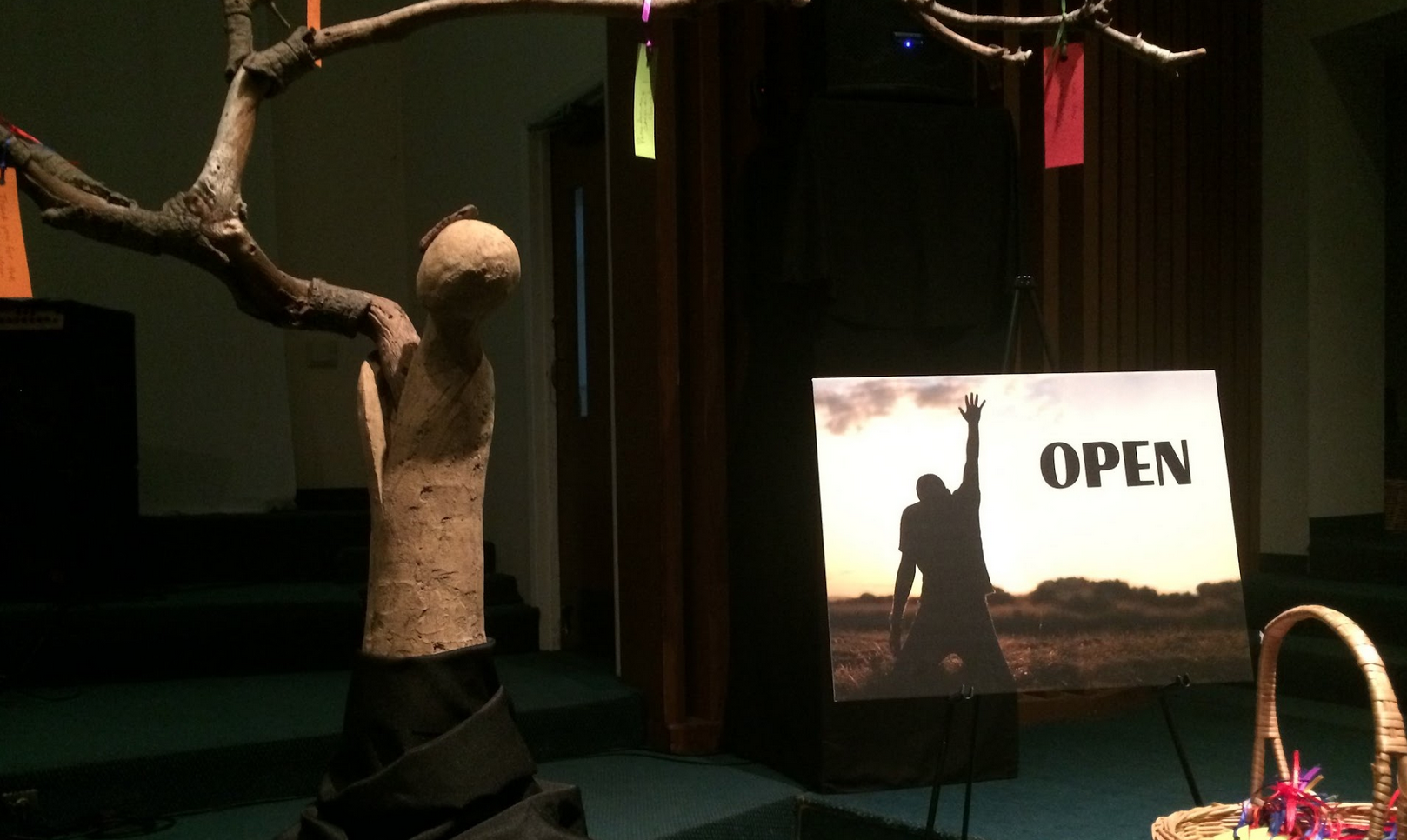
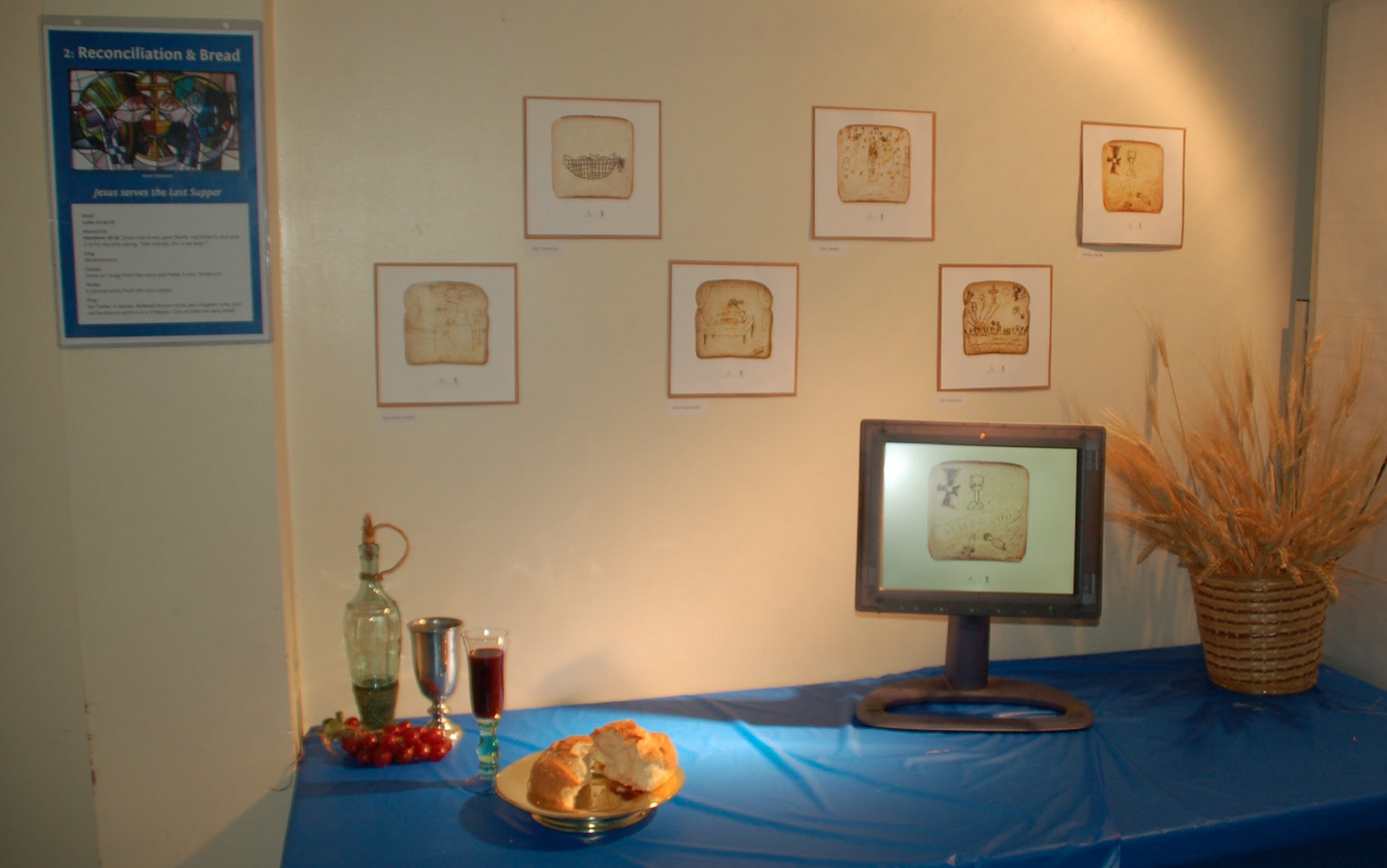
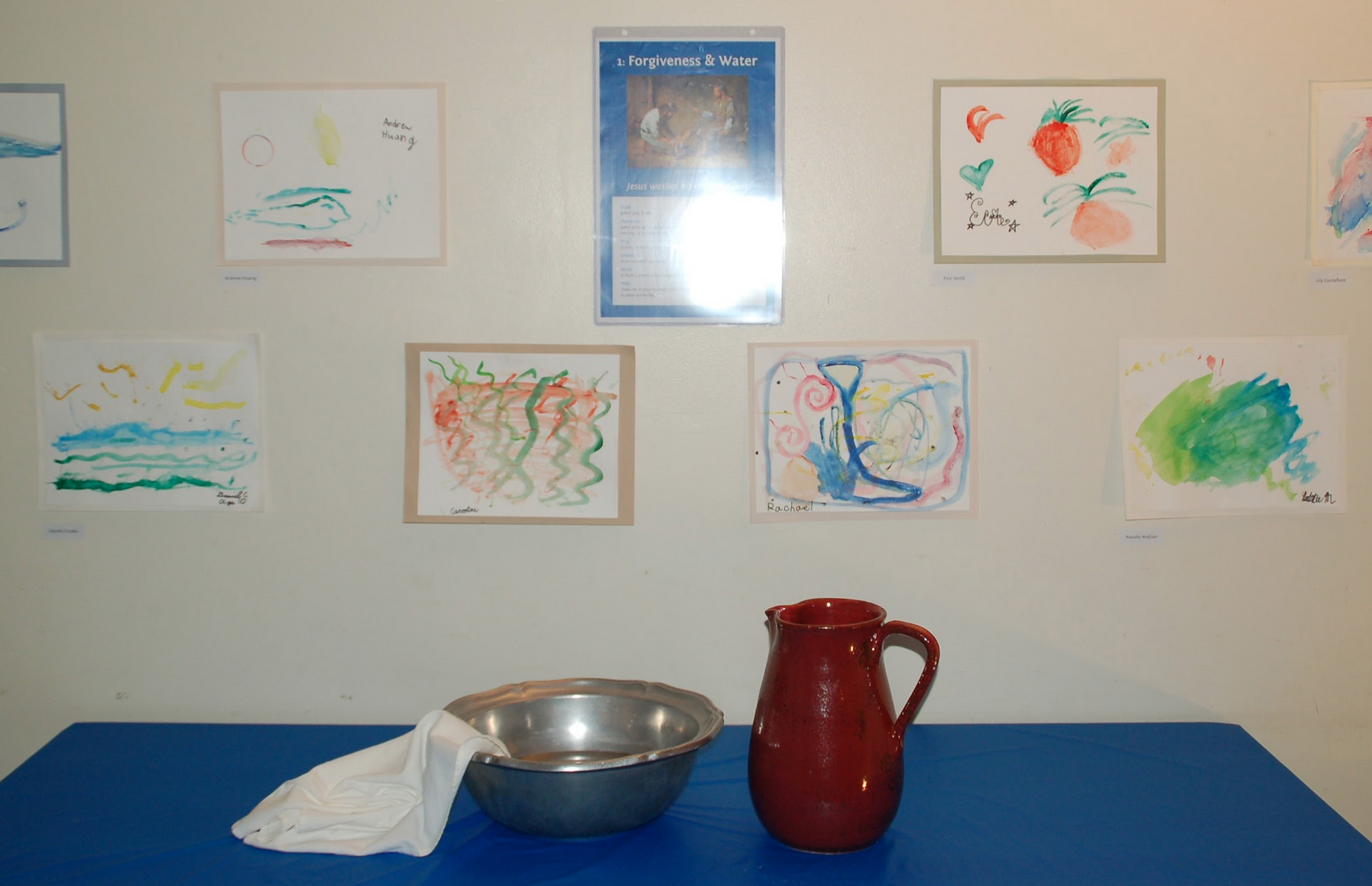
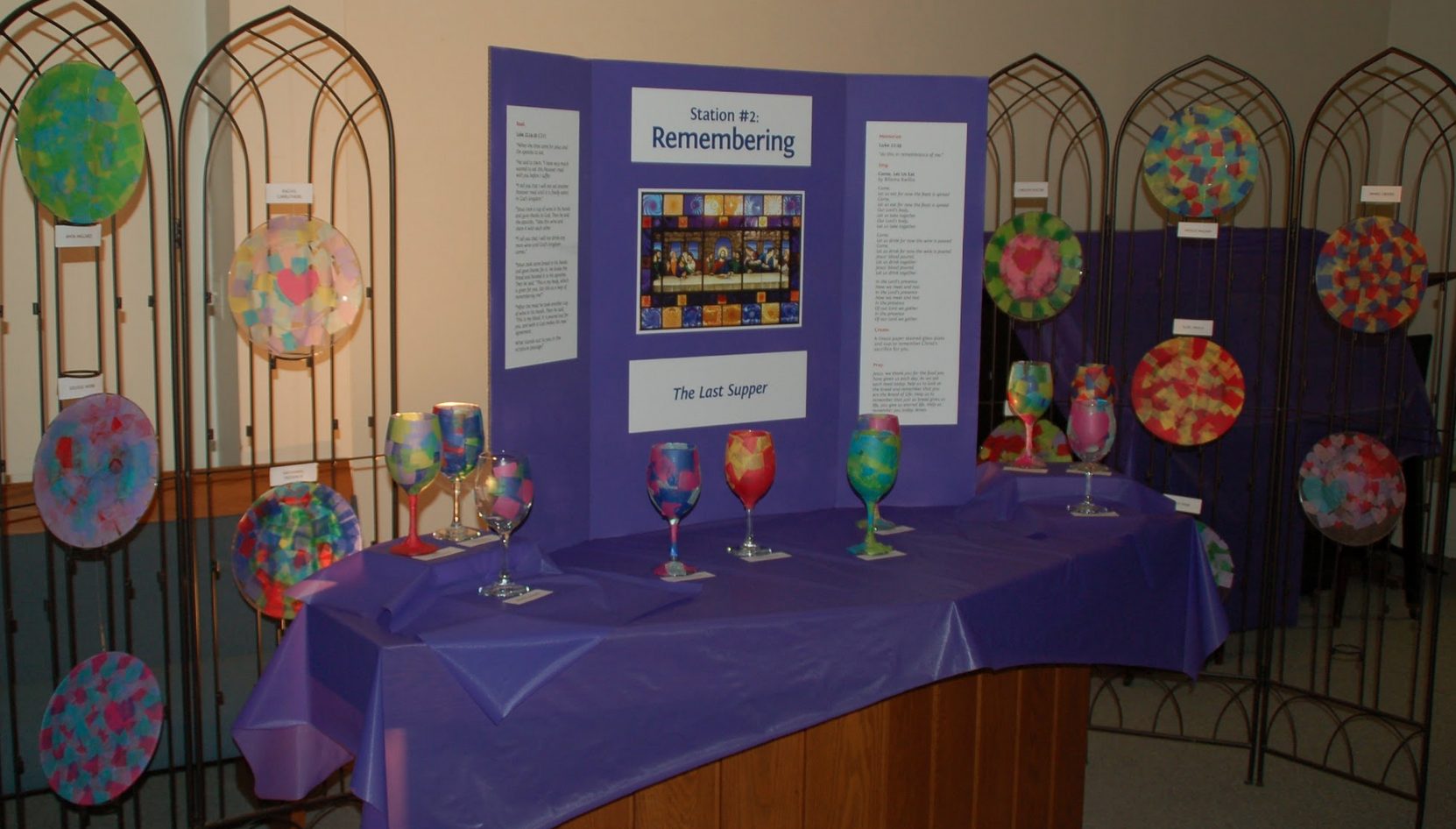
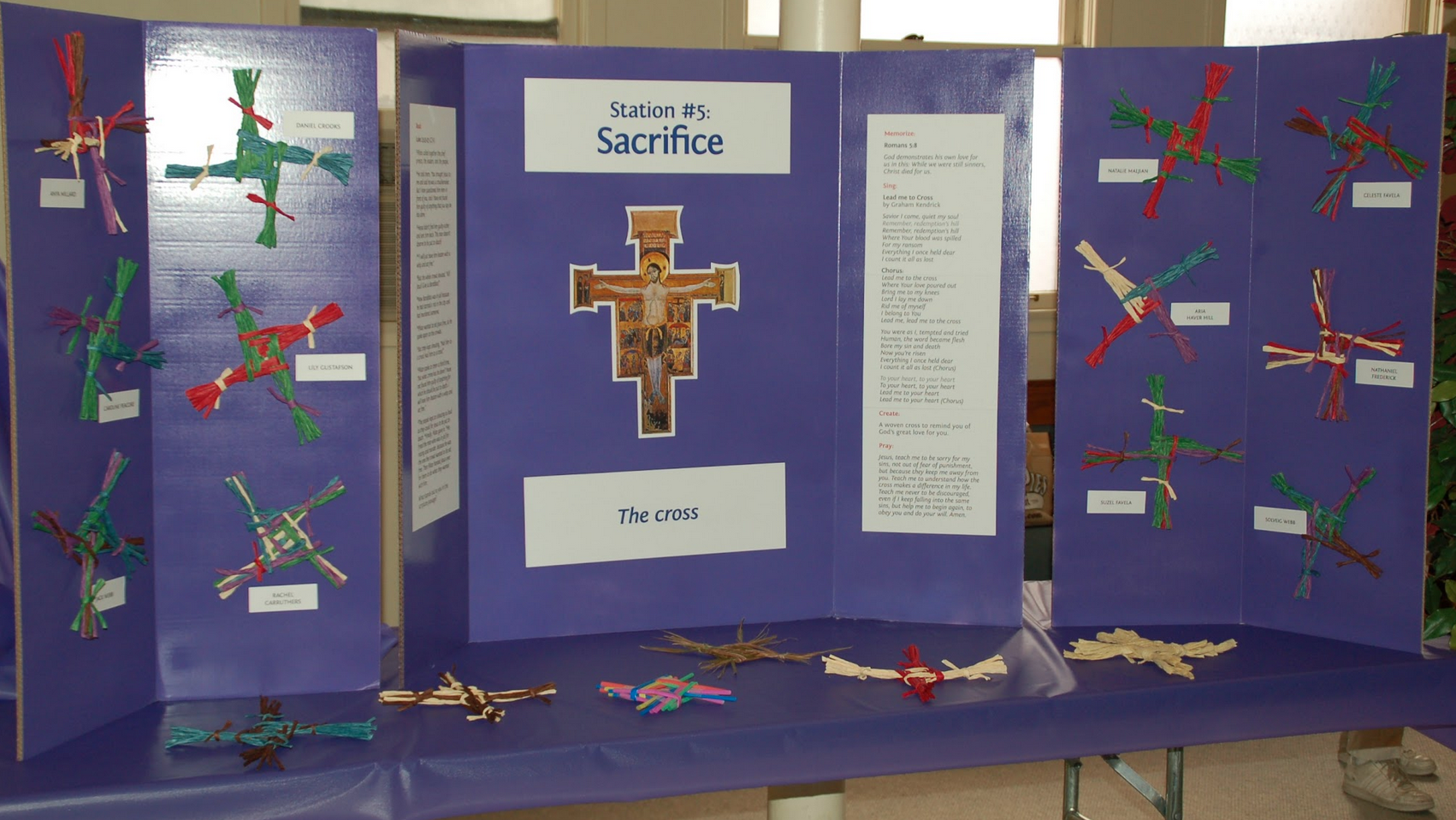
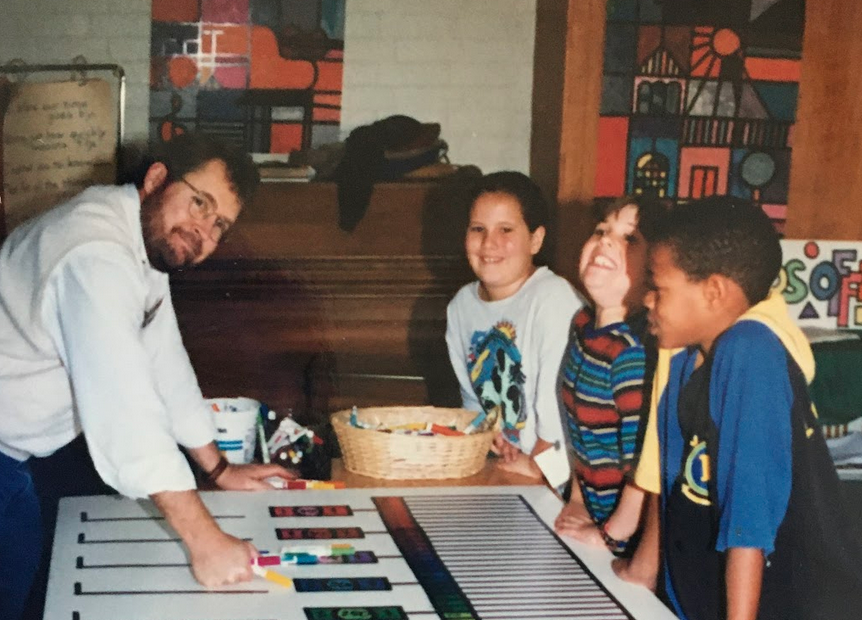
Including children in the making and experiencing of these installations has been important.
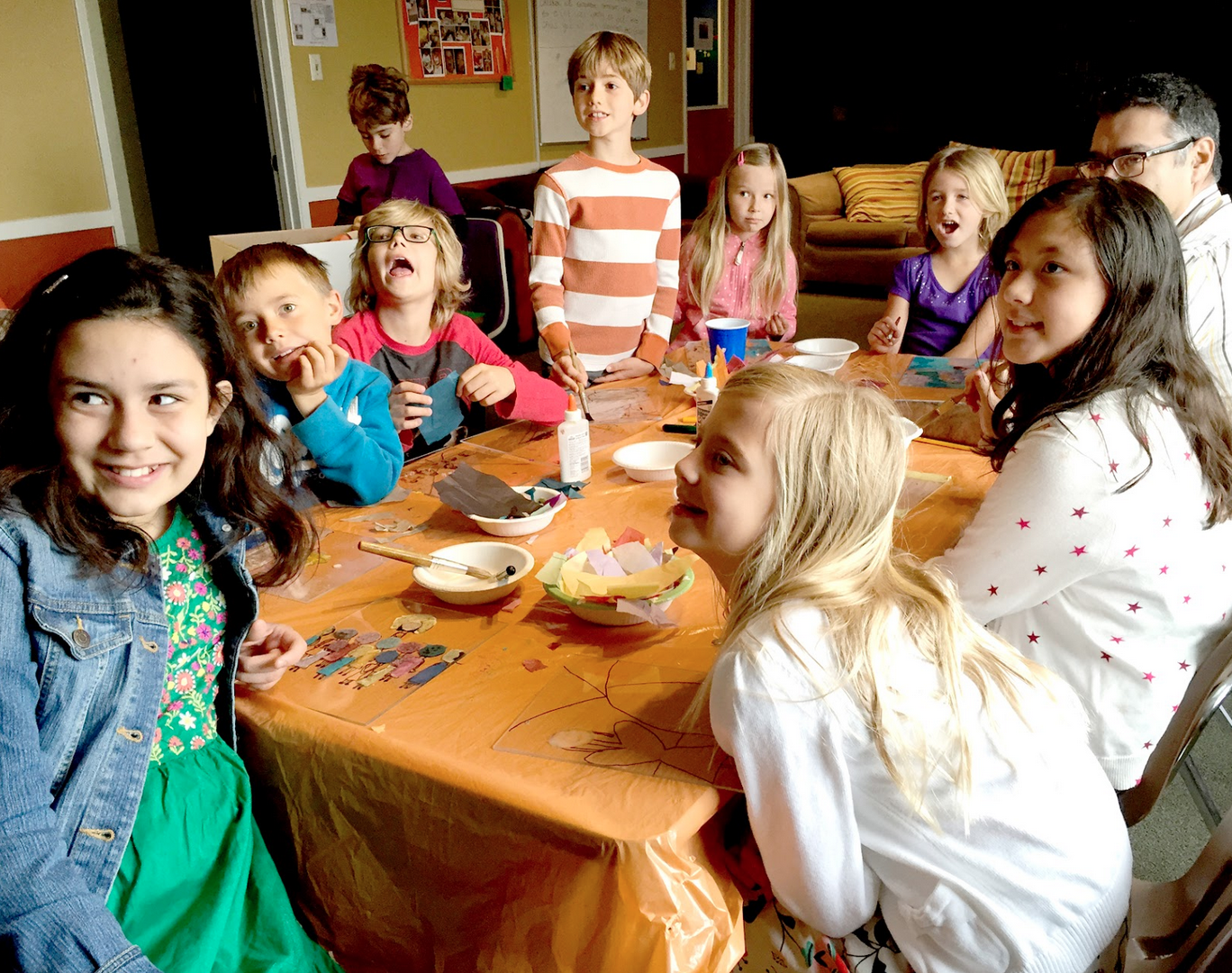
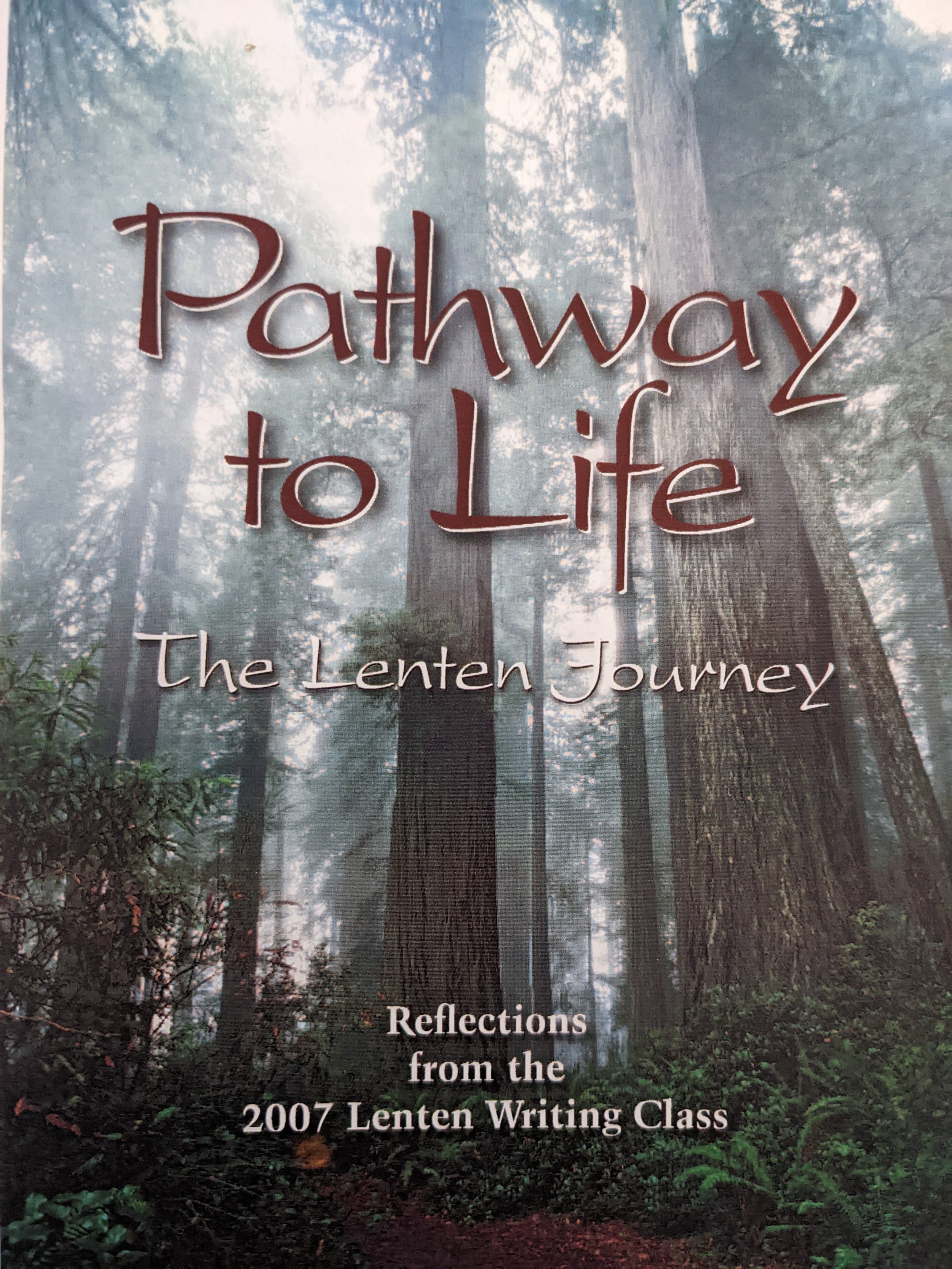
Creative writing has also been part of these seasonal experiences. Becky Still has led groups of people to try their hand at writing (and sharing those expressions in the worship service) for Advent and Lent during several years between 2005 and 2019.
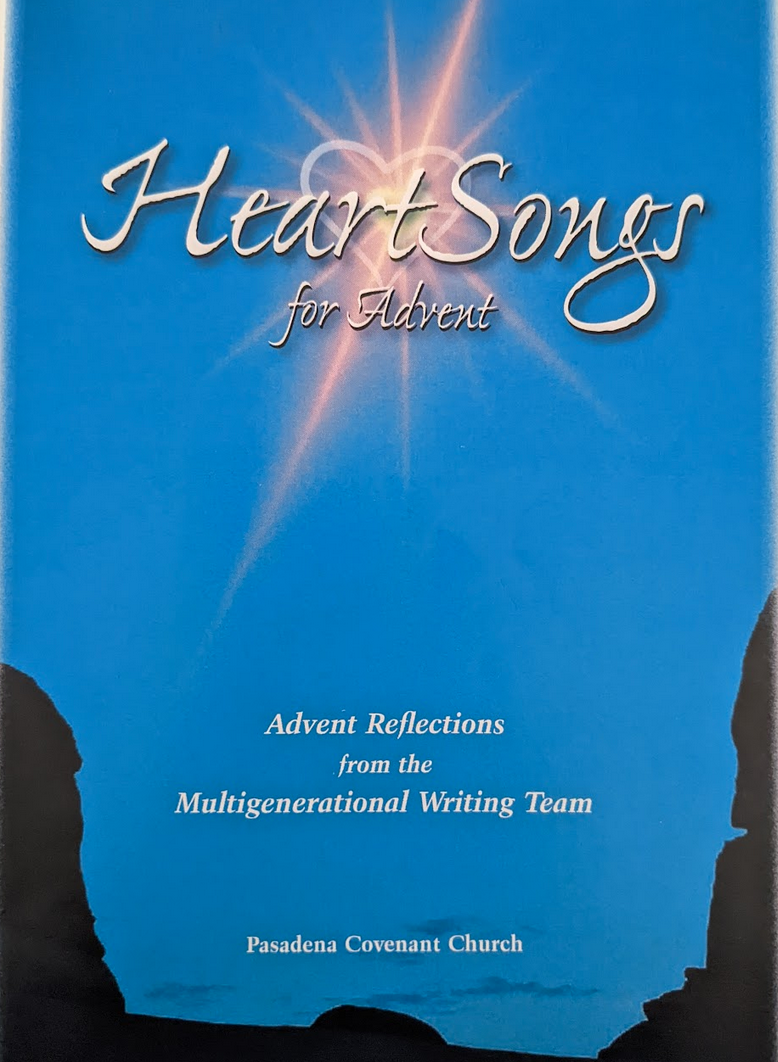
Conclusion
How thankful we are for all the artists who have contributed so much! In the comments, please feel free to remember those who’ve made an impact on you and those we might not have mentioned by name.
In 1976, Mel White wrote: “The Covenant Church has roots in two very different worship traditions: the Swedish Lutheran Church with its classic hymns and its ancient creeds and liturgies, along with the American frontier revivals with their strong biblical preaching, their joyful Gospel songs, and their spontaneous lay participation. Our goal is to continue using the best from both worship traditions with a touch of modern media to build services that consistently minister to our members and visitors from across the community.”
Beyond 100
Now, in 2022, what worship traditions would we say we are rooted in? How can those roots, along with new growth, allow us to minister to members and newcomers? What will the role of the arts be in a future in which we long for everyone to experience the beauty of the Lord?
P.S. Steve Stuckey has created a video to introduce the Art+Prayer gallery. Listen to his explanation and get a preview of the current show. https://www.pascov.org/artprayer. (September 2022)
We are so grateful to the many who have sought to follow God over the past century,
and now we seek to imitate their faith for the next hundred years.
Please join us in giving to this legacy of faithfulness!

Prayer
Introduction
The roots of prayer at Pasadena Covenant can be traced back to the 19th century Pietist movement in Sweden. Home-based small groups, or “conventicles,” that met for prayer, singing, Bible reading, and encouragement toward personal spiritual growth, were a practice that the founders of the church had grown up with and continued in their new church home.
One way prayer was a part of the church during the early days was a midweek prayer meeting. During one year when the annual report included attendance statistics (1959), attendance at the morning service was 450 and attendance at the prayer meeting was 75—one in six people were committed to that extra hour of group prayer. Traditionally, congregants got on their knees during this prayer time.
Another key season for prayer at the church started in 2002 when church leaders decided, as their vision statement put it, to “make prayer central.” Diane Woods led this Centrality of Prayer initiative until 2009. She oversaw multigenerational ministry teams who prayed before the worship service and who prayed twice weekly for the needs of the church. She visited the church council, committees, Sunday school classes, and house groups to demonstrate prayer activities. Prayer calendars for adults and kids were included in church newsletters. More initiatives from this time will be described below.
Details of the where, how, who, and when of prayer may have changed, but the why remains the same: we pray because Pasadena Covenant believes in a God who speaks and who listens, and believes that our relationship with God is nurtured through prayer. The differences are like different streams from the same river.

Where: places to pray
At some periods in the history of the church there have been special places to pray. The new church sanctuary built in the 1940s left a space in the old one, the room we now know as the Gathering Place. In 1954 it was dedicated as a prayer chapel—filled with people during the midweek prayer meetings.
The little room at the front of the church next to the women’s restroom was for a while used as a bride’s room. In 2009 the Tybergs redesigned it as a prayer room, which it served as through 2020. A table-top fountain, art, and a desk with Bibles for study and writing made it a quiet place for individuals or small groups to pray.
Anita Sorenson introduced the church to an off-campus location for prayer, Arlington Garden in Pasadena. In 2014-2015 she offered several Days Apart there for prayer and retreat.
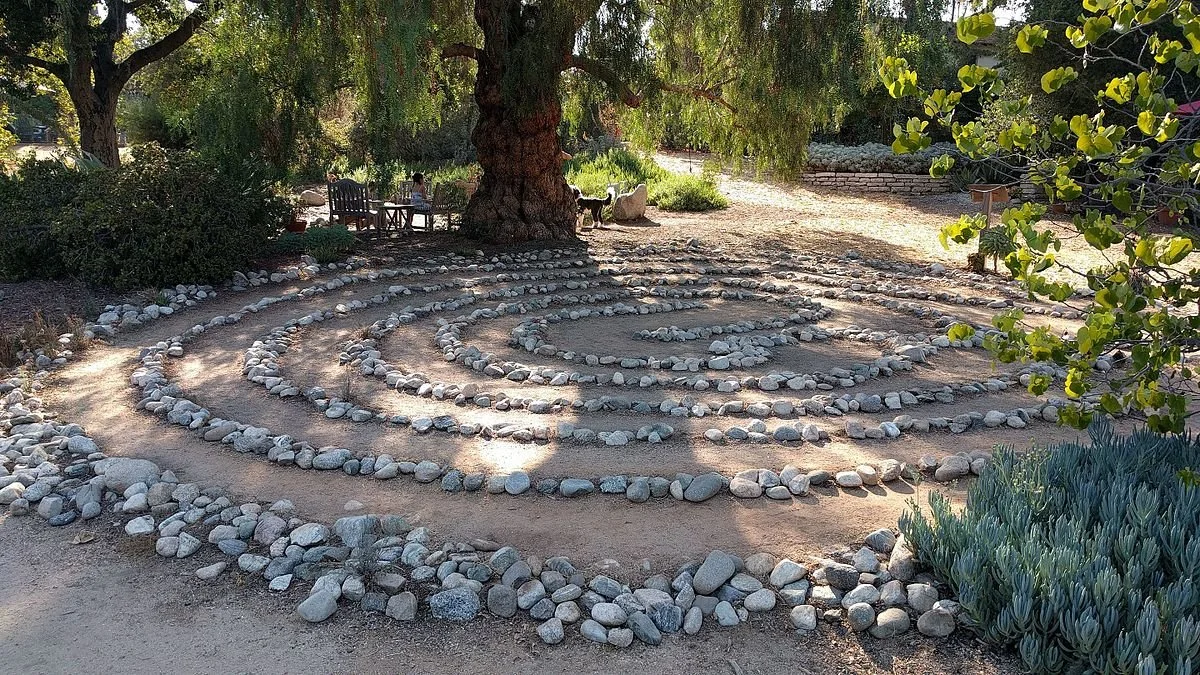
How: learning various forms of prayer
The church has benefited over the years from seminars that both taught about prayer and created experiences of prayer. One seminar was in 1989, by Randy Roth, an active Pas Cov member while a Fuller student and later a Covenant pastor in Oakland, known for his commitment to praying for the city. Others were in 1990 and 1998 by Ron Lagerstrom, a Covenant leader who developed prayer resources for the denomination.
The most notable of these speakers was Brennan Manning, author of The Ragamuffin Gospel, who led us in a weekend retreat in March 2006. Attendees numbered 140 from the church and 150 more from elsewhere. Diane Woods, who organized the retreat as part of the Centrality of Prayer initiative, wrote in her annual report: “The retreat focused on Jesus’ extravagant boundless love for each of us. Manning encouraged participants to grow in intimacy with, trust of, and love for Abba because He is ‘so very fond’ of each of us.”
It wasn’t just outside speakers. Pastor Anita Sorenson led a one-day retreat on peace and prayer called “Come Away for a While” in 2003. She also led the Life Together class for adults on Sunday mornings from 1990 to 2010, which often focused on prayer. Starting with “Invitation to Prayer,” over the years her classes included "Praying through the Gospel of John," “Lectio Divina,” “Praying through the Hours,” and “Contemplative Prayer and Silence.”
Chuck Kraft, longtime Pas Cov member and Fuller Seminary professor, offered a four-month-long Sunday evening class on healing prayer around the year 2000. During his two-hour sessions, attendees learned about prayer for healing and then had a chance to experience both praying and being prayed for.
Who: intercessory prayer
The church has also had people who interceded for various specific ministries or groups. For example, in the 1950s and 1960s the Cradle Roll (more on this program in the February blog post on Families) was supported in prayer by Ollie Roth, who got up early every morning to pray for the mothers, children, and volunteers. Campus Club (more on this program in an upcoming blog post on Evangelism) was buoyed by the Bickers and Reimans who met weekly to pray for the ministry, as well as volunteers like Warren Thompson and Joni Bicker who visited high schoolers in their homes to pray about their life in Christ. In the 2000s, MOCS (Mothers of College Students) gathered to pray for children on the cusp of adulthood. The prayer group PATKIPS (Parents and Teachers of Kids in Public Schools) interceded for Pas Cov children and staff in local schools.
During group prayer meetings, individuals express their needs out loud, but there have been other ways people at Pas Cov can ask for prayer. During Pastor Charles Barker’s tenure, and led by Jim and Caryl Tyberg, the church began a program of Prayer Partners on Sunday mornings. Trusted people of prayer were available after the service. As Caryl said, “Like friends of the paralytic, we brought people and their requests to Jesus.”
There used to be a phone tree where someone could call one person, who in turn would call a few others, each of whom would call more people, until a whole group was interceding for the one in need. Technology has changed so that online requests, email, and texts are the ways intercession is prompted today. Christine Lusby has been keeping this prayer chain going since the mid-1990s.
Another ministry that started during the Centrality of Prayer period was “prayer shawls.”
More than 100 shawls were crocheted by people like Betty Tabell, Ann Mulholland-Wozniak, and Rachel Thaxton for people in the congregation and beyond going through hard times. The women prayed while making the shawls and wrote accompanying notes describing the prayer and the significance of the color or pattern. Sometimes even the delivery was special. Rachel describes one that entailed a drive to Las Vegas with Ruth Howell, our sign language interpreter at the time. The recipient was a young deaf woman, who had recently moved from Pasadena with her husband and had been diagnosed with a progressive terminal disease.
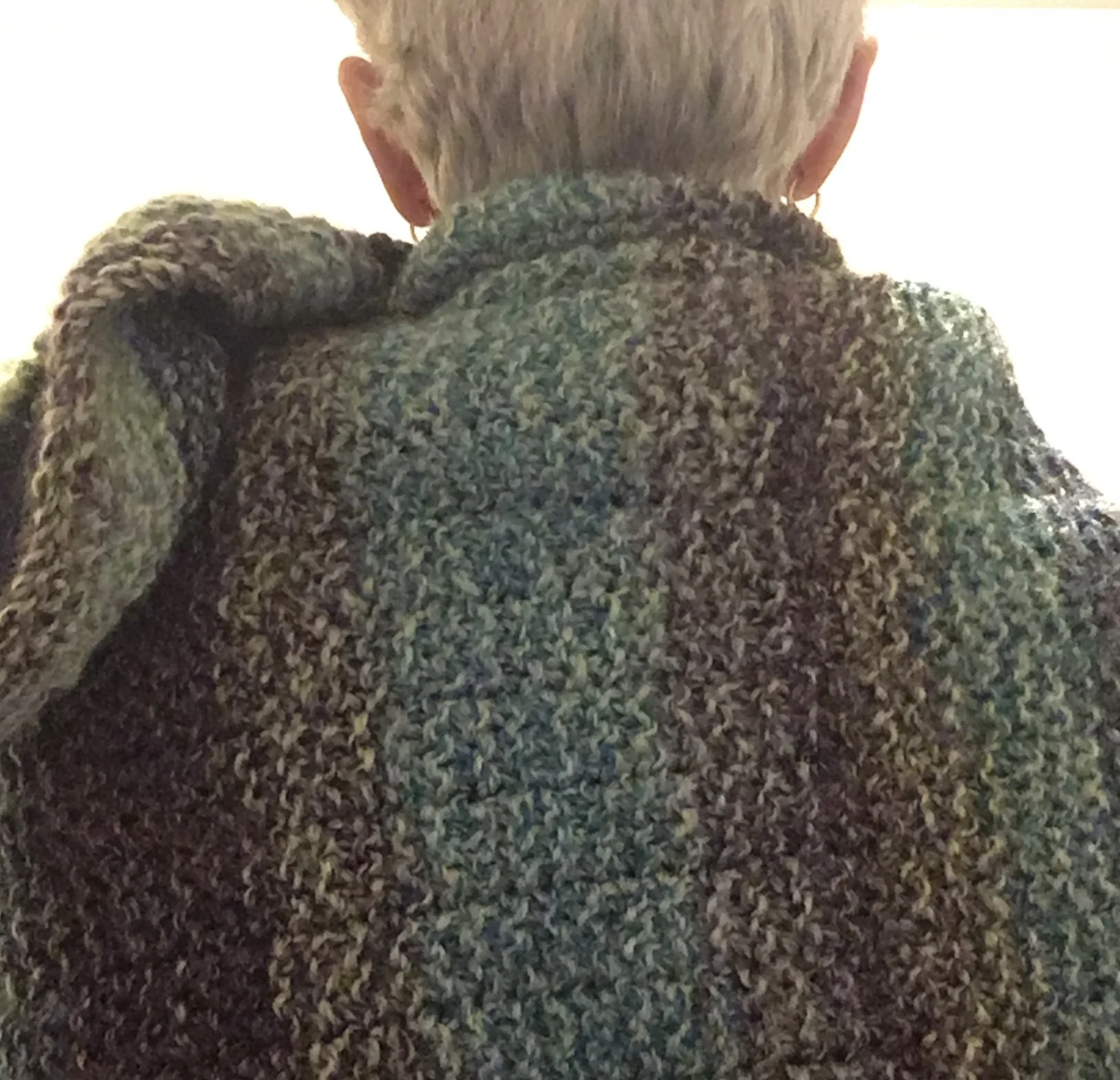
There have been countless individuals and groups who have prayed, and continue to pray, for each other. Perhaps you remember or are a part of such a group you could mention in the comments. How has this prayer support contributed to your life in Christ?
When: special times of prayer
In the 1950s and 1960s, the church followed the denominational practice of designating a week in January as “Prayer Week.” Themes ranged from “Drawing Nigh to God” to “Conversing with God” (per Rosalind Rinker’s influential book) to “Needs of the World.”
During a transition time for the church in 2008, Diane Woods led us in a two-month Lectio Divina on 2 Chron 7:12-16 and Eph 3:14-19 to discern next directions.
Facilitated by Randy Hill and Rob Filback, and inspired by the Alpha-related 24-7 prayer movement founded by Pete Greig, Pas Cov held a series of prayer vigils in 2015-2020. They started when the 2015 Alpha planning team prayed weekly for six weeks. The congregation was then invited to a 24-hour vigil in December 2015 and a 72-hour vigil in January 2016. A testament to the power of prayer, the Alpha course that spring was the largest ever run by Pas Cov. (More about Alpha in the upcoming blog post on Evangelism.)

In the vigils people signed up online for one or more hour-long slots, most spending their hour in the prayer room in what was then the youth building. Stations and suggestions for how to pray adoration, confession, and intercession were organized, along with specific concerns such as Our World, Our Nation, Pastoral Search, and Dreams for Pas Cov.
Poster boards, markers, and sticky notes let pray-ers document what was on their hearts or what the Holy Spirit was telling them. Two more vigils were held in April and August 2017, one in February 2019, and finally a series of four vigils in the summer of 2020. More than 60 households participated.
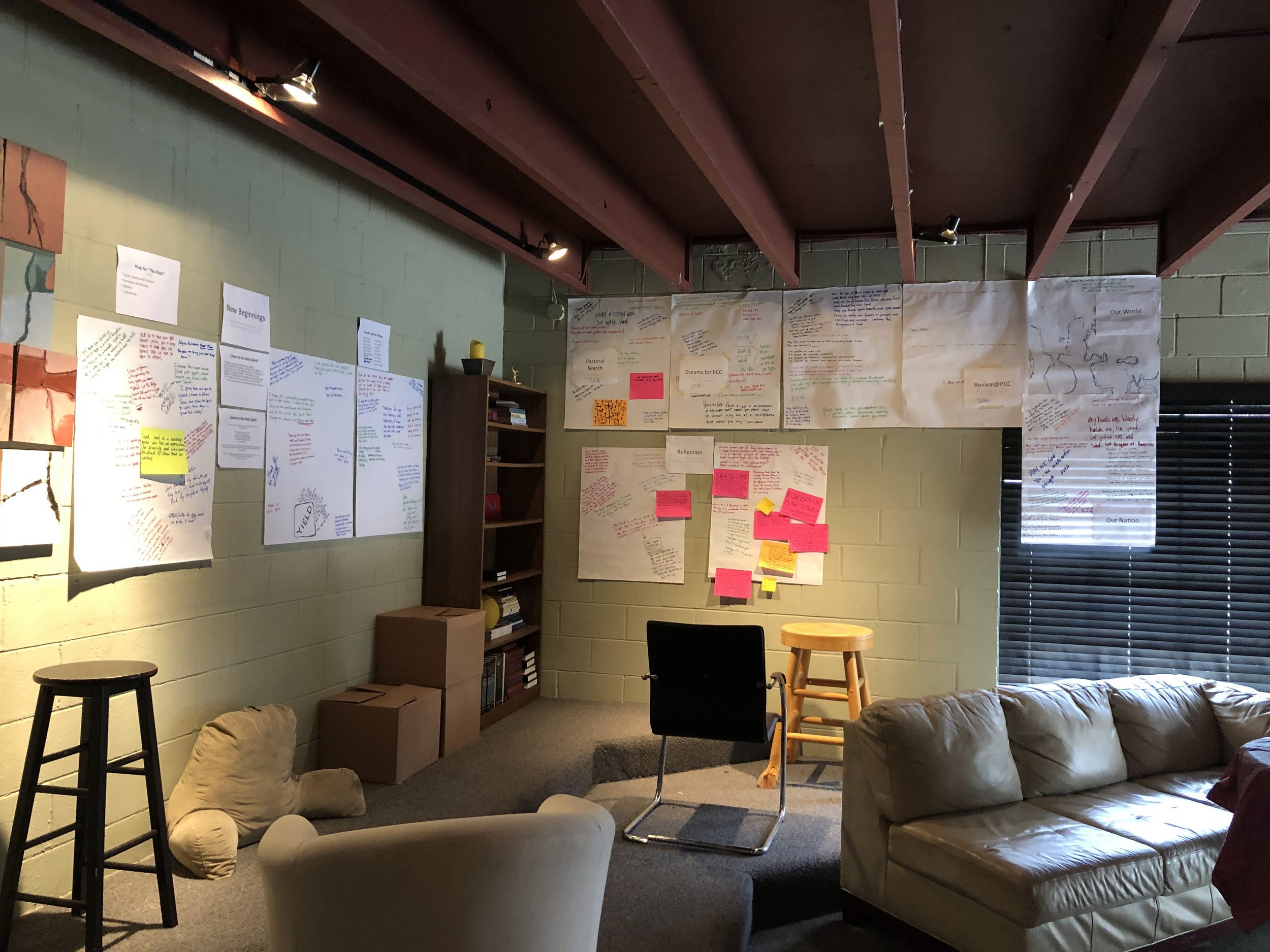
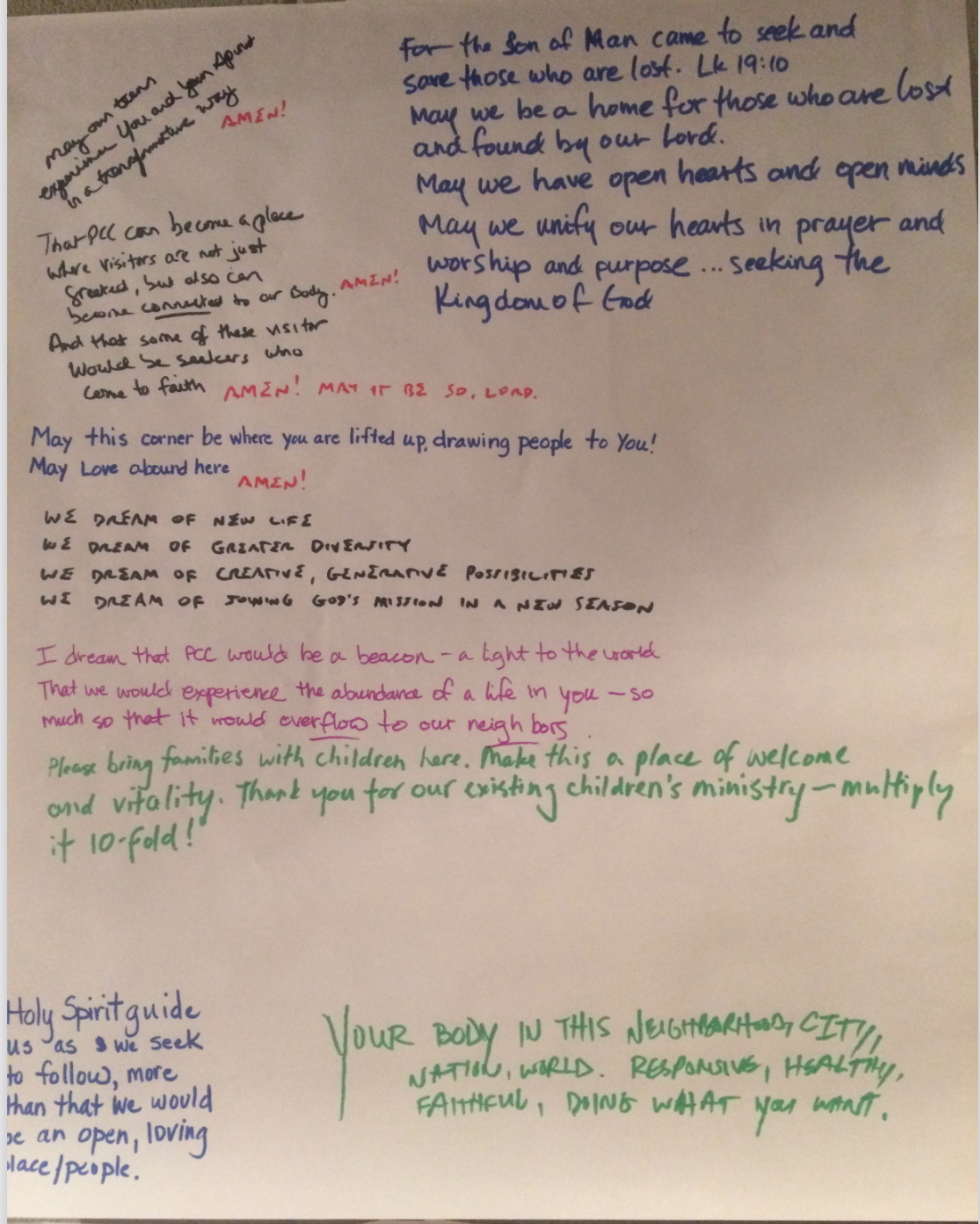
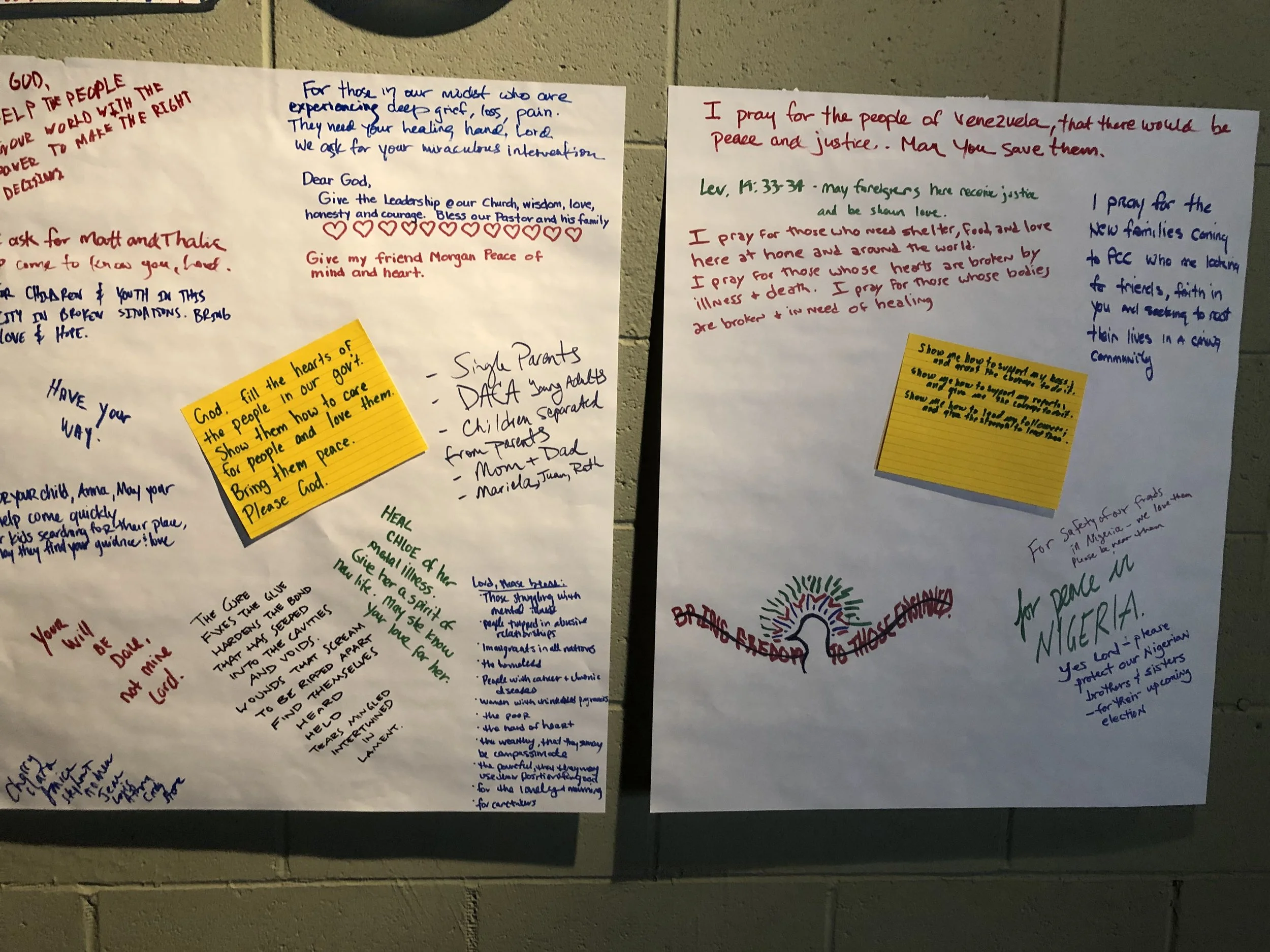
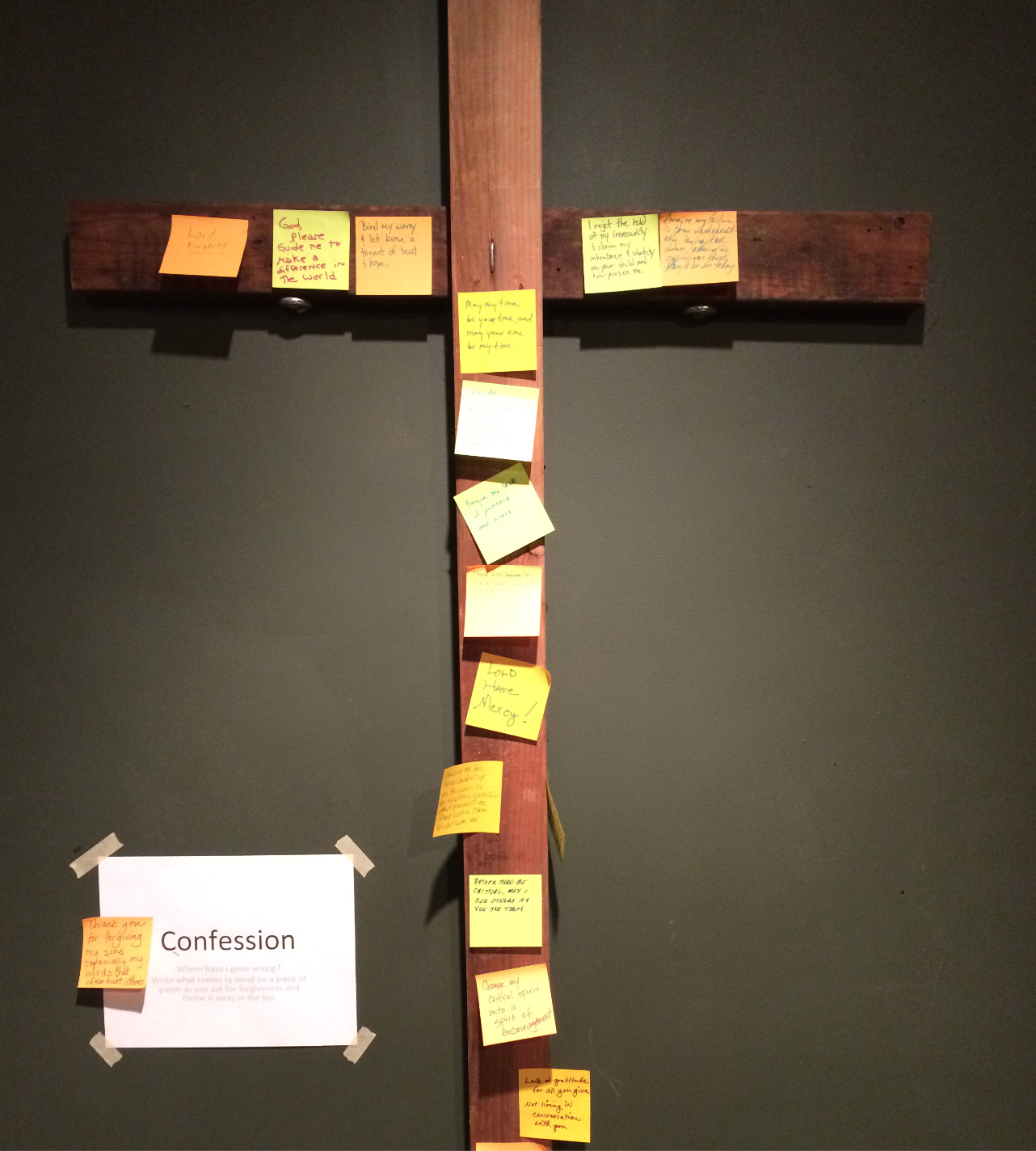
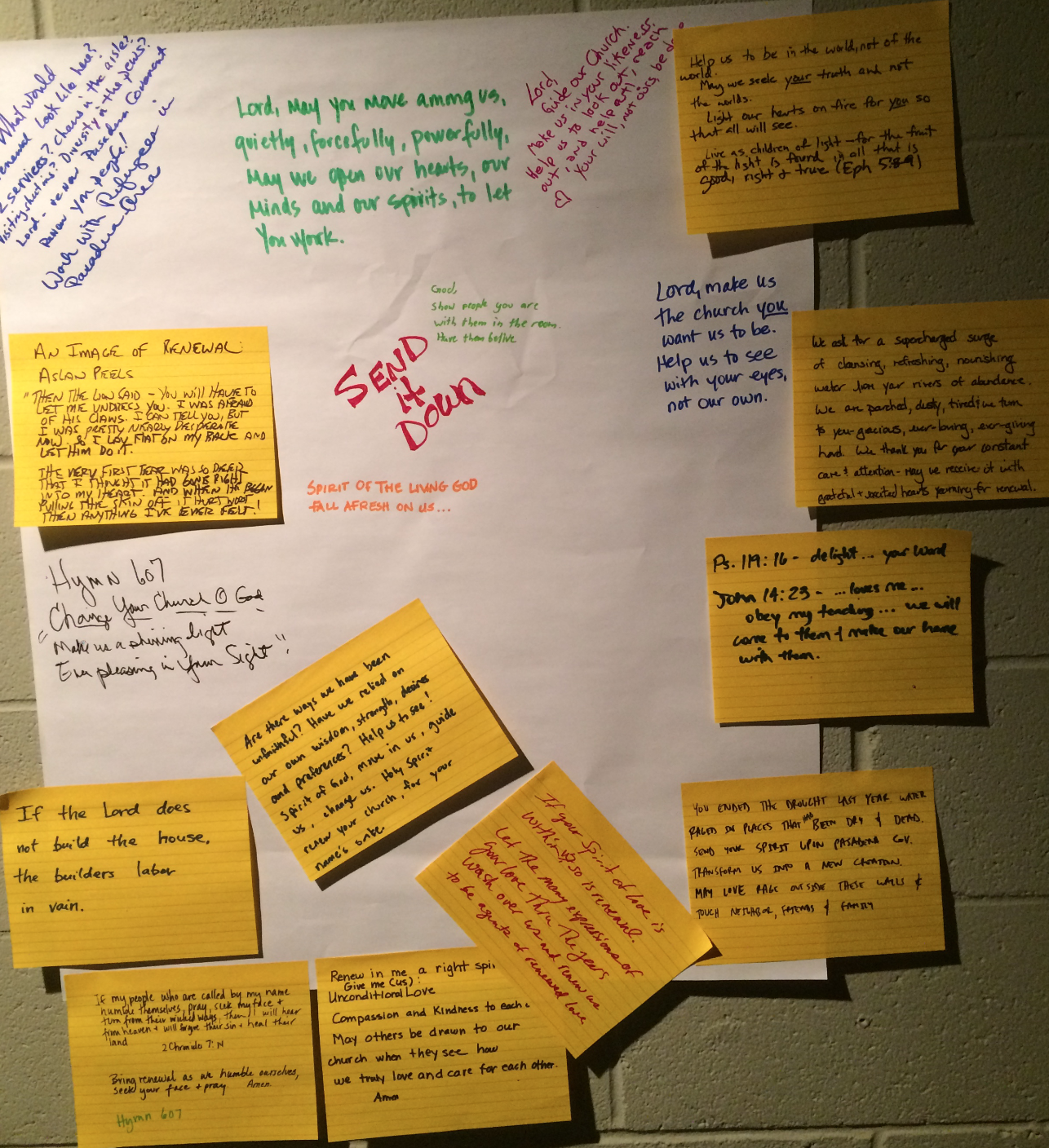
Summary
Influences on the prayer life of Pasadena Covenant have included the devotional practices of the 19th century Pietists, the charismatic renewal starting in the late 1960s and early 1970s leading to prayer for healing in the 1980s, the resurgence of ancient prayer practices such as Centering Prayer and Lectio Divina in the 1990s, and the 24/7 prayer movement in the 2000s—or simply our ongoing care for each other. We are grateful that the Holy Spirit has led us in countless ways toward experiencing the blessing and power of prayer.
Beyond 100
What prayer needs will be prominent in the next 100 years? What forms or practices of prayer will be important for our church in the future? How will God draw us to prayer?
We are so grateful to the many who have sought to follow God over the past century,
and now we seek to imitate their faith for the next hundred years.
Please join us in giving to this legacy of faithfulness!

Families
“Family.” It’s a word that has special meaning to those of us who have been adopted into the family of God. It’s also a word that conjures up lots of different images, both positive and negative, depending on one’s experiences. This blog post deals mostly with children. In a later month in this series we’ll look at how community and family have been created with other groups in the church.
Introduction
Pasadena Covenant Church has from the outset supported families, though there have been many changes across the decades in what families look like and what kind of support is most needed. For example, the first Sunday school had five children from one family, the Bergstroms; now families are usually smaller. Through the 1960s many women had plenty of time to volunteer. Over the last fifty years, time has become an increasingly precious commodity for everyone. There have been other changes as well, but Pas Cov has continued to seek to care for families of all types and to ensure that children grow up learning about Jesus and having the option to commit themselves to the Lord.
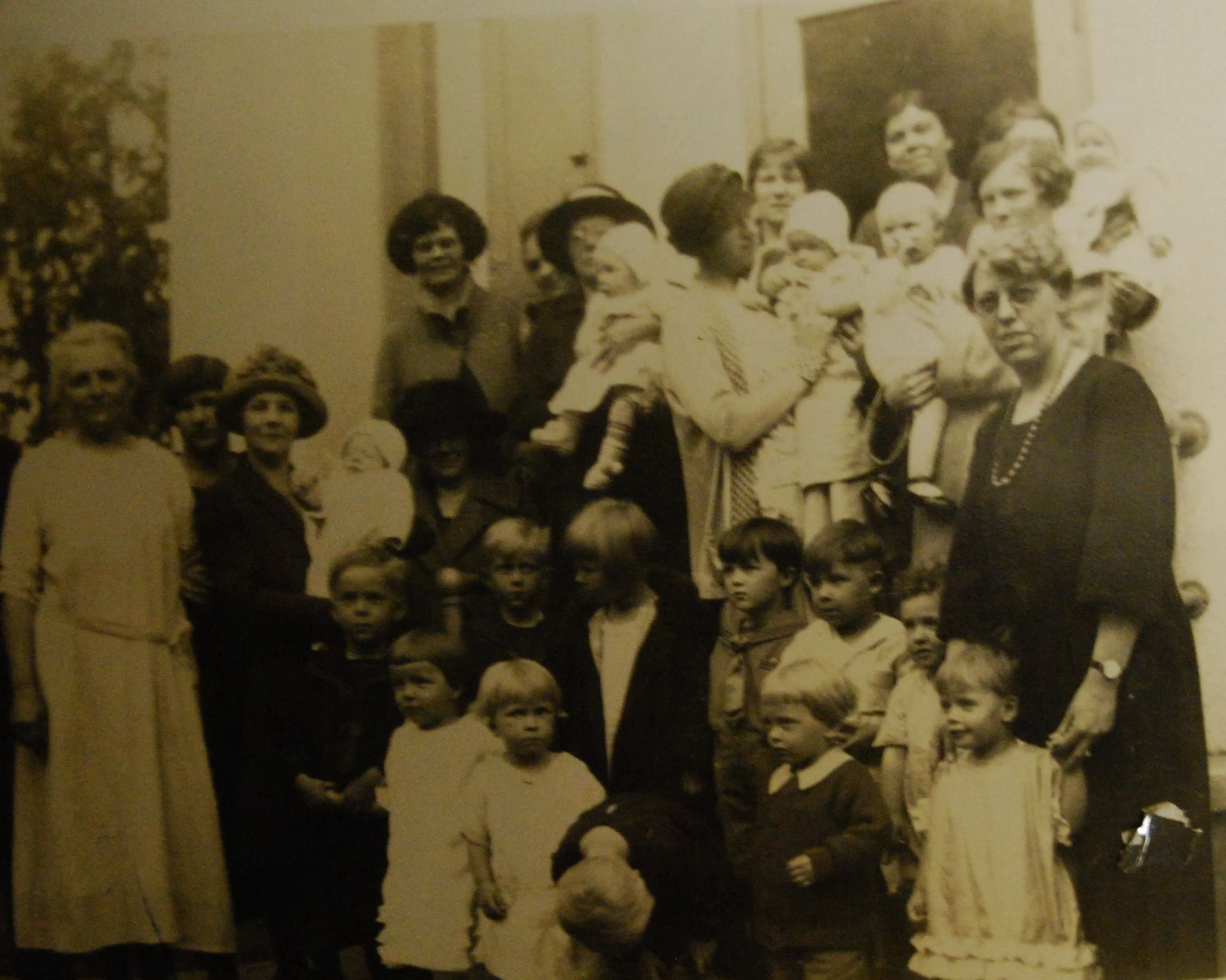
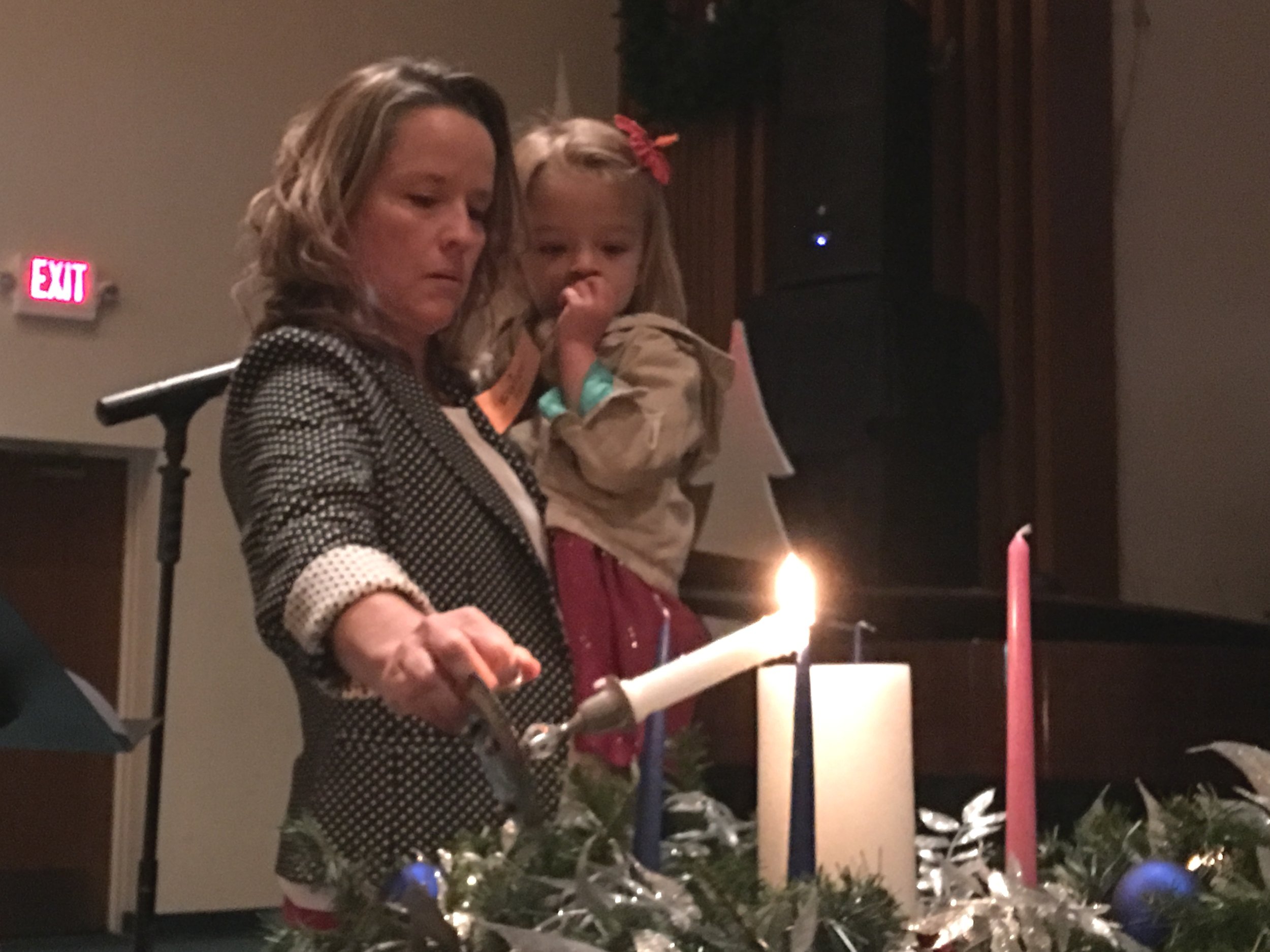
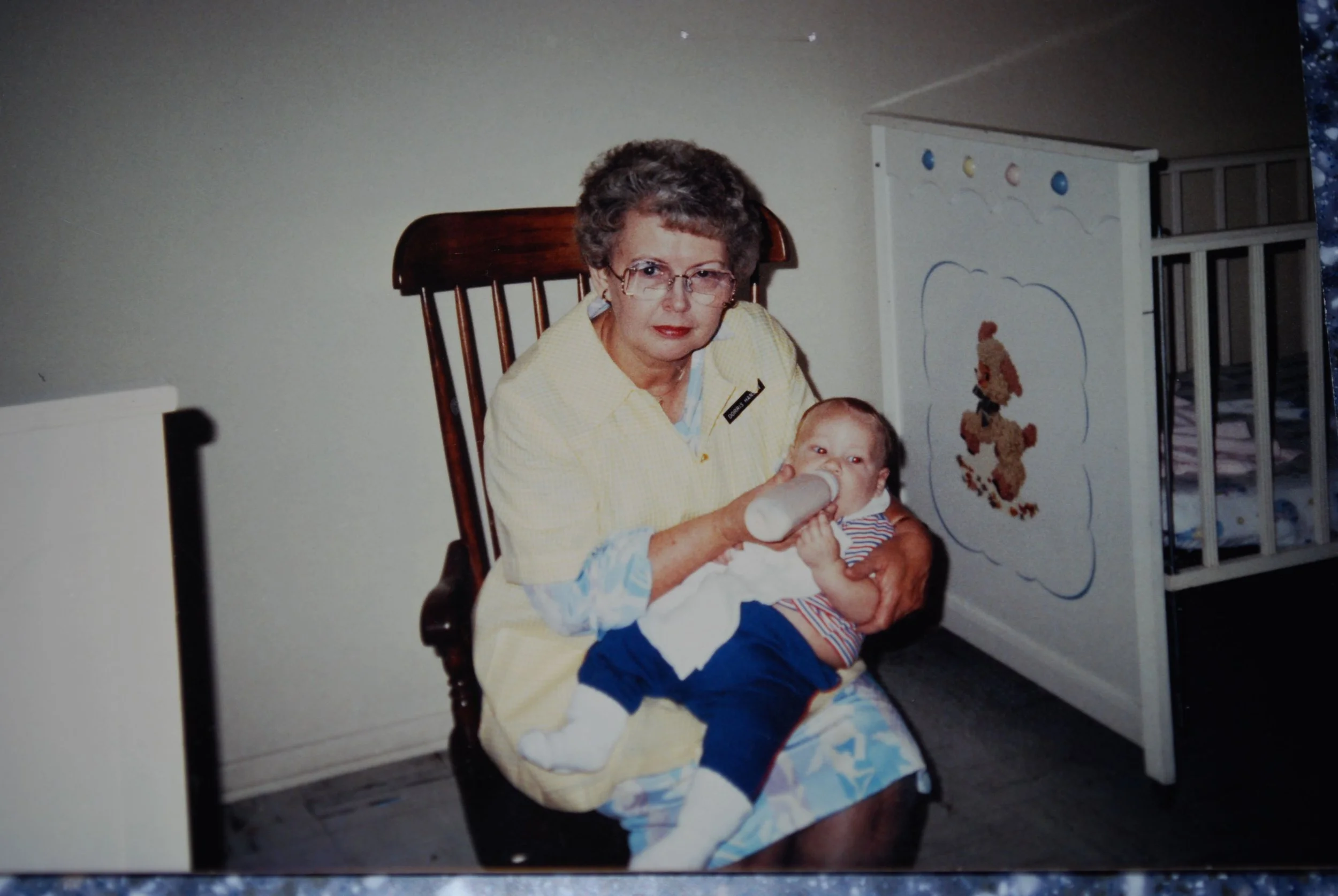
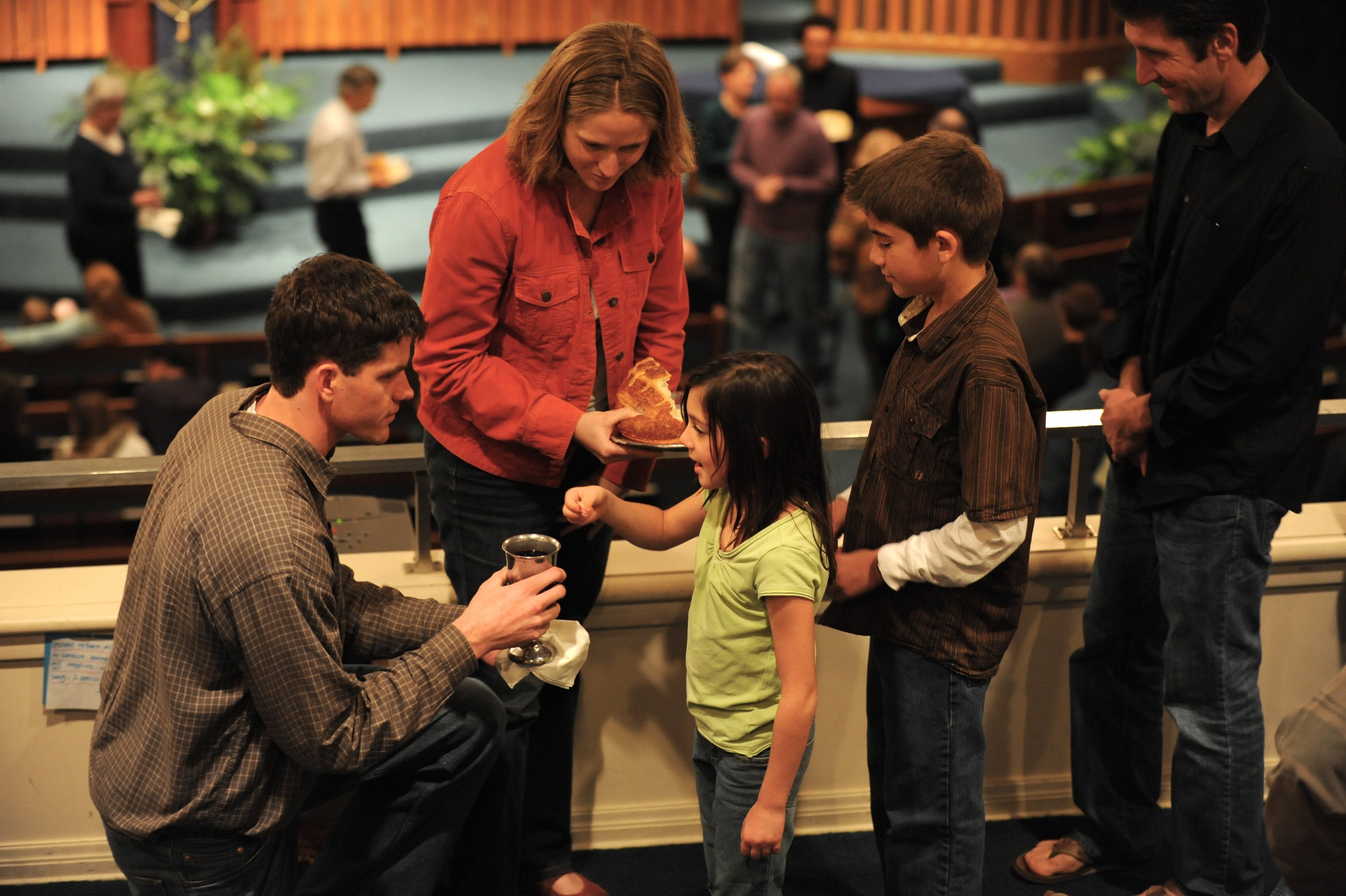
Support for Young Mothers
Cradle Roll was an outreach program for mothers and babies through the age of four, running primarily from 1945 to the mid-1970s. While personal contacts were important, birth announcements that were published in the Pasadena Star-News accounted for more than half the contacts. Postcards inviting the new mother to enroll her baby in the Cradle Roll at church were sent out. In addition, volunteers visited each home with baby gifts, tracts, and church pamphlets. A monthly class for mothers was held in the home of a church member, usually with refreshments and both some Bible teaching and a session on parenting. (For example, at one class, Dr. Lars Granberg from Fuller spoke on “A Psychological Approach to Discipline.”) About half of the children on the roll ended up entering the church’s Sunday nursery. 1965 appears to have been a peak year, with 380 families in all, 150 new babies enrolled, and 60 mothers attending the monthly meetings. Nursery facilities (remodeled in 1963) included a room full of cribs (now the Santa Barbara meeting room). Cradle Roll required many volunteers, from the teacher Naomi Johnston; to directors such as Ollie Roth, Muriel Racine, Betty Tennyson, and Rose Tahmisian; to hostesses such as Edith Hicks; to more than 20 visitation workers and secretaries. Pasadena Covenant was so successful in their program that they were often asked to speak to other churches about how to do it.
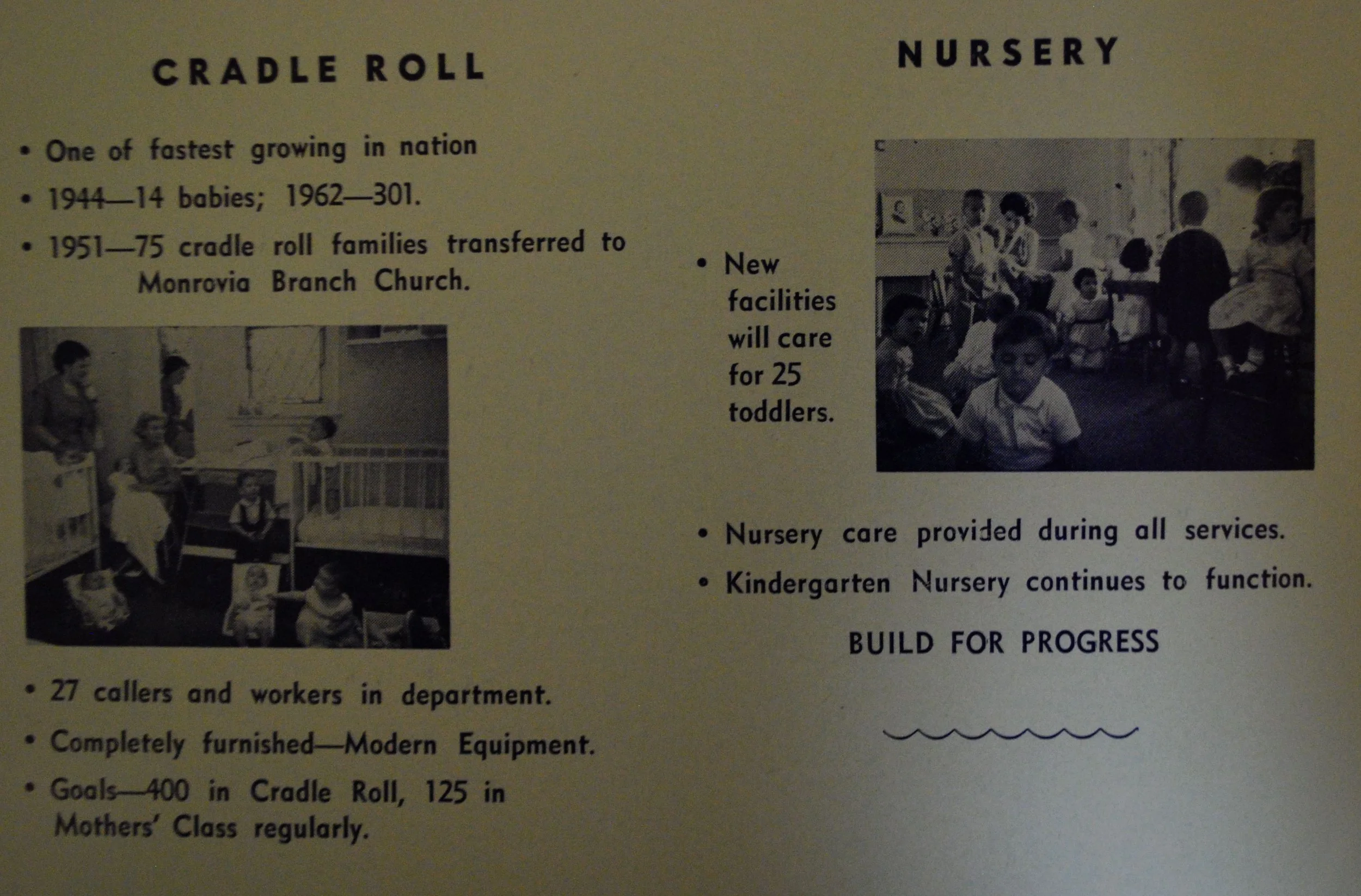
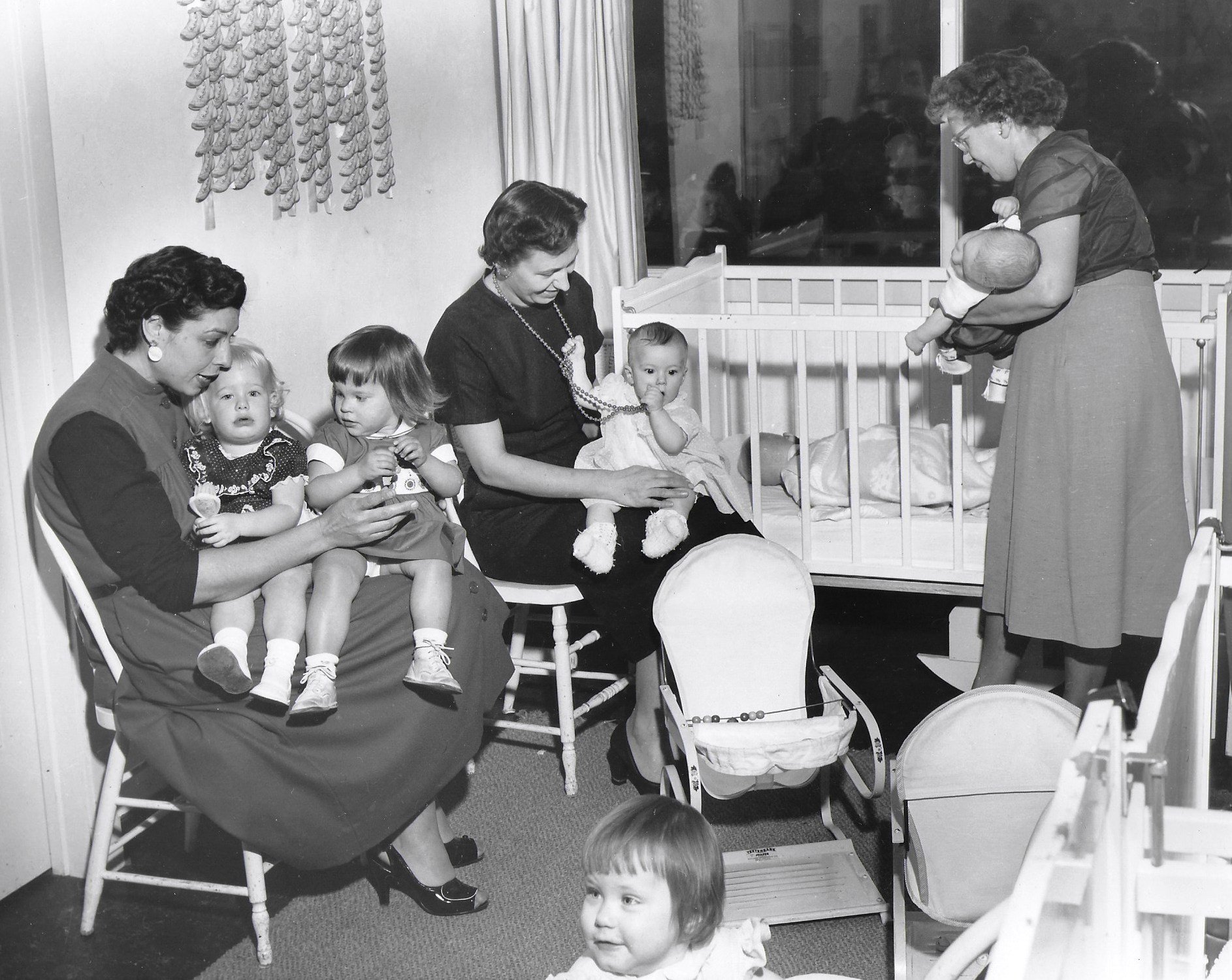
A support group for young mothers that started in the late 1970s was the Mary and Martha Circle or M&Ms. Every other Thursday morning, children would be looked after while moms had a Bible study and did a craft project. Lucille Peterson, whose children had grown, provided child care. Diana Trautwein, Tonia Fletcher, and Caryl Tyberg—mothers whose kids were in school--led the program over the 1980s.
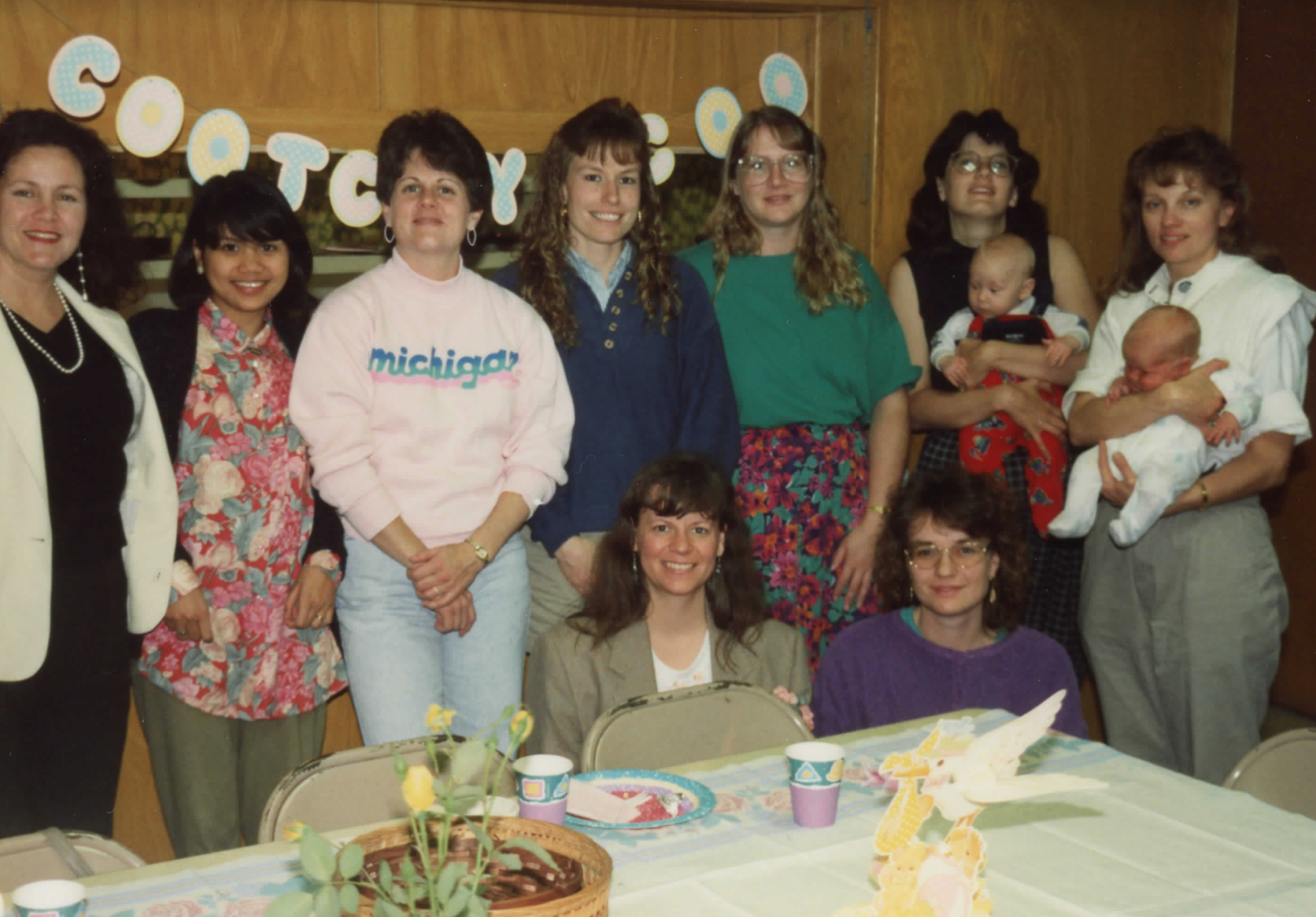
Baby shower with M&Ms, 1993 (photo from Barb Robison)
At various times parents have organized informal play groups too, designed for friendship and support.

Play group notice from church bulletin, 1999
Support for Families
Psychologists and therapists at Pasadena Covenant have offered many retreats, classes, and other support for families over the years. Topics have included marriage, parenting, family dynamics, and conflict resolution. To give just one example, here’s a brochure for a ten-session series on resilient relationships that Jack & Judy Balswick led in 2008, including a session by Wayne Aoki.
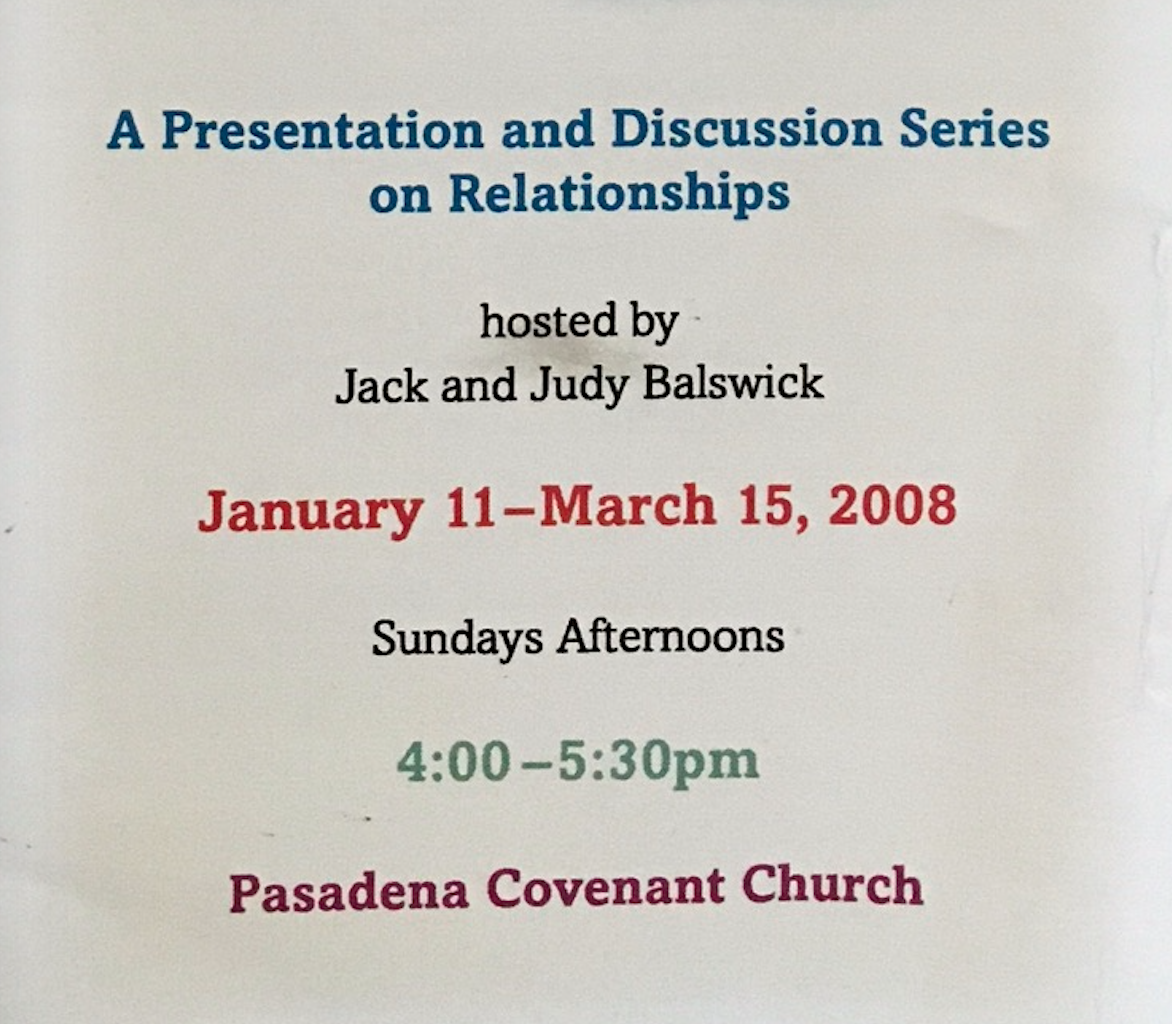
Hosting the organization Club 21 is another way Pas Cov supports families, specifically those who include individuals with Down syndrome.
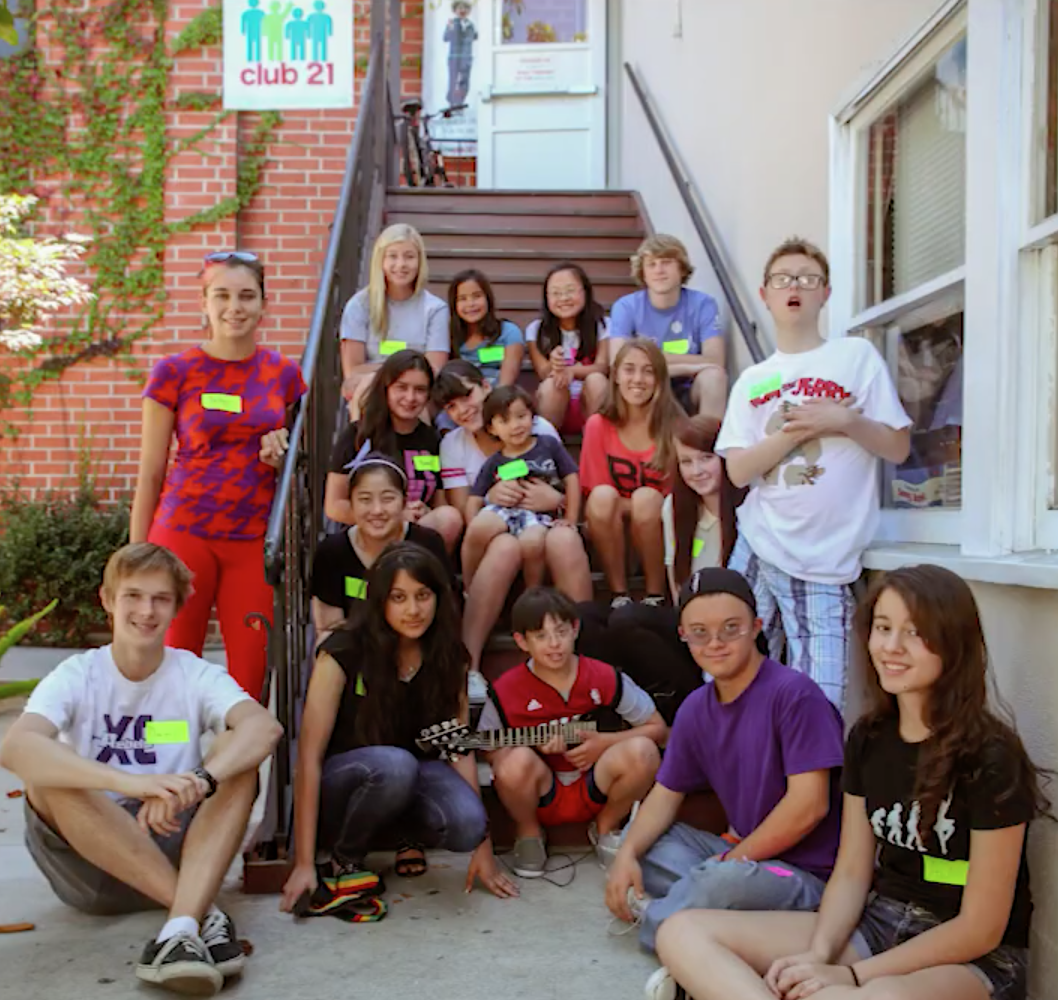
Photo from Club 21 website
Christian Education and Discipleship
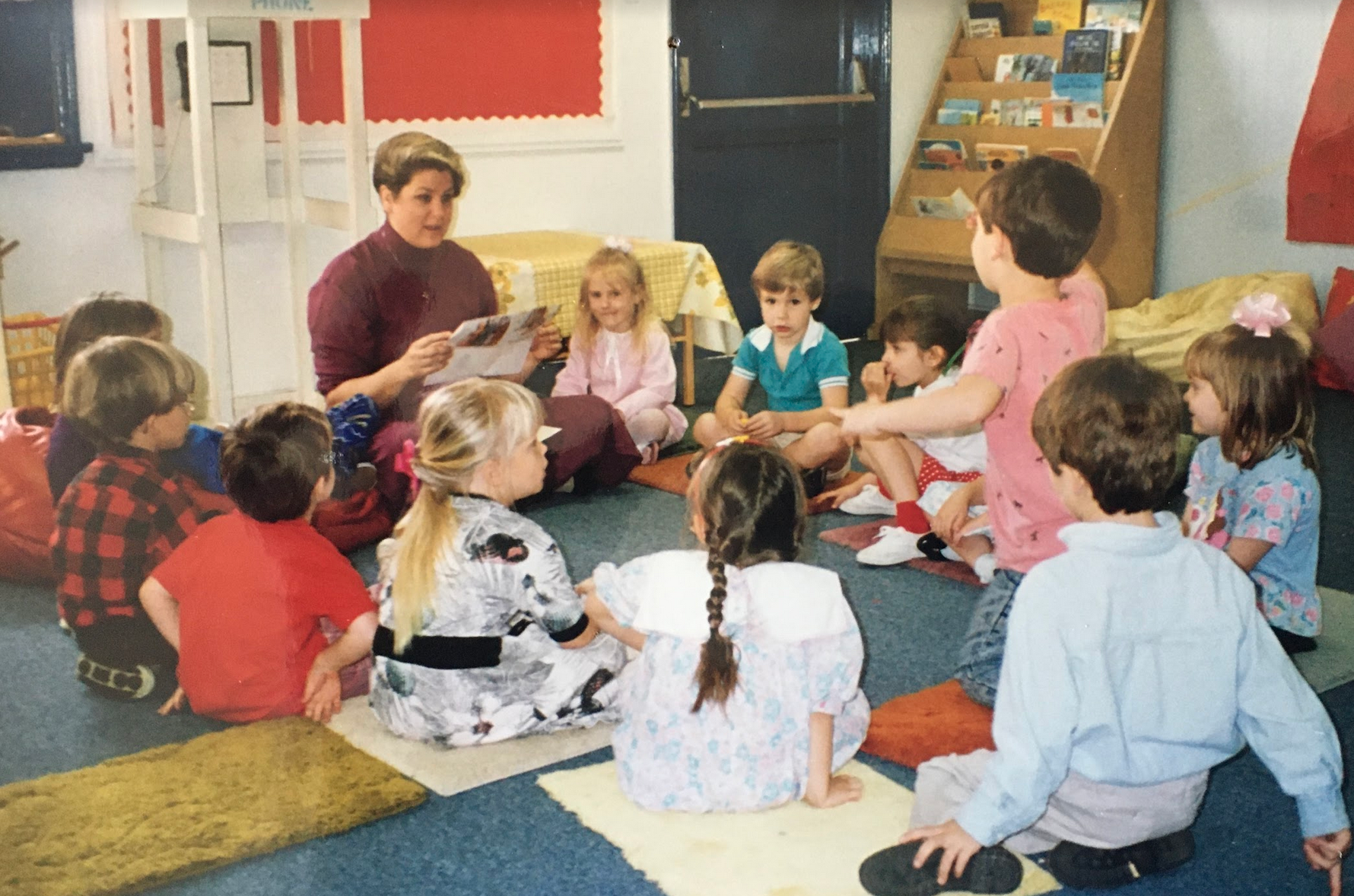
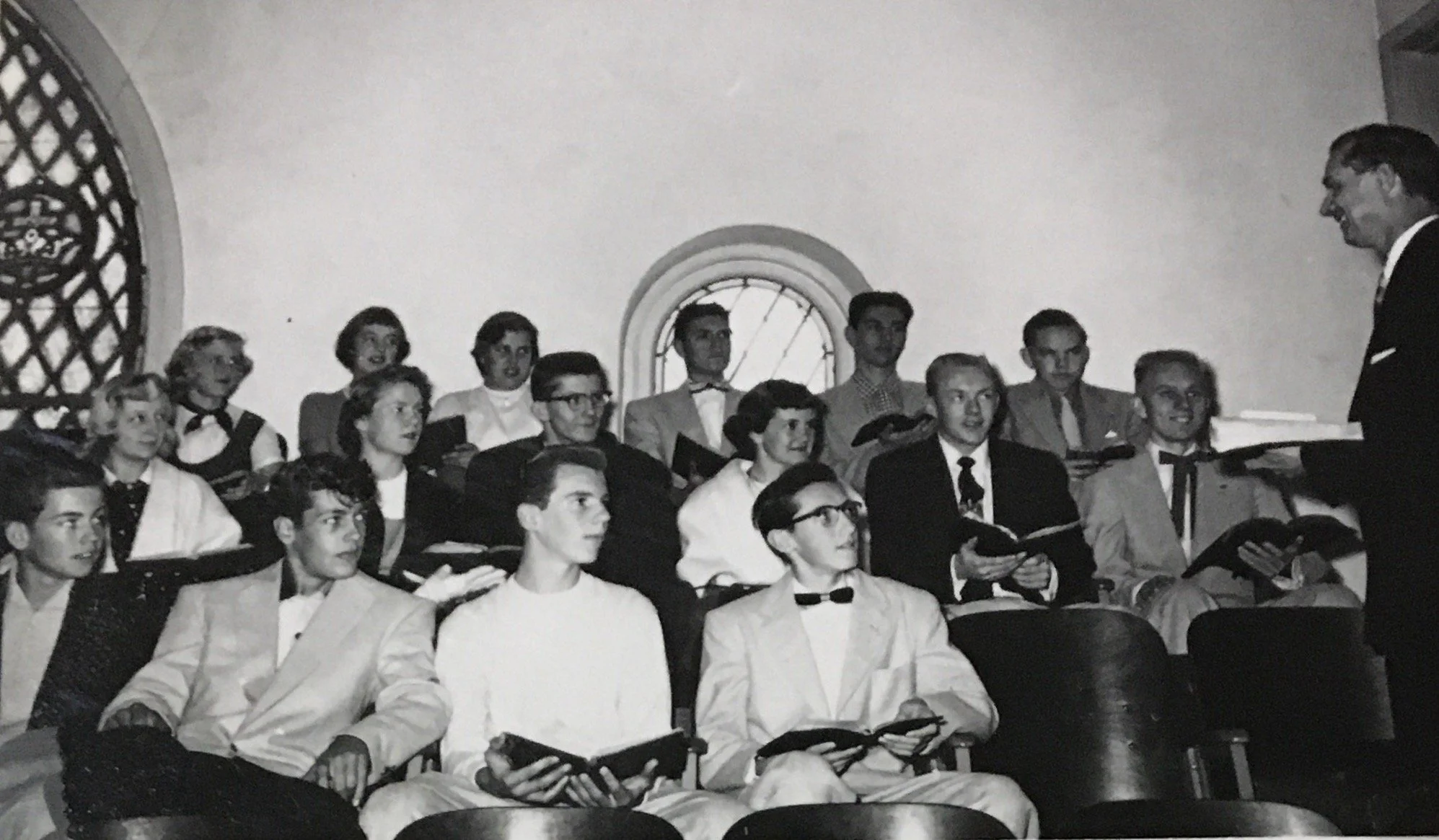
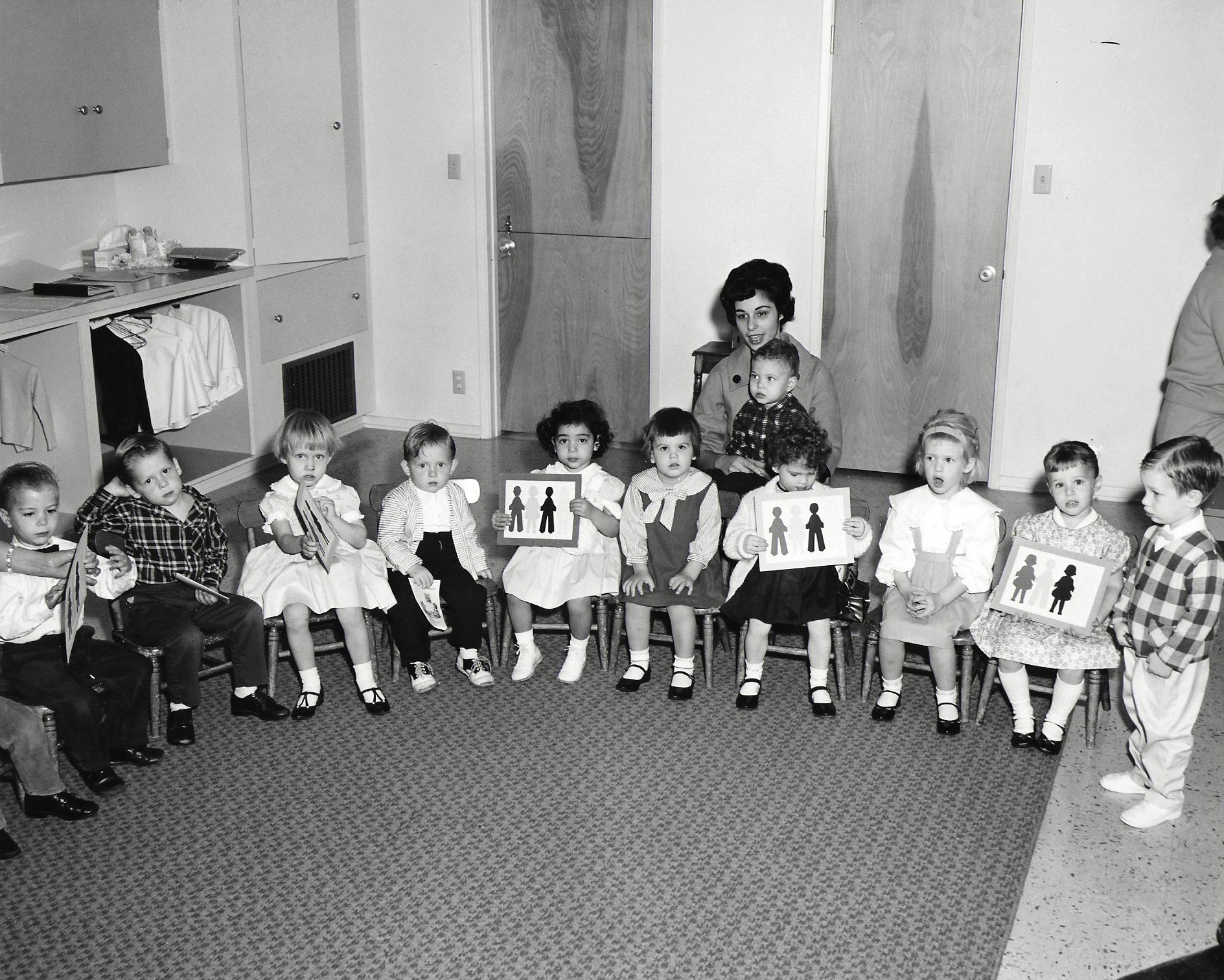
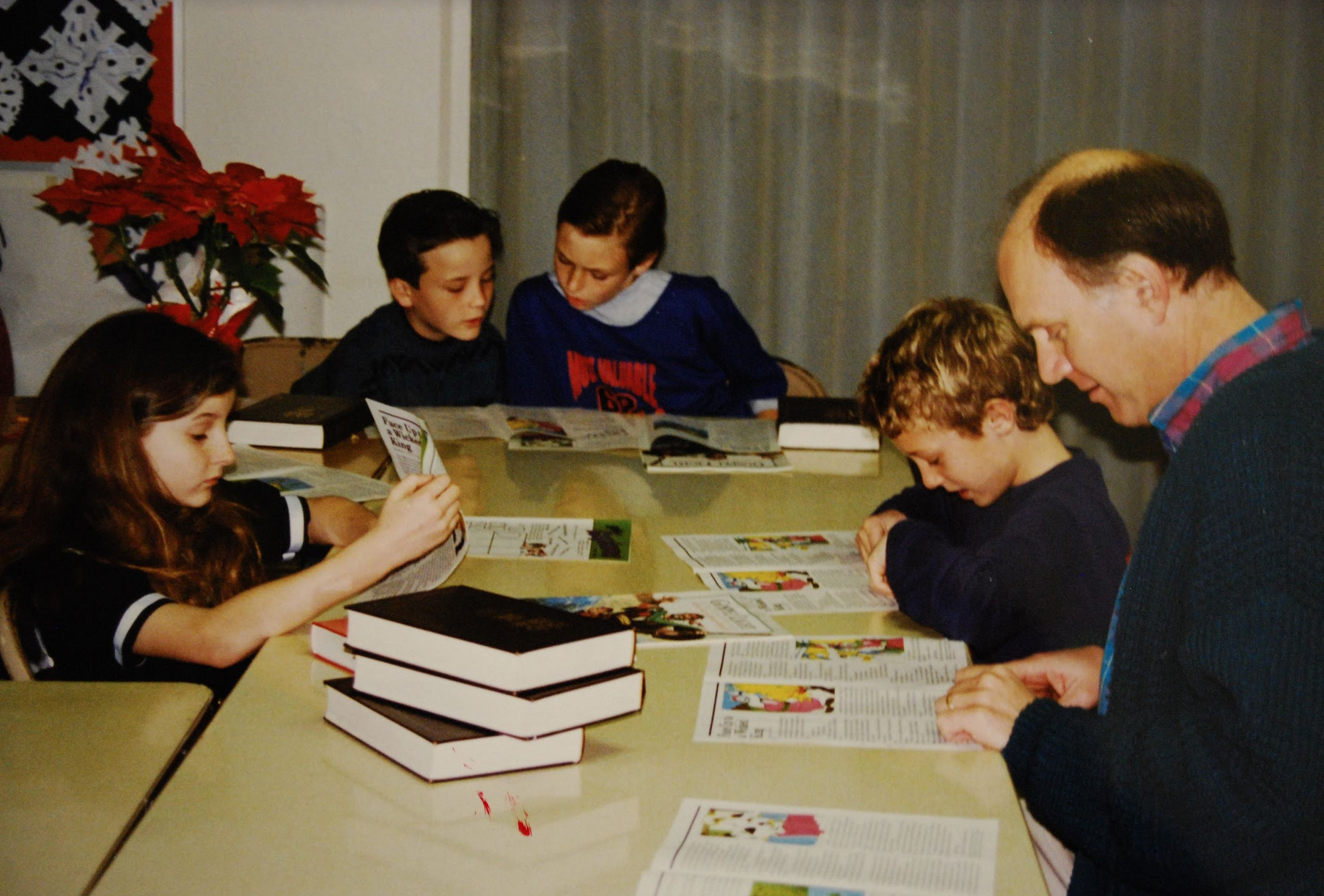
The first Sunday school class in 1923 consisted of six kids. As the church grew, the Christian education program grew too.
1955 is one good snapshot year for Christian Education. On Sunday mornings the Sunday School, divided by age into seven departments from nursery to adult, was supported by more than 75 volunteers. They included teachers of course, but also hostesses and pianists for each group, and specialists like historian, secretary, treasurer, curriculum coordinator, and librarian of teaching aids. Average attendance for young people was about 340, it but reached 575 during the period of an attendance contest with other churches. Lesson preparation, Bible memorization, cooperative behavior, and church attendance were encouraged with paper money or “talents” that could be redeemed for prizes. Each department collected its own offering to support their selected missionary. In addition, on Sunday evenings four groups met: Junior League (upper-elementary), Hi-League (junior high), Ambassadors for Christ (high school), and CYF (college), with about 20 in each. We’ll remember a mid-week group called Campus Club later in this series.
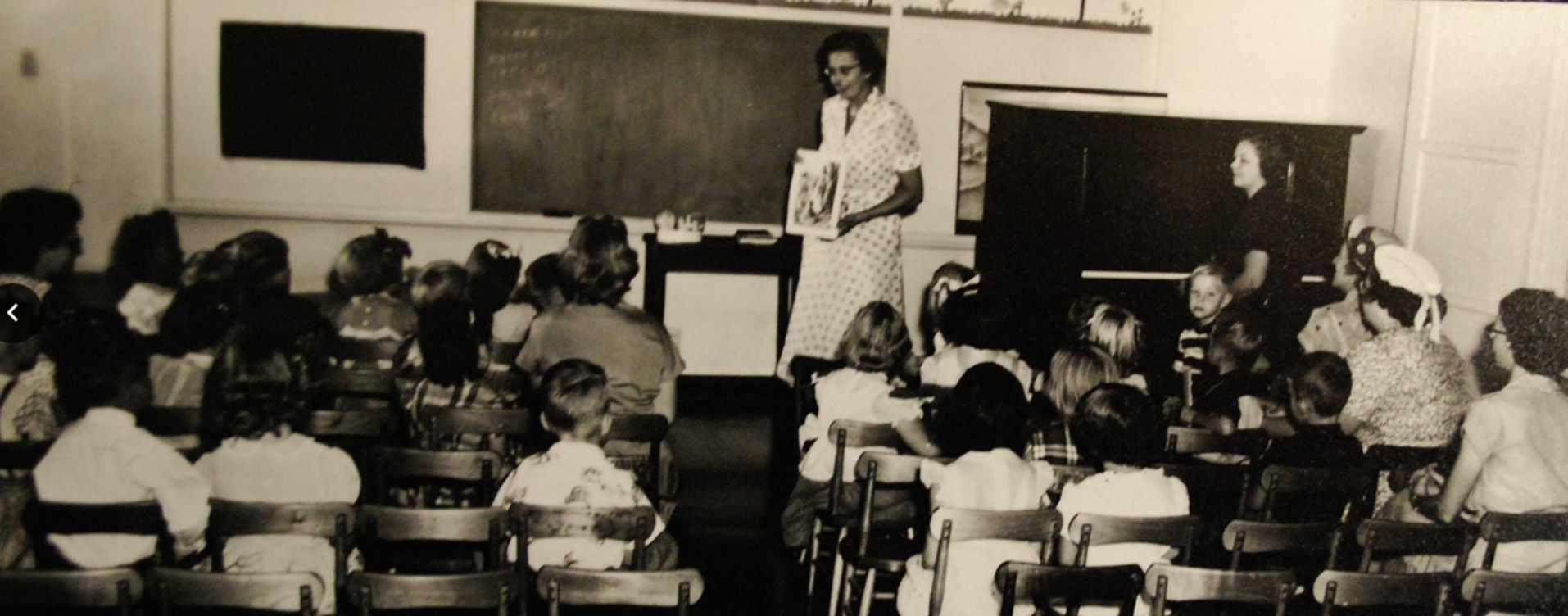
Godly Play is an example of Sunday School from more recent years. This program for pre-schoolers from the late 1990s till recent years let children wonder and enter into the Bible stories through play. (By the way, Jim Nixon made the wooden figurines. This is just one example of the many creative ways church members with various skills have supported Christian education.)
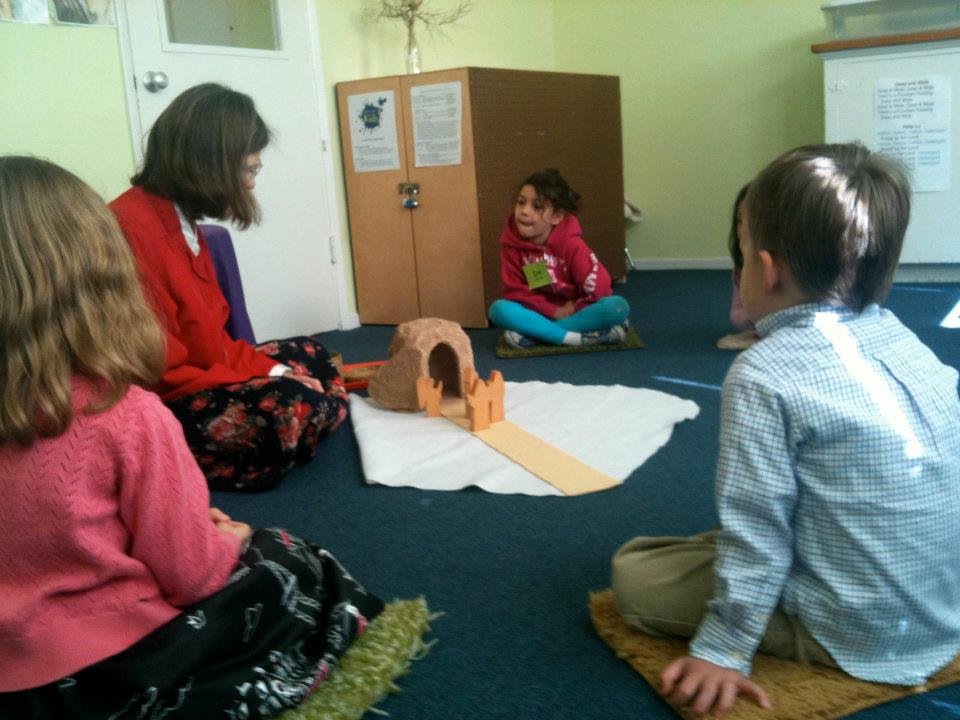
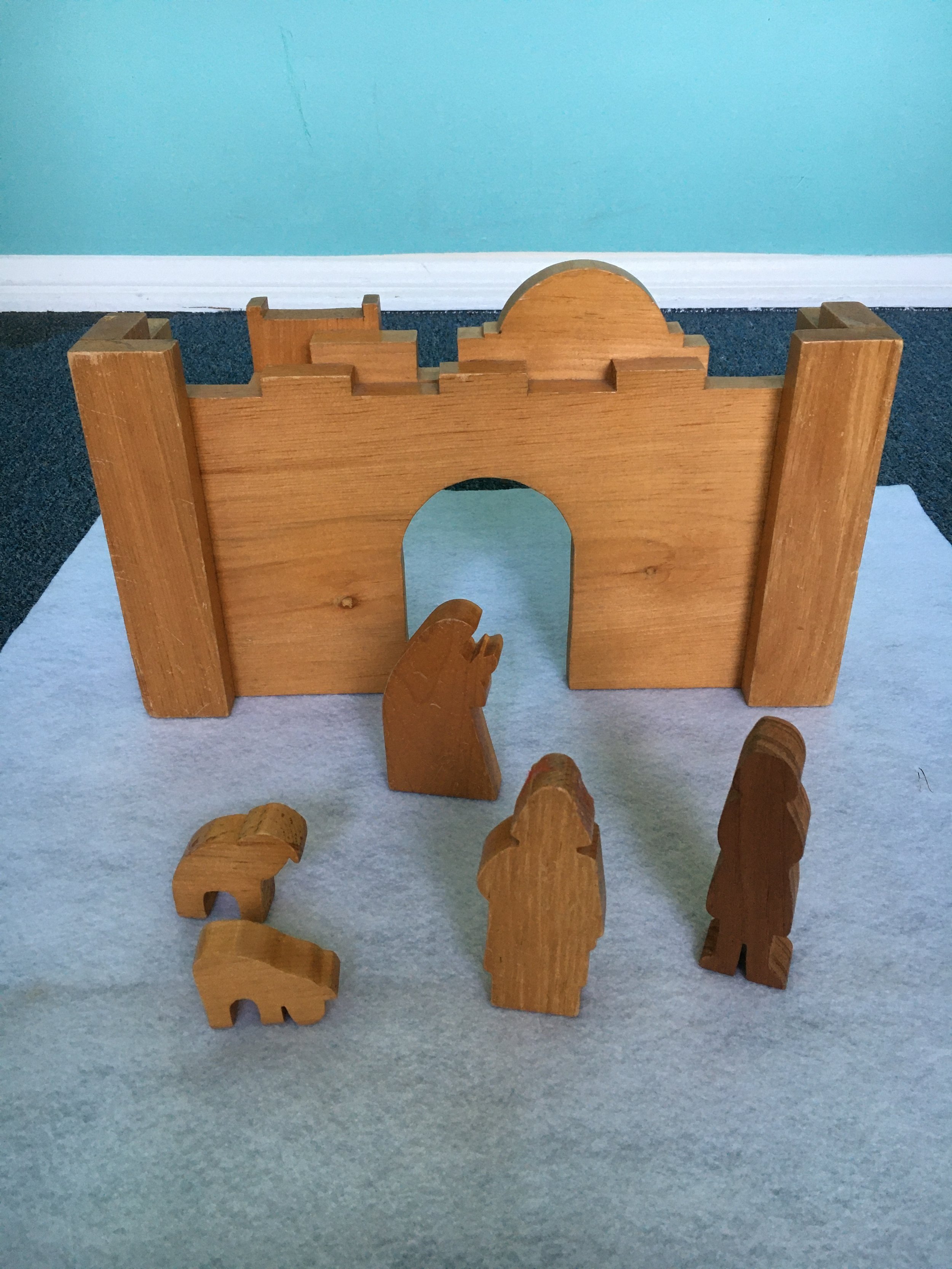
Confirmation class has been an important element of Christian education. In the 1950s, Pastor Arvid Carlson developed a curriculum for a nine-month class held on Saturday mornings. Young people learned about the Bible, church history and theology; memorized the books of the Bible, the Ten Commandments and the Apostles Creed; attended a weekend retreat; and met with the pastor. Later confirmation classes have used curriculum from the denomination, Evangelical Covenant Church.
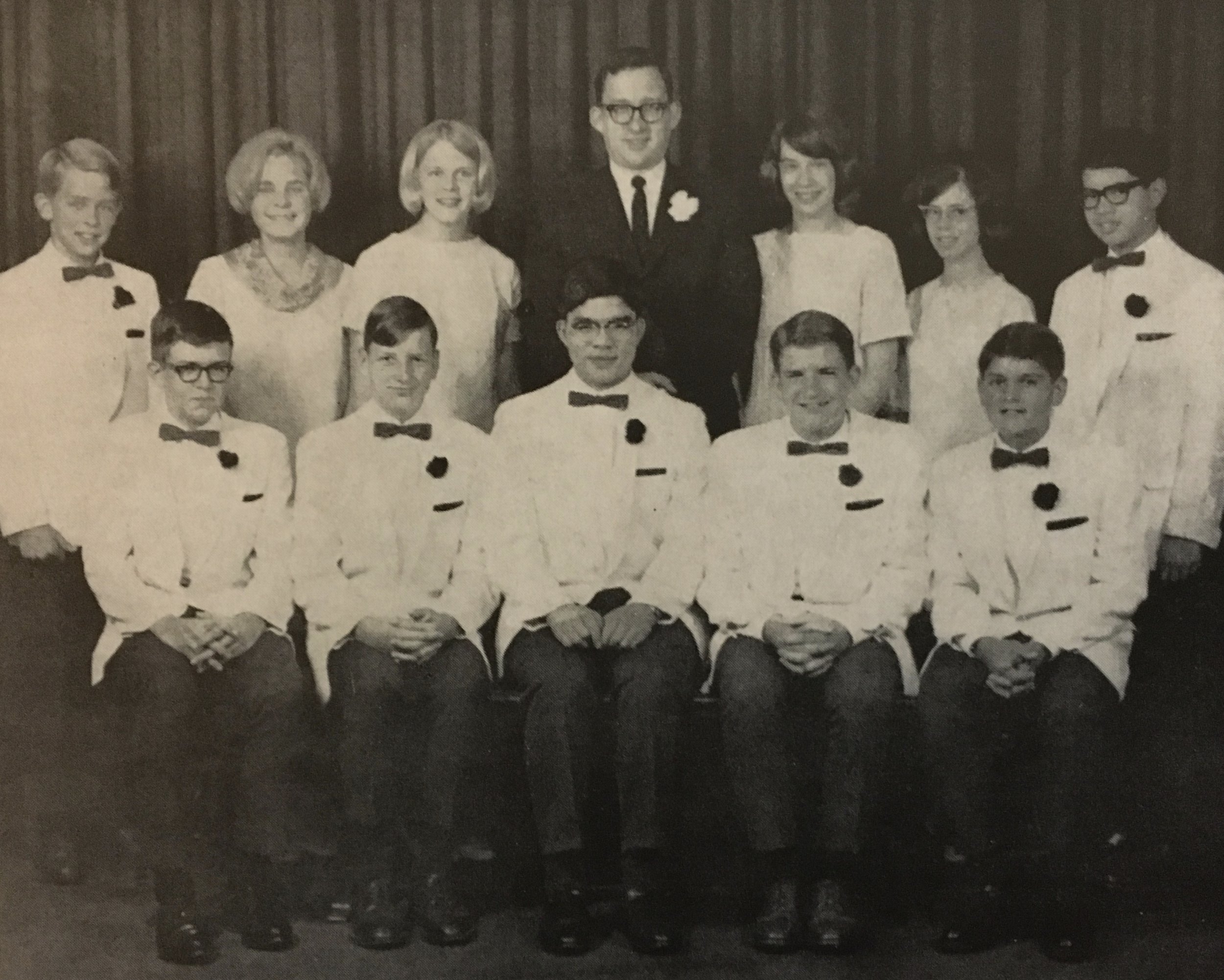
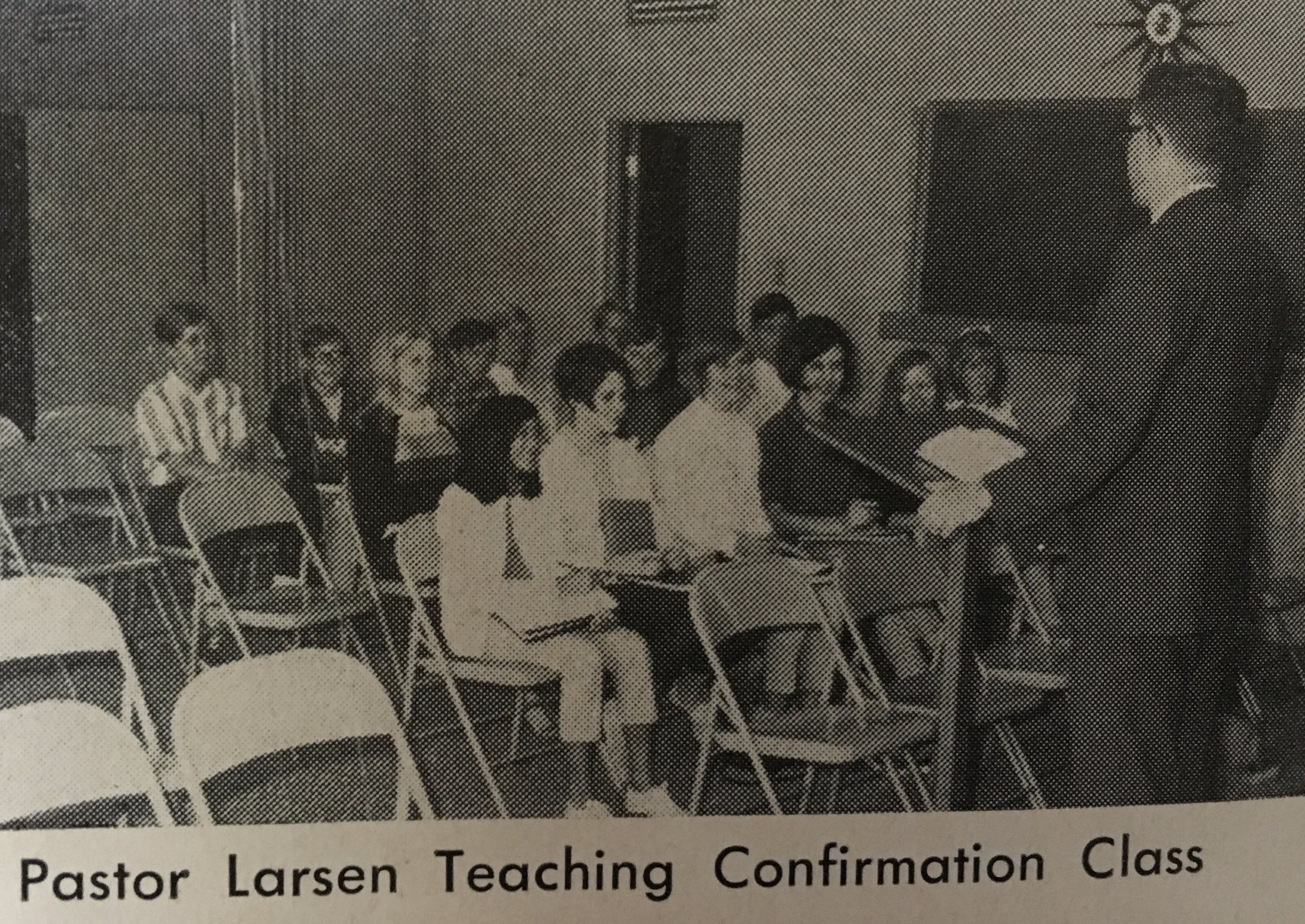
After graduating from confirmation class, the young people can choose to profess their faith by baptism and/or church membership (since the Covenant denomination allows parents to choose for their children either infant dedication or baptism).
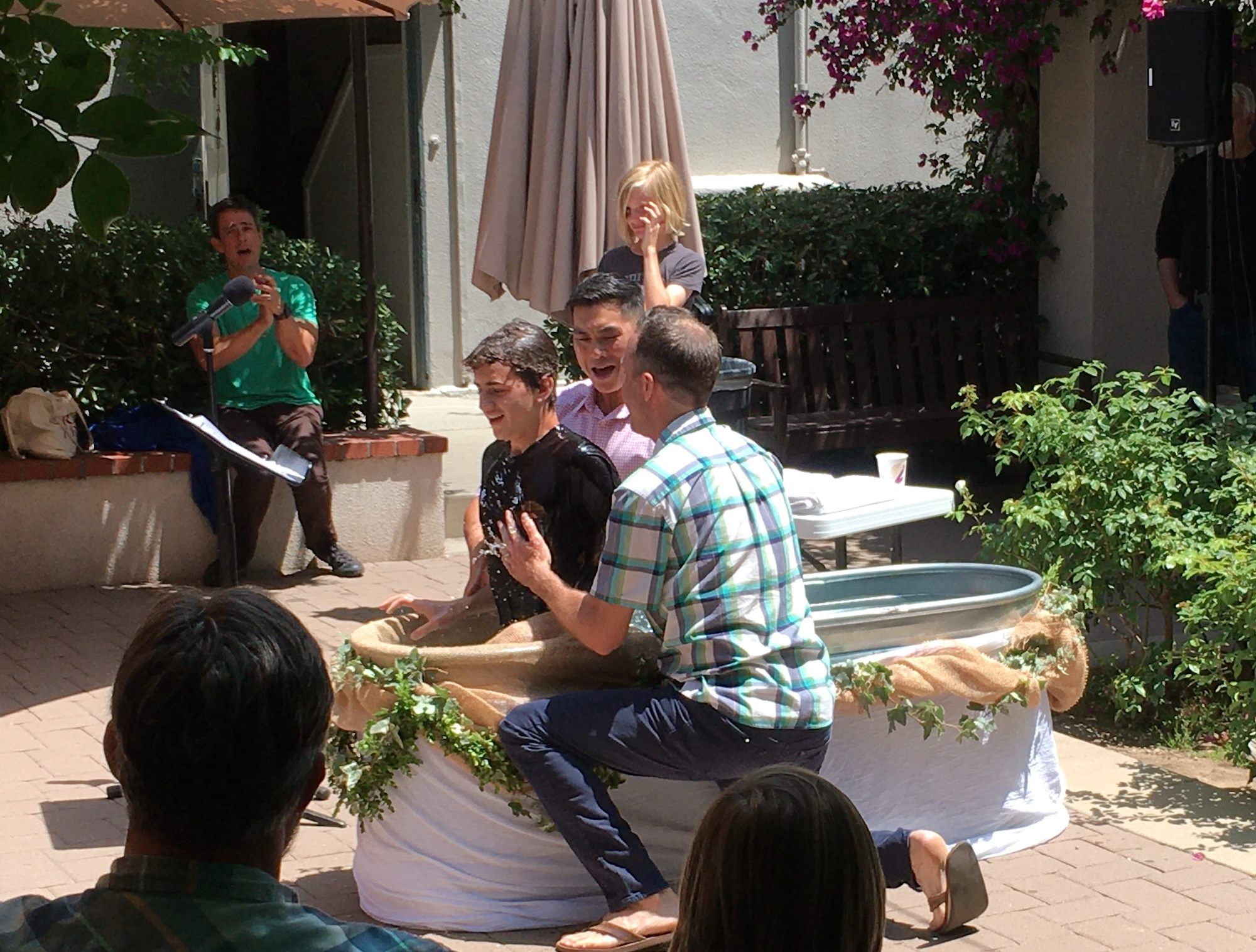
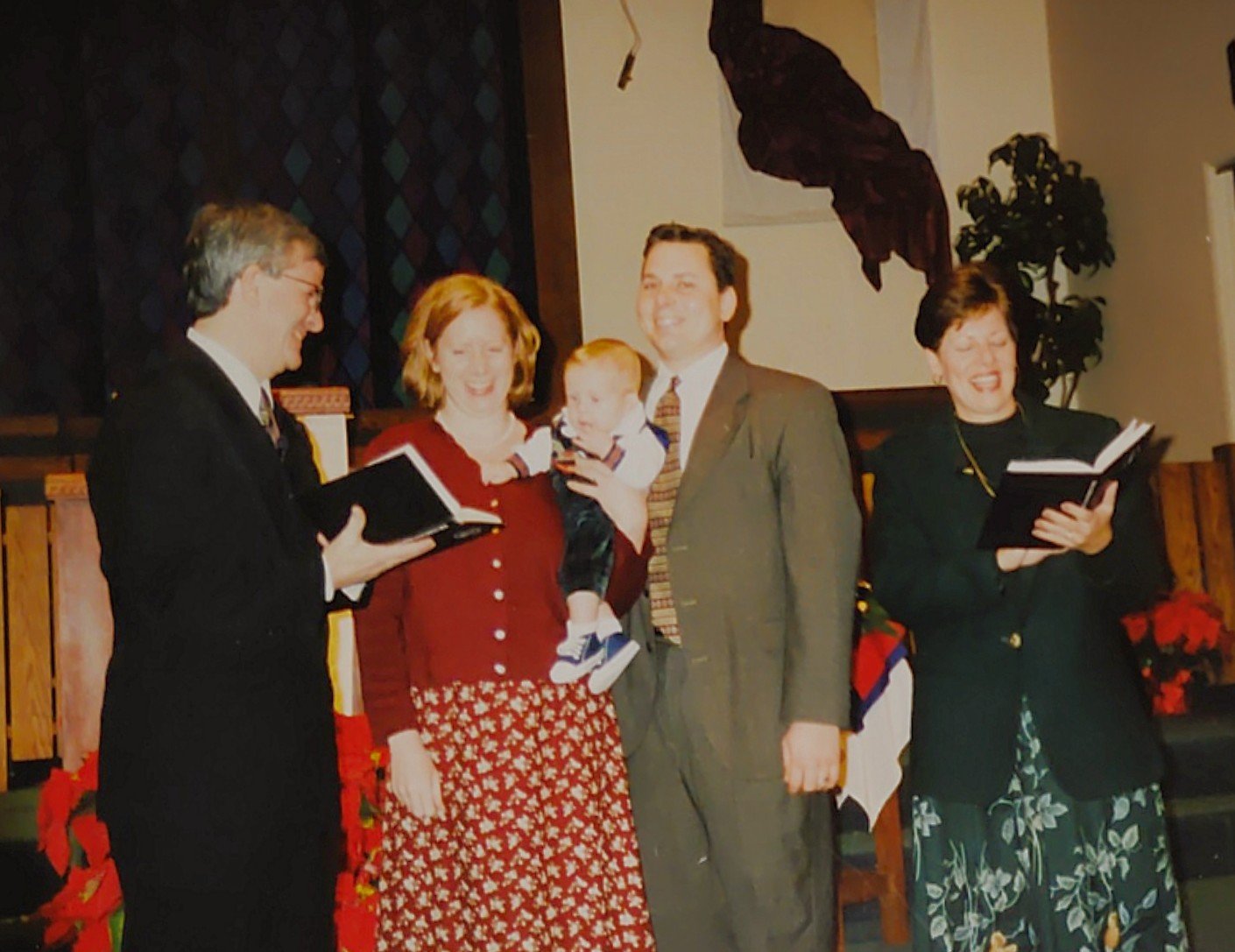
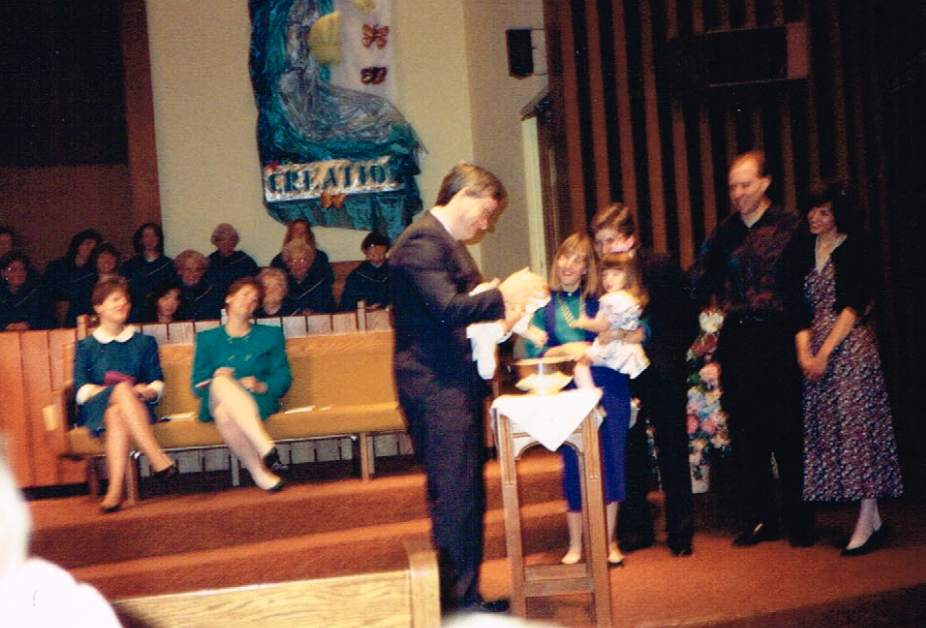
Daily Vacation Bible School was a summer staple in the 1950s and 1960s. It originally ran for two weeks and often had enrollment of 350 to 425 children. The program consisted of games, skits, crafts, singing, and Bible teaching, mostly for elementary-aged kids. In the 1990s, Pas Cov volunteers for VBS developed their own creative curriculum each summer. “A Champion’s Journey,” for example, preceded the 1996 Atlanta Olympics, and was offered in the evening along with dinner. However, competition from summer school, family needs for consistent child care, and intensive volunteer hours meant that by 1997 a traditional VBS was no longer viable for Pas Cov. (There were some years in which it was re-envisaged as neighborhood outreach, and that will be examined in a future chapter in this series.)
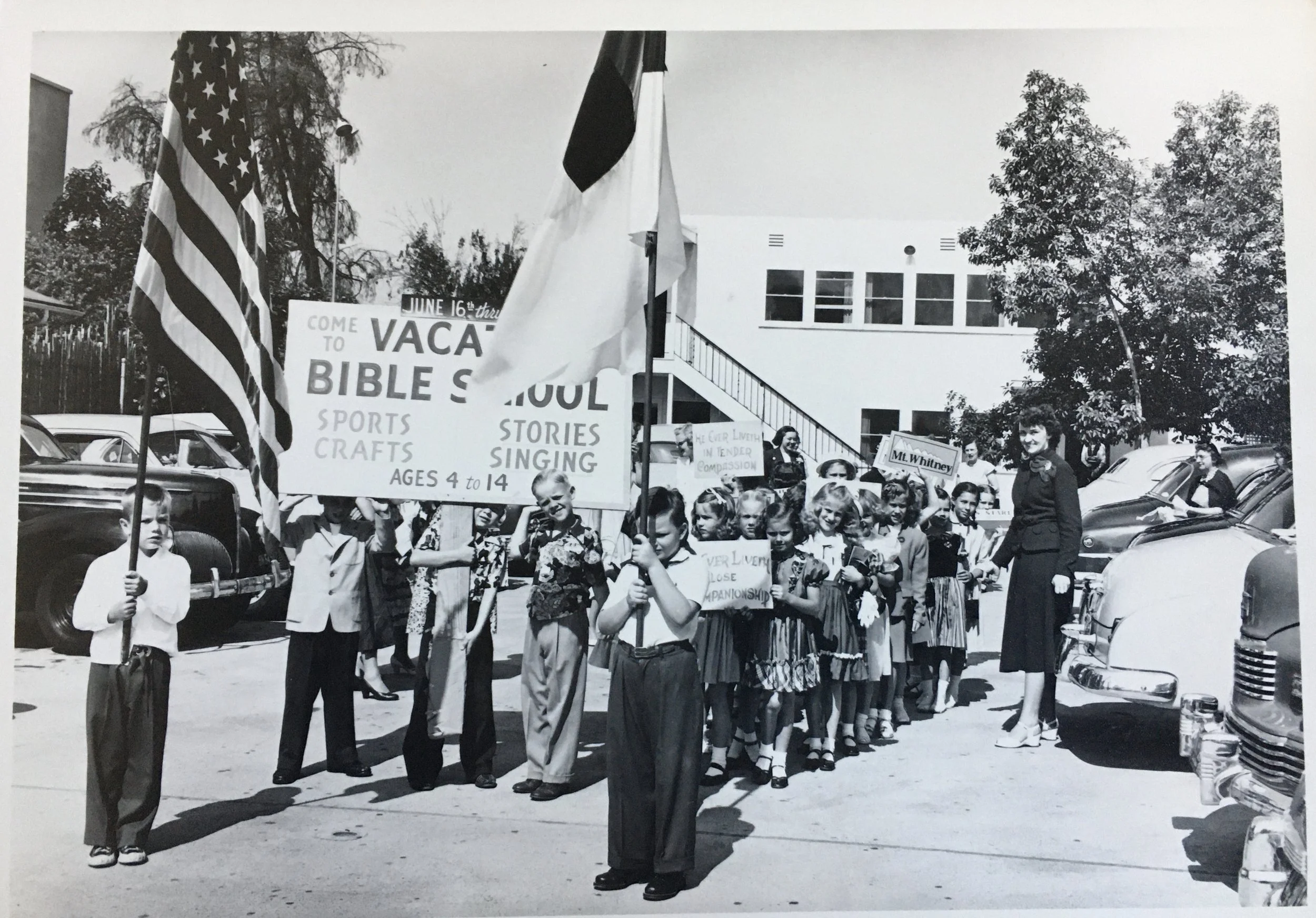
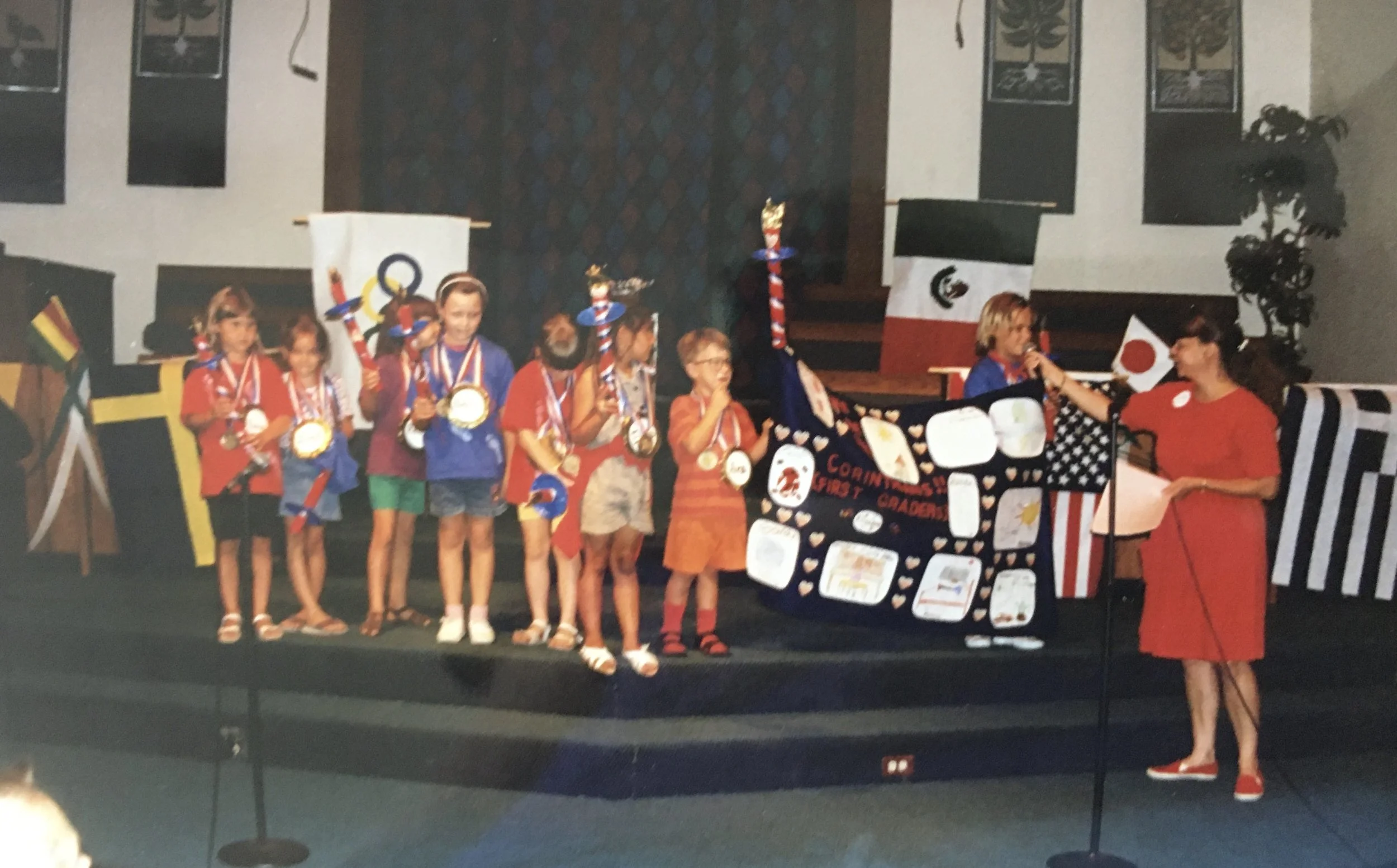
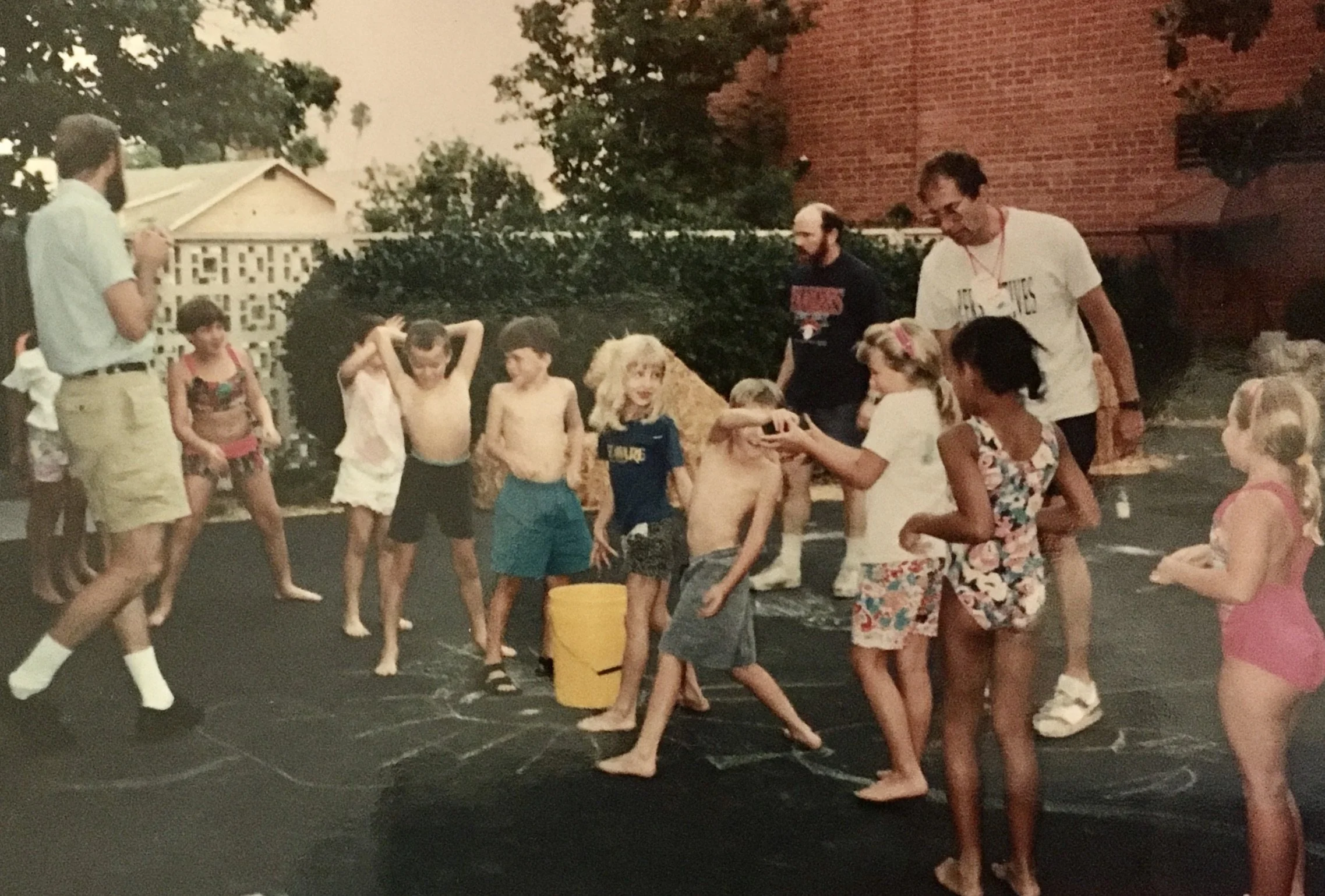
Other programs for young people at Pas Cov have included Boy Scouts from 1960-1975, various athletic programs, and the choirs which we talked about in the December chapter of this series.
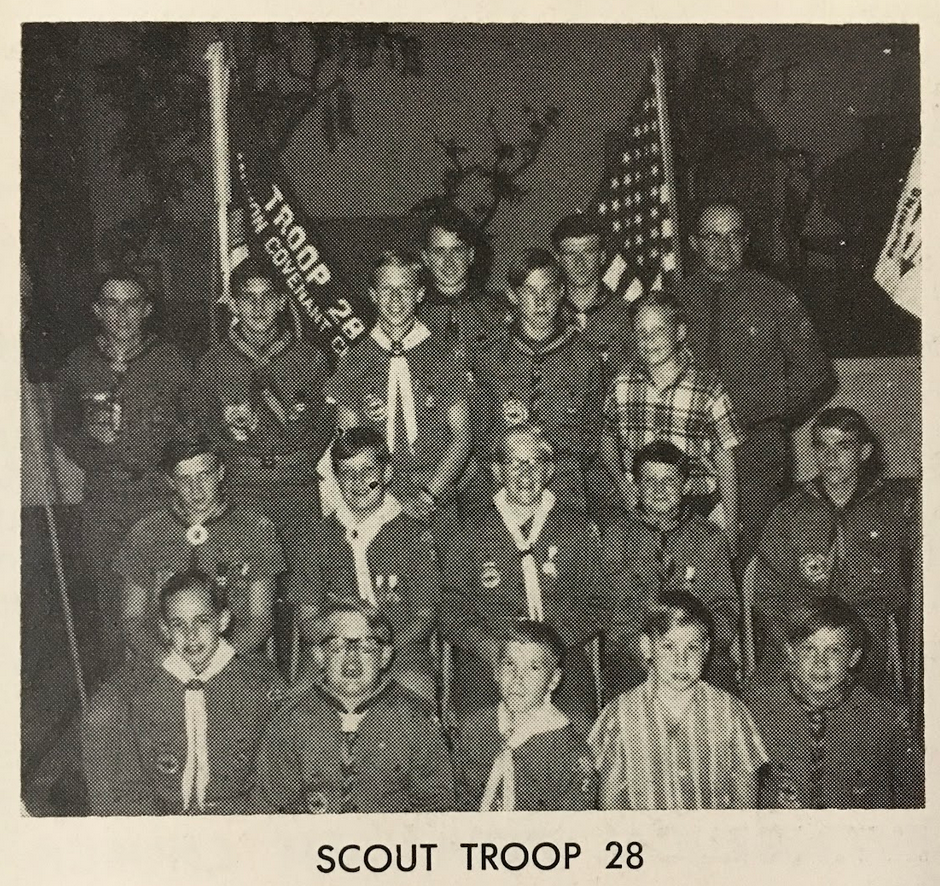
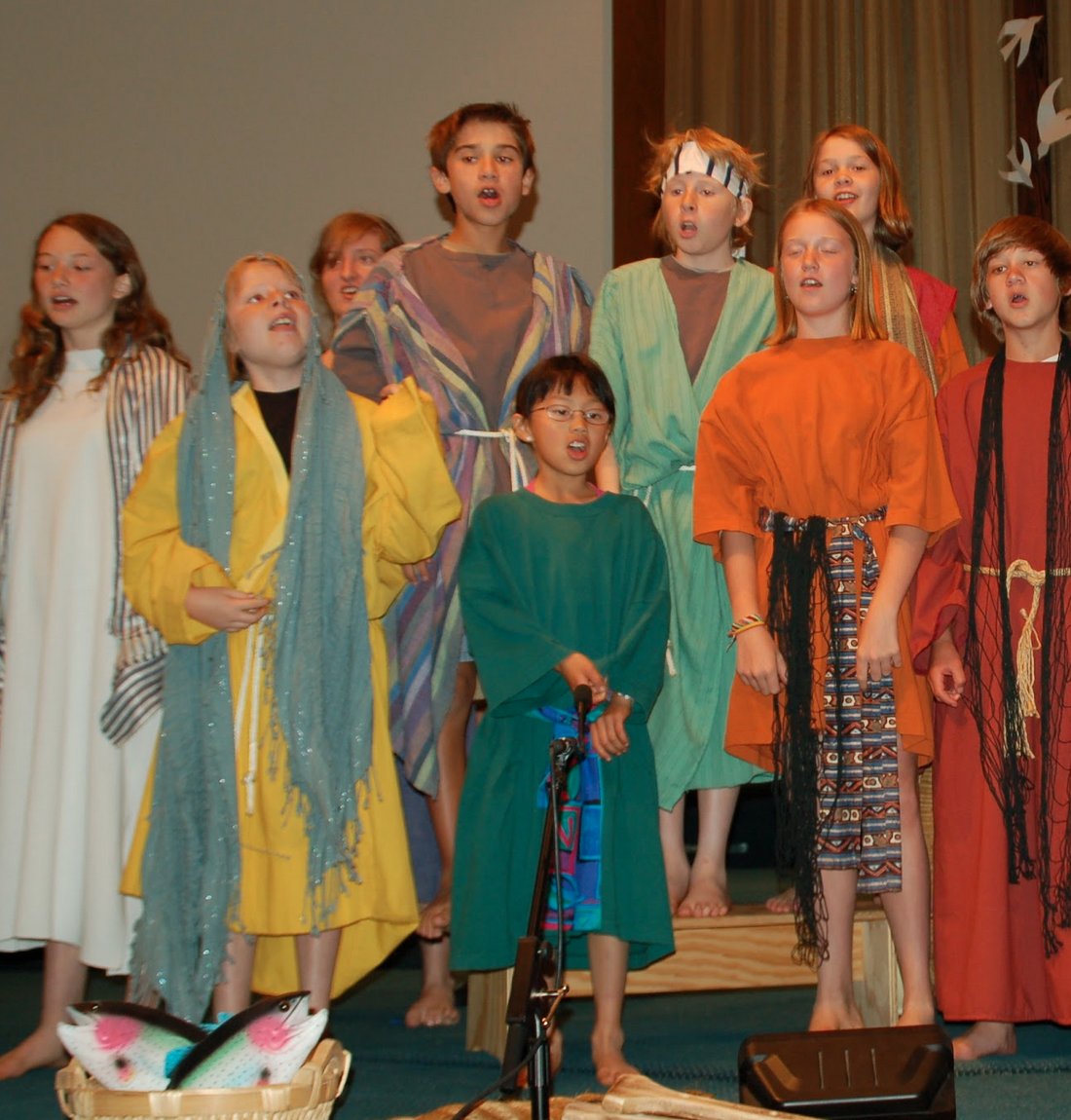
Special Events
In addition to regular programs, special events have also supported children, youth, and families. Some of these have young people going off on their own, such as to camp at Alpine, Campus-by-the-Sea on Catalina Island, or elsewhere; to CHIC, the Covenant denomination’s triennial youth gathering; or on mission trips to places like Mexico, Nicaragua, or Ecuador. Other special events involved the whole church. For a while there was an all-church picnic every Memorial Day. Everyone would gather at a place like Tournament Park for a softball game (single men vs married men), a potluck lunch, more games and contests, and an ice cream feast. More recently there have been pool parties and barbecues hosted by church members with large homes, and multi-family camping trips.
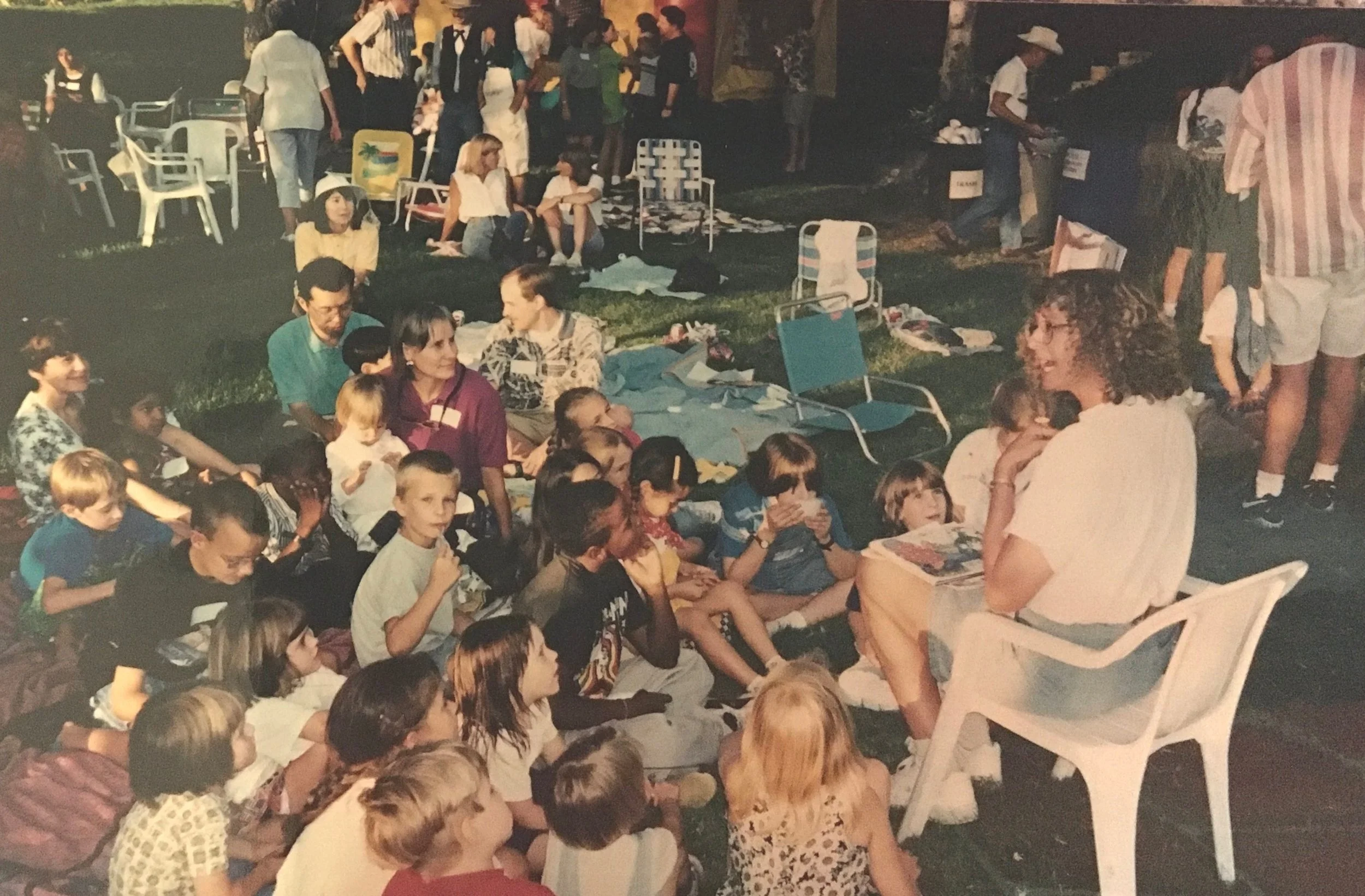
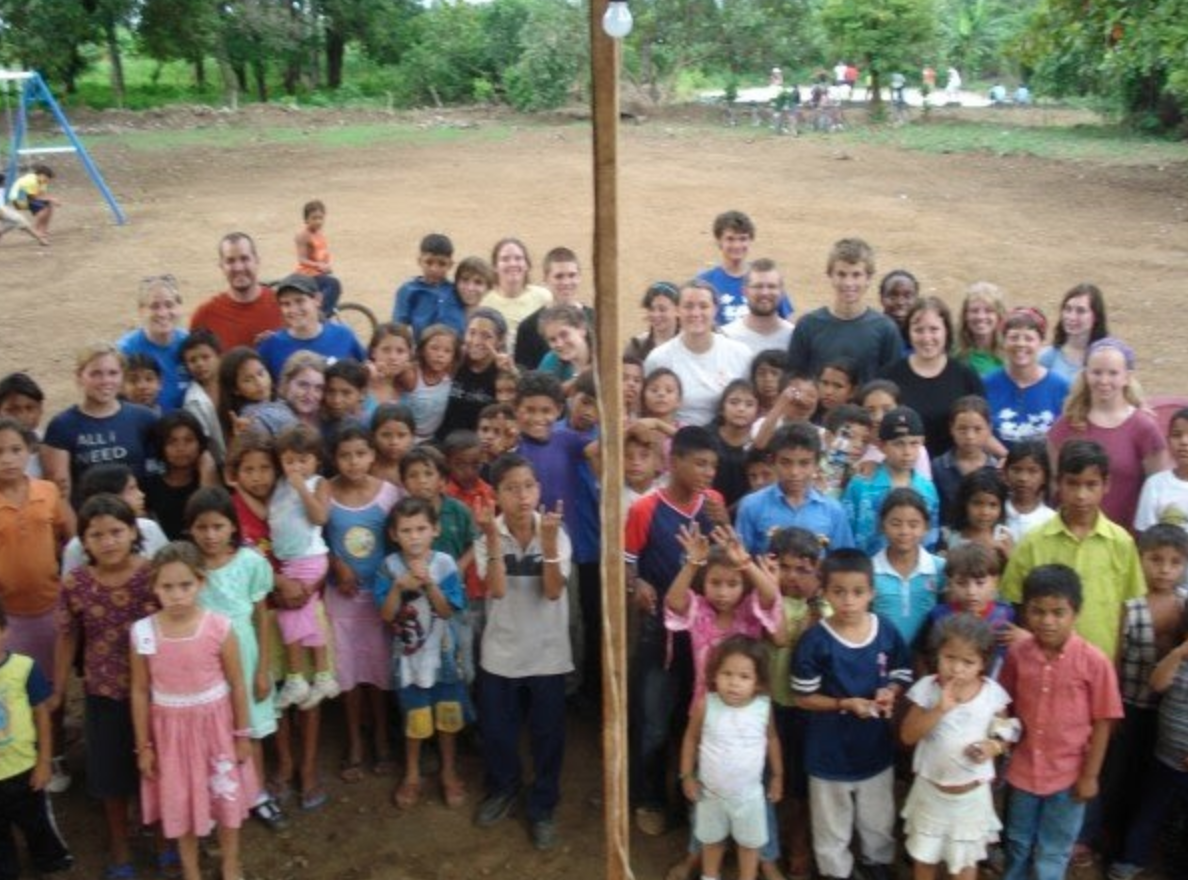
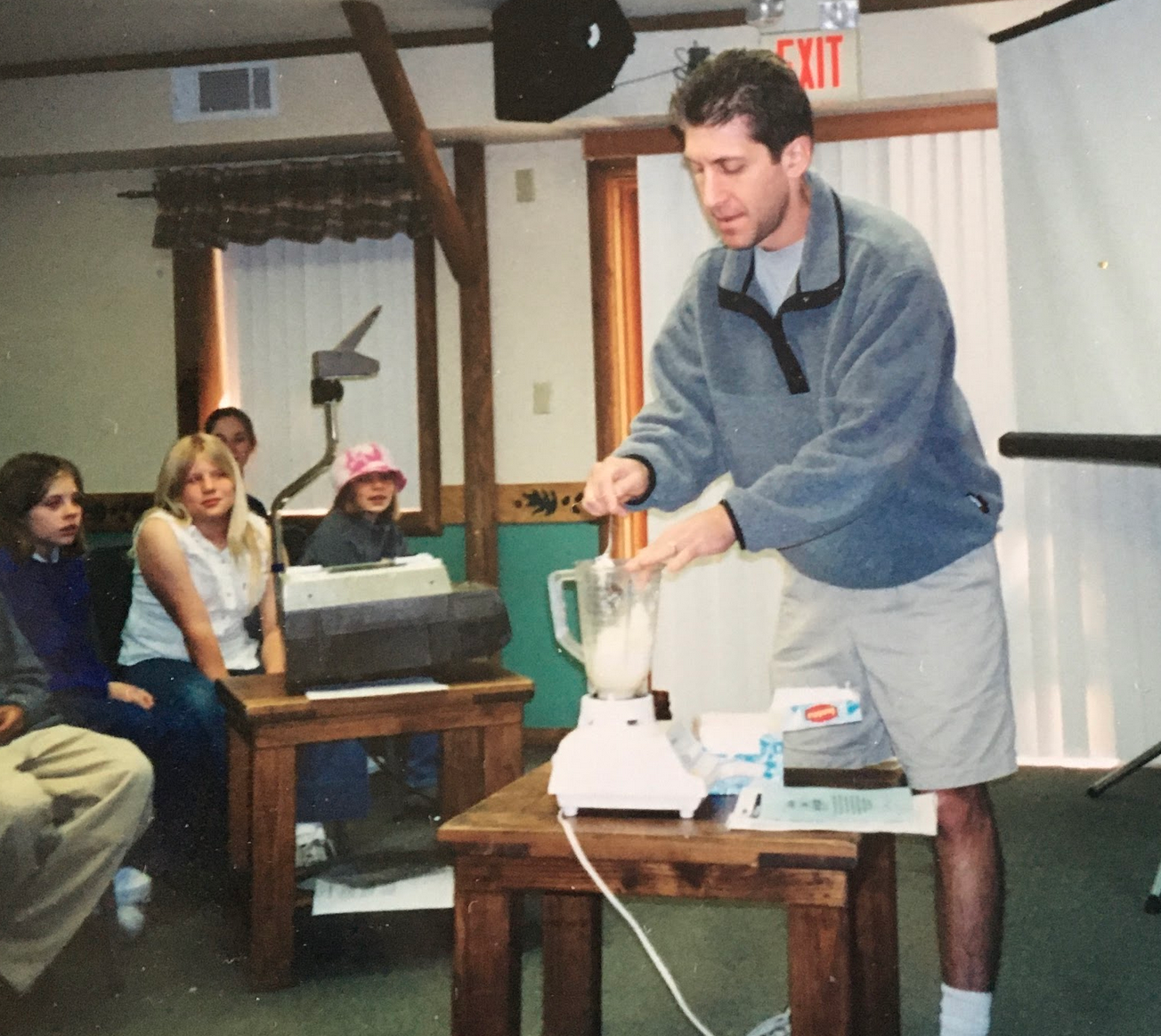
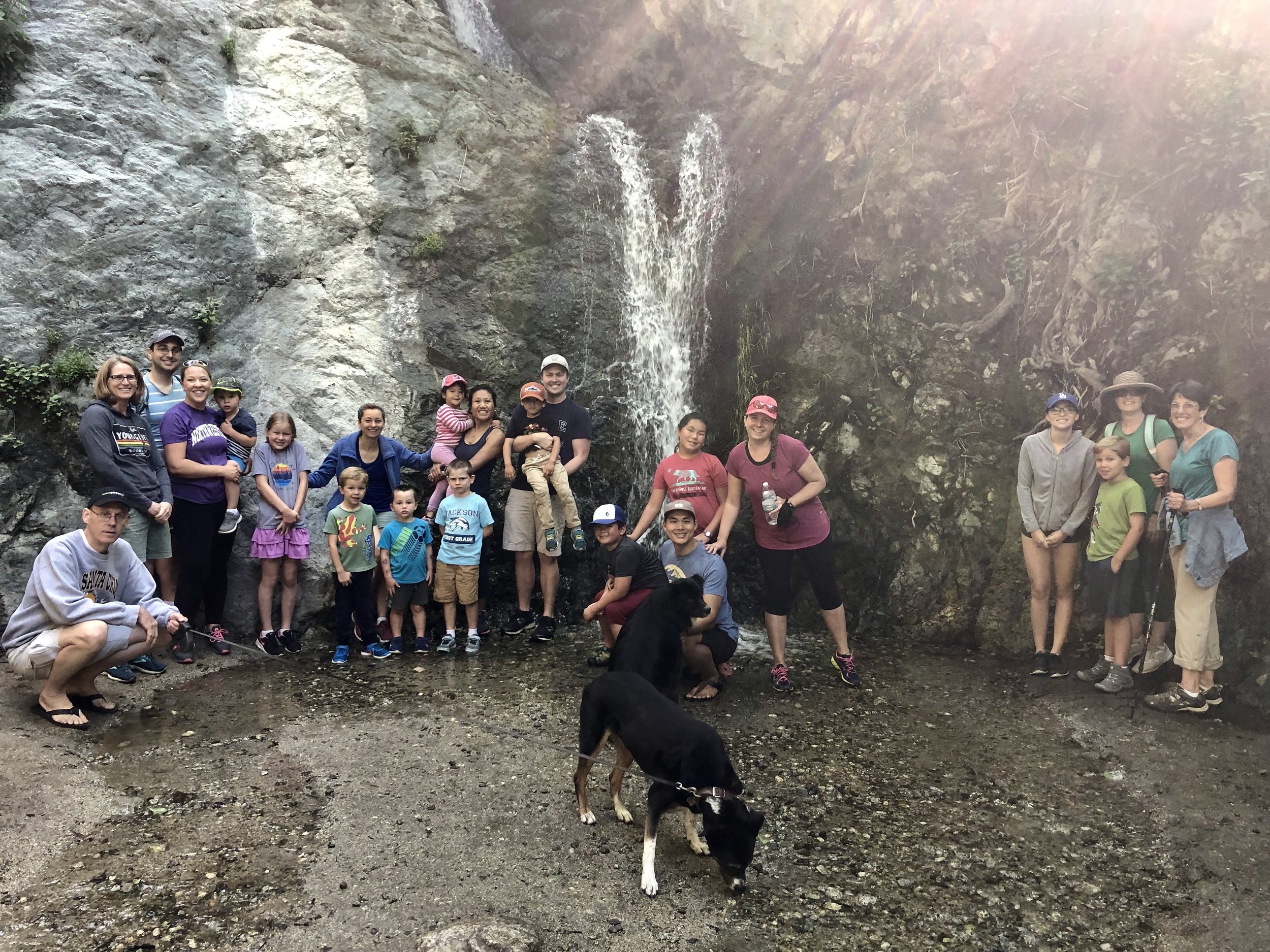
Mentoring
Pas Cov hired its first youth pastor in 1952. Important and wonderful though they have been, from the start, such staff members have usually stayed just a few years. But volunteers who are part of the church have a longer impact. Two mentors illustrate this value.
Warren Thompson, known as “Thomps,” (1921-2007) shepherded young men from the 1950s through 80s. A retrospective of his ministry quoted several influential leaders about Thomps’ role in their lives. Dave Hicks (who has been a pastor since 1974) says: “He’d pick me up after school, take me out for a Coke and fries, and we’d talk. It was never, ‘Did you have your daily devotions today?’ I experienced only genuine interest, love, and care coming from him.” Curt Peterson (former pastor and now denominational leader) says: “He saw the best in everyone and encouraged it.”
Though Thomps taught Sunday School, led Bible studies, and went on retreats, it was this one-on-one discipleship that has had a lasting impact through several generations. At the same time, he believed discipleship was a two-way street. “It’s so easy as you get older to put God in a box and feel like you have all the answers,” Thomps said. “Over the years I learned to be flexible and open-minded, to be blessed by the stimulation of younger people’s thinking.”
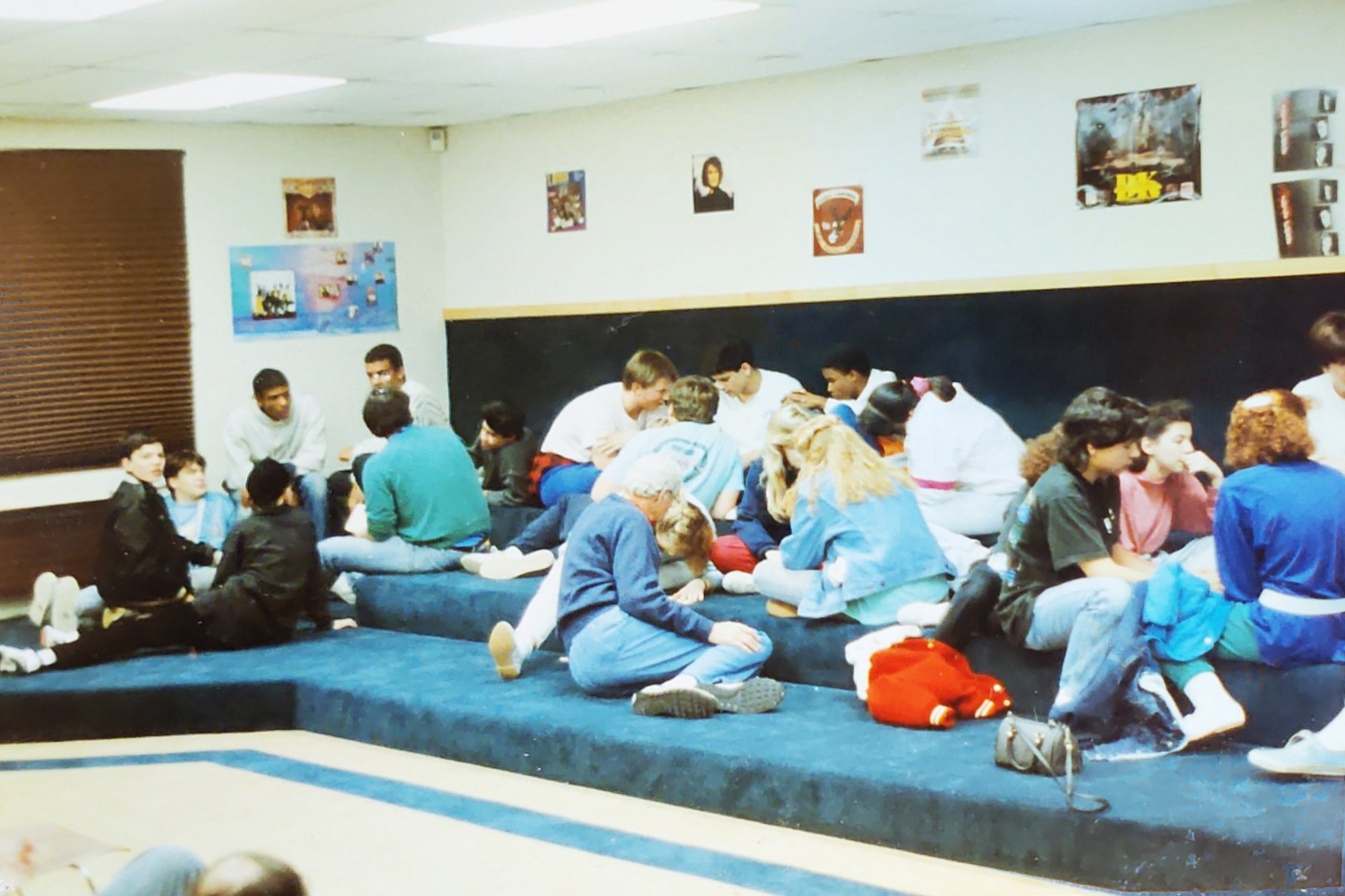
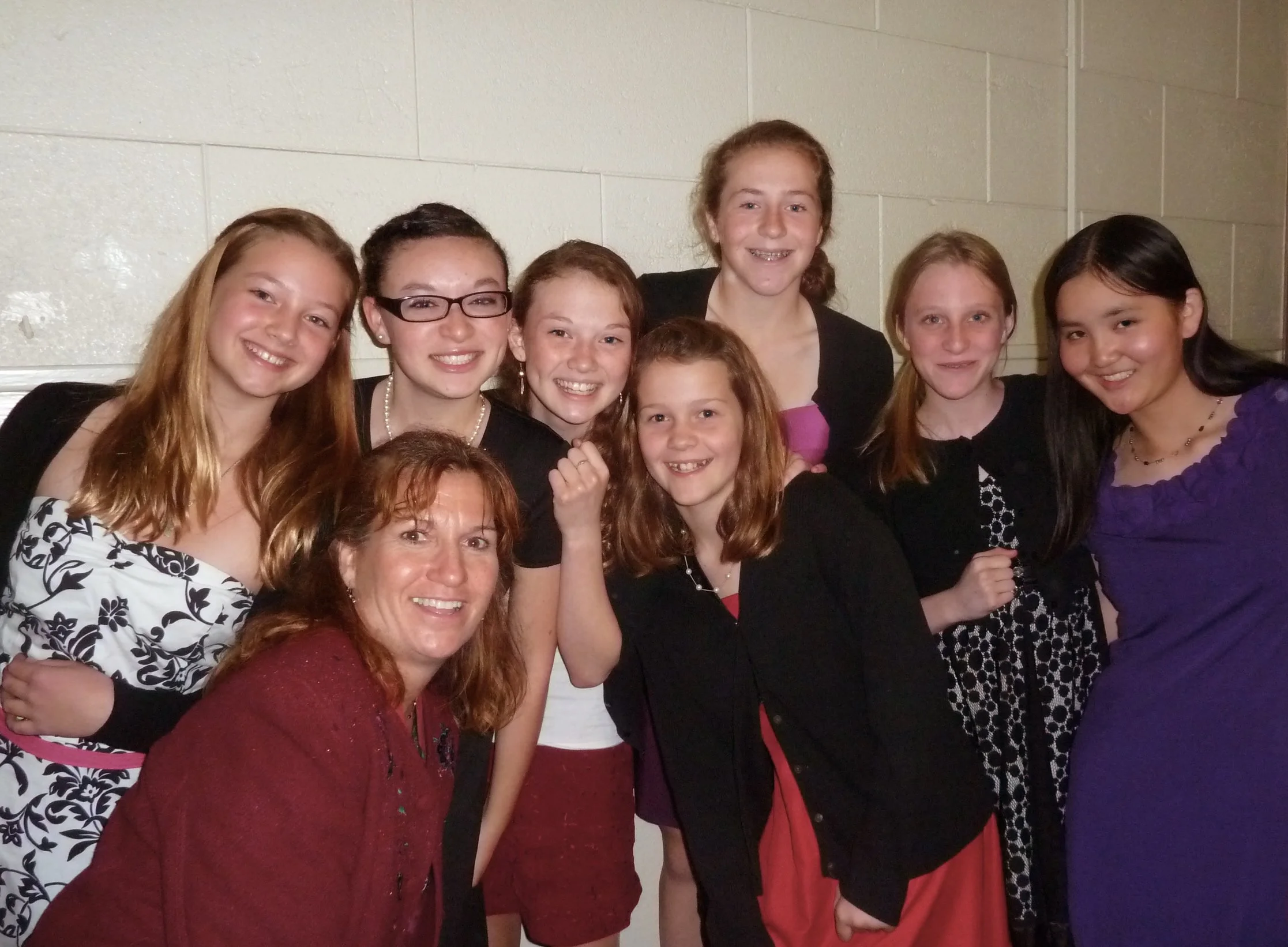
Another mentor, Terry Fields, agrees. “An unintended outcome of leading girls’ small groups has been my own growth—personally and spiritually.” Terry started volunteering with the youth program in 1986. Her particular niche has been mentoring a group of girls, seeing them from high school through college. Terry and her girls have sleepovers, tea parties, ice cream outings, retreats, backpacking trips, and special birthday kidnapping getaways. They also do Bible studies, read devotional books, and have share-and-prayer times. Her 1986-89 group included Kristen Annes, who’s now mentoring another generation of young women. Her most recent group (which has been co-led with Colleen Thaxton) includes Aria Haver-Hill, Natalie Maljian, and Annie Filback.
Multigenerational activities
Pasadena Covenant Church believes that worship and service should involve all generations coming together.
This was accentuated starting in the 2000s. Church retreats were especially designed to bring people of all ages together, kids were given active roles during worship, teens were offered a place on the church council and an opportunity to help with children’s ministry, and everyone served together at the Bad Weather Shelter. In July 2010 Pastor Vikki Randall led a Narnia-themed intergenerational evening family camp.
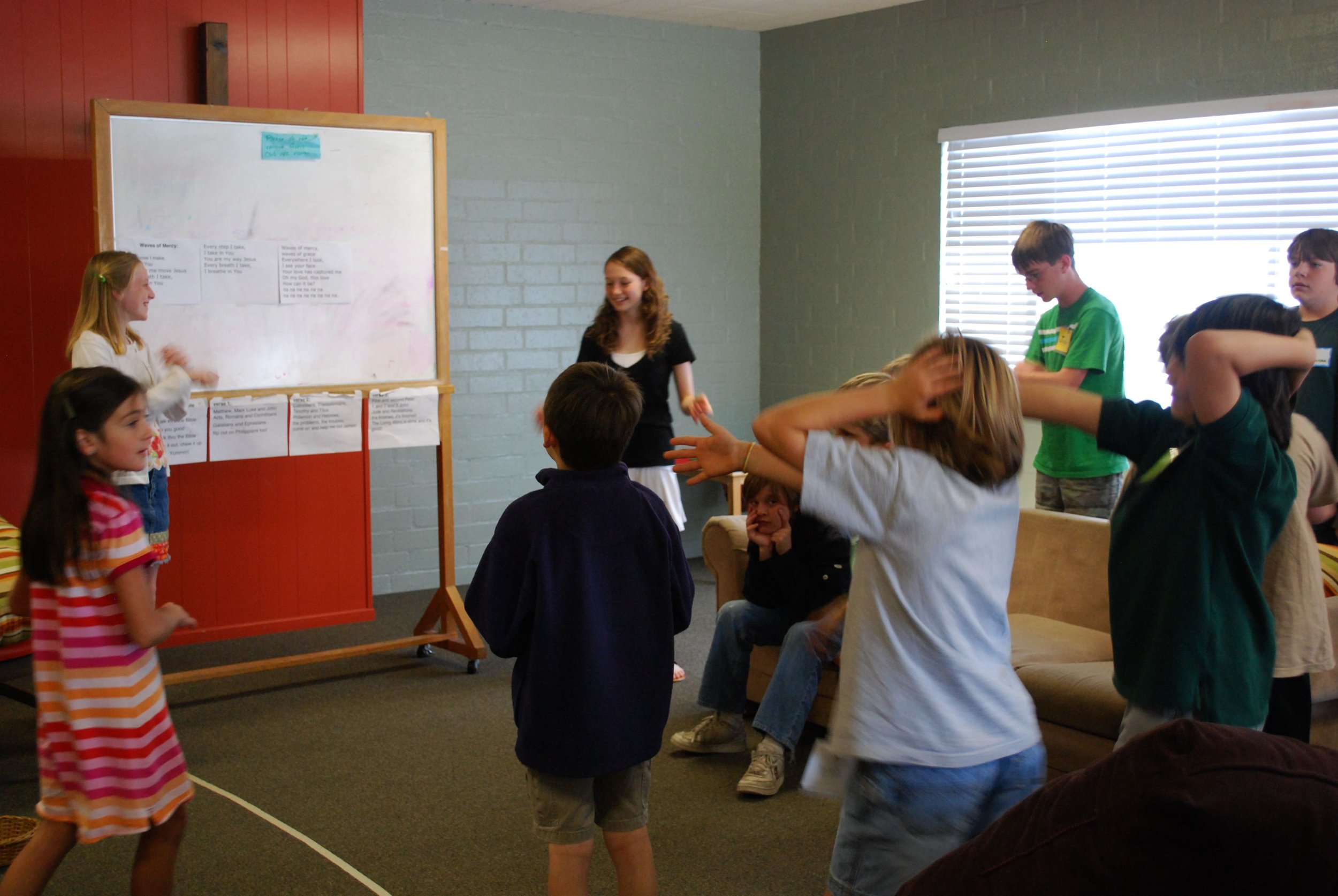
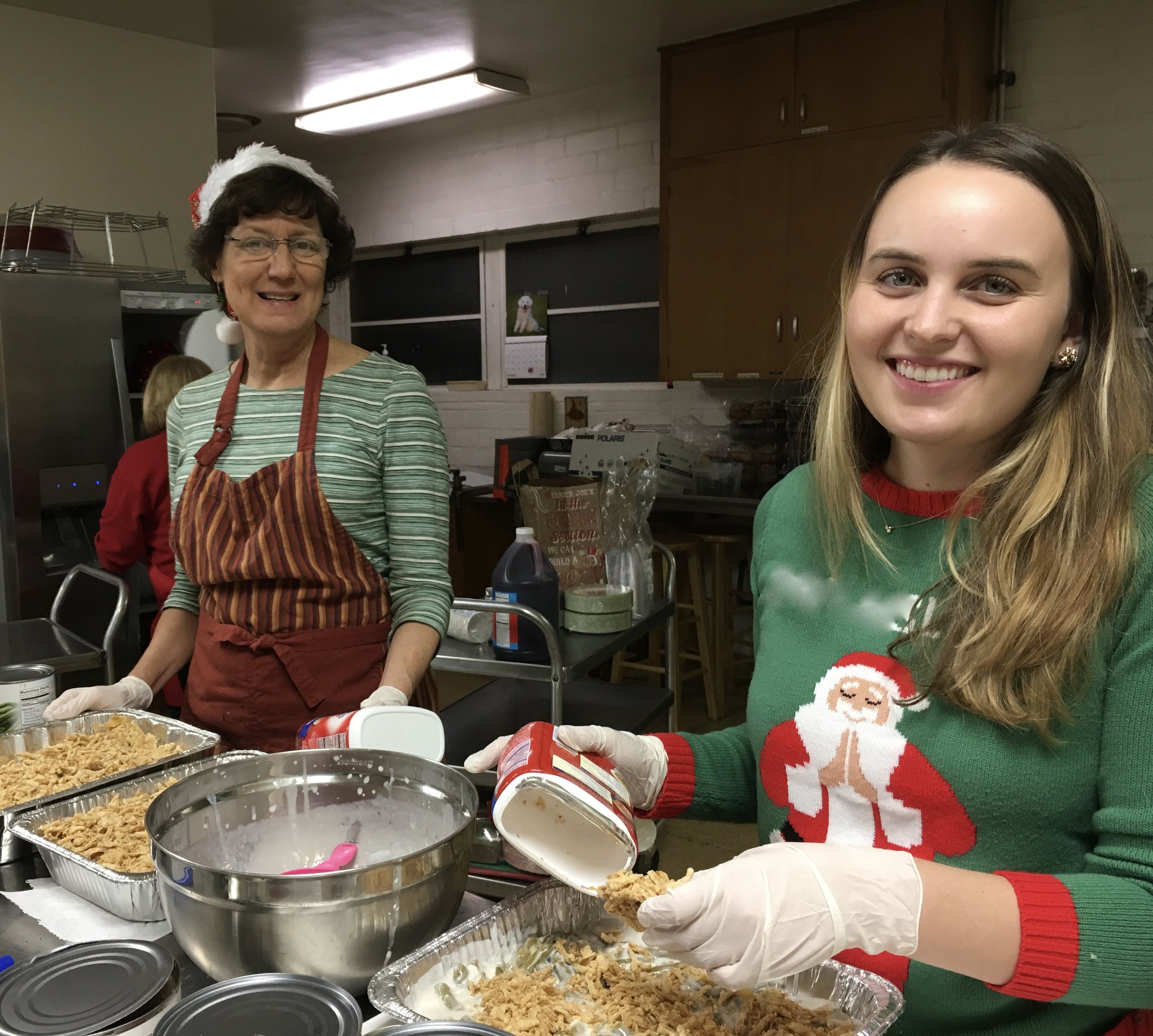
Special multigenerational opportunities opened up during Pas Cov’s partnership with Church of the Redeemer in South Central Los Angeles. For example, in 2003 (and several summers afterwards as well), “Vacation to LA” brought all ages together to live and minister in the neighborhood of the new church plant. They renovated the tutoring center and ran recreation and arts programs for children and youth.
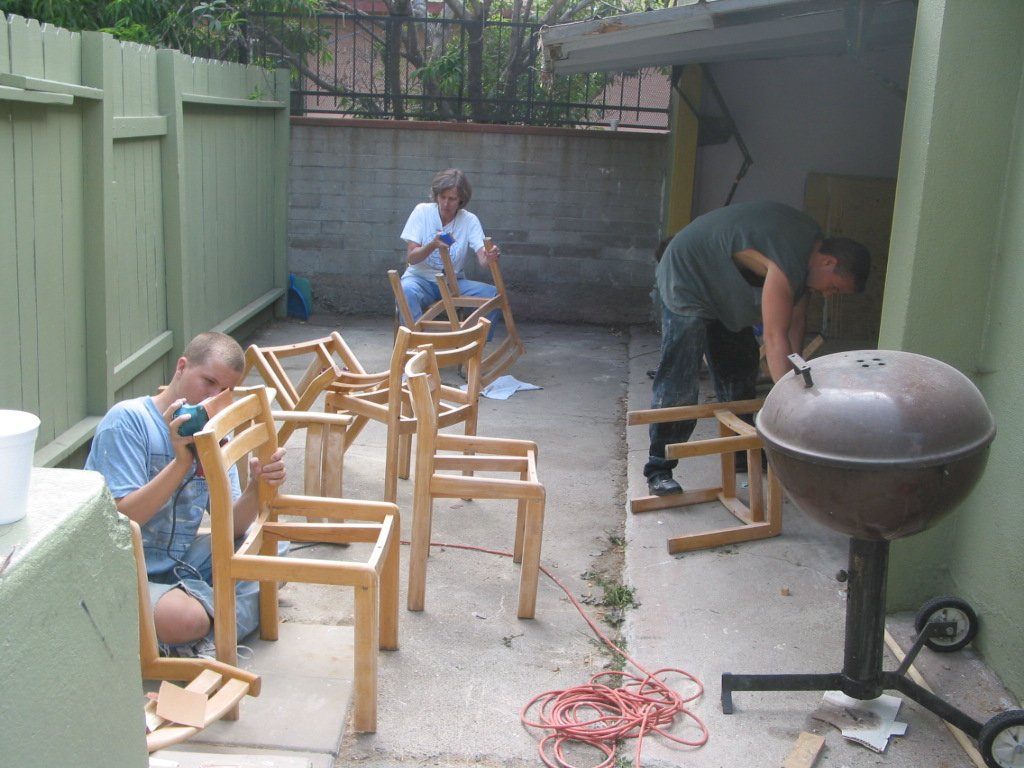
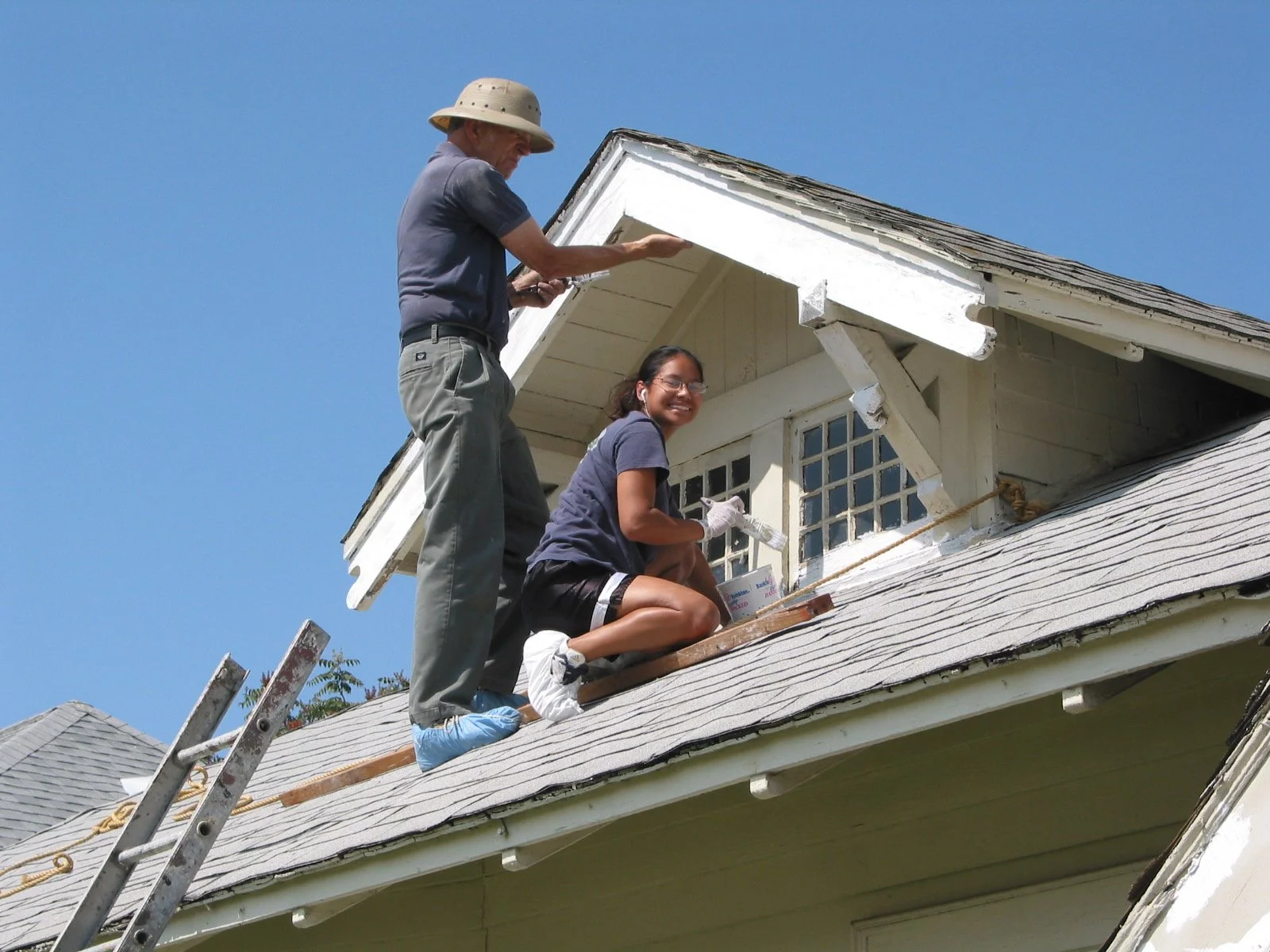
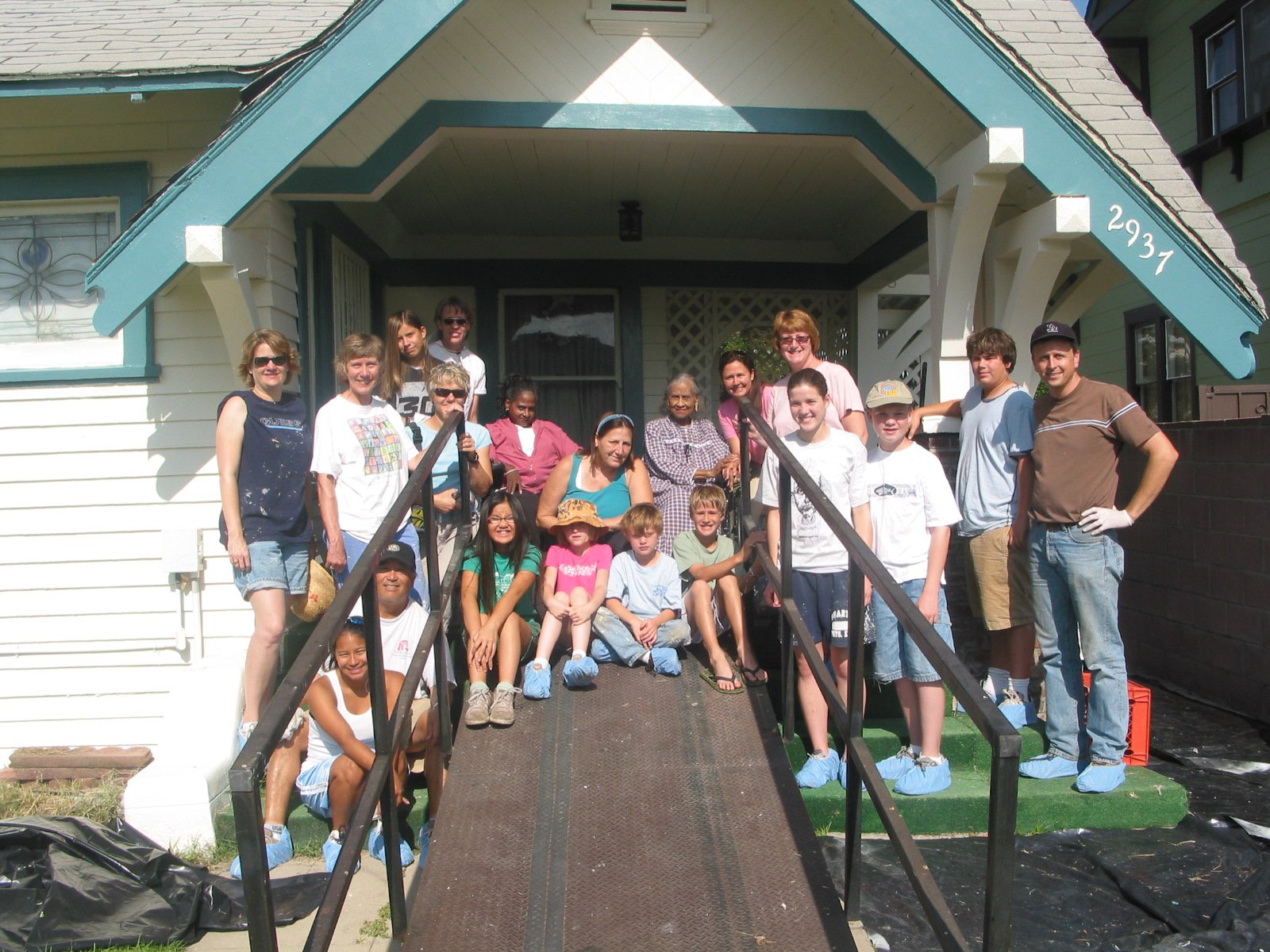
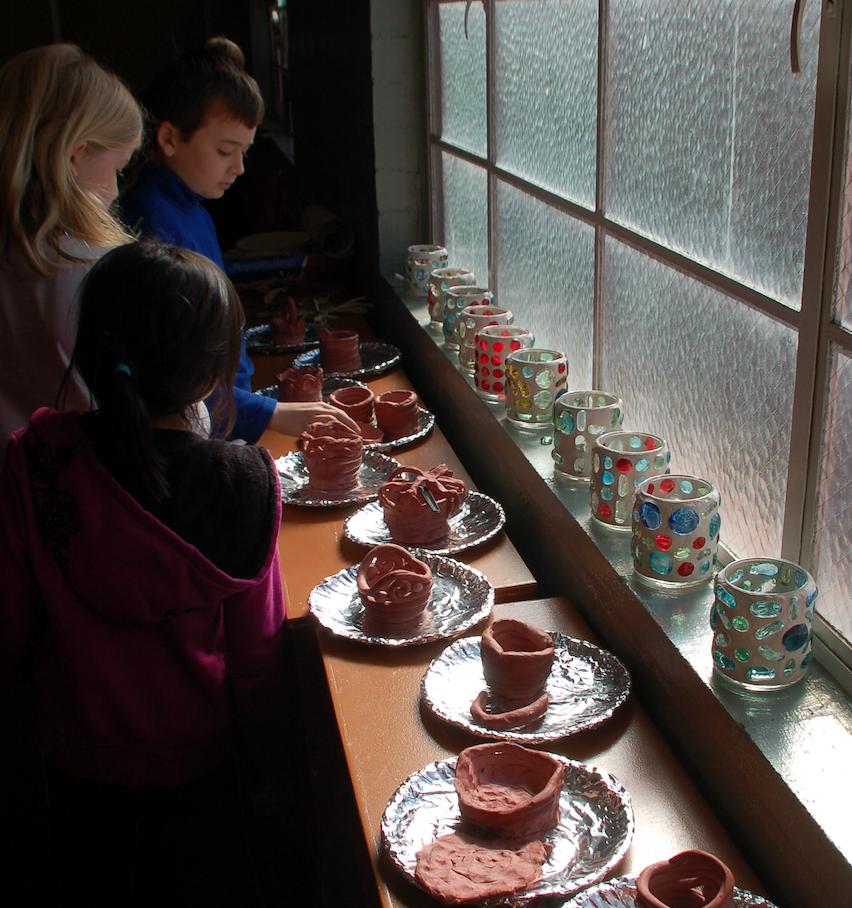
In 2004 the church received a grant from Calvin’s Institute on Worship to explore new expressions of multigenerational worship. This led to several years of Advent and Lent experiences with art and faith for kids and adults.
Conclusion
From Cradle Roll to Confirmation, from Vacation to LA to Family Sunday, Pasadena Covenant has sought to encourage families, whatever their structure and whatever their current struggles. We are thankful that the church has provided biblical teaching, service opportunities, and Christian community so that all generations can thrive together.
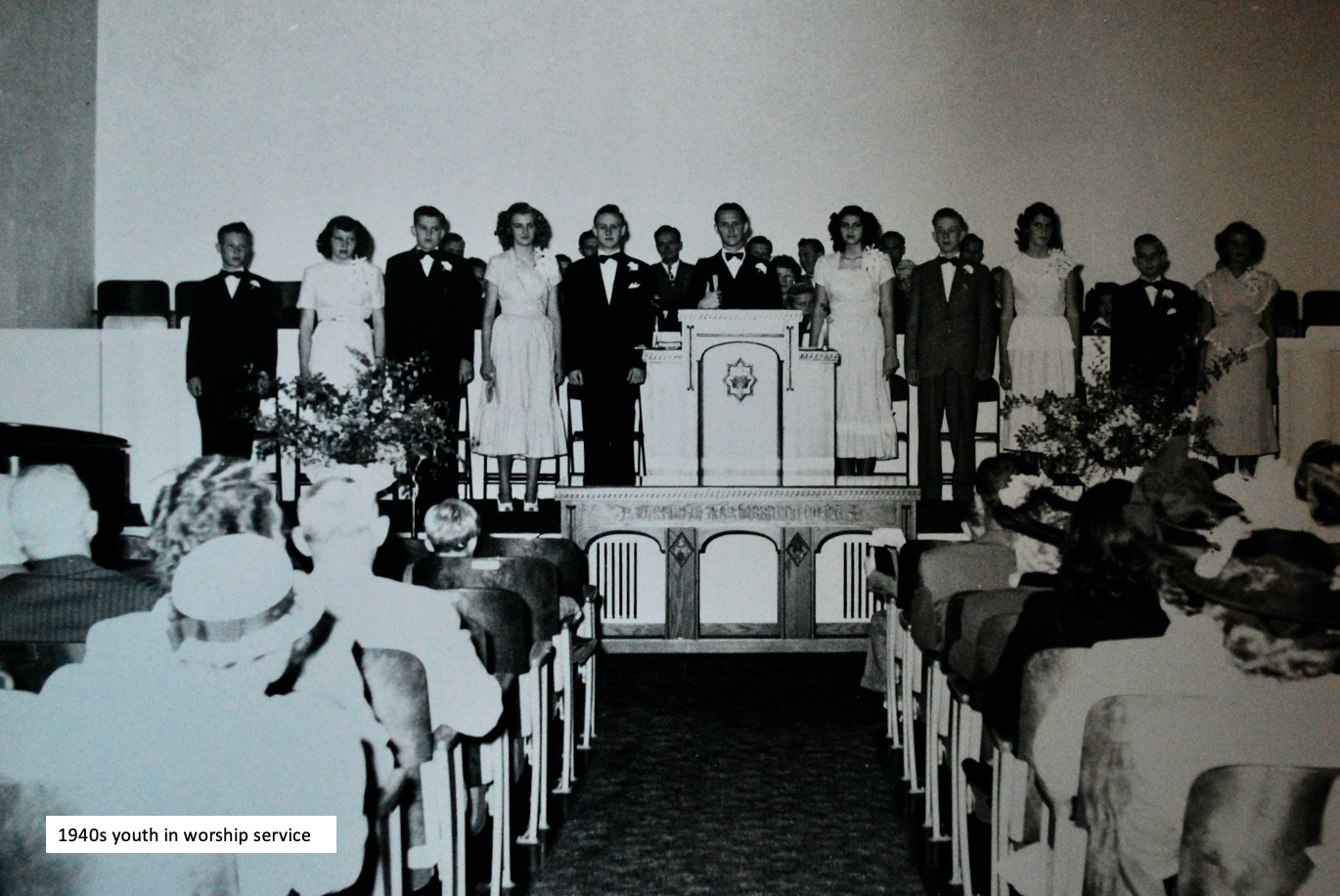
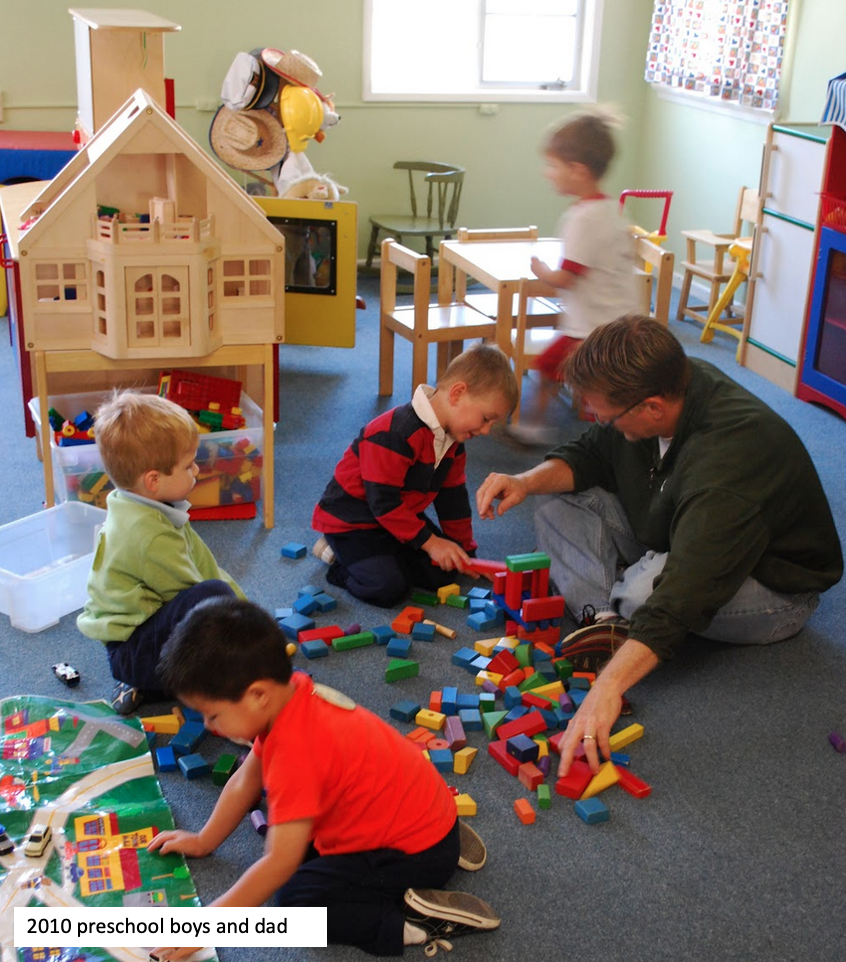
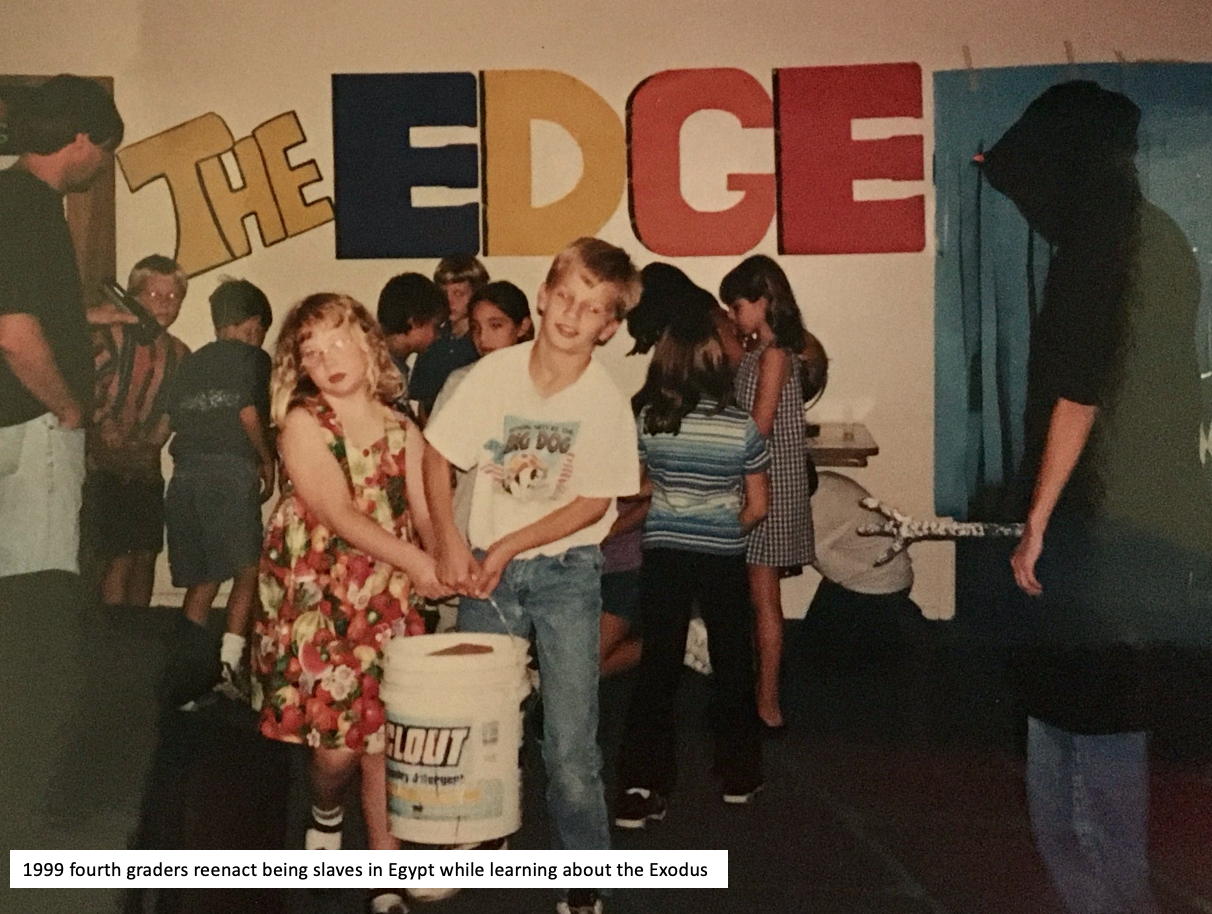
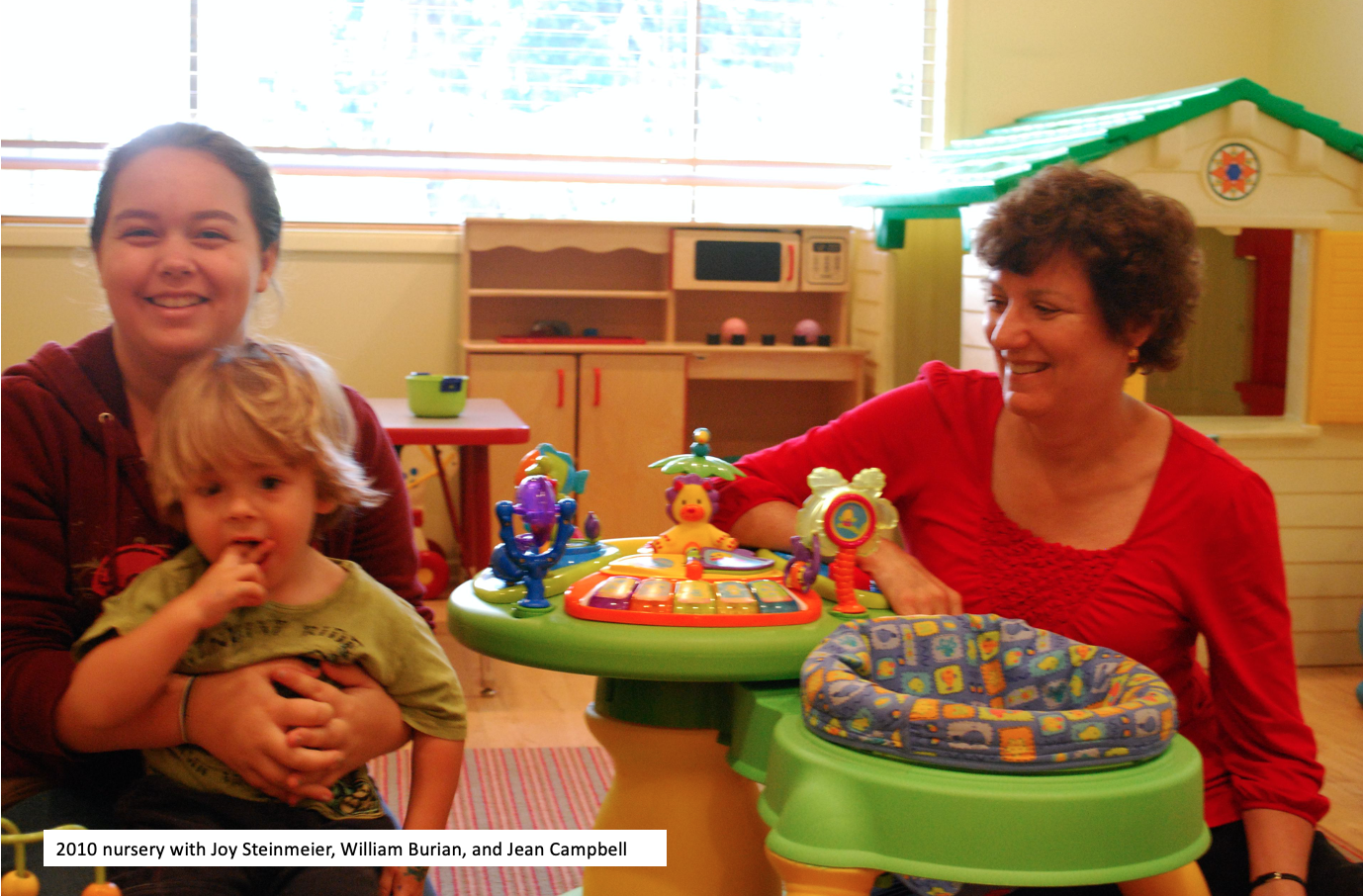
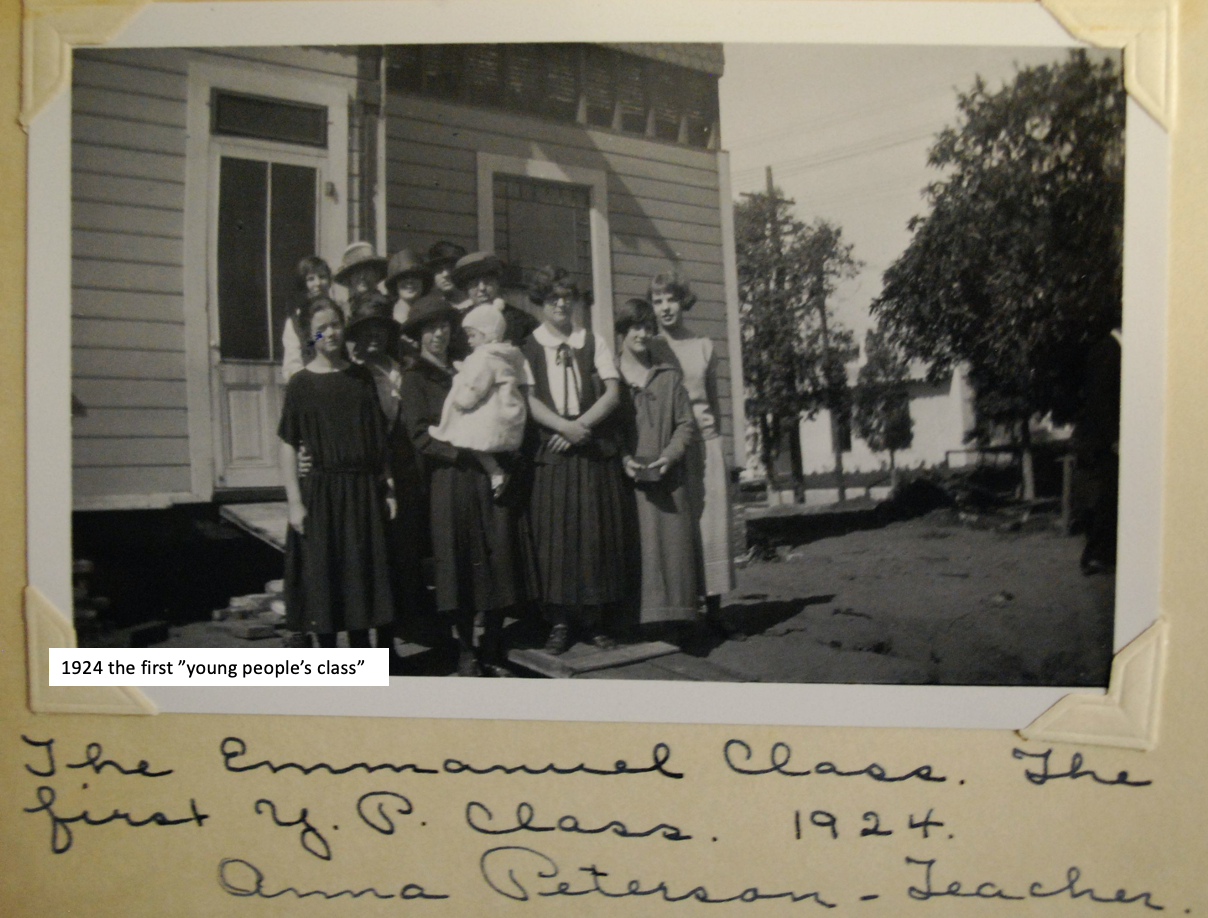
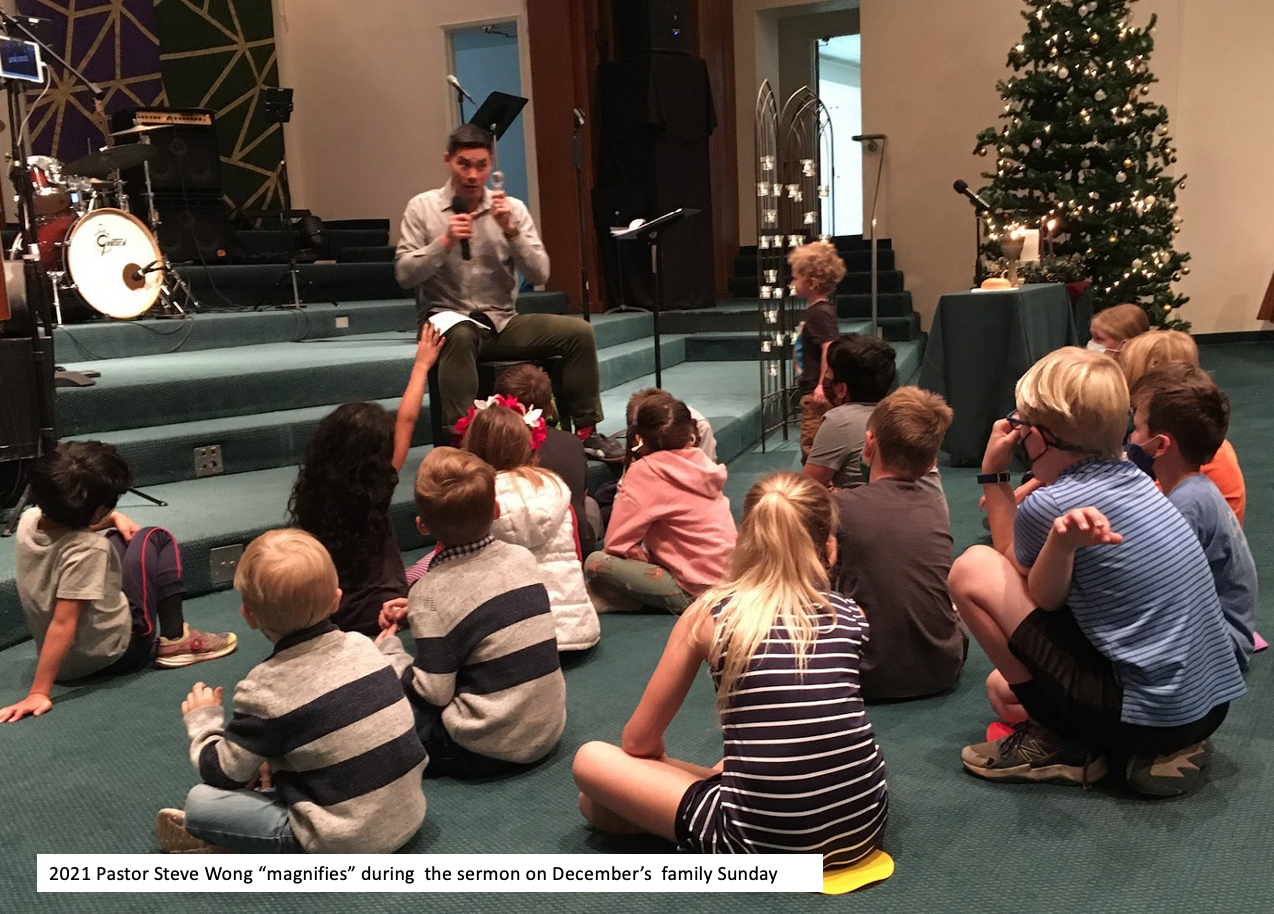
Beyond 100
In the next 100 years, who are the children and families who will come to Pasadena Covenant? How will God want to use them to influence the world for his Kingdom? How can the church be a part of that?
We are so grateful to the many who have sought to follow God over the past century,
and now we seek to imitate their faith for the next hundred years.
Please join us in giving to this legacy of faithfulness!
P.S. What a great time to be welcoming our new pastor Pastor for Families and Community, Andrew Mark!
Andrew Mark and his family

Cross-Cultural Ministries
How has Pasadena Covenant connected with the world?
Missions
How has Pasadena Covenant Church been involved in God’s mission around the world?
Early Years: Pasadena and China
Perhaps it was because they had crossed an ocean to get here. Perhaps it was because they took the Bible seriously and knew that Matthew 28:19 reads, “Go and make disciples of all nations.” For whatever reason, the Swedish immigrants who founded a church in Pasadena in 1922, had the world on their hearts from the beginning, and within a decade or so had named it Mission Covenant Church. They were moved to support missions in China in the 1930s after hearing a Covenant missionary, Joel Johnson, speak at the church about the educational and benevolence work being done in war-torn central China.
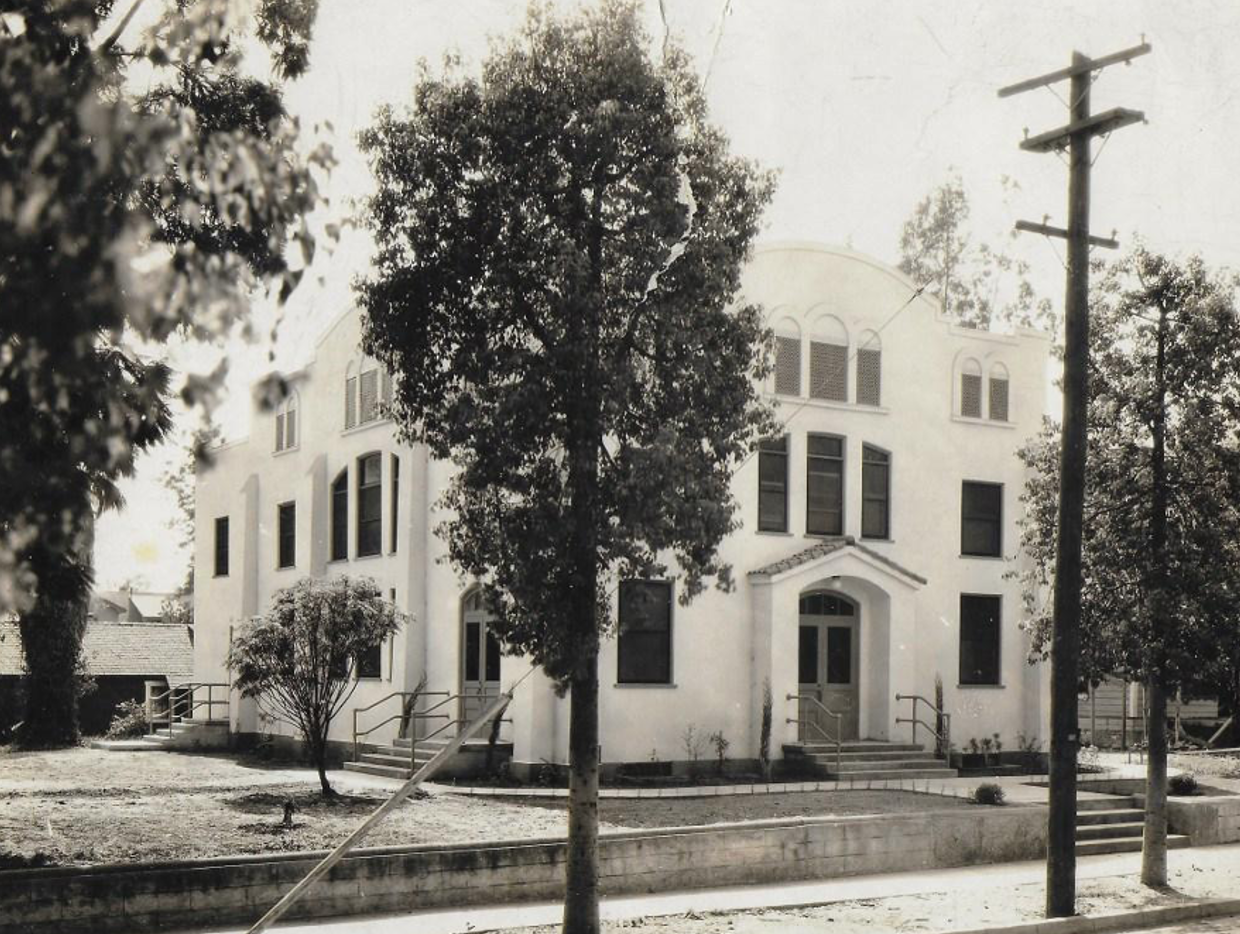
Congo
In 1944 Mission Covenant Church sent out their first missionary from Pasadena, Ann Berg. She had worked for a few years as a church-supported Sunday school teacher in Pasadena, and she carried on that role in what was then Belgian Congo.
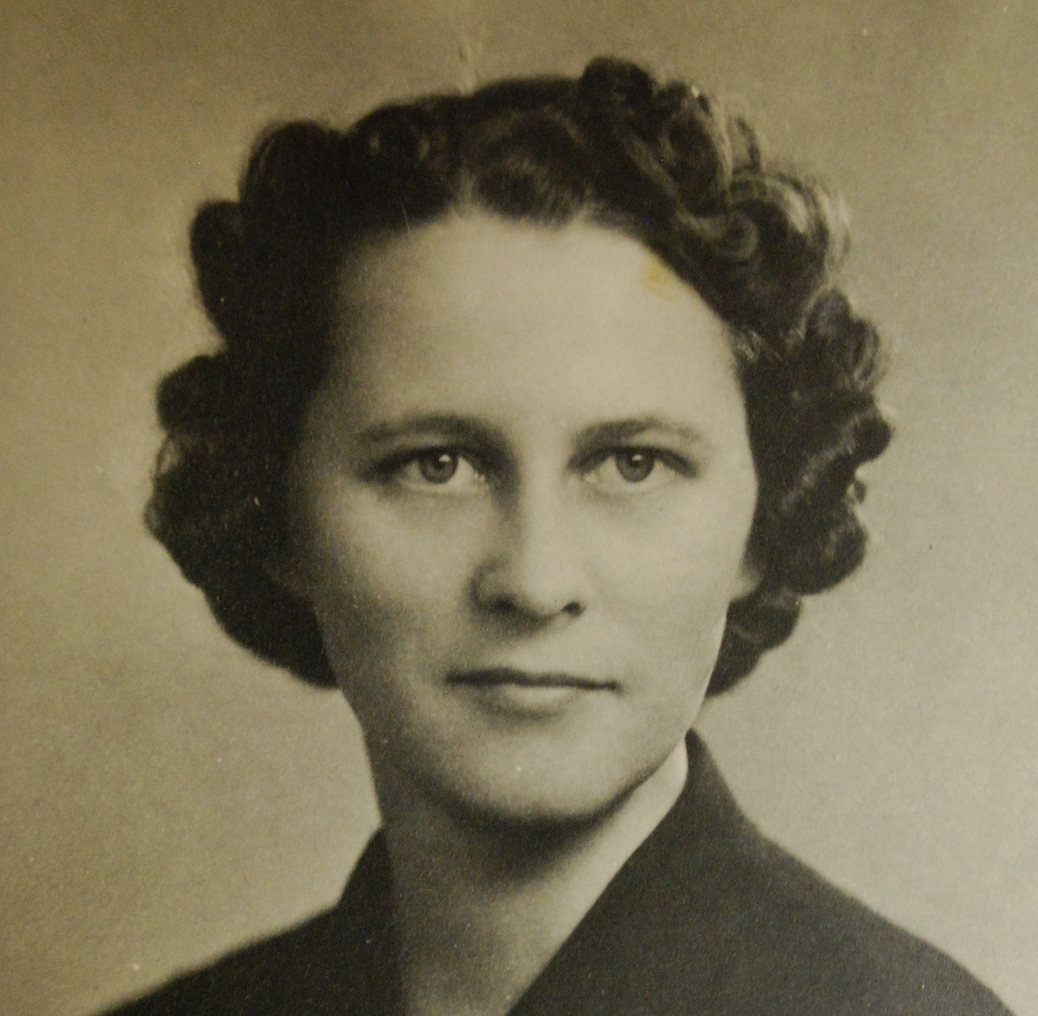
Ann’s particular interest was in the education of women. The Covenant missionaries with whom Ann worked eventually included dozens of educators, ministers, translators, doctors, nurses, builders, and engineers. In 1960, as Belgium agreed to give Congo independence, the Covenant transferred four hospitals, many schools, and other properties to the Congolese. Ann stayed in Congo until 1980, helping to train local leaders. Karen Benson, a nurse and nurse educator, was another missionary supported by our church serving in Congo from the 70s until the early years of the 21st century. Our connection with Congo has continued through Fred and Karen Vinton, who attended Pasadena Covenant 2009-2012, and are now working in Goma (eastern Democratic Republic of Congo) with Wycliffe Bible Translators.
Today, the Covenant church in DR Congo (CEUM) has more than 1600 churches (compare that to 875 in the U.S.). Mossai Sanguma, president of the CEUM from 2003-2012, attended Pas Cov during his years at Fuller.
Japan
Japan was the focus of a missionary sent by our church in the 1940s. While studying at Pasadena City College, Robert Verme became interested in the island nation and made several Japanese friends, whom he invited to church. In 1949, Mission Covenant sent him and his young family to Japan.
By the mid-1950s, Covenant missions work in Japan included a Bible camp for nurses, a Bible class held in a printing company, classes in a boys’ reform school, English classes for university students, and Sunday schools in Tokyo and Nagaoka. The Vermes served in Japan until 1972.
Pasadena Covenant is still strongly connected to Japan through our current missionaries, Tim and Wakako Clark, who have done evangelism and church-planting in Sapporo and Tokyo over the past two decades.
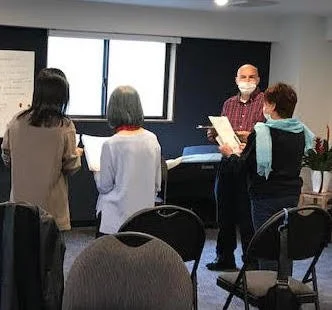
Becoming a Mission-Centered Church
Through the 1950s and 1960s, Mission/Pasadena Covenant continued to support missionaries, many of whom had grown up in the church and been inspired here.
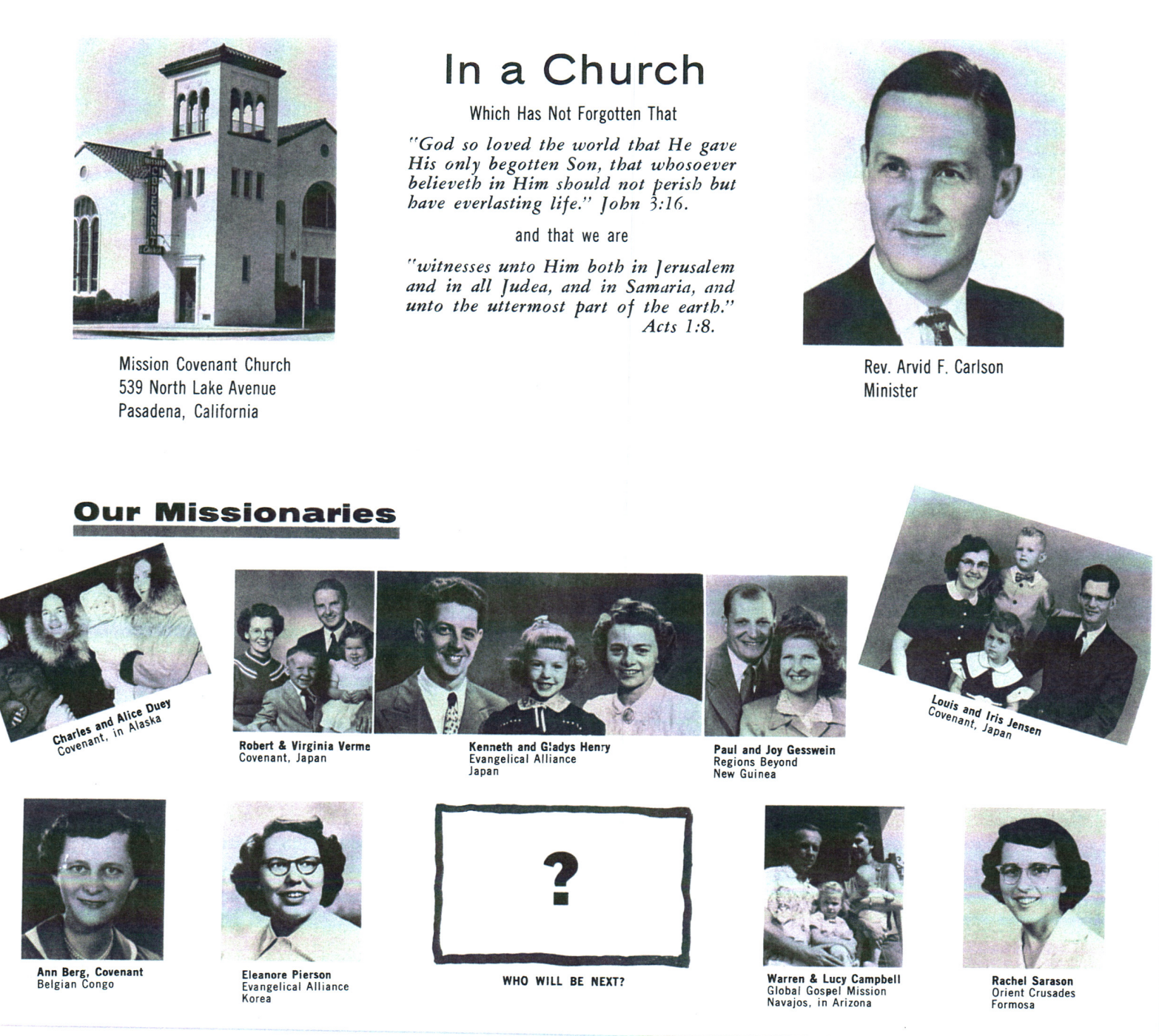
Church missions conference brochure 1958
There were annual missions conferences. Covenant Women supported missions with special event meals, packages of supplies, and letters to missionaries. When the church received a large gift of money to construct the new gym and classroom building, Pastor Arvid Carlson challenged the church to raise an additional $100,000 in matching gifts for missions, which we did. In addition to the workers in Congo and Japan, missionaries from our church were serving overseas in Korea, Formosa (Taiwan), and New Guinea. The diverse ethnic populations in Alaska and the Navajos in Arizona were also focal points.
Thailand
In 1971 Joan Christensen Gustafson, who had grown up in Pasadena Covenant, and her husband Jim, a recent Fuller Seminary grad who worked at Pasadena Covenant as a youth minister and was ordained in the Covenant, went to Thailand. Applying principles of contextualization, the Gustafsons began work with several Thai church leaders in the northeast province of Udon Thani to re-envision how the gospel could be more effectively communicated to the Isaan people there.
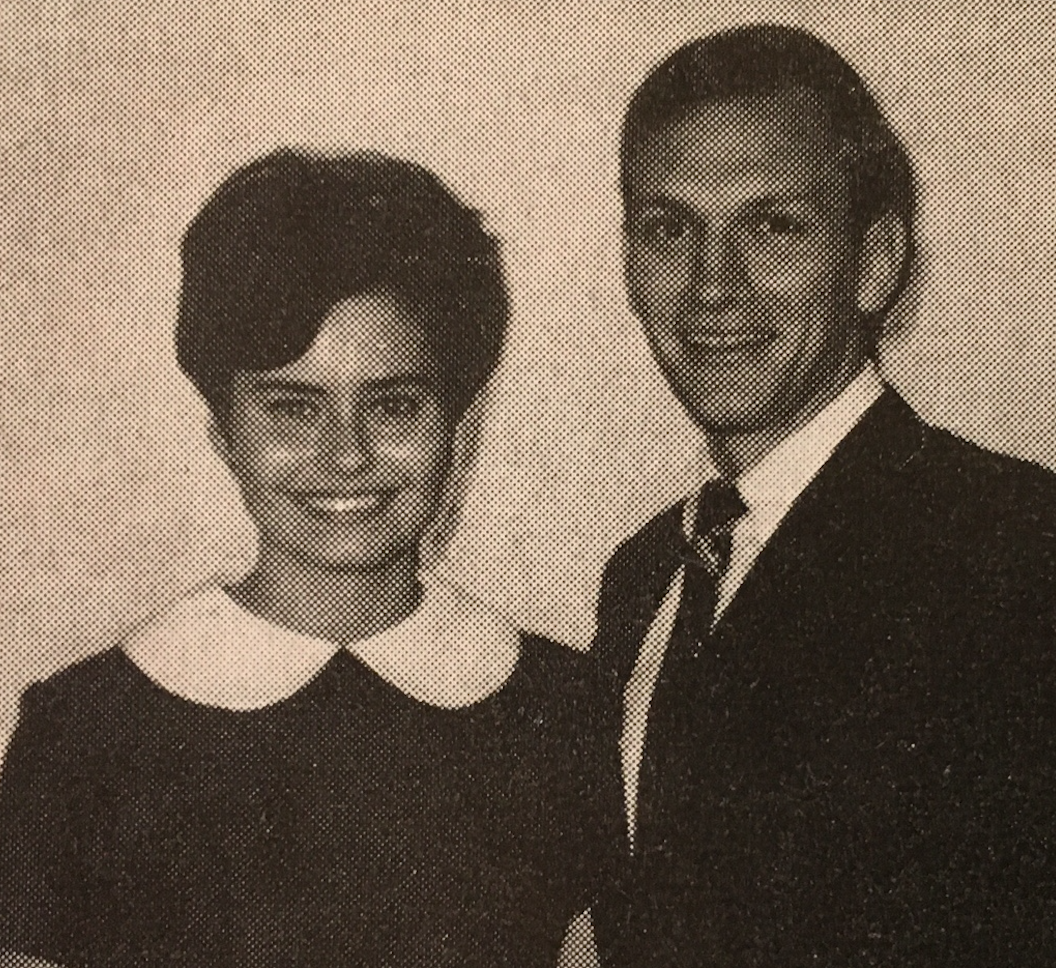
Jim and the Thai team encouraged musicians in the group to create new hymns and dance to embody contextually sensitive understandings of the gospel. They also helped these new Christians become economically self-sufficient by developing pig and fish farming. Joan coordinated the mission’s finances.
After nearly two decades without many other missionaries joining this work, several families with close ties to Pasadena Covenant signed up in the late 1980s. Peter and Ruthie Dutton went to Udon Thani, while Doug and Carolyn Johnson and Paul and Gretchen DeNeui partnered with a team from Udon Thani to begin a new ministry in another Isaan province, Roi Et. Their focus was again multifaceted—discipleship, church-planting, contextualized worship, and economic development through fish farms, as well as the initiation of a campground ministry. Still another Covenant couple, Carl and Karen Groot, established a new ministry among the Isaan people who had migrated to Bangkok looking for work, by developing a crafts business to help alleviate poverty. Soon the Duttons went to northwest Laos, which shares a similar culture because of the historic and linguistic connection between the Isaan and Lao people, and began a ministry there utilizing fish farming and agriculture to minister to the people and share the gospel.

The Thai work is in the hands of local leaders now. The emphases on an integration of church planting with economic development and the use of local cultural forms in presenting the gospel remain and help animate work in the churches.
Across Africa and Asia
We have focused attention on Congo, Japan, and Thailand, but the influence of Pas Cov has also spread along what is known as the 10-40 window (a region that has historically been less developed and has fewer Christian resources). These maps highlight some of the areas where our cross-cultural workers have served (Bob & Koleen French, James Tang, Steve & Kitty Holloway, Lisa & Brad L, Milton & Stephanie Coke) .
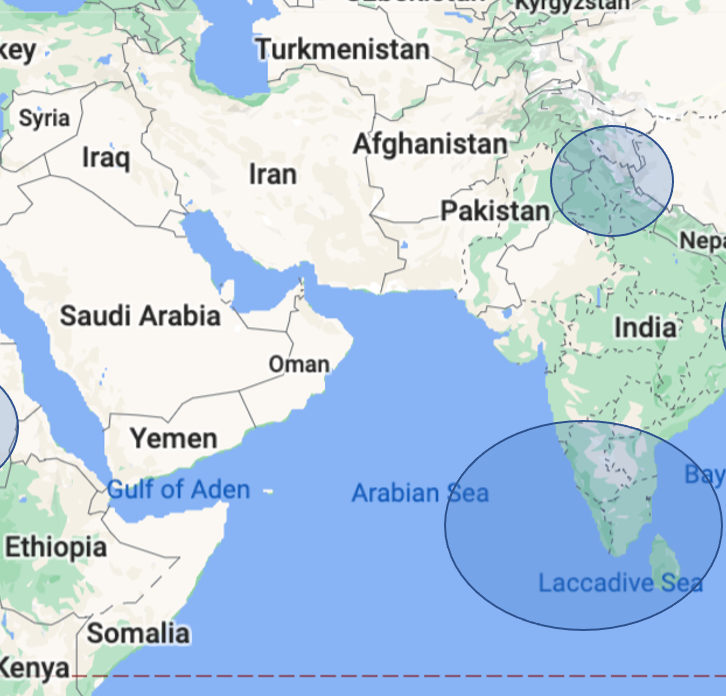
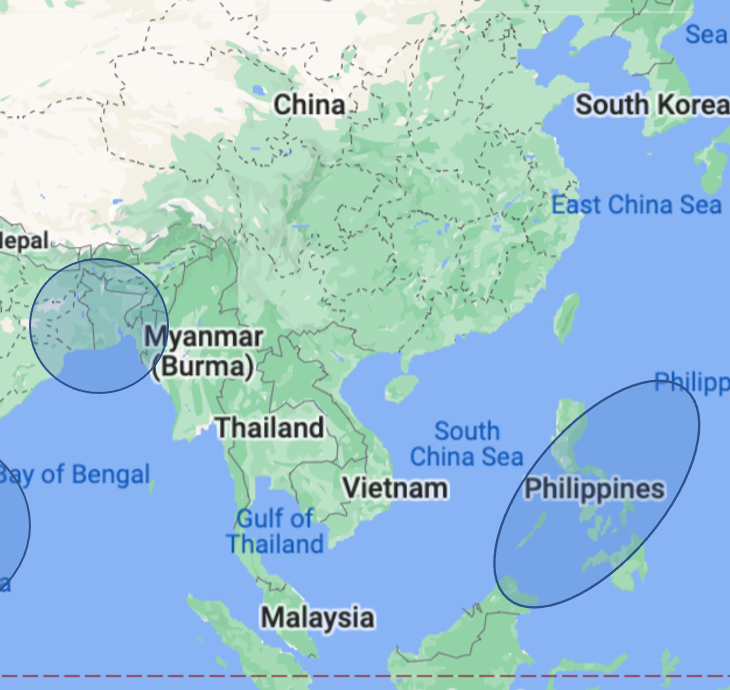
Leadership and Training
Many of the people supported by Pasadena Covenant are now in positions of leadership. Milton Coke, a member of Pasadena Covenant with his wife, Stephanie, has worked with Global Partners for Development in southeast Asia since 1975, and is currently serving as their president and CEO. Eugenio and Pia Restrepo are the Covenant denomination’s Regional Directors for Latin America. Paul and Sue Hoiland have been with Wycliffe Bible translators for over 30 years, first on the field in Latin America and more recently as mentors and trainers based in the U.S. (ready to retire at the end of 2021). Peter and Ruthie Dutton have recently moved back to the U.S. and will continue to work with the Covenant’s ministry in Thailand, making trips to southeast Asia to mentor and train those involved in the camp ministry they have led for the past several years as well as provide leadership in other areas, as needed. Paul De Neui is now a professor of missions and intercultural studies at North Park Seminary and is Director of the Covenant’s Center for World Christian Studies. His wife, Gretchen, is the Finance Manager for the Covenant’s Serve Globally Team. Rich and Lisa Lamb recently headed overseas to do seminary teaching and discipleship training in several countries in southeast Asia and beyond.
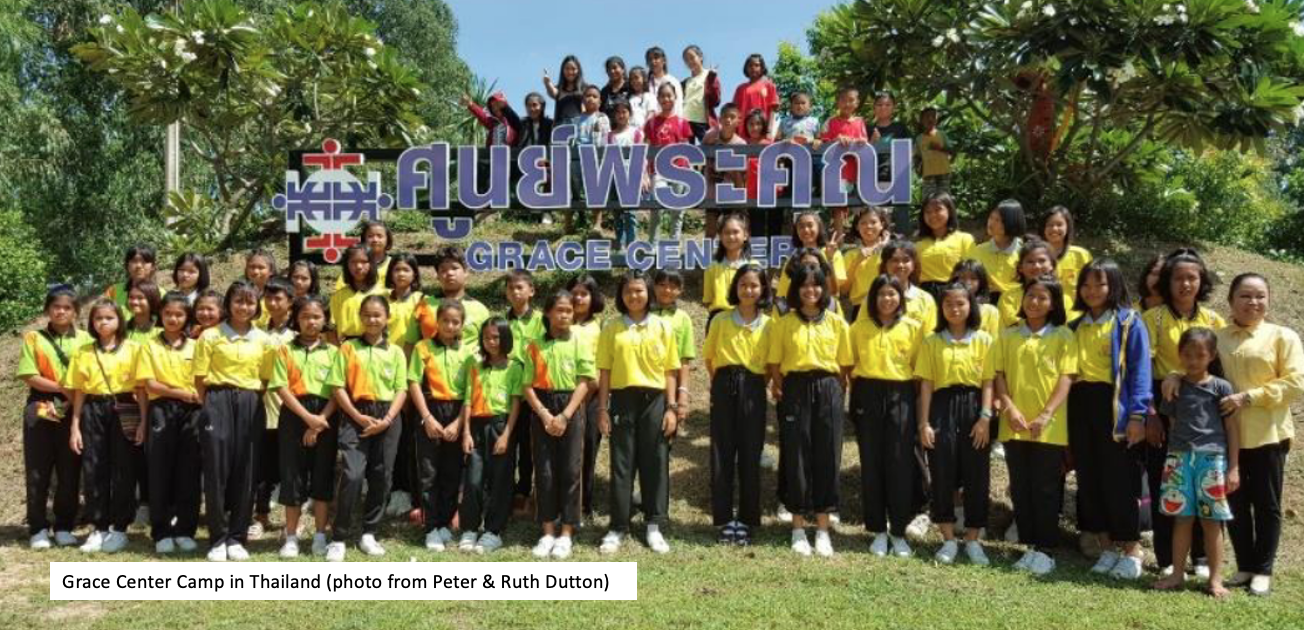
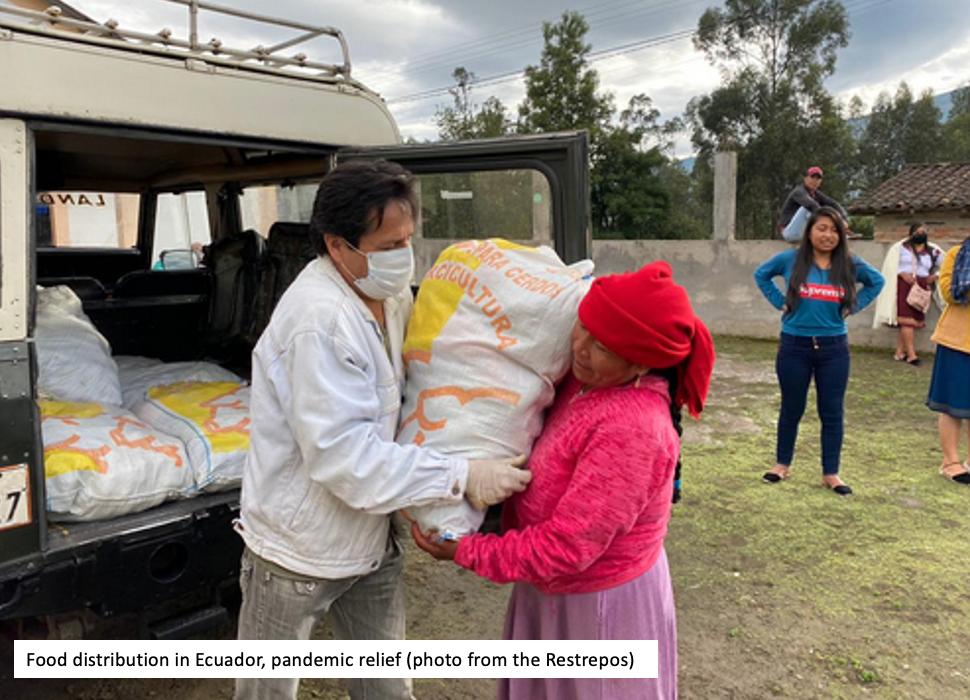
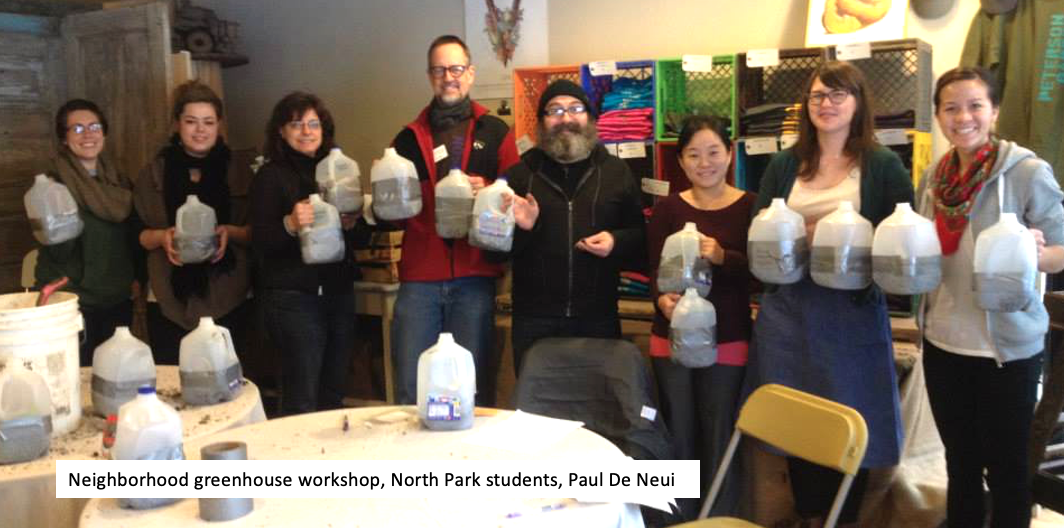
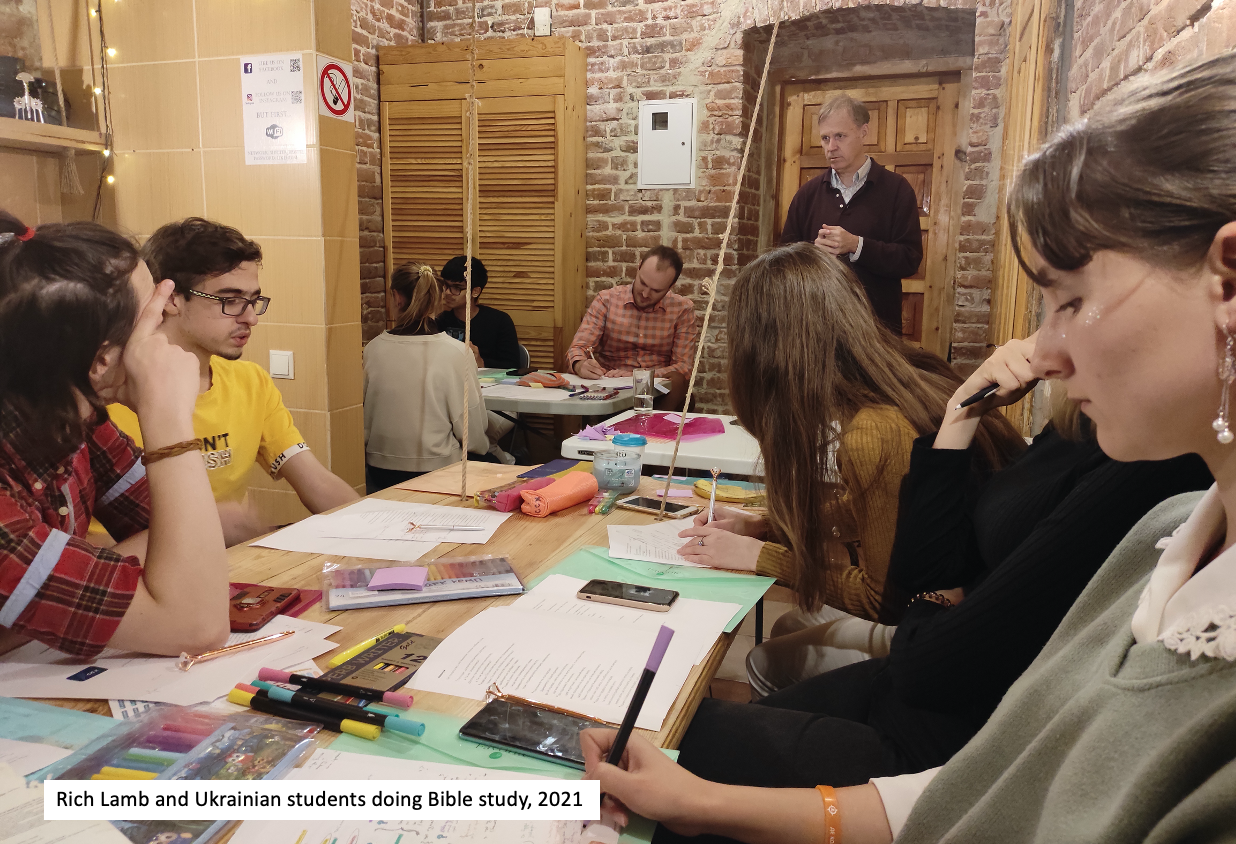
Through the support of several InterVarsity staff, the church is also shaping the next generation of Christians. Dan Stringer and Joe Thackwell work through InterVarsity with grad students, Dan in Hawaii and Joe at the University of Southern California. Tim Hsieh works in campus ministry with InterVarsity in the Pacific Northwest, and Elizabeth Walsh does so out of St. Louis. Maureen Huang is InterVarsity’s director of Multiethnic Initiatives.
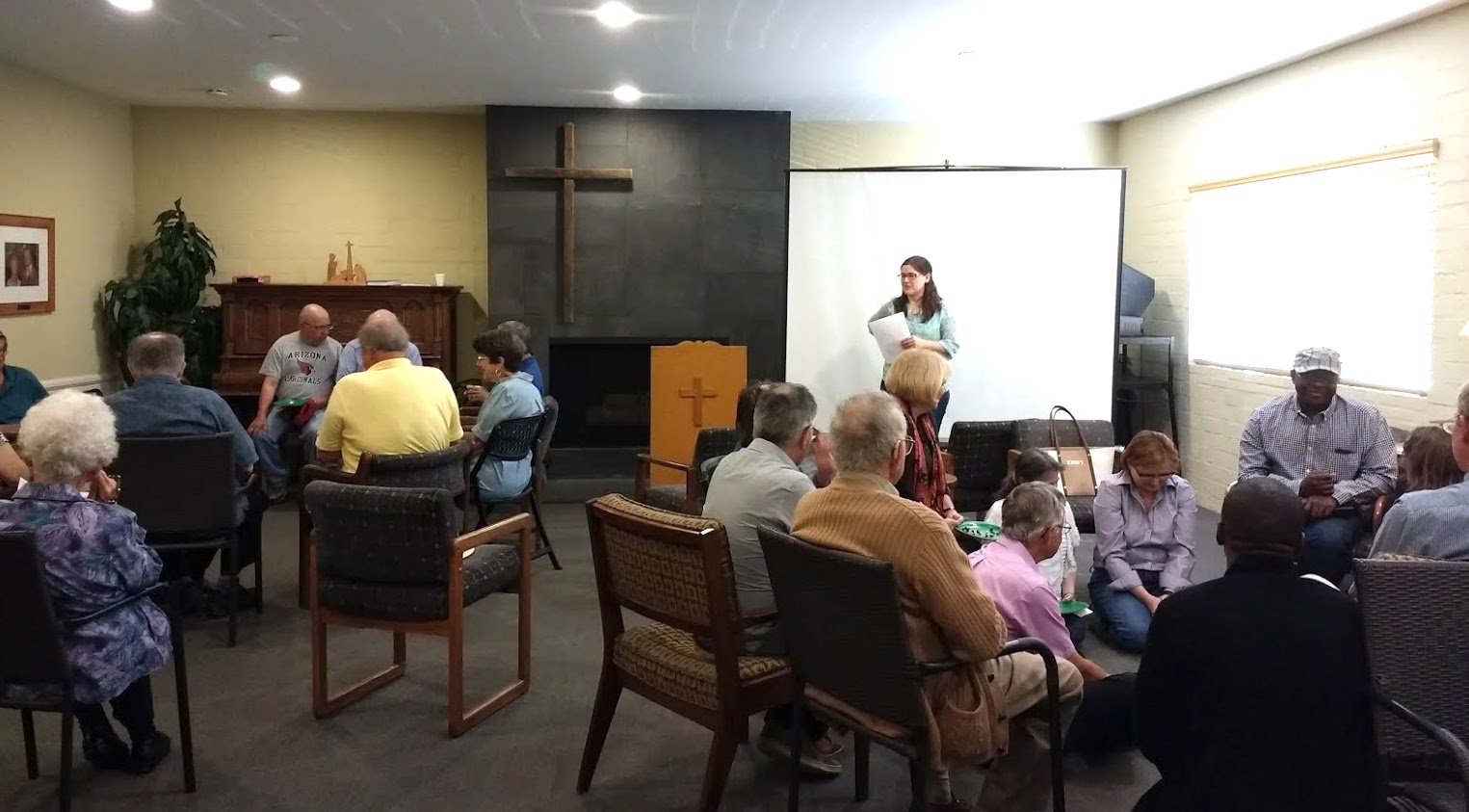
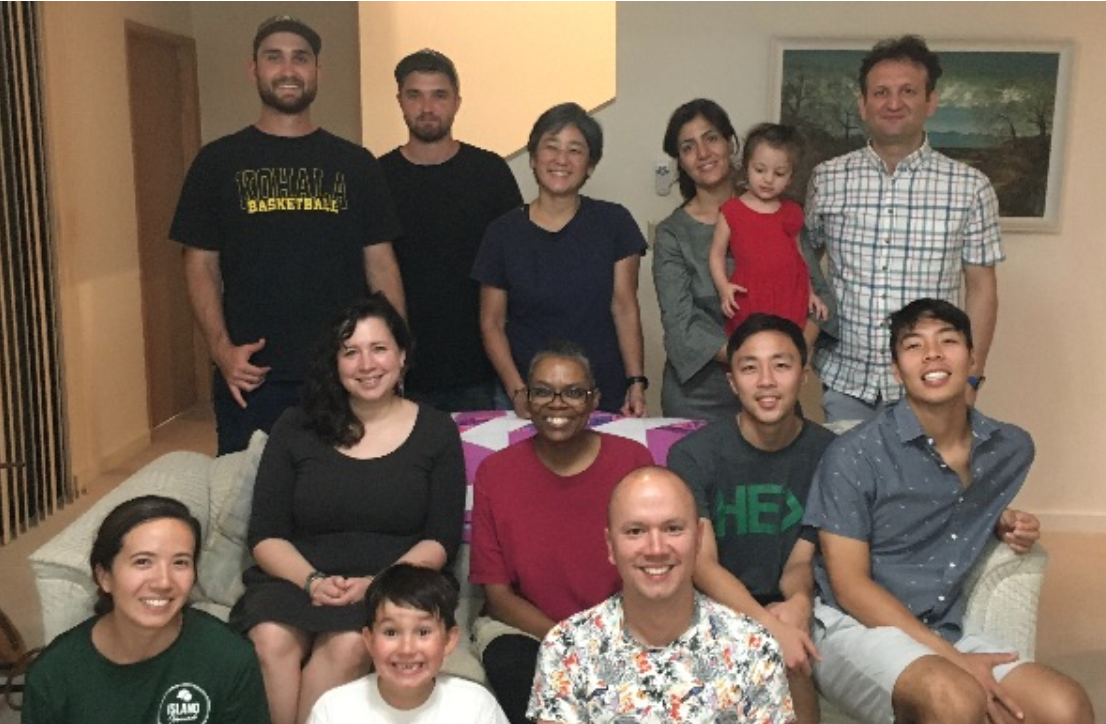
Limitations on space means that there are many other missionaries and areas of the world we haven’t mentioned. Feel free to remind us of them in your comments. In addition, besides funding full-time missionaries, our church has supported short-term trips, Urbana missions conference scholarships, disaster relief and development, and special project grants.
Beyond 100
The rich history of Pasadena Covenant’s engagement in global mission is an integral part of who we are as members of the Body of Christ. Missiological issues have changed, and the world has changed in many ways since the church first sent out missionaries, but the need for Good News among all people has not. Today, more than 40%* of the world’s population is part of a group that has little connection to anyone who knows and follows Jesus. What cross-cultural work is next for us as individuals and for the church?
We are so grateful to the many who have sought to follow God over the past century,
and now we seek to imitate their faith for the next hundred years.
Please join us in giving to this legacy of faithfulness!
*from https://joshuaproject.net/

Worship: Music
The spaces of Pasadena Covenant Church have always been filled with music, from choir to band to congregation. Learn more about the role of different kinds of music in worship over the last hundred years.
Music at Pasadena Covenant
This is the first of several blog posts about our worship over the past hundred years. This month the focus is on music; we’ll return in the future to other topics, including visual and dramatic arts.
Watch and listen to this ten-minute video to learn about the history of worship through music at Pas Cov over the last ten decades.
Beyond 100
Music has changed and will continue to change, but worship will continue. What do you think music at Pasadena Covenant will be like in the next decades of our church?
Comments
Are there some hymns, songs, or musical events at Pasadena Covenant that you remember? Tell us about them in the comments.
Do you remember the Sonlight Singers? Here’s a 1972 church newsletter article with some reflections from members.
P.S. During the worship service on Dec 12, 2021, we combined the centennial preparation emphases of language (November) and music (December) as a two-part choir sang a Christmas song in Swedish. Adults were in front and kids were in the balcony.
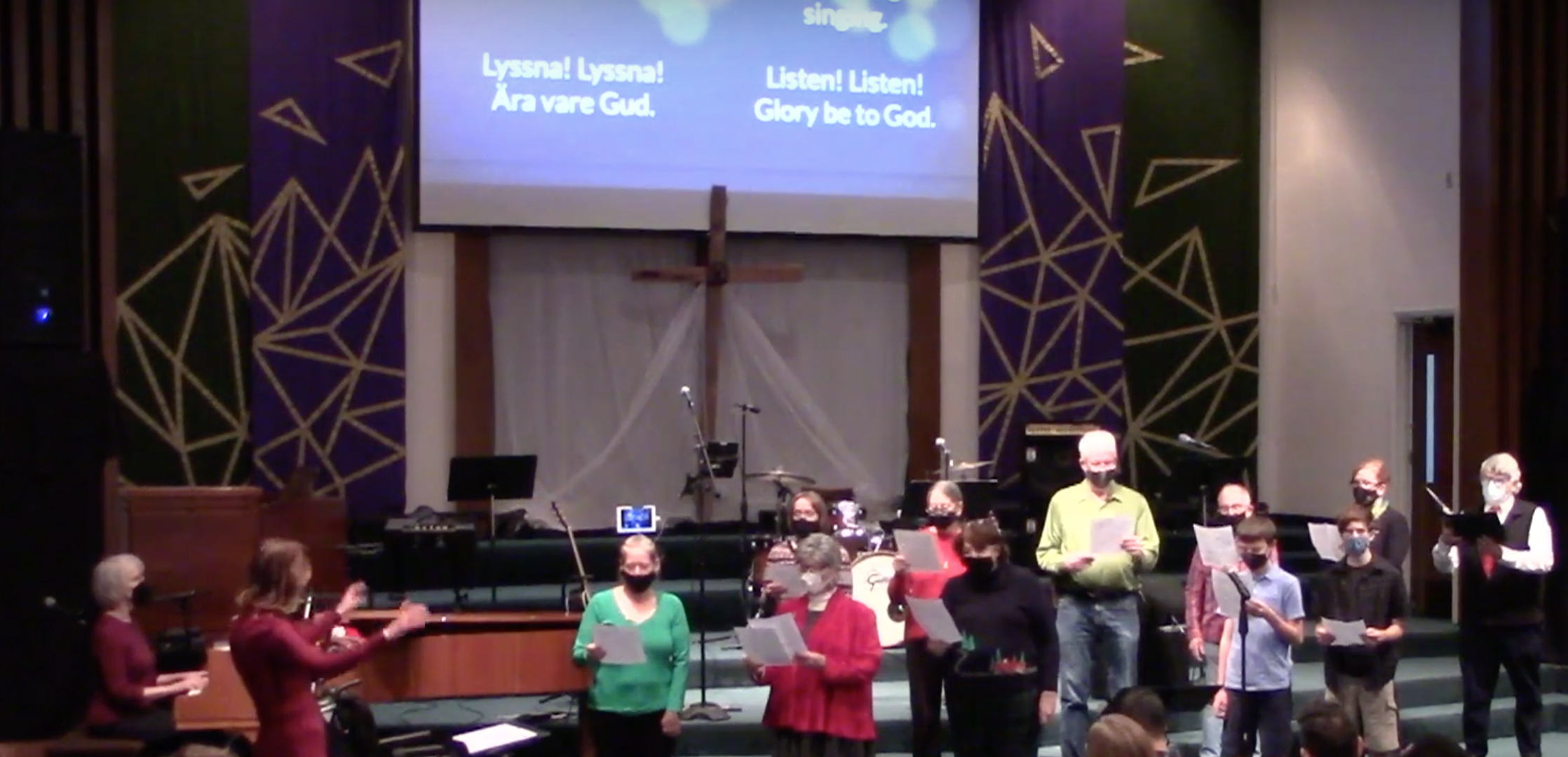
led by Mindy Gustafson, accompanied by Becky Still
Sources
I selected the music in the video to illustrate the text, choosing sources to reflect as far as possible what the music would have sounded like at Pasadena Covenant during the various eras of musical worship. —Kitty Purgason
Blott en Dag (Day by Day) - Sissel Kyrkjebø performing on Norwegian television with audience singing along https://www.youtube.com/watch?v=UVp9yqkRee0
O Mighty God - Swedish folk melody arranged by Norman Johnson; sung by North Park College Choir, recording on an LP “Hymns of the Covenant Heritage” https://www.youtube.com/watch?v=AV5cKIldBVA
In Christ There is No East or West - southern melody arranged by Norman Johnson; sung by Cathedral Choir of St John the Divine https://www.youtube.com/watch?v=Kf4M6fWSdh0
The Majesty and Glory of Your Name - Tom Fettke; sung by Sanctuary Choir of Pasadena Covenant Church led by Roland Tabell, from the 1999 CD The Majesty and Glory
Come Share the Lord - Bryan Jeffrey Leech & Roland Tabell; sung by Voice of Praise, HKBP Menteng, Jakarta, Indonesia https://www.youtube.com/watch?v=HPVnWFxi7PA
The Heavens are Telling - from Franz Josef Haydn’s “Creation”; conducted by Nicholas Bowden at Peachtree Presbyterian Church, Atlanta https://www.youtube.com/watch?v=rZ5olabSpOQ
Lord, Listen to Your Children Praying - Ken Medema, from the 1973 album Son Shiny Day https://www.youtube.com/watch?v=BK3KJTyUqX0
Always Loving Him - from “Resurrection” by Bryan Jeffrey Leech & Roland Tabell (from a recording of Roland’s memorial service) https://www.youtube.com/watch?v=hghmtIgiA-Q
You Shall Go Out with Joy - Stuart Dauermann https://www.youtube.com/watch?v=unWnWSgoSt0
Jesu, Jesu, Fill Us with Your Love - Ghana folk song, #165 in the book The Song Goes On edited by Roland Tabell; sung by choir of First-Plymouth Church, Lincoln NE https://www.youtube.com/watch?v=UvQz513Jl8M
10,000 Reasons - Matt Redman; recorded at Central Church of God, Charlotte NC https://www.youtube.com/watch?v=rLXmaqkm0z8
You are God (Eternal Word of God) - written by Jaewoo Kim, Josh Davis, Paul Neeley, and Carol Steddom; Dan Huang leading worship, recorded at Pasadena Covenant Church 9/19/2021 https://www.youtube.com/watch?v=-BhjD8YcN1k&t=377s
Lift Up Your Heads - Jody Lindh; sung by Children’s Choir of Pasadena Covenant Church led by Joan Reeve Owens, from the 1999 CD The Majesty and Glory
We Are God’s People - Bryan Jeffrey Leech; #50 in in the book The Song Goes On edited by Roland Tabell; https://www.youtube.com/watch?v=3QPymRVOCyU

Language and Ethnicity
Where else would an Armenian couple celebrate a Swedish festival? Pasadena Covenant Church! Read more about the ethnic and linguistic history of the church and wonder with us about how God will shape us in the future.
The Swedish Era
The early identity of Pasadena Covenant Church was solidly Swedish. The founders or their parents had left their homeland around the turn of the century. Many came on the Santa Fe railroad from Chicago, getting off at the last stop before Los Angeles—Pasadena, an increasingly popular resort city. Twelve of the founding members were single women, employed as domestic workers. There were seven other married couples. Their common faith had grown out of the Pietist spiritual movement in Sweden that emphasized new birth in Christ and meeting in small groups to study the Bible and encourage holy living. Their common Swedish culture made it easy to spend their limited free time together (Thursday afternoon and evening, and Sundays after breakfast). Their common language, Swedish, was used during church activities that included Sunday school at 9:45, morning worship at 11:00, young people’s meeting at 5:00, social hour at 6:00, and evening service at 7:00. In between morning and evening activities, families had a large Sunday dinner, always with plenty of food to extend hospitality to visitors, or a picnic at Tournament Park behind Cal Tech. On Thursdays they met for prayer at 7:30. Thursday was also the day for the monthly ladies’ aid, or Phoebe Society, meetings.
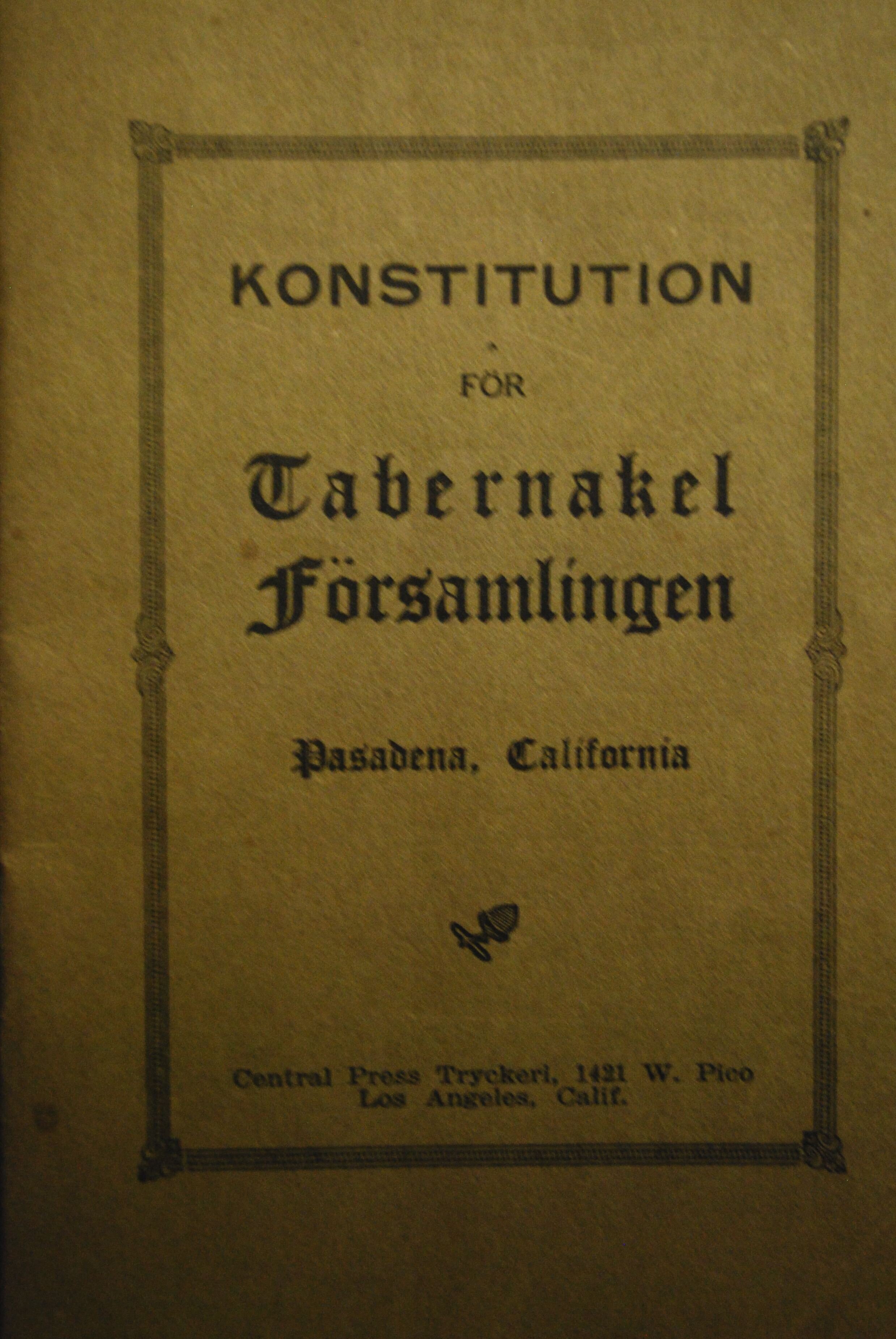
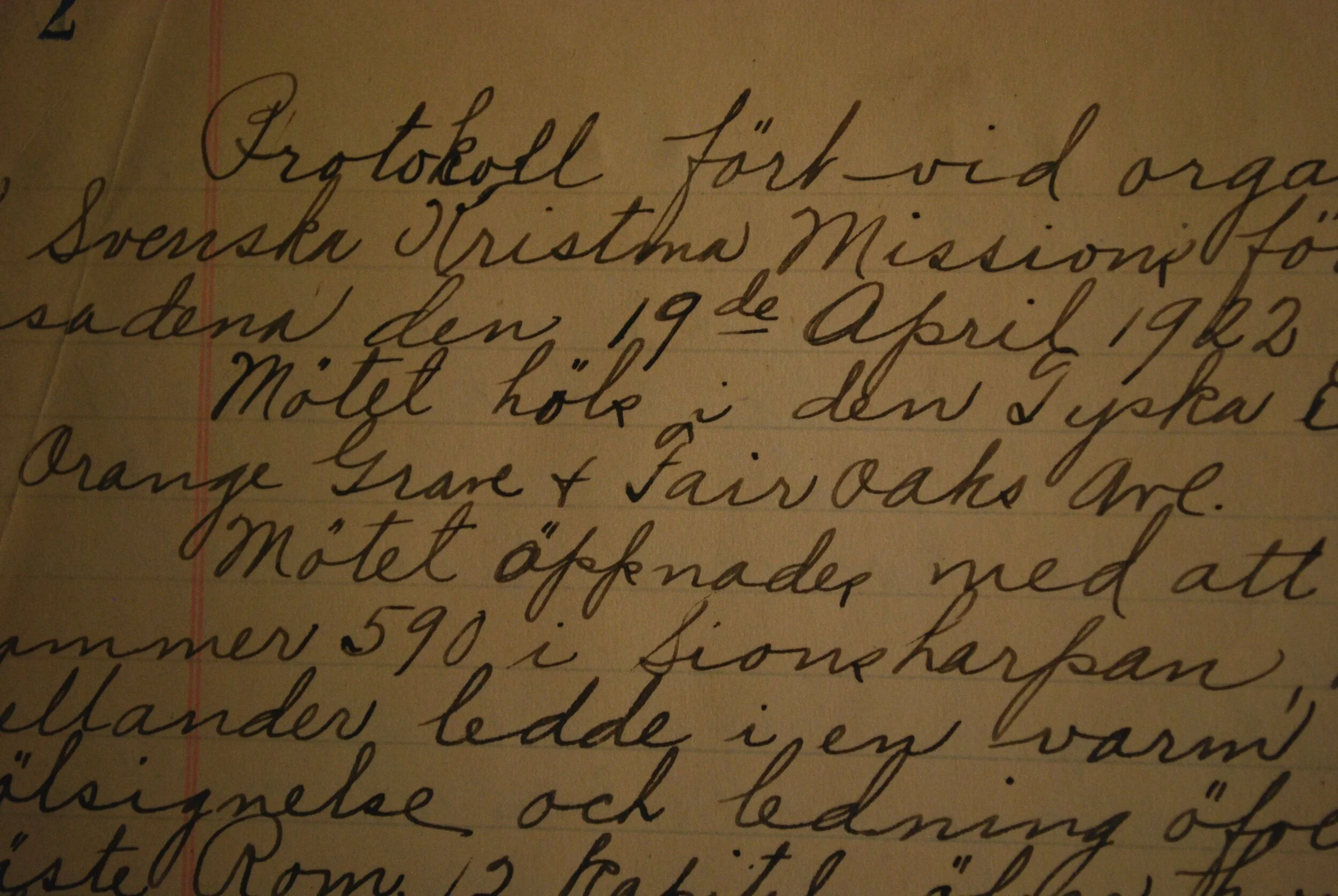
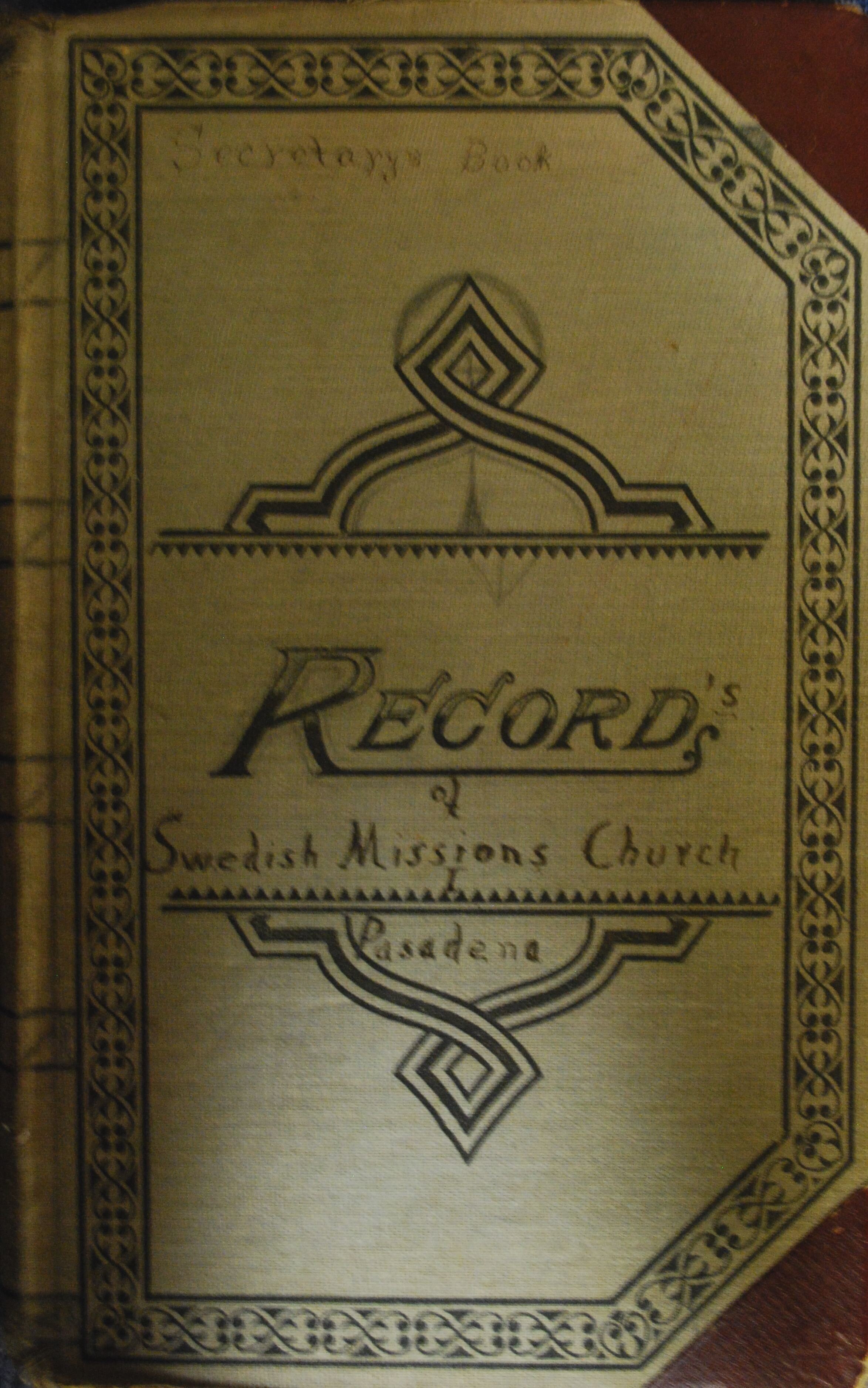
Transition to English
By the 1930s, fewer immigrants were coming from Sweden, and the children in the congregation were growing up more familiar with English. Changes were gradually made. By 1936, on Sunday mornings there was an English meeting for young people and singles in the basement auditorium, led by Roy Johnston. The English ministry was expanded to include a joint service in the sanctuary once a month, and then twice a month. The Thursday evening prayer service was also converted to English. In 1940 it was decided to conduct all the services in English.
Ludwig and Amy Brandt exemplified the adult members at that time. Kind, gentle, and hospitable, they regularly invited visitors to Sunday dinner. Ludwig was a beloved and well-respected deacon known for being a peacemaker and able to calm things down during contentious meetings. At the annual meeting when the final switch from Swedish to English was discussed, he spoke in favor of it. He said, much as he loved the Swedish language and hearing the Bible read in Swedish, he recognized that more people in the community could be served through English. His wisdom carried the day.
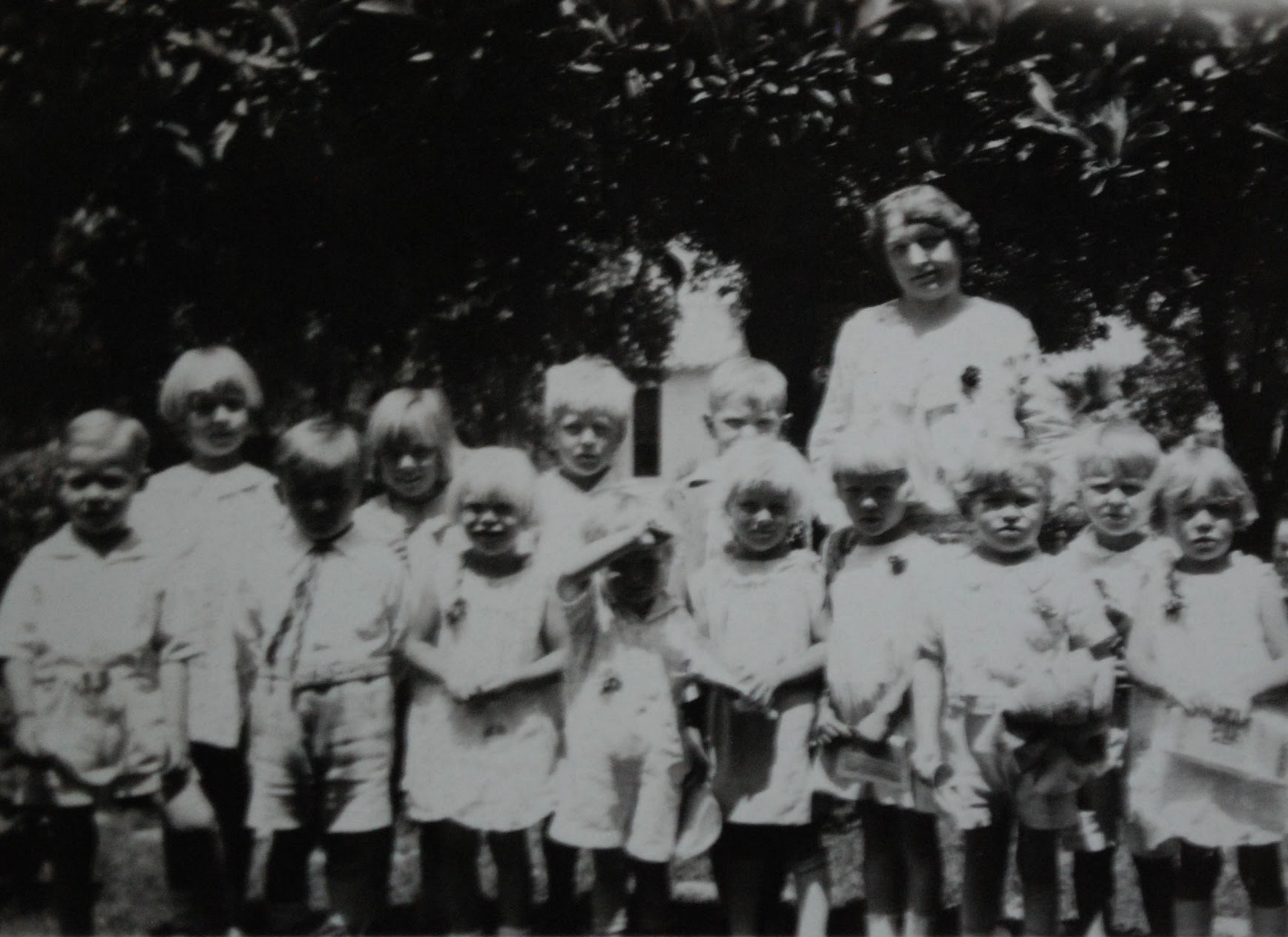
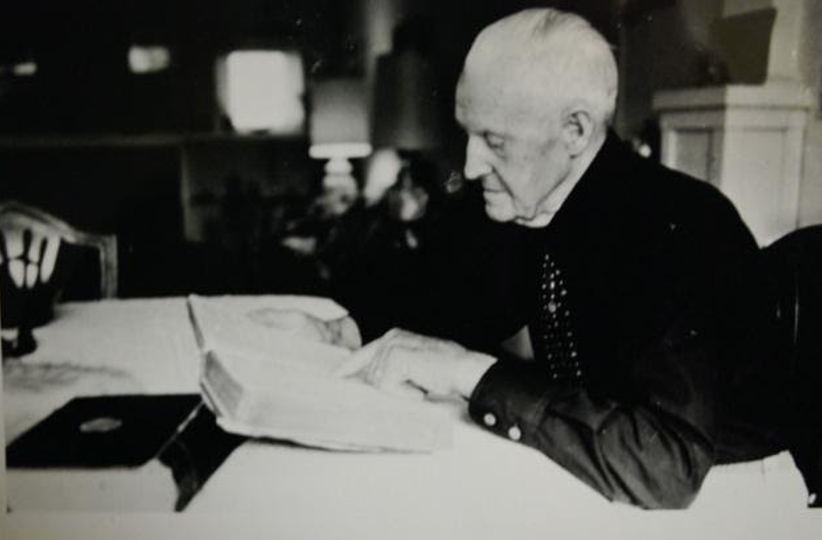
Maintaining Heritage
Even after English became the language of choice, some Swedish traditions remained. Every Christmas morning, for example, church members used to gather at 5:30 am for a Julotta service. Carols included the Swedish song “Lyssna.” After the worship service, members gathered in the basement for a pancake breakfast served by the deacons, and drank “Swedish” coffee that Alice Anderson, the co-custodian, prepared with a raw egg to make it clear. But a new generation of church members felt they would rather be at home so early on Christmas morning. In 1977 they started a new tradition that was to last till 2004—a Saturday morning Lucia Fest early in December. Two breakfast seatings packed the gym as people came from all over to enjoy the baked delicacies of pepparkakor and lussekatter as well as fruit soup.
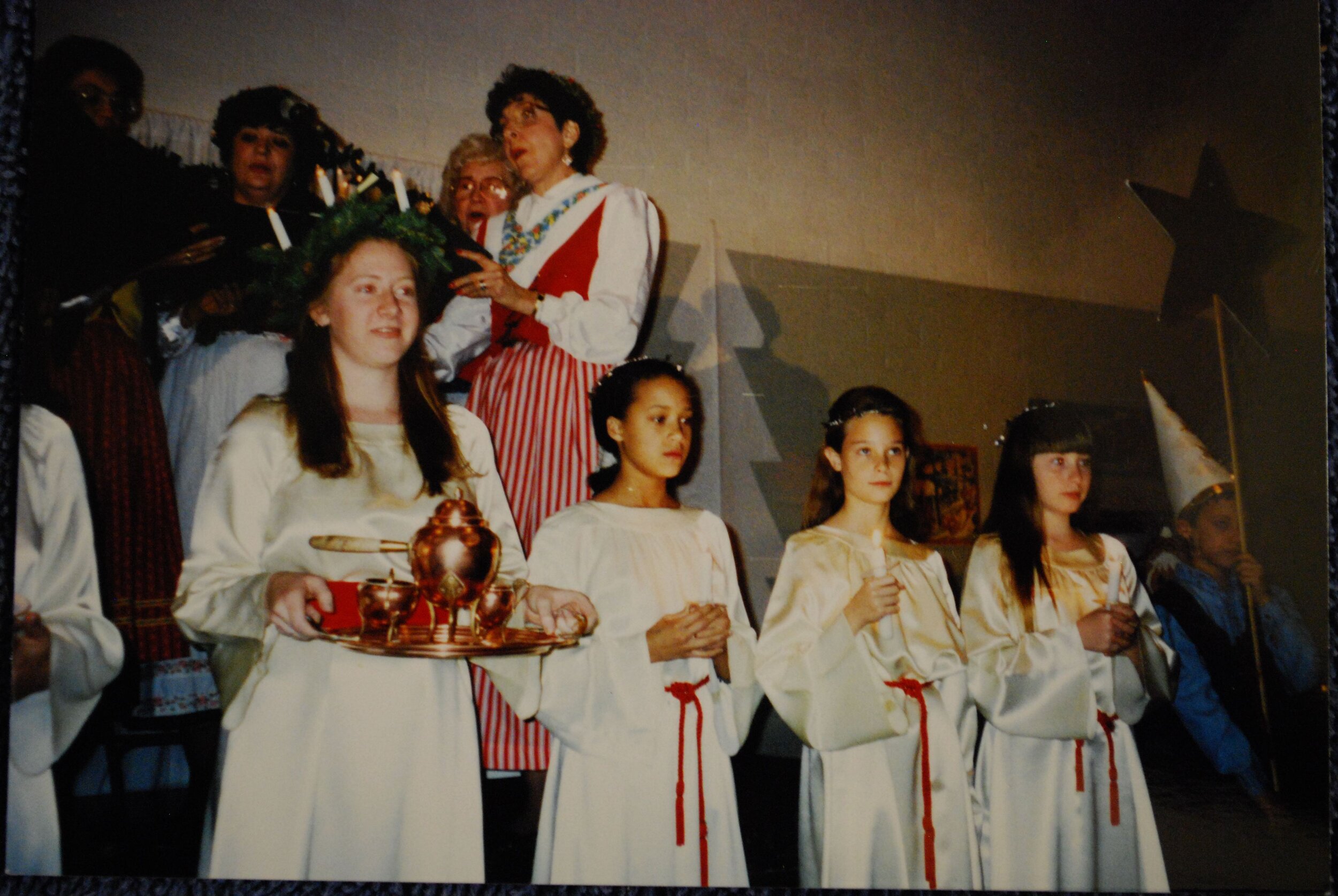
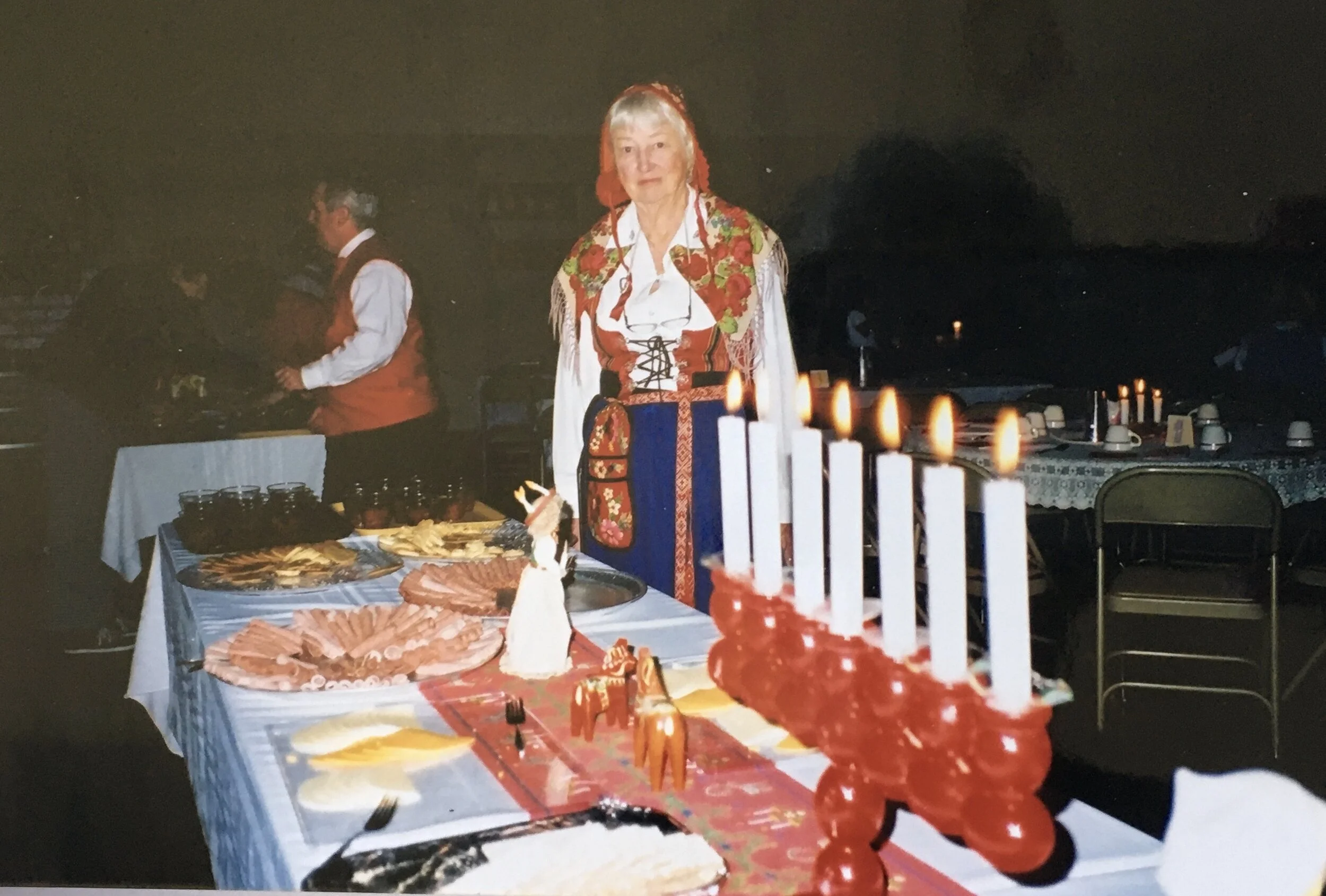
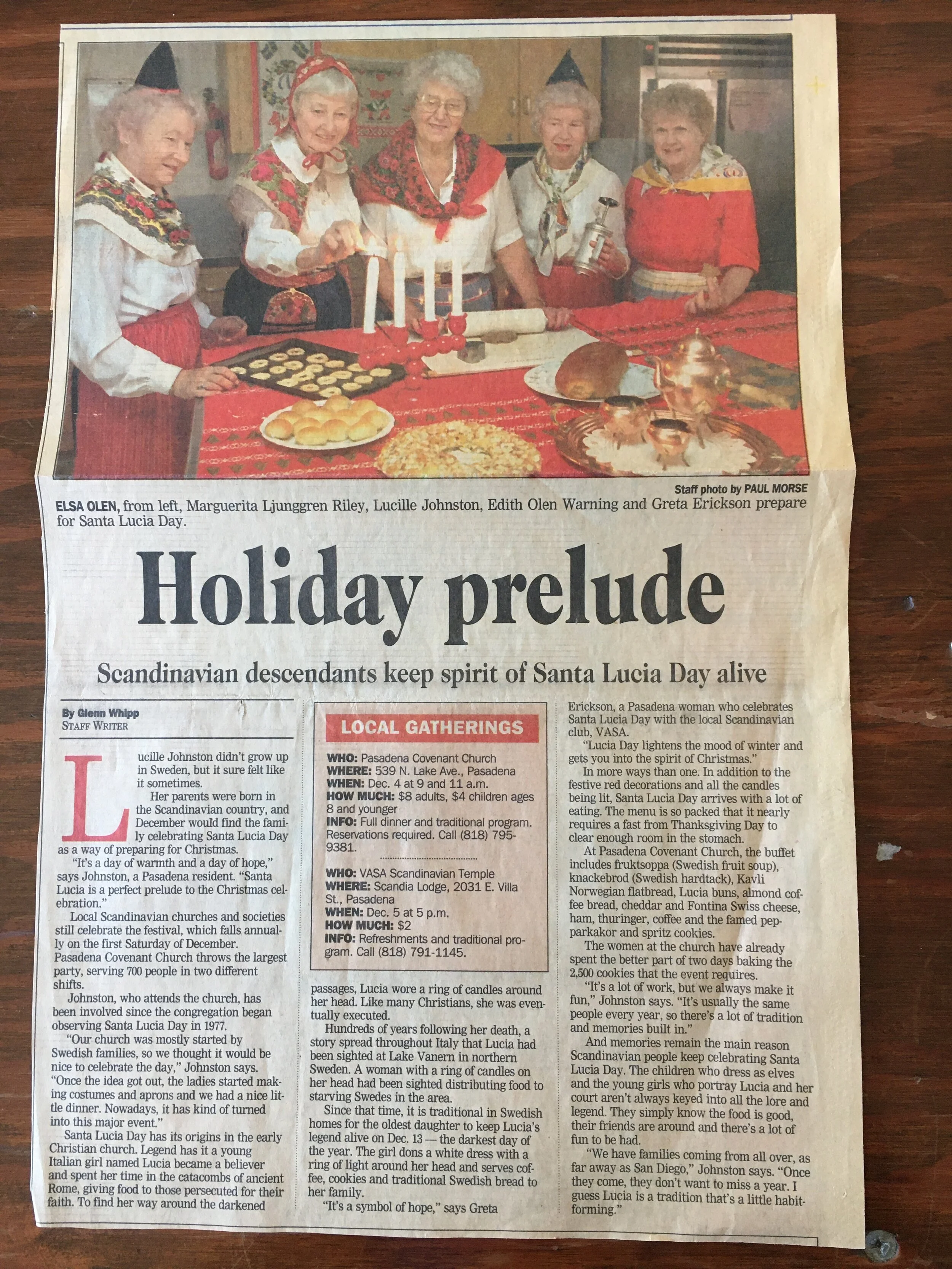
Arrival of People with Different Heritages
If you were to look at Pas Cov’s church directories before the 1950s, names such as Olson, Erickson, Carlson, and Johnson would dominate. But in the post-war era, Pasadena began to become more diverse, with more African Americans and Asian Americans, as well as immigrants from Armenia, Mexico, and Central America.
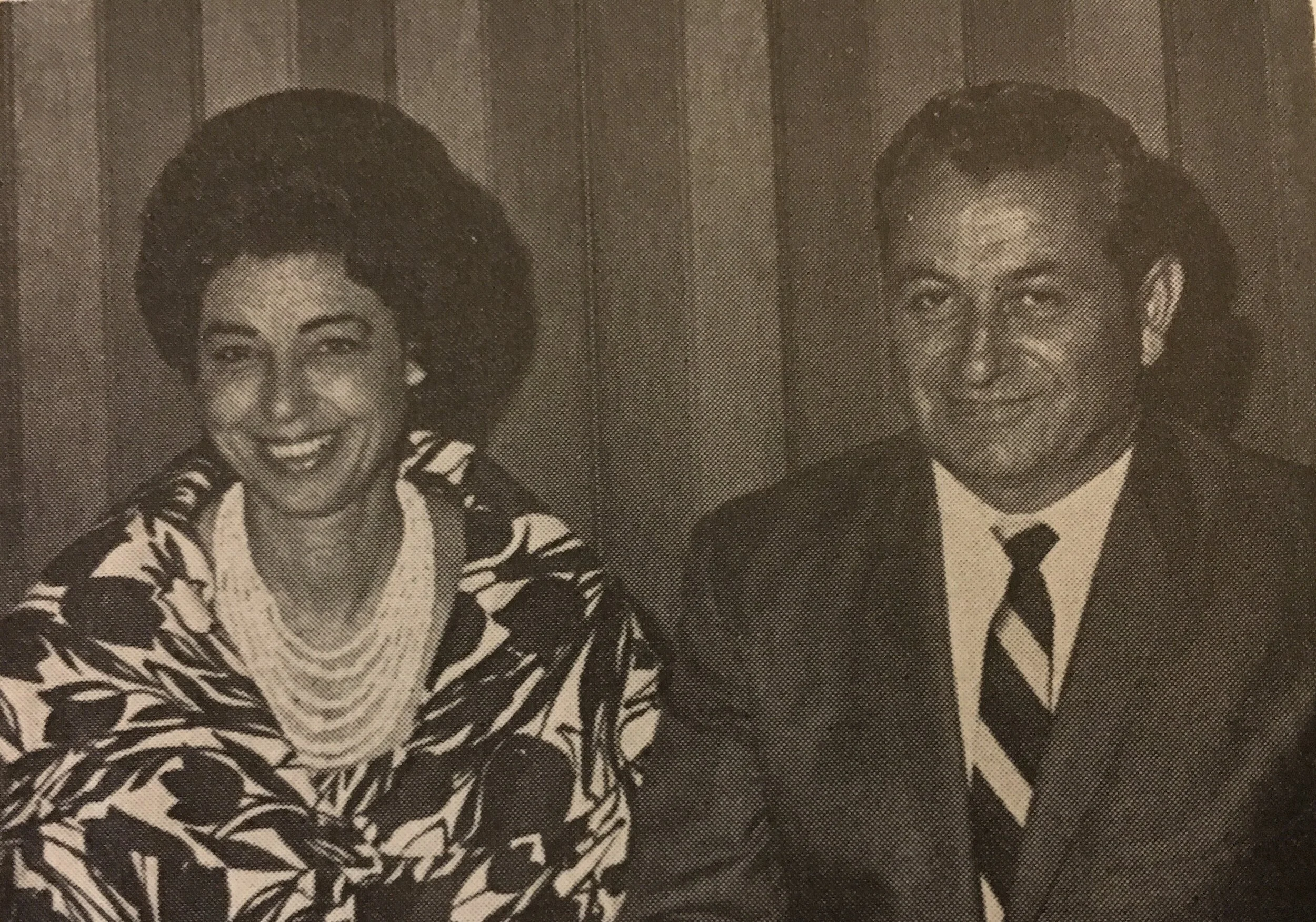
Paul & Rose Tahmisian, photo from Pasadena Covenanter 1969
Paul and Rose Tahmisian were among the first Armenian members of Pas Cov. Paul was born in Turkey and, as his parents escaped the genocide via Greece, came to live in California when he was 11. He was active in Pas Cov starting in 1950, leading a class for young people. Later he hosted a Friday prayer breakfast for businessmen at the church and also served as deacon and trustee, while Rose was involved with Cradle Roll, Covenant Women, and missions.
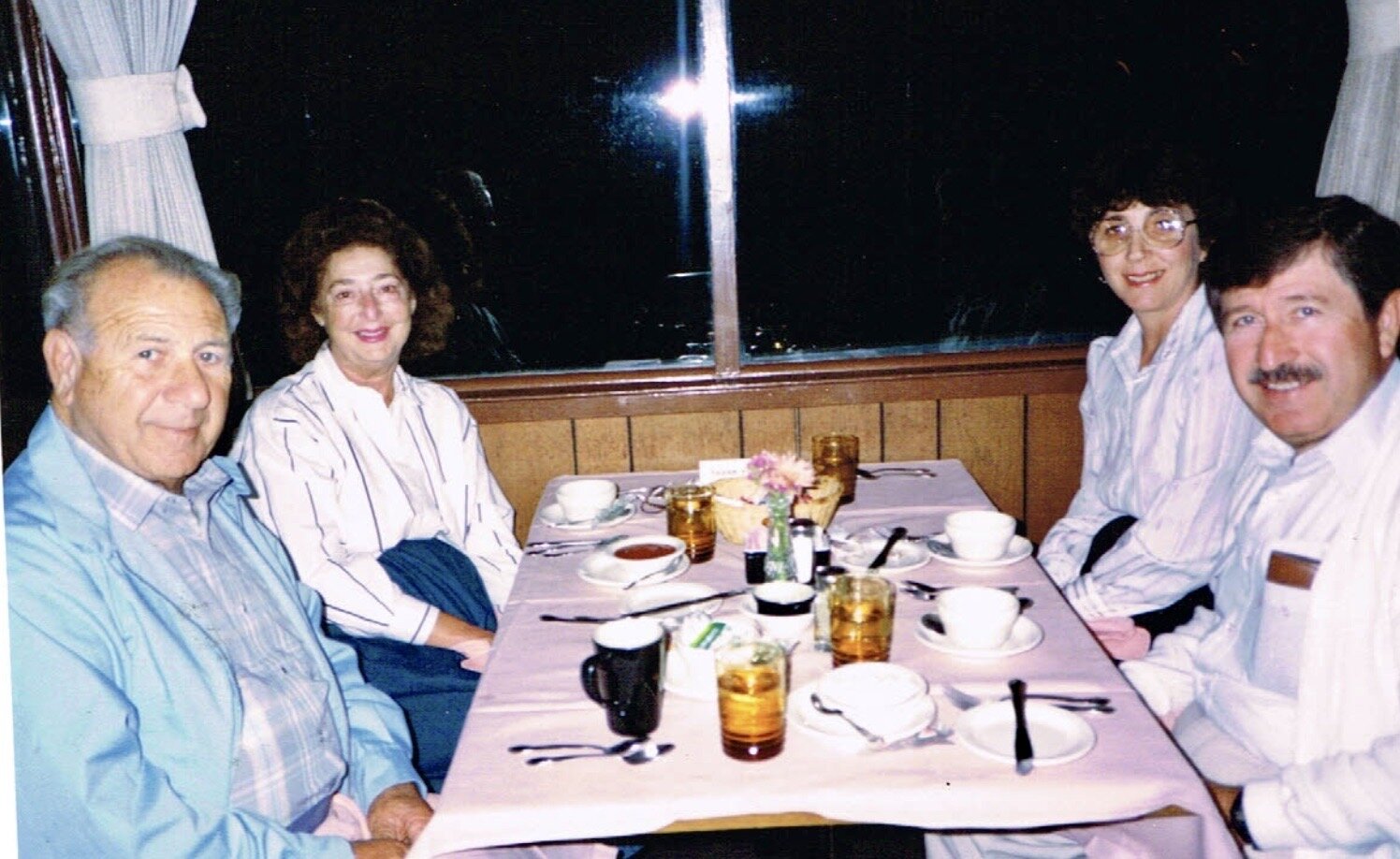
The Gedigians and the Maljians (photo courtesy of Julie Maljian)
. Other Armenian families who came in the 1950s and 1960s included Hagop and Haigan Keverian, Jim and Eva Jizmejian, Harry and Isabel Gedigian, and the Pampeyans. Sisters Dottie and Julie Avakian sang in the choir in the late 1950s and the Maljian name was added to the roster when Perry married Julie in 1960.

Women’s group including Virginia Lowe (photo from the Pas Cov archives)
Another key family who came to Pasadena Covenant in the 1950s was Chinese-American Eugene Lowe and his wife Virginia. Eugene’s forebears were Chinese immigrants who had come in the mid-19th century to build railways and mine gold. Although his father was a third generation American, he had been told by his bank employer in Calexico that there would be no promotion opportunities for a Chinese man, so he had moved his family to Pasadena in 1939 (when Eugene was 9) and opened a gift and furniture store on the corner of Villa and Los Robles. Virginia, like many young mothers at that time, came to the church because she’d been invited to the young mothers group, and Gene later followed. Gene and Virginia were

Eugene Lowe (from Pas Cov archives, album belonging to Anna Peterson)
active in many church ministries, from Courier class to men’s fellowship, from missions to Sunday school superintendent. Although the Lowes thought of themselves as Americans, their Chinese heritage was especially evident in their hospitality—they often took visitors out to lunch after church at local Chinese restaurants.
Hosting Churches

New languages echoed throughout Pas Cov as the church began to host other congregations. The first was a Korean church that met in Carlson Hall from 1969 to the mid-1980s. Another larger Korean church was Logos, who used space on our campus for a few years in the 1990s. Spanish was the language of IMHA, or “Iglesia,” a growing church that met in the gymnasium for about a decade starting in 2000. Though all of these churches wanted to keep their own identity, their presence on our campus was a reminder of the larger Kingdom of God, with all its ethnic and linguistic variety.
African Students

Pasadena Covenant’s location near Fuller Seminary has meant that a number of international students have blessed the congregation. Mossai and Sabuli Sanguma, Covenanters from the Congo, were here 1999-2003. On their return to DRC, Mossai became head of the Congo Covenant denomination (CEUM) and also established a university, while Sabuli founded Congo Voice, which supports orphans. Bitrus and Monica Audu from Jos, Nigeria, were also at Pas Cov for a season and have inspired some in our church to partner with their ministry, Christ Missionary Outreach, in northeast Nigeria. A few years ago, we also welcomed Bitrus and Sanatu Sarma, also from Jos, Nigeria, during their postdoc year at Fuller. Bitrus is president of ECWA Seminary and Sanatu has founded a ministry to women suffering from fistula damage. (The gospel was originally shared in their area by our longtime members and mission professors Meg and Chuck Kraft.) From Nigeria, we’ve also fellowshipped with Chris Gankon and the Enwerejis—Caroline also ministering to us through her worship team participation.
Our Current Identity
Pas Cov continues to broaden its ethnic identity, now home to people whose families speak or whose forebears spoke Sinhala, Tamil, Farsi, Japanese, Tagalog, Mandarin, Cantonese, Vietnamese, Hausa, and more. Many of our kids are being educated in Pasadena’s dual-immersion schools in Mandarin and Spanish. A highlight of hospitality time after the church service from 2018 to 2020 was Wayne Aoki’s monthly treats featuring world cuisine, like lahmajun, malasadas, lo bak go, aluwa, and akara.
Of course, there is much more to one’s culture and ethnicity than food. Underneath our taste buds are important values, such as whether it’s more important to be promptly generous with one’s money or to save for the future, or whether one should keep to a schedule or respond to an immediate need. There are also deeply rooted practices, such as strategies for dealing with conflict, conversational patterns, or approaches to problem solving. But food is a good beginning. As Wayne says, international dishes spark people’s interest in new cultures, put out the welcome mat for everyone, and reinforce our commitment to hospitality for all.
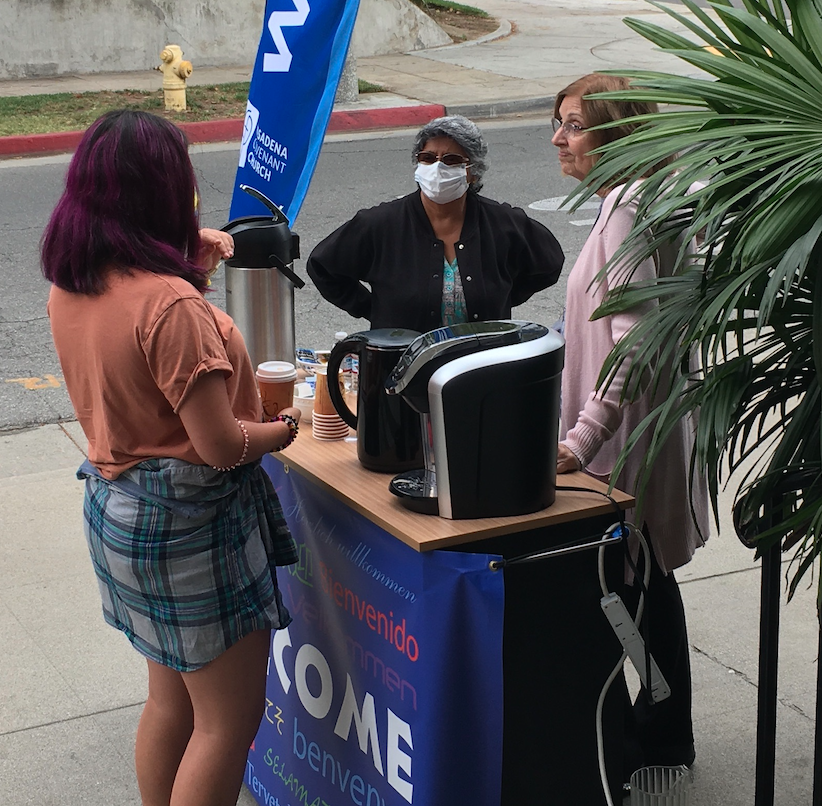
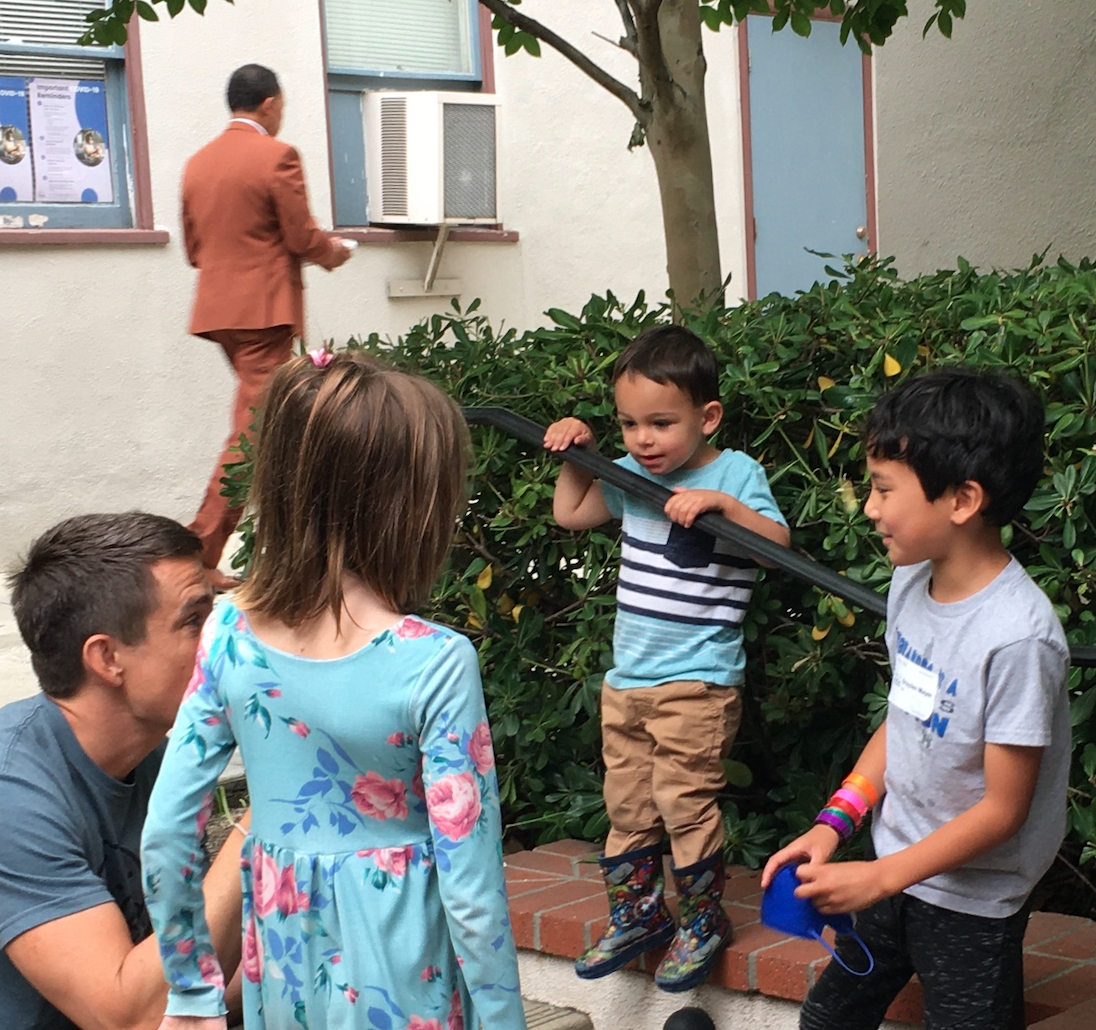
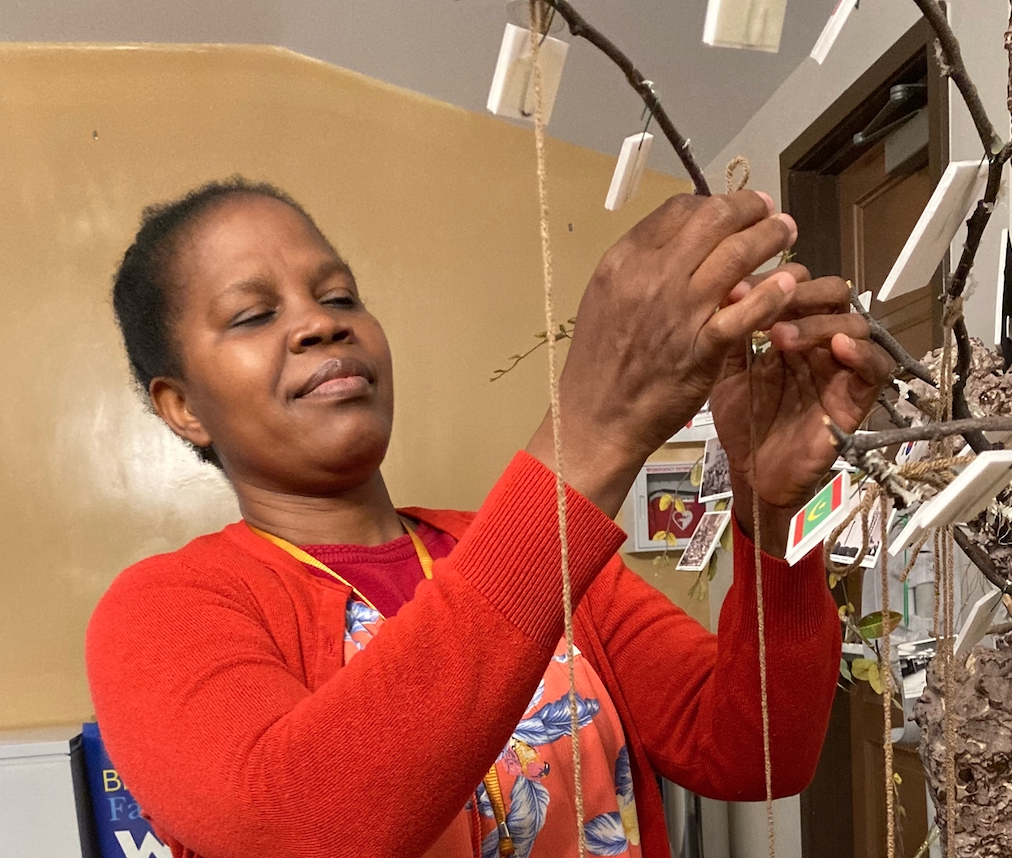
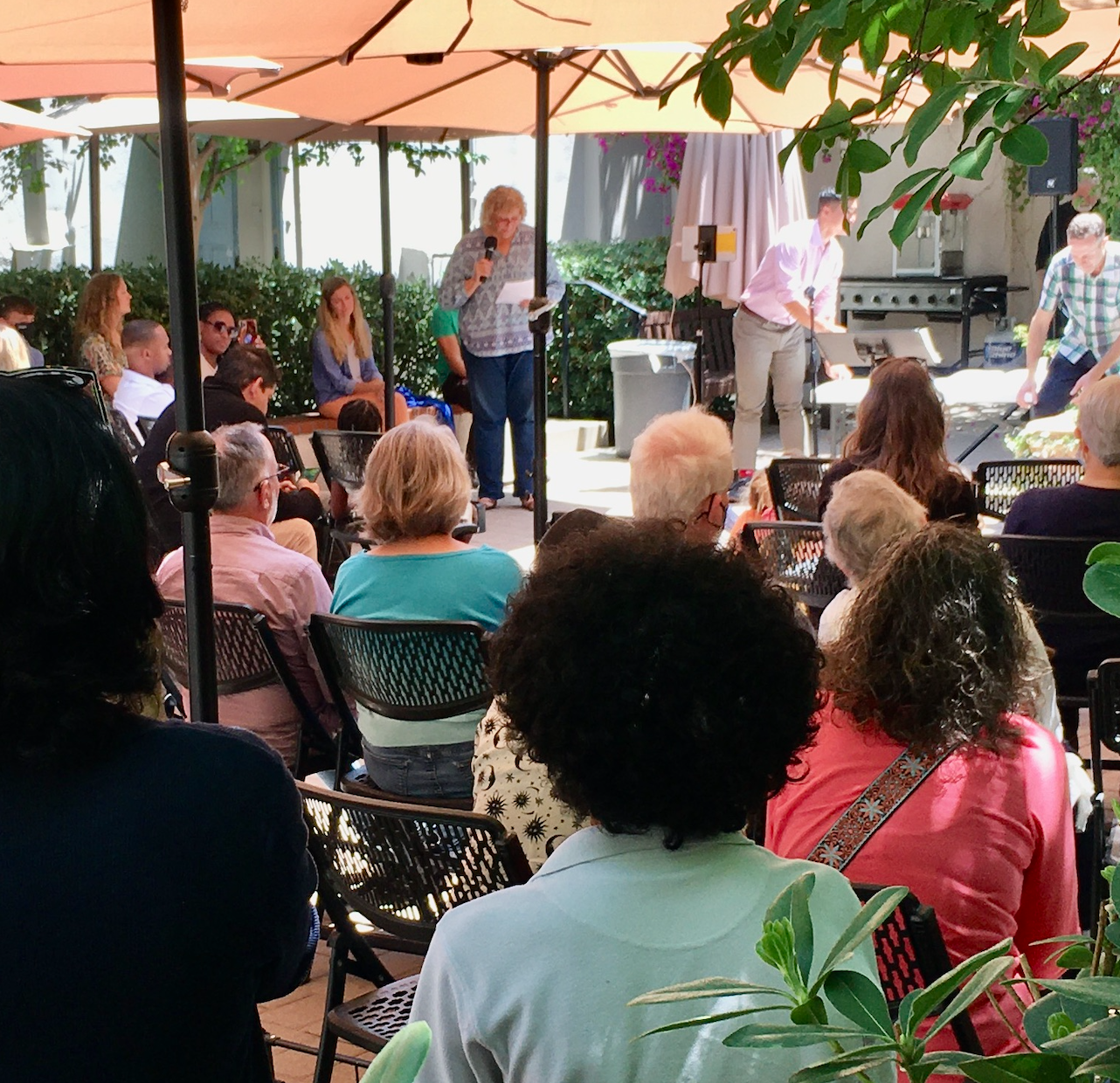
Hospitality for all was the focus of a year-long series of Sunday sermons and Wednesday interviews in 2020 as we turned our attention to the brilliance of God’s multiethnic kingdom. Starting in Genesis and journeying all the way to Revelation, we sought to understand current racial inequalities and systemic injustice, and to hear and proclaim God’s intention for racial and ethnic diversity and for reconciliation.
Beyond 100
The church made a big language switch from Swedish to English. What switches might be ahead in the future? How can we more effectively show that God’s kingdom is multiethnic, multifaceted, and brilliant?
Interested in more?
In 2020-21 our Sunday services focused on the brilliance of God’s multiethnic kingdom. From September 13 through November 22, 2020, a scriptural foundation was laid—from Genesis to Revelation. From January 3 through May 30, 2021 the focus was on the King of this kingdom—Jesus—and his teaching. It’s worth listening to the sermons again (which can found on the church youtube channel). The conversations during Wednesday Reflections also followed this theme. Every reflection was wonderful, but we want to highlight the following: David Thaxton, a biracial adoptee from Korea, raised by a black family in Pasadena (Sept 9, 2020 and April 28, 2021); Jeff and Susan Maljian, on their ethnic identities (Sept 30, 2020); Christine Anketell, on both her experience leaving her homeland of Sri Lanka because of war and the hard experiences of some of her community college students (March 24, 2021) and Pastors Dan Huang & Steve Wong, on on their experience of racism as Asian Americans (March 31, 2021).
“There before me was a great multitude that no one could count, from every nation, tribe, people and language, standing before the throne and before the Lamb.”

Property and Buildings
How the church got the buildings and property we have today
Sacrificial Giving
When the charter members of what is now Pasadena Covenant Church started to gather for prayer and Bible study at the turn of the 20th century, they first met in homes, and then in rented facilities.

“Swedish Evangelical Tabernacle” reads the sign on one of the houses the group first met in
Twenty-six Swedish domestics and tradesmen created and signed their charter as a church in 1922. In 1923 they were able to get their own place: a cluster of three lots, including a two-story house on the corner of Lake Ave. and Santa Barbara St., purchased for $9,000 ($143,000 in today’s dollars, representing enormous dedication on their part). A year later, they were growing and ready for a proper church building.

Church building on Santa Barbara St, 1924
First, they moved the original house to the west. (It eventually became what is now the church nursery and office building.) Then they laid the cornerstone for a two-story chapel seating 200 (now the area we call the Gathering Place).
One of the members drew up the plans and another supervised the construction. Thrifty Swedes gave generously from their minimal pay as servants and laborers, raising $30,000 (which would be $478,000 today). The women’s society held a fundraising contest. One of the women went door to door to collect donations. Their pastor, A.G. Sporrong, toured sister churches with musical concerts and received donations. Their first service in the new space was in August 1924.
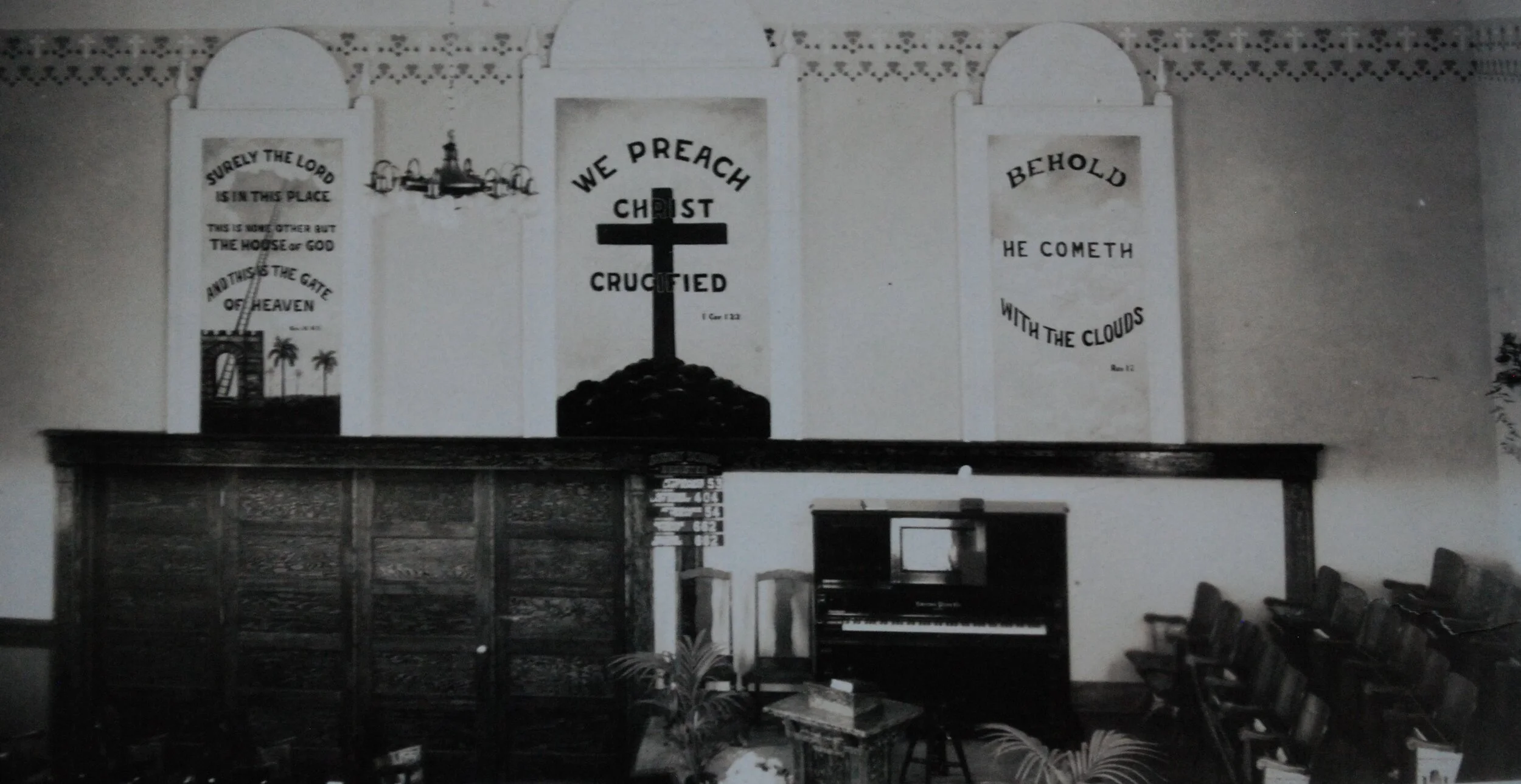
Church interior, 1920s
Creative Labor
Eight years later they were growing enough to need additional space, and decided to build a basement under the church that would include an assembly hall and a kitchen. It was now the Great Depression of the 1930s, so a number of the men in the church were without work and able to volunteer their services. They shored up the building and dug the basement by hand, using shovels and buckets and wheelbarrows. Twenty years later they excavated again to enlarge the space. The next time you’re in Fellowship Hall and its adjoining kitchen, think about how it was excavated by hand.
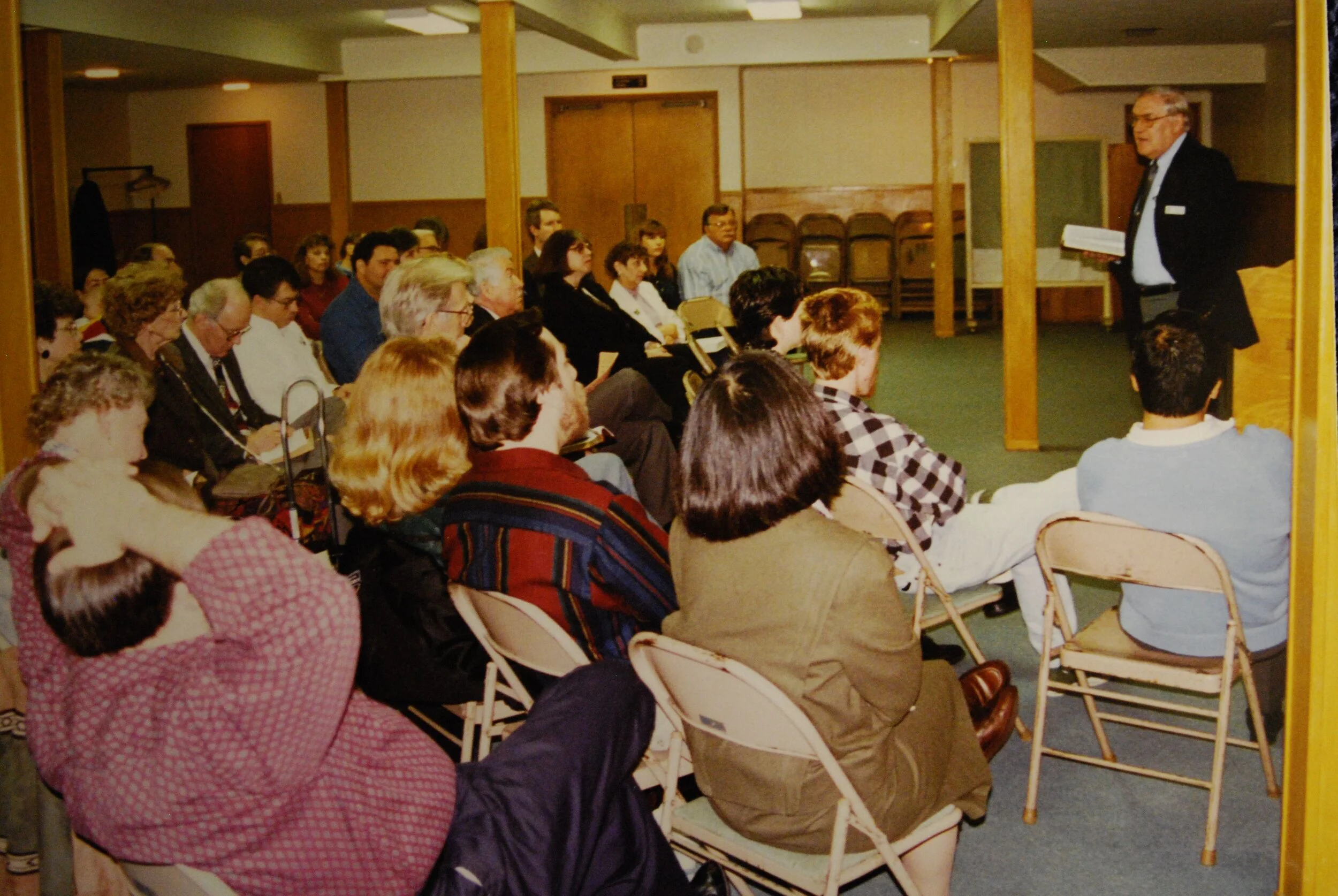
Adult class meeting (1995) in “Fellowship Hall,” the basement excavated by hand underneath the first church.building
A Presence in the City
In the 1940s the church continued to grow in numbers. In addition, congregants wanted a building with visibility from Lake Avenue. They invited a Swedish-American architect, Anton Johnson, to plan the new, larger church.

New church building in 1947
Johnson’s Spanish Mission Revival style building, completed in 1947, had thick fortress-like walls, a tower, and light filled stained glass windows depicting Jesus the Shepherd. The architecture itself conveys something important. The Swedes had left their original homes and were putting down roots in a new home with a different culture. In their new church building they were reminded that through every change God is a fortress, strong tower, light and shepherd.
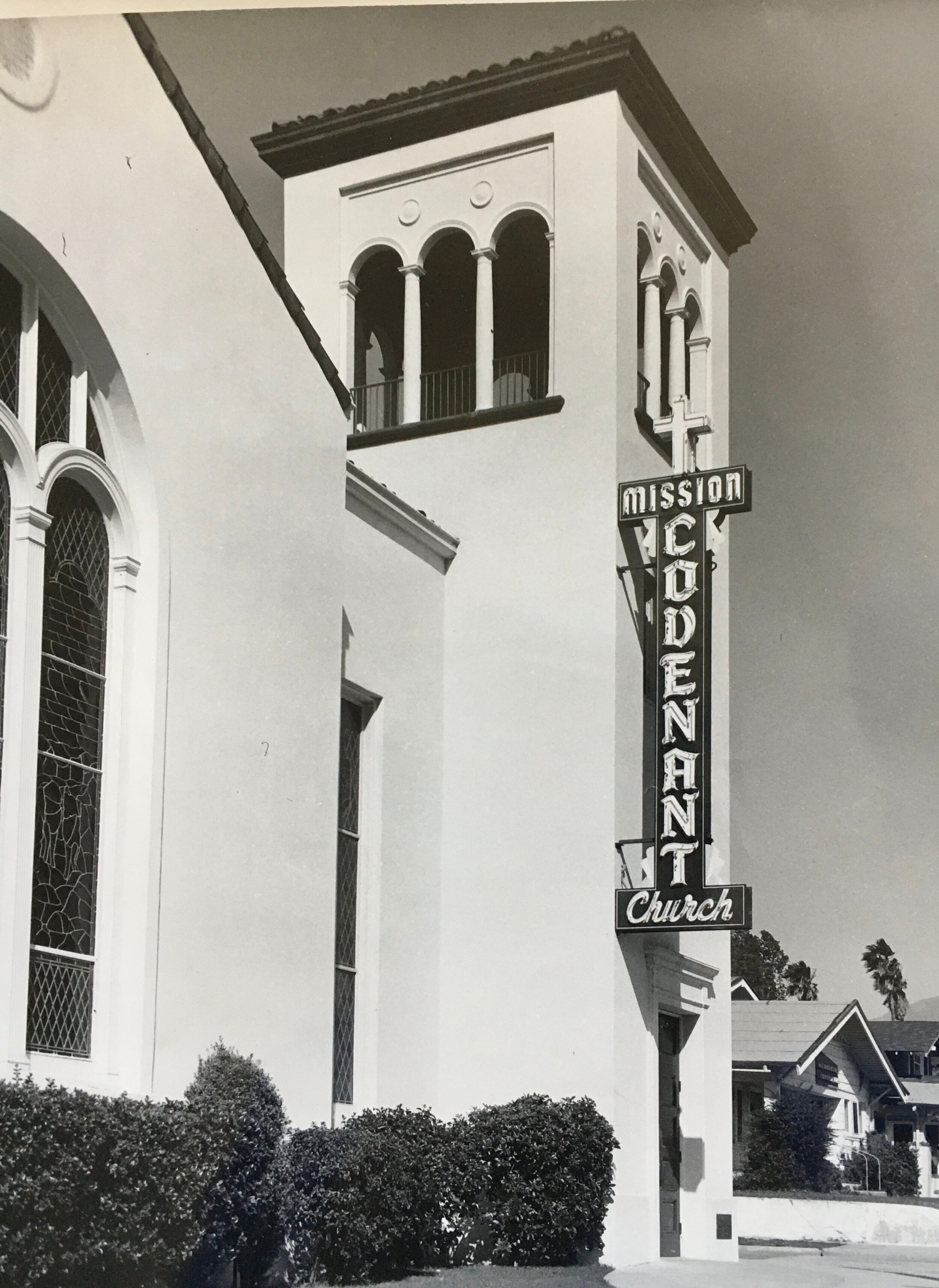
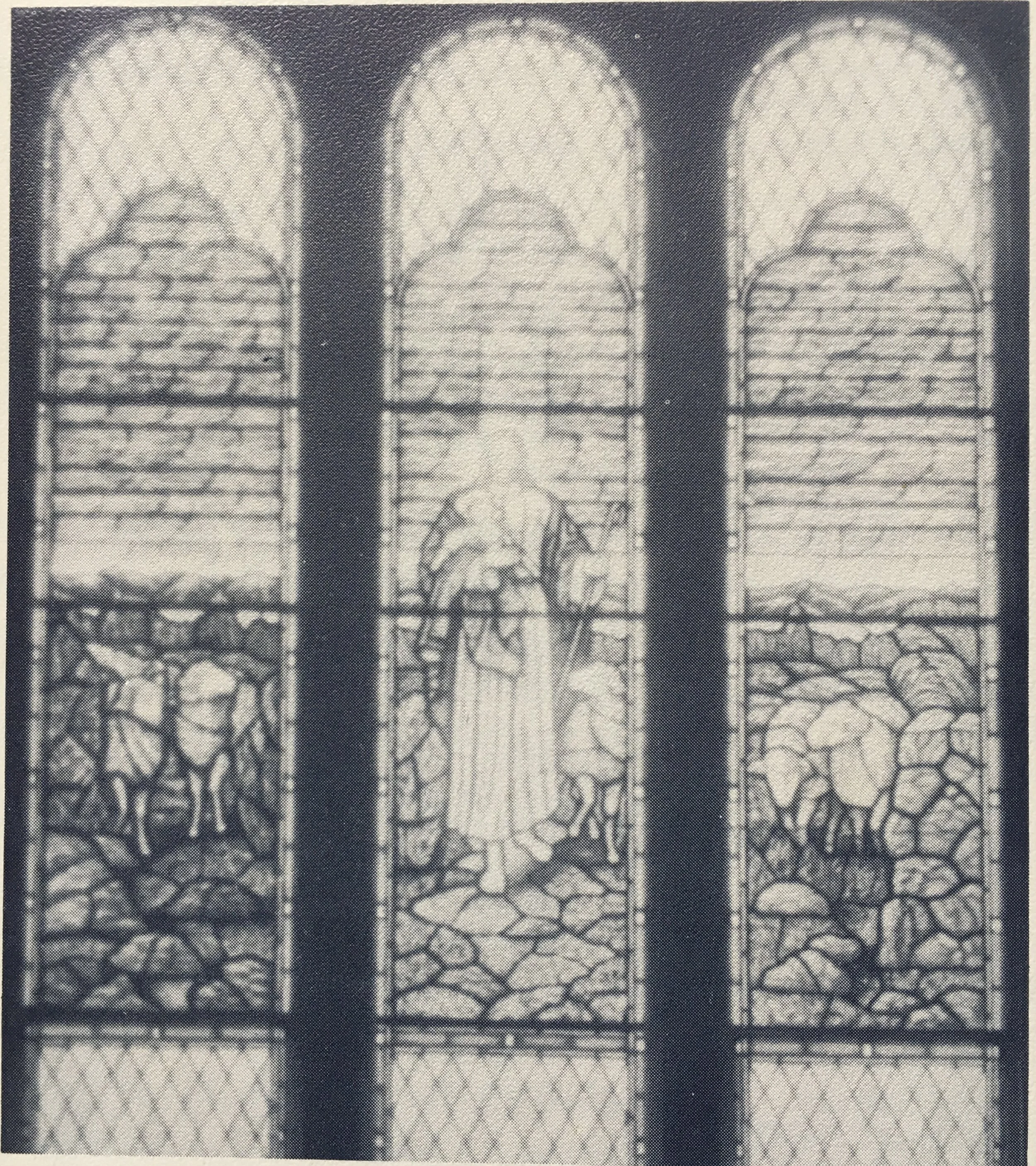
Over the next five years, the church doubled in size.
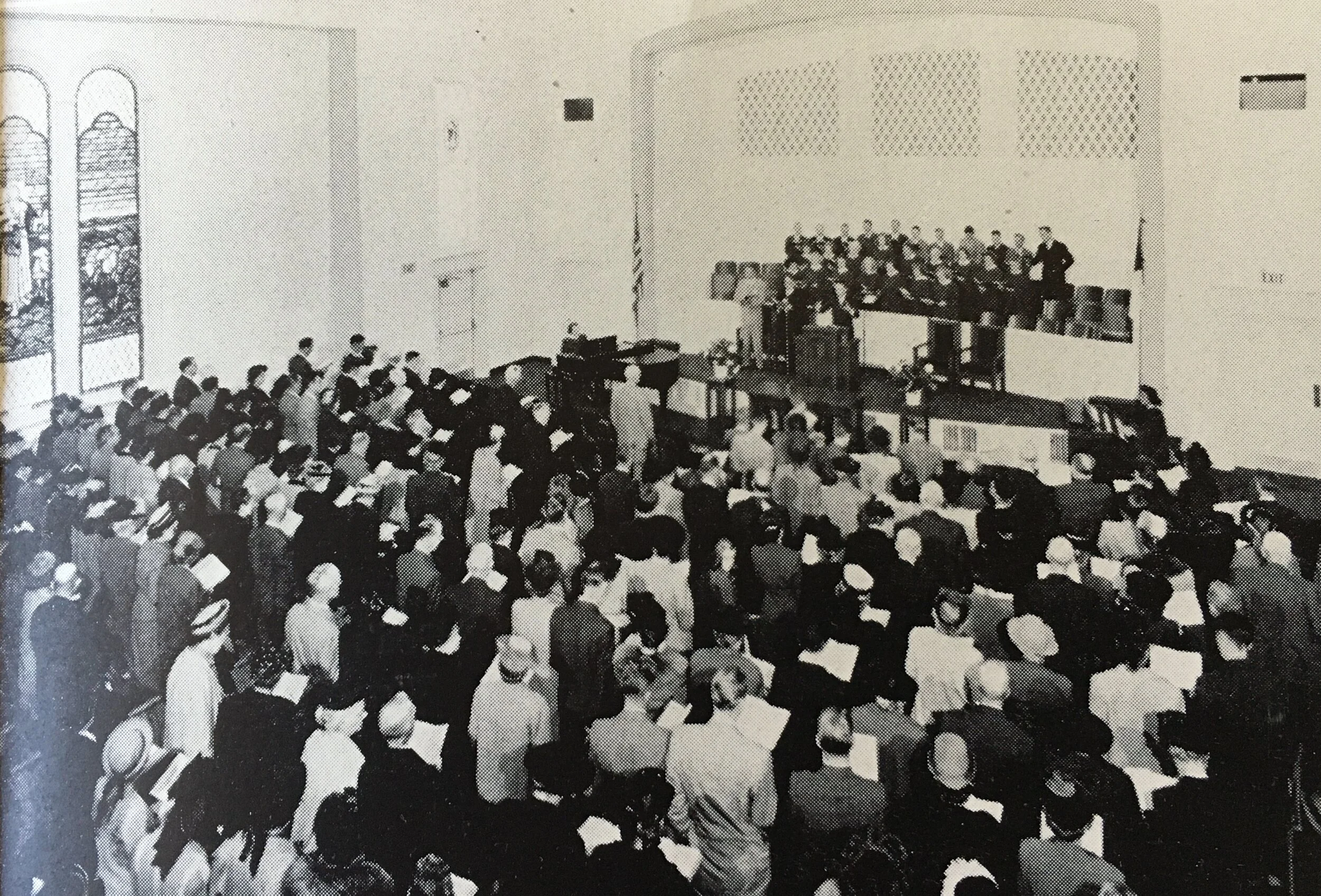
Church sanctuary interior, ~ 1950
More Creative Labor
A lot to the south of the original building was also purchased, space which now includes Magnolia Courtyard and the classroom building to the west of it. That building was erected in barn raising style in 1951. The concrete foundations had been poured and the lumber had been pre-cut by a church member who was a carpenter. Thirty-five men gathered to erect the building, assisted by kids who handed them supplies and women who served lunch. By nightfall even the roof was in place.
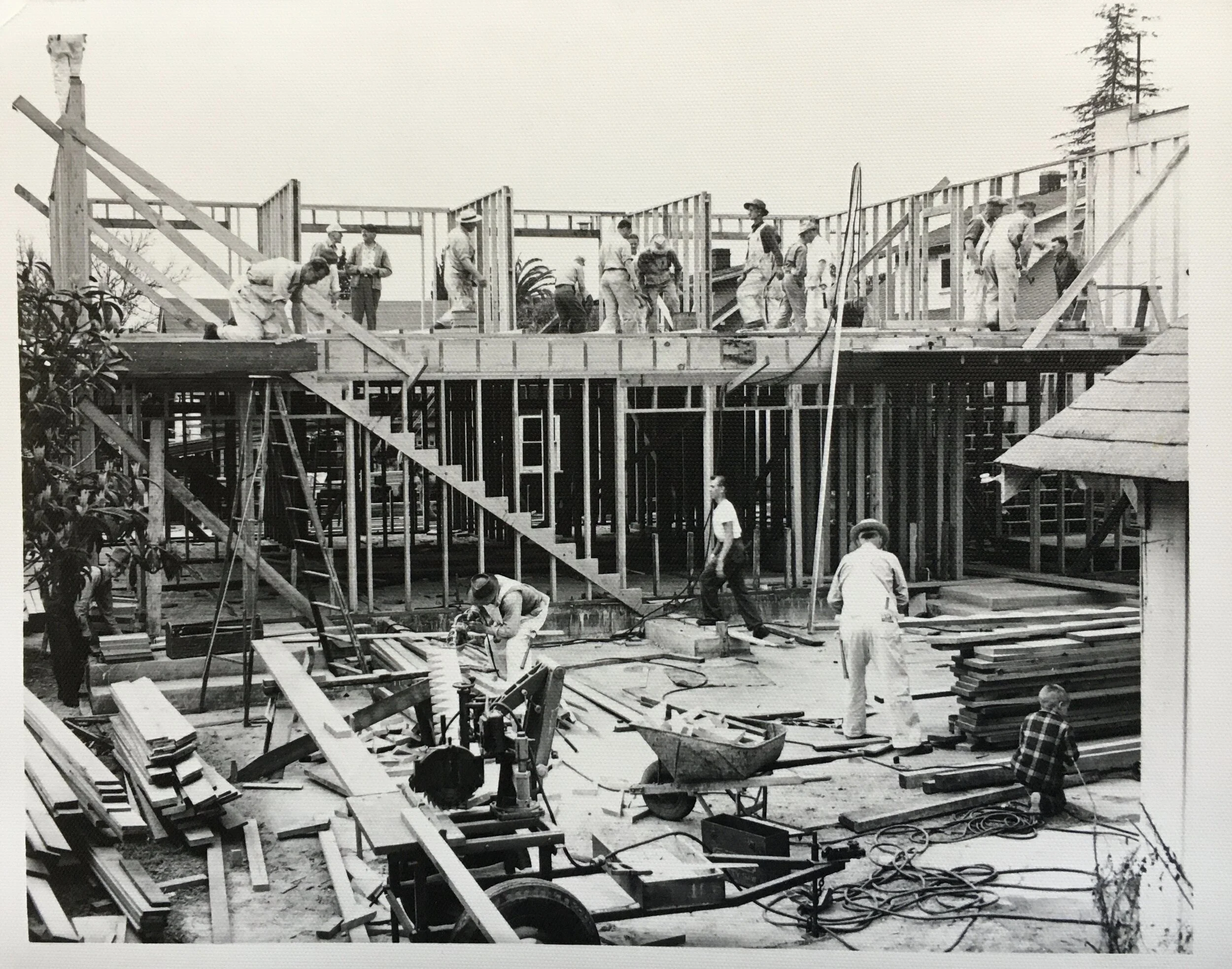
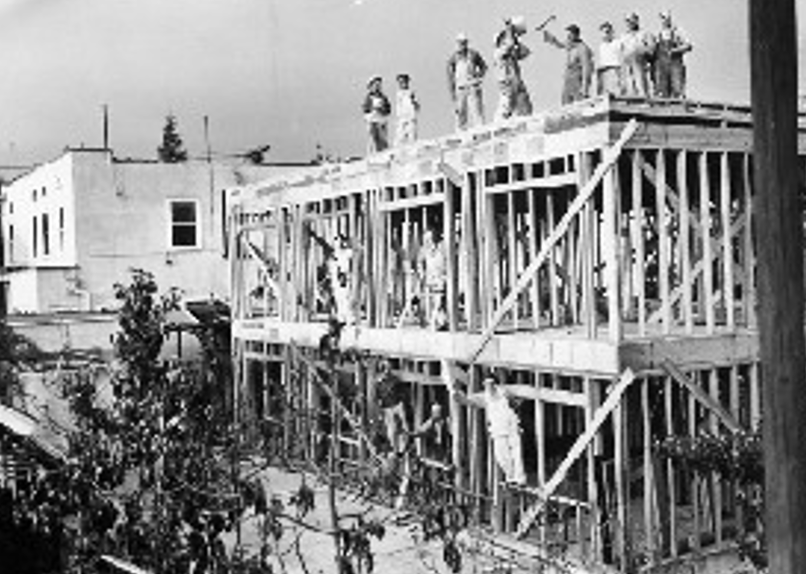
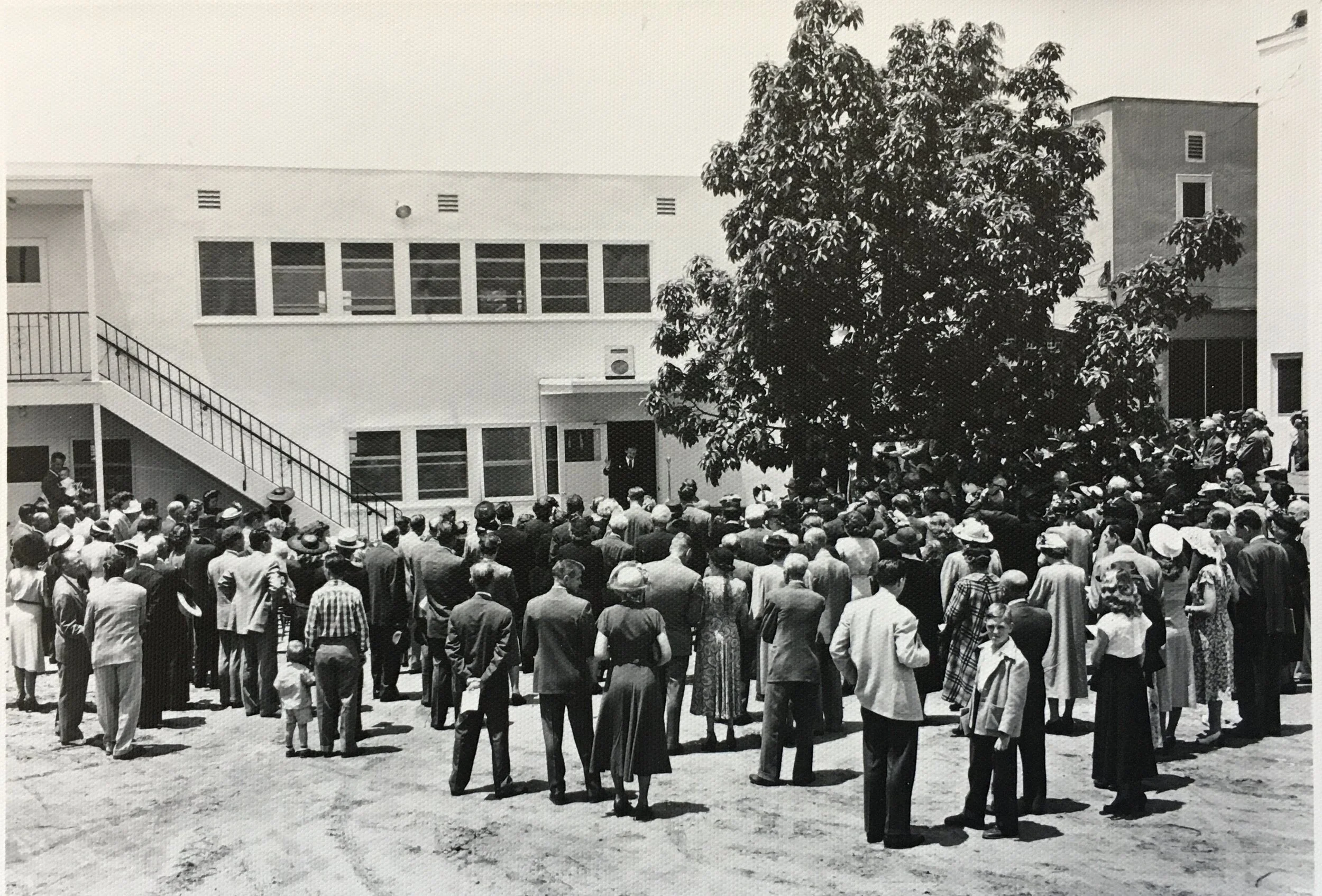
God’s Provision
By the 1960s, youth programs at the church were booming. It was time for new space for the church’s children and youth, and the addition of the gym and classroom building we now call Carlson Hall was accomplished through some wonderful provisions.
One was that the lots to the south of the church were purchased from two single brothers, the Faulks. Perhaps they agreed to the sale as they remembered their Swedish mother, who had attended Pasadena Covenant before she passed away. The second was a serendipitous meeting between Pastor Arvid Carlson and a woman who’d been a patient in the hospital next to a church member he’d been visiting. Pastor Carlson visited this Mrs. Smith multiple times in the future and although she never attended Pasadena Covenant, her will left the church $100,000. The third was that two charter members of the church left their estates to Pasadena Covenant. Anna Johnson and Hanna Newberg were single women who didn’t have their own families to leave an inheritance to, but they ended up blessing many families in future generations. Various church members also contributed to the building’s roof and furnishings. It’s significant that Pastor Carlson challenged the church to match Mrs. Smith’s gift with a similar amount raised for missions and outreach, which they did.
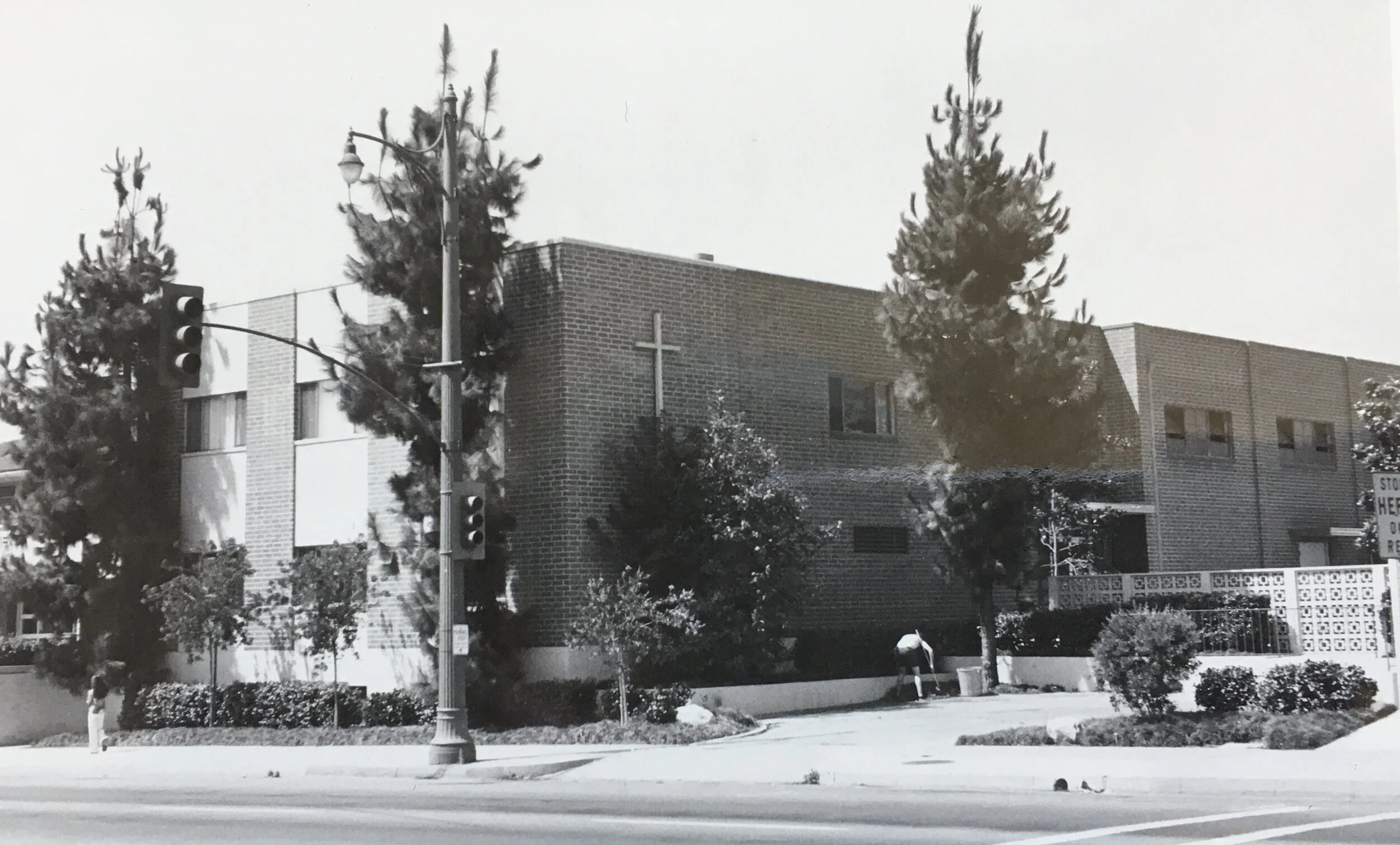
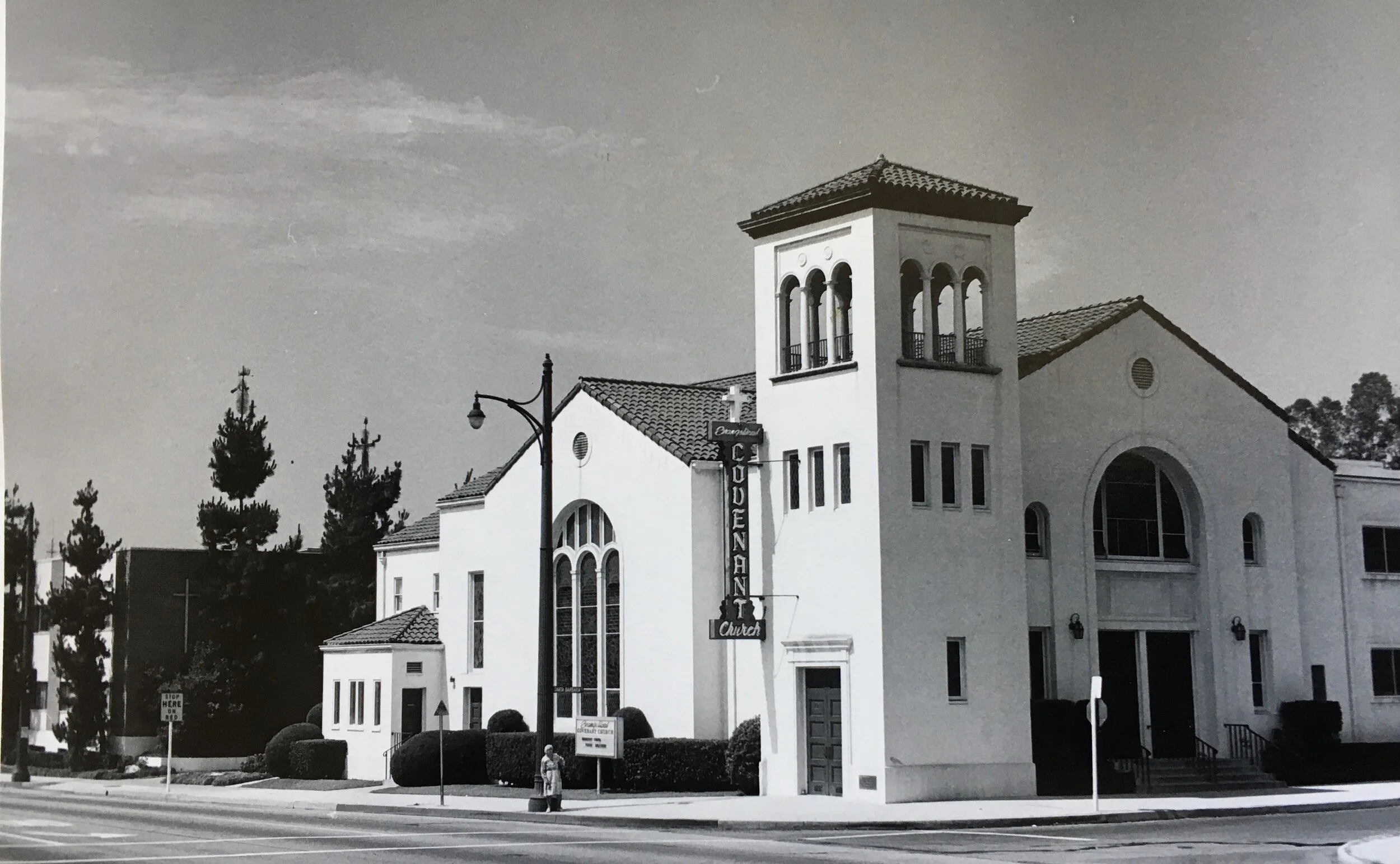
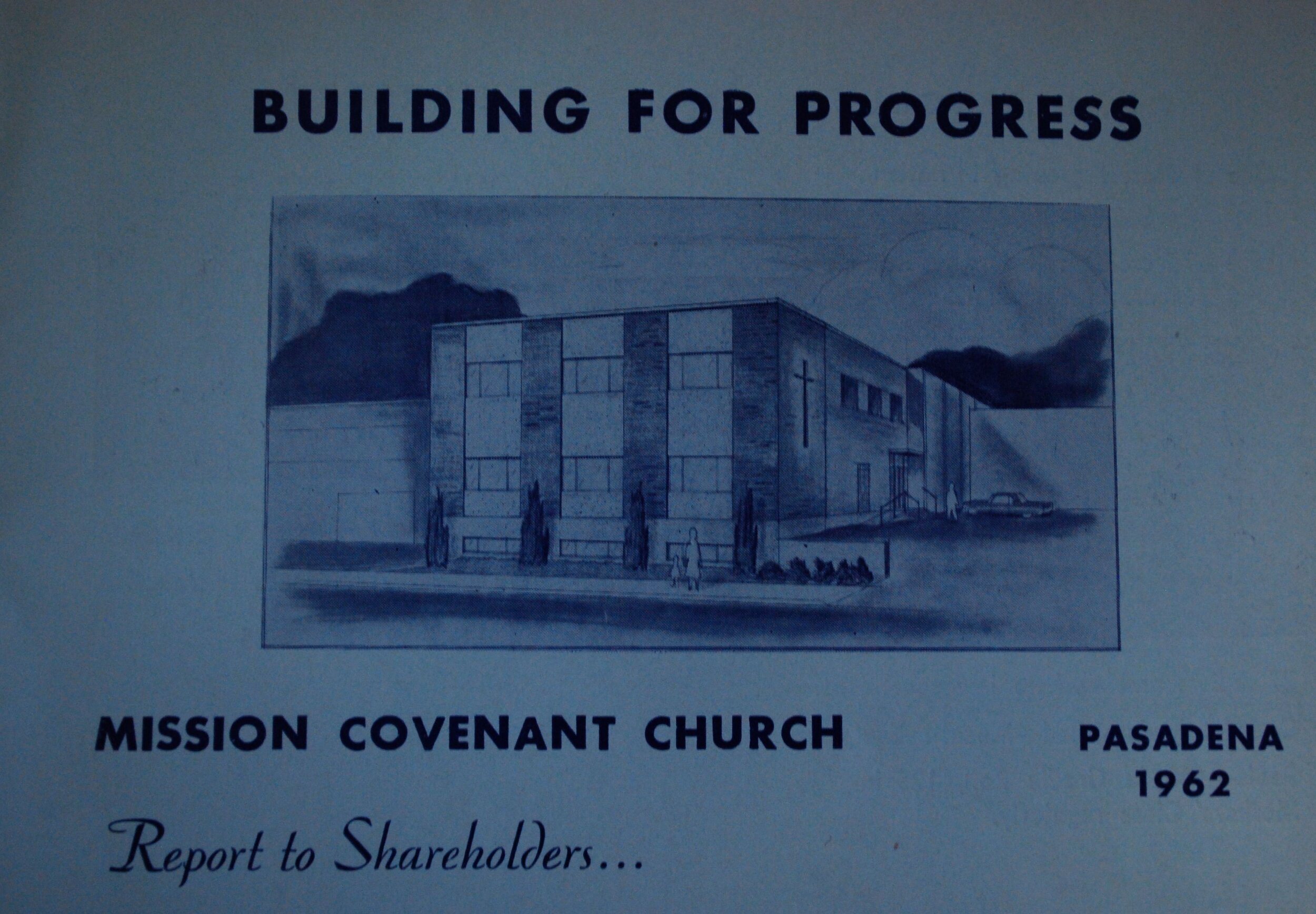
Modern Life Intrudes
The sanctuary was remodeled in 1971-1972. Why? Sunlight streaming in through the windows on the east side of the building meant the sanctuary got warm unless the windows were open. But noise would then come in from the fire station next to the church and the growing traffic on Lake Avenue. The solution was to cover or eliminate windows and add air conditioning (with a lowered ceiling to cover the ducts). This also enabled the church to have audiovisual projections, an innovation that Pastor Mel White made use of. It was during this remodel that the modern-looking pews in three sections were added, allowing more people to get “good” center seats.
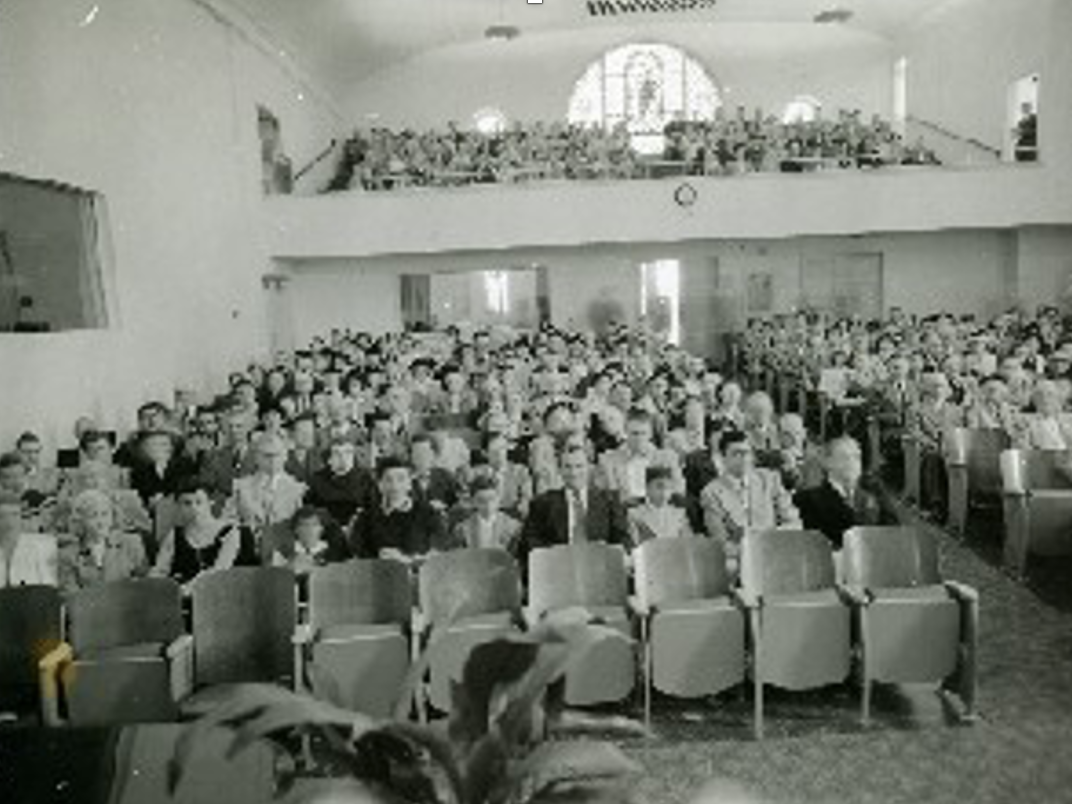
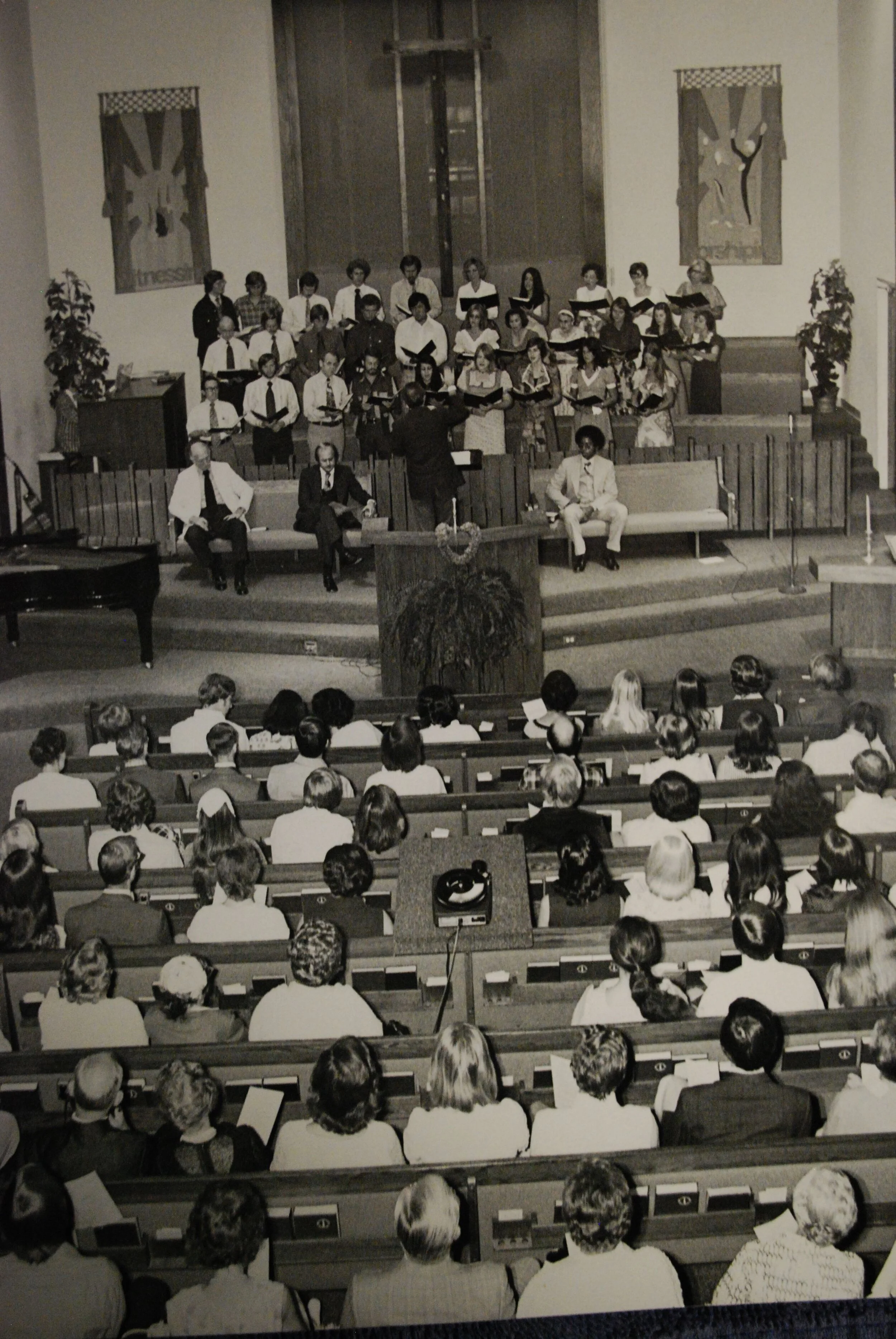
Strategic Purchases and Generous Gifts Round Out the Campus
In the 1960s, the church was able to acquire property that became our parking lot and the residences between the church and the lot, which we rented out to our staff--Roland and Betty Tabell raised their family there. In the 1980s, it acquired the properties across Santa Barbara St. One of those lots used to have a house for a church ministry called “Operation Help,” which distributed food and clothing to those in need. Now that property has the building that used to house our youth ministry. The house on the other lot was formerly used by visiting missionaries, then occupied by the custodian, and is now used by Club 21.
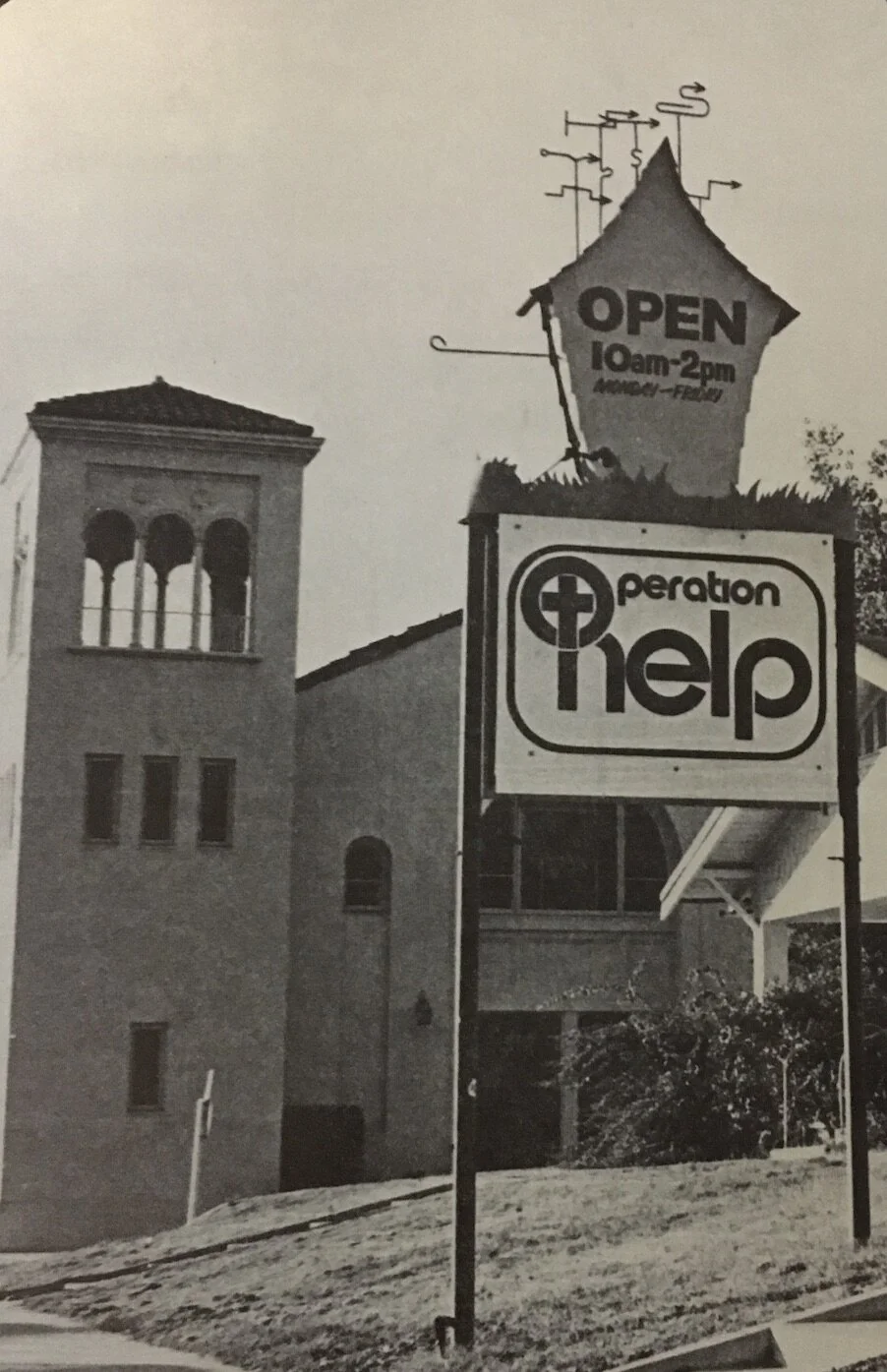
The Corner House was the last property the church acquired, in 1998. Although the church had been interested in that corner lot for a long time, the owners didn’t want to sell it to the church. However, when a couple named Scott and Karen Garland approached them, the owners agreed. The Garlands, who had been active in Pasadena Covenant for some years, then generously donated the property to the church. They had originally been thinking about getting a vacation home on a lake, but instead they bought and then gave this home on Lake Avenue to Pas Cov.
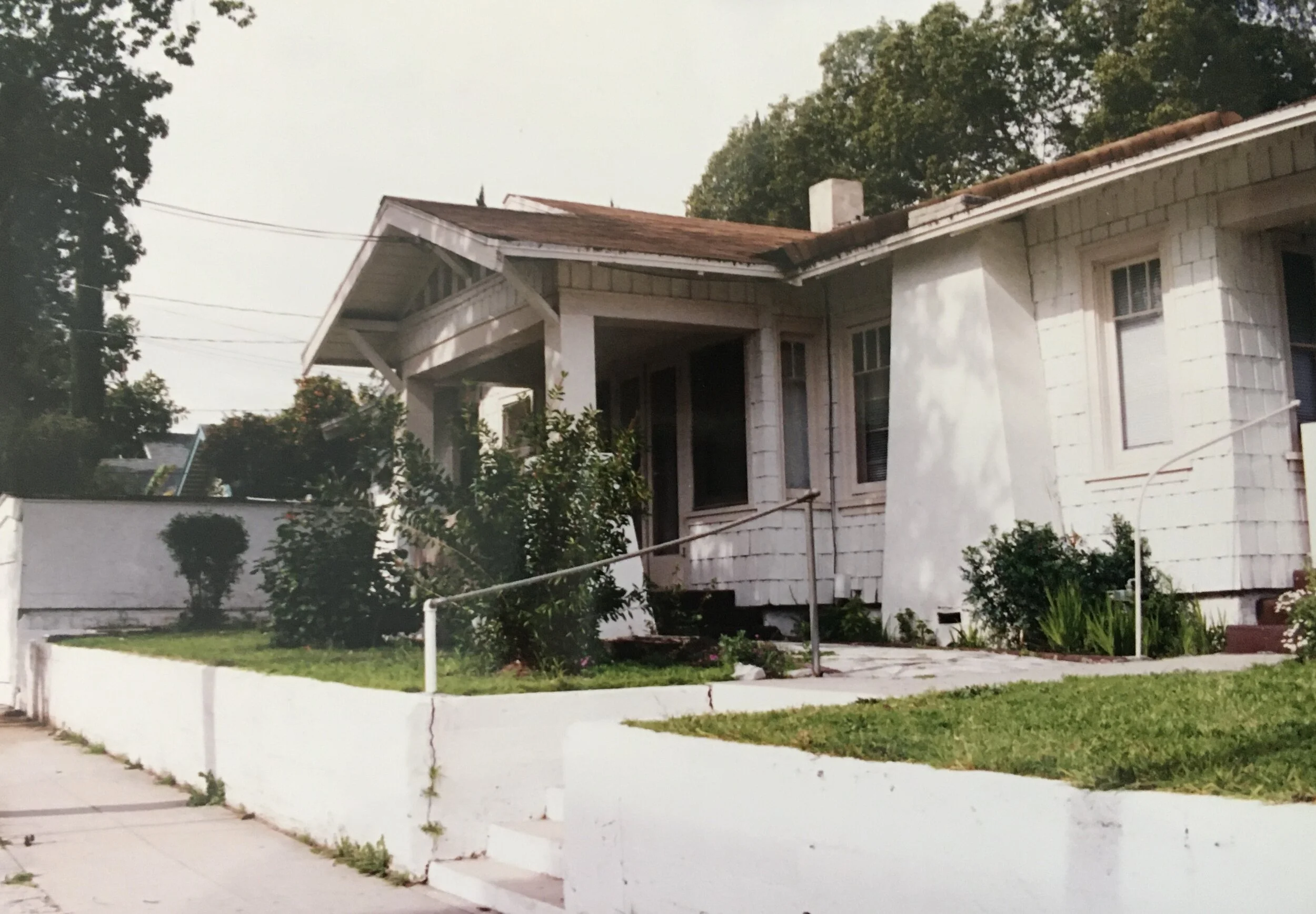
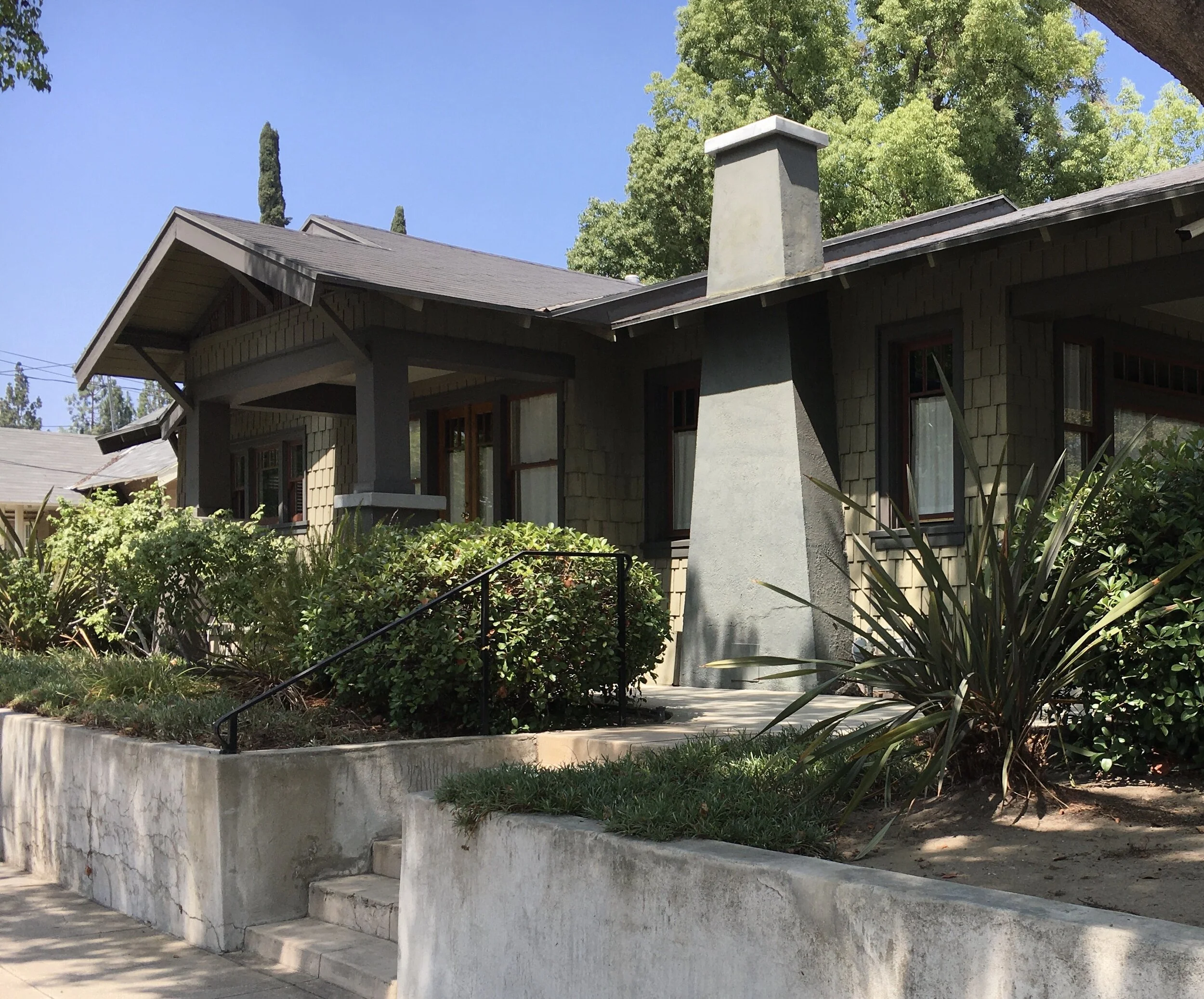
The house on the corner had been built in 1910 and for many years it was a minimally maintained rental property. After some debate on tear-down versus restore, the latter won. Renovation costs were donated. Church member and master carpenter James Steinmeier lovingly and skillfully refurbished the house in 2001. Now it’s a place of beautiful hospitality, which can be used either as a residence or for meetings.
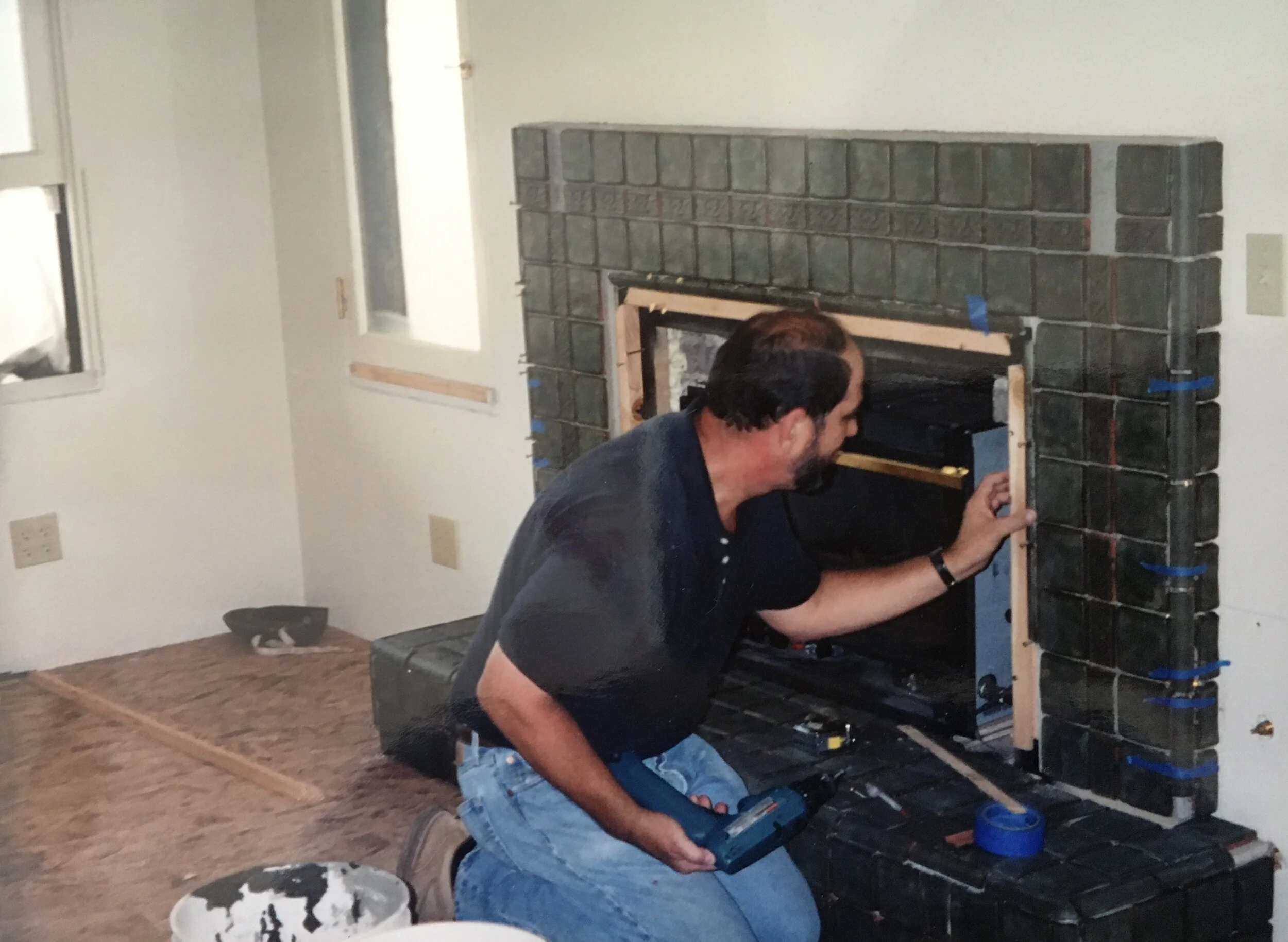
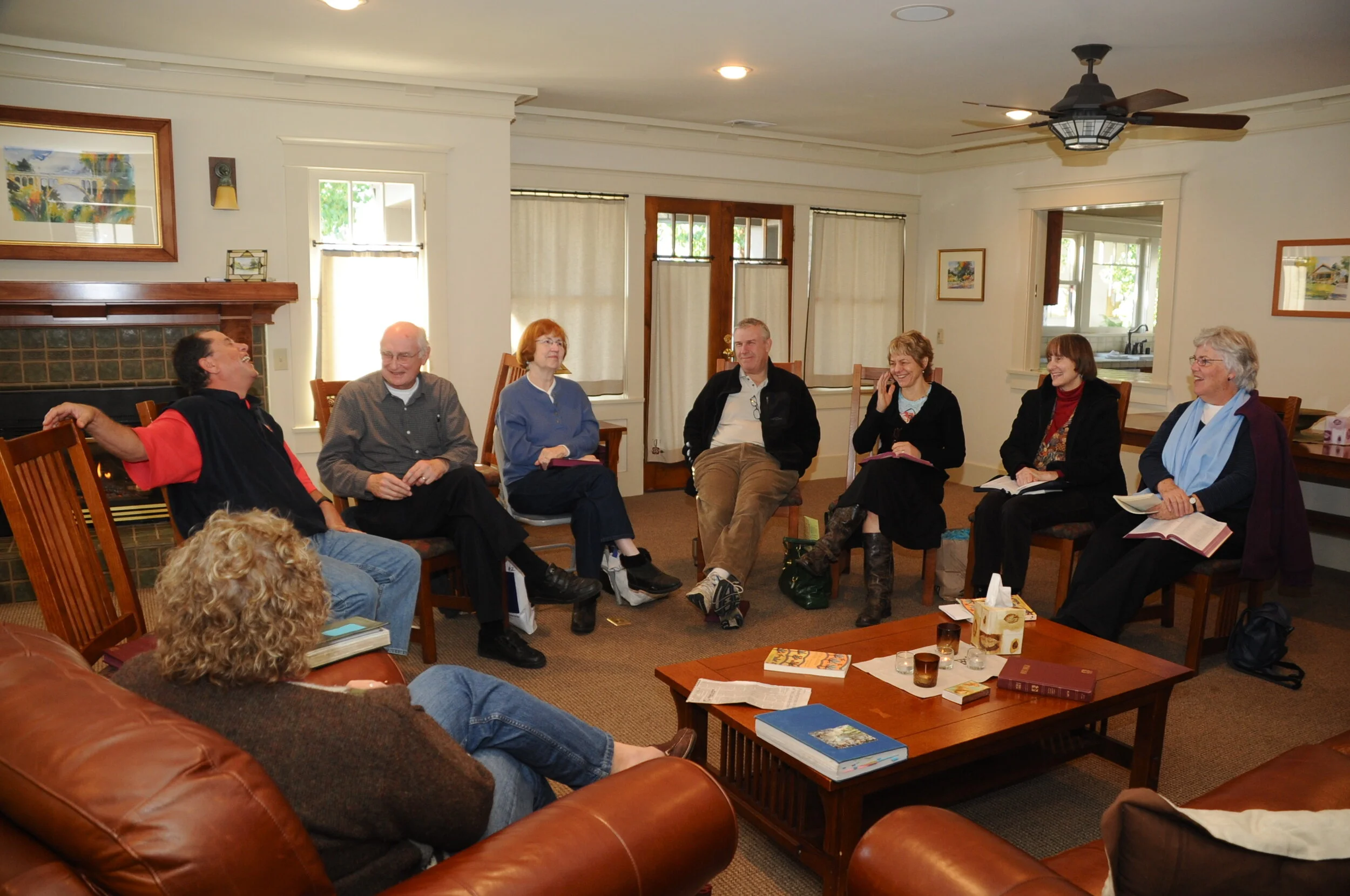
Current Use
Although there aren’t as many members using the church buildings as there have been in the past, many people are still being blessed by the facilities. The gym has been used for the Bad Weather Shelter. It has also served CAN-DO Kids and basketball leagues. The classroom building has housed Options for Learning (Head Start) and Club 21. Selah Gospel Choir uses our facilities for rehearsals and performances.
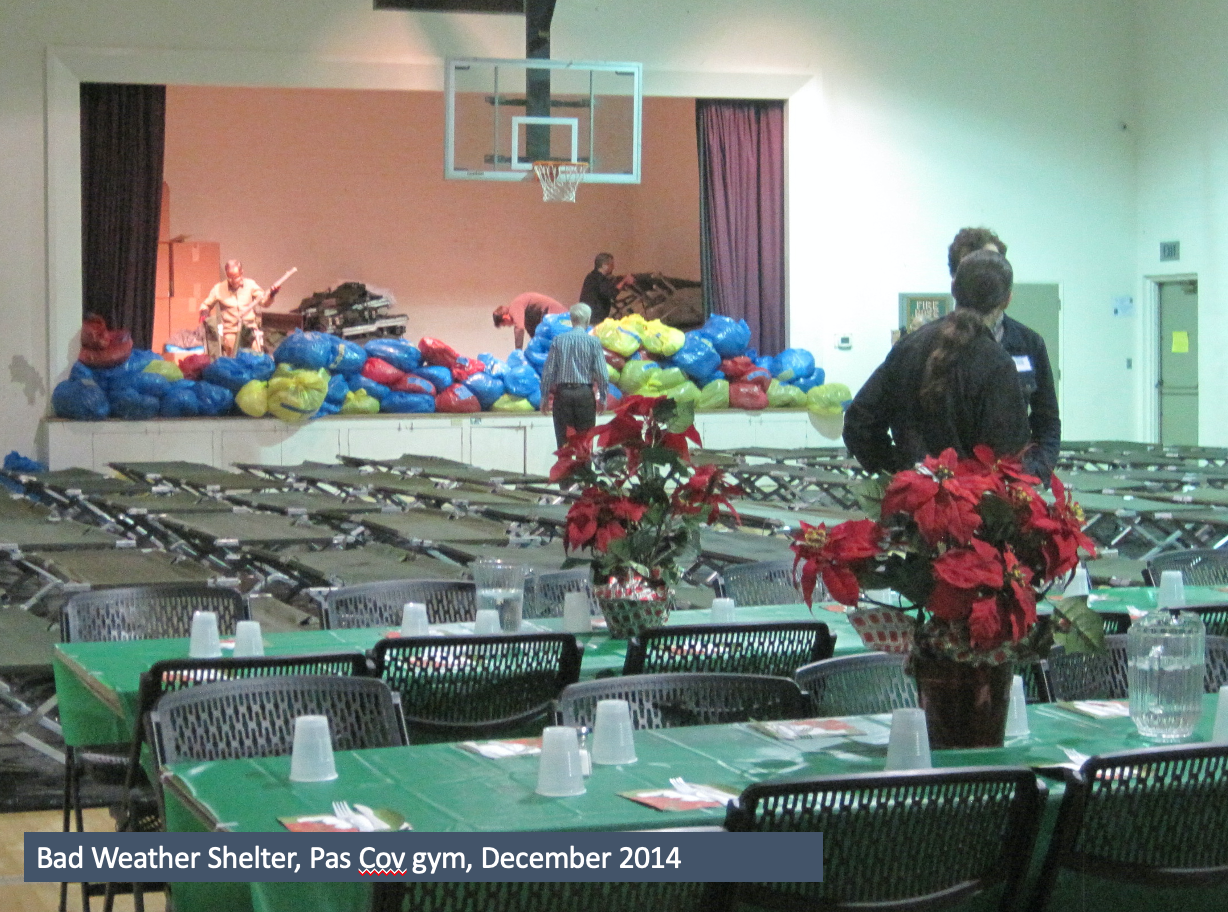
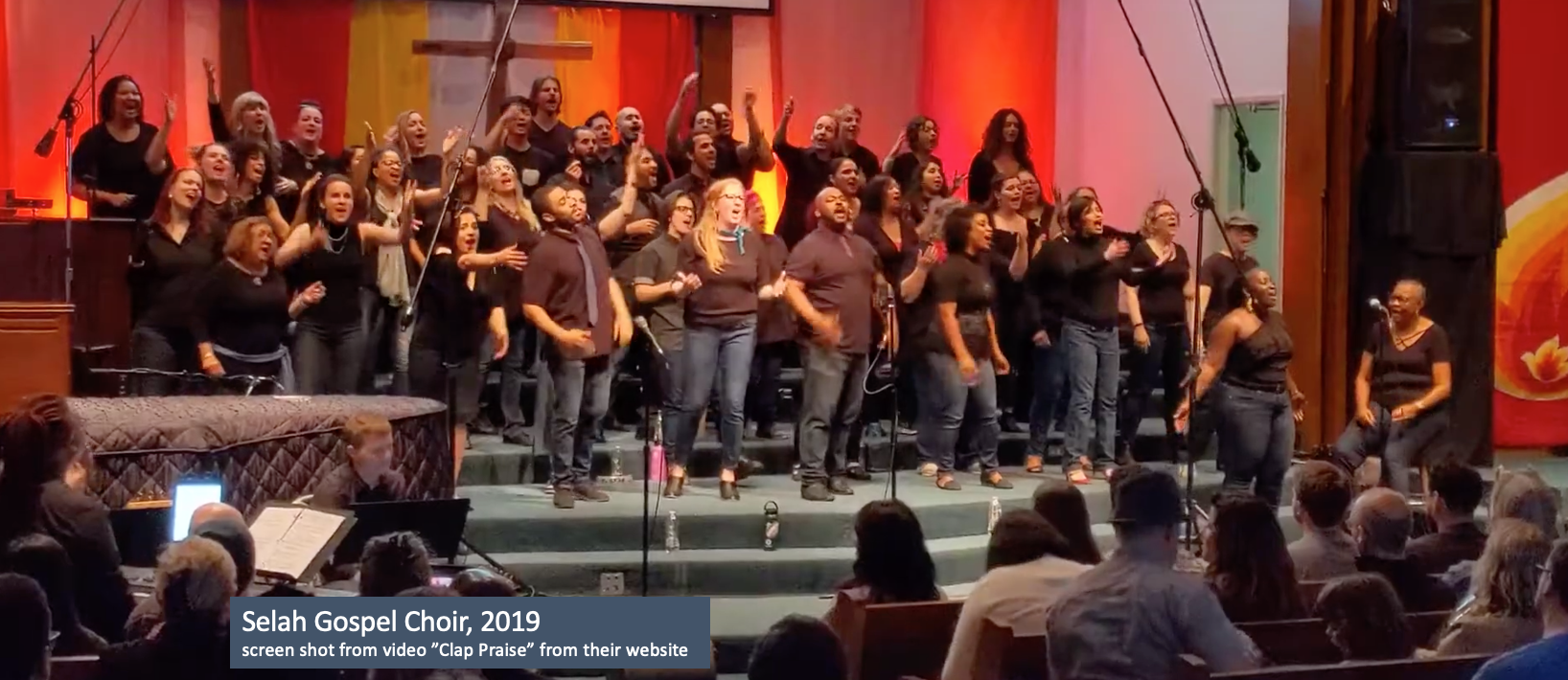
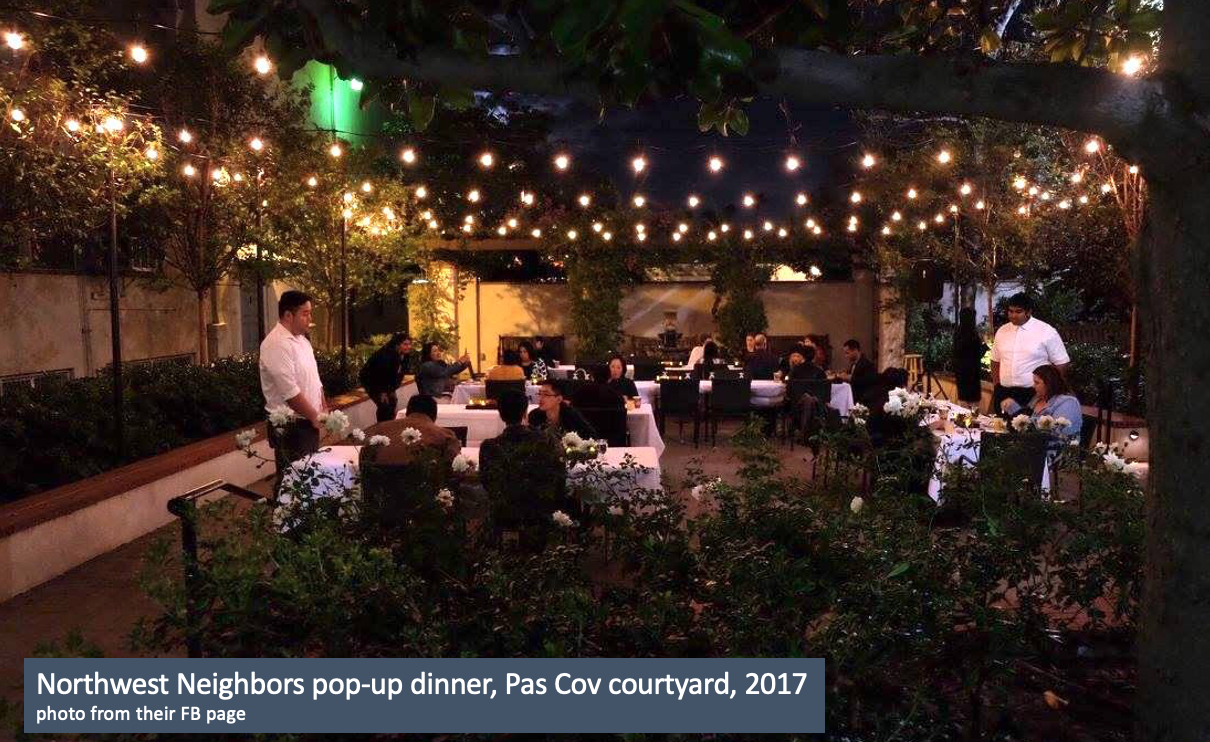
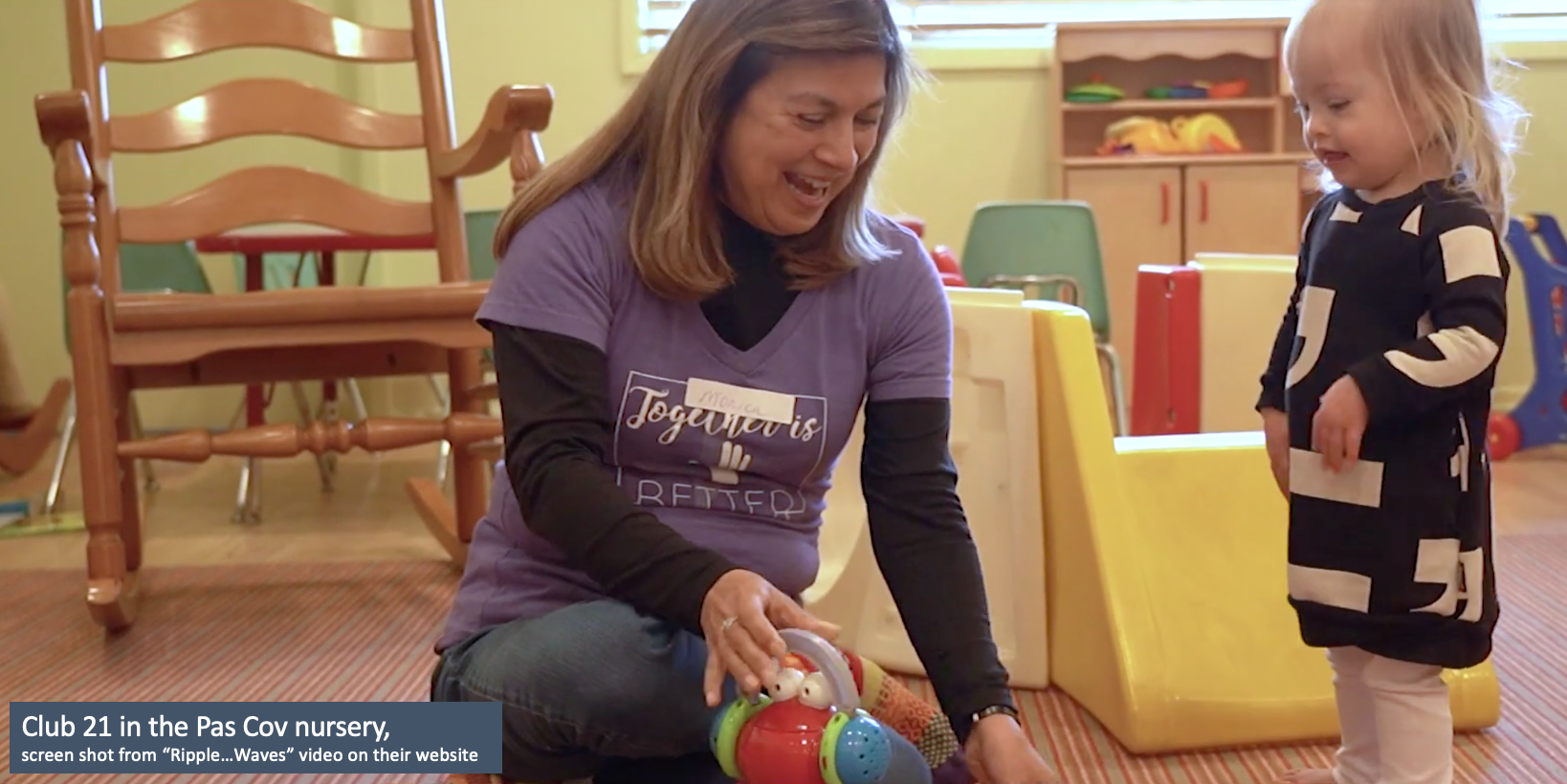
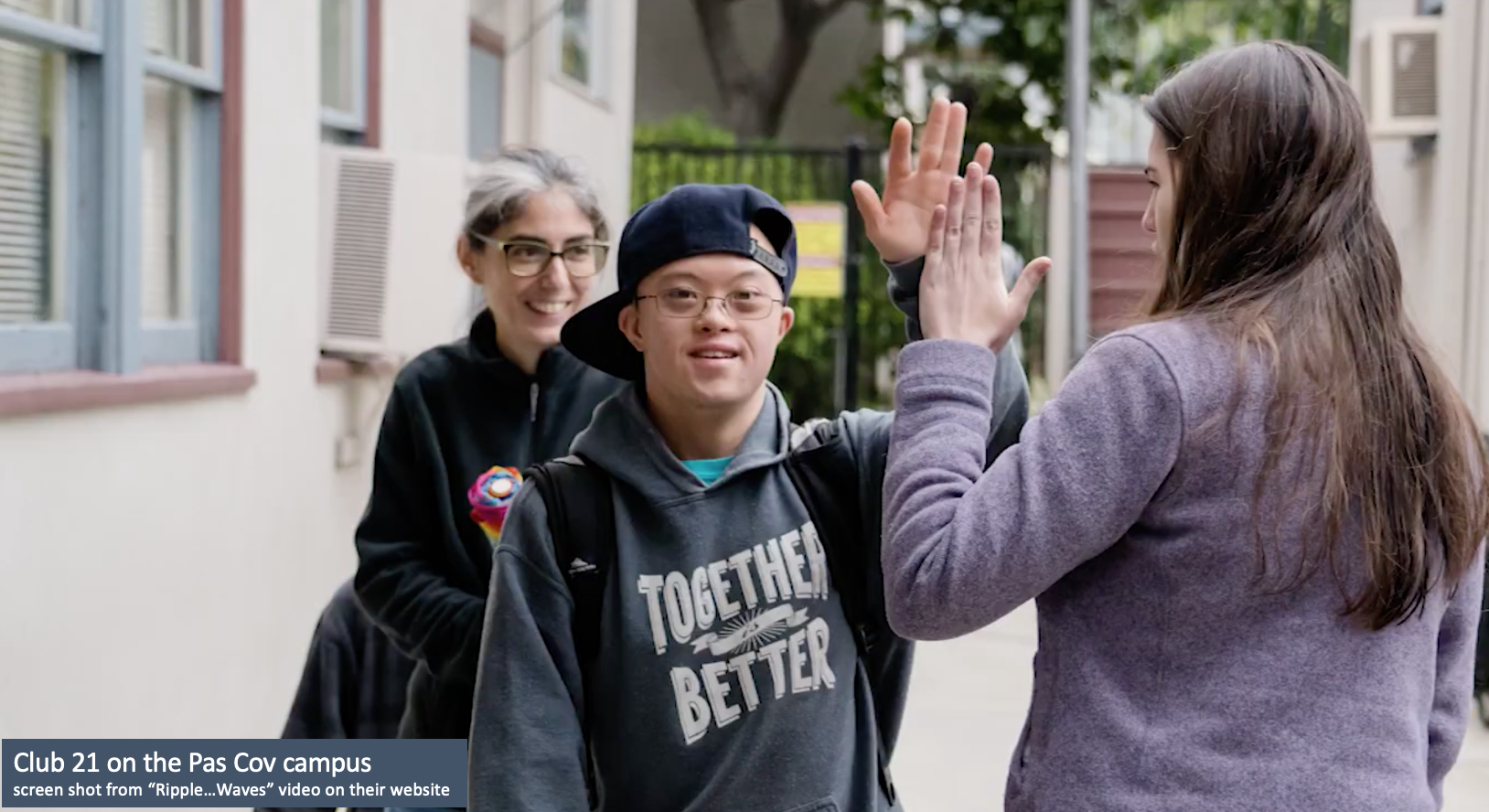
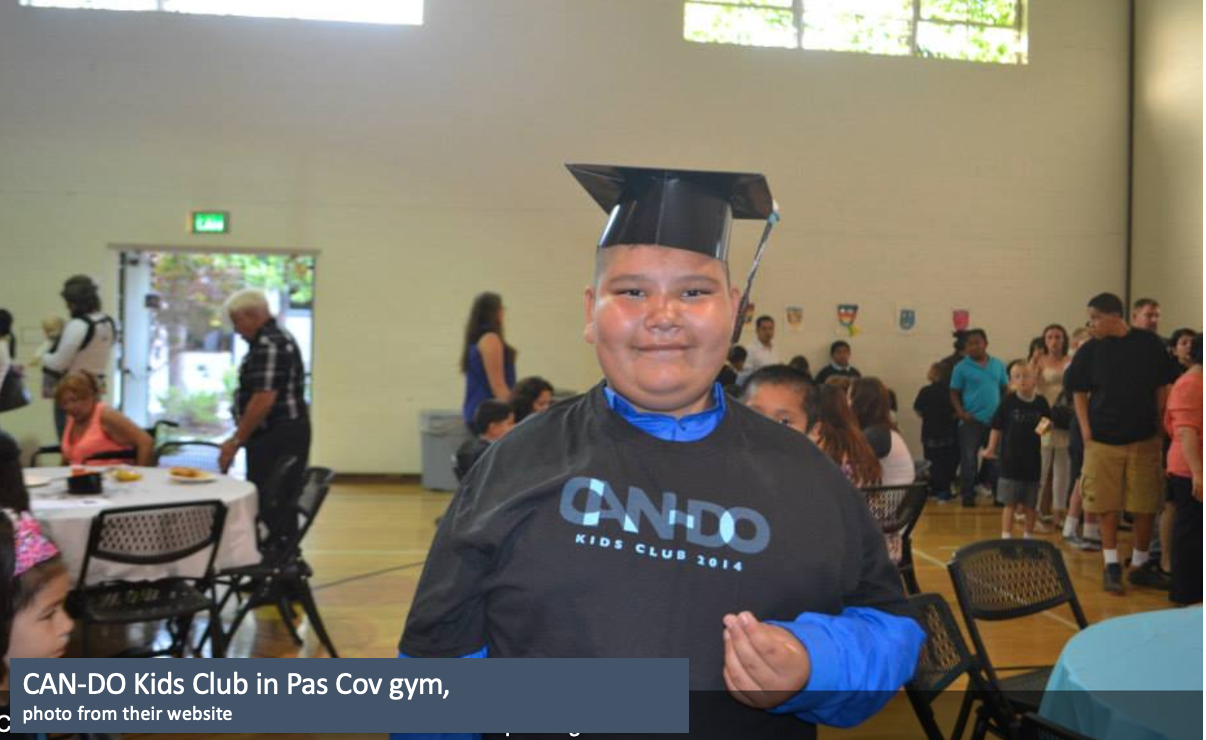
Beyond 100
It’s clear that God has provided us with our current campus in a variety of ways, from financial sacrifice to generous gifts to personal talents. I wonder how 21st century renovations will be achieved? It’s also clear that the buildings have been used in different ways over the years. I wonder what Kingdom purposes will be achieved in and through our church facilities in the future?
During the month of October in our worship services, we focused on God’s faithfulness through our property, as Pastor Steve preached a series on the Jewish temple/our church as described in Chronicles. On October 10, he said that place is where God’s promises come alive. On October 17, he said that we people are instruments of God’s promises—God’s grace is at work in light of our capacity and despite our failings. On October 24, the message was about relationships, and how we as God’s people practice the “with-ness” of God in the neighborhood.
You might be especially interested in a portion of the service from October 31. A slide show gave interesting historical details about four spaces on campus and prayers from groups in each of those spaces were summarized. Watch especially 16:35-34:00.

Roots, branches, blossoms, fruit
How looking at a tree can help us understand our history
A two-minute video that uses the image of a tree to explore why and how Pasadena Covenant is exploring its nearly 100 year history.
An environmental art piece, the Centennial Tree, will be on display in the church (the lobby, to start with). Each month a new branch will be added. Here’s the October branch, displaying the history of our property and buildings.
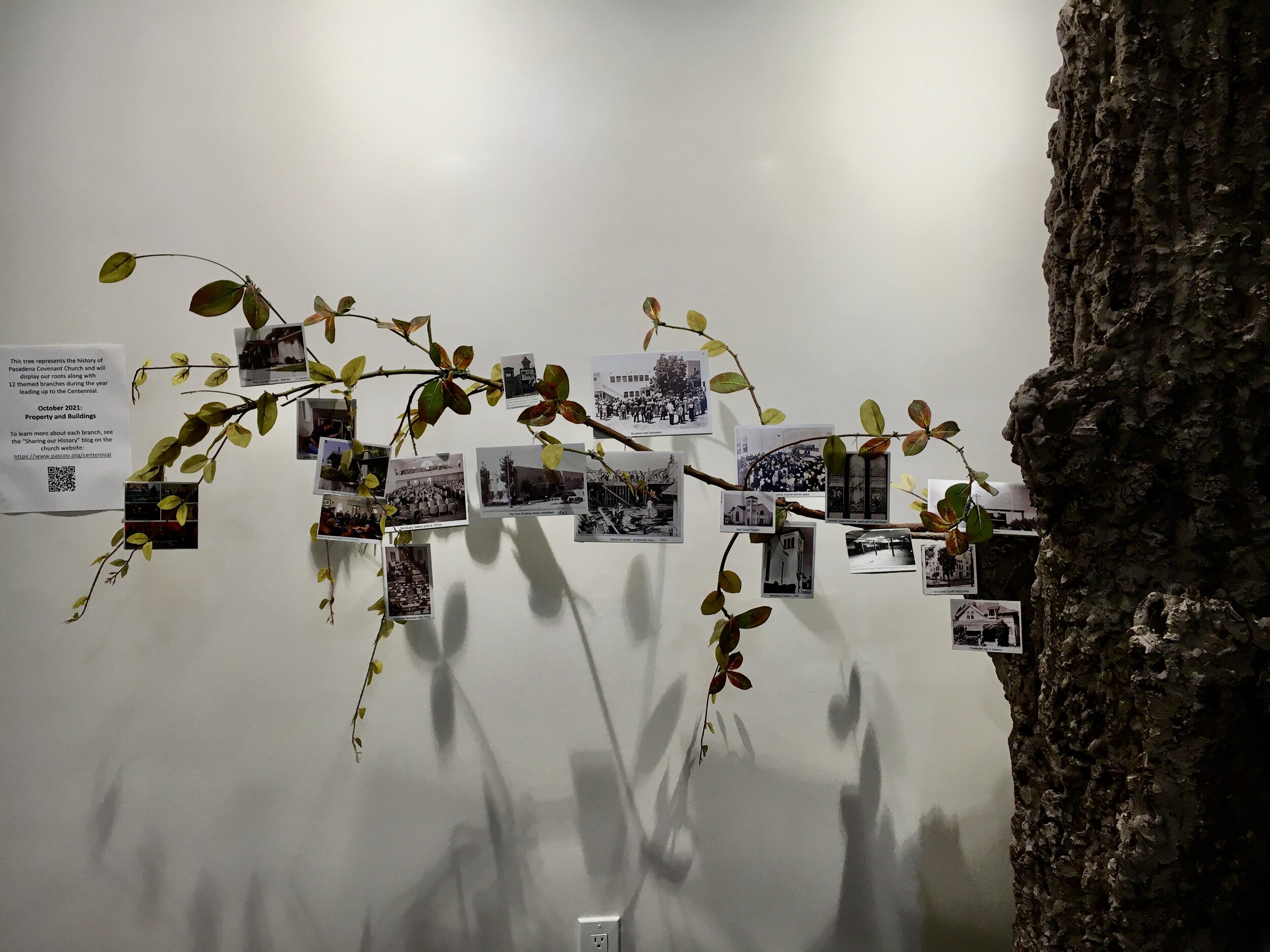

We hope this will remind us of the way God has led us to this point in our history. Like the stones from the middle of the Jordan River set up at Gilgal (Joshua ch 3-4), may the tree be a special kind of monument—something significant, a visual story, and a prompt to look to God’s strength and faithfulness as we prepare to start a new century in uncertain times (as Dan Huang preached about on 9/26/21).

Why History?
We’ll be spending the year leading up to our centennial looking back at the church through twelve different lenses. Each month we’ll consider a different topic: property and buildings, ethnicity and language, worship through music, cross-cultural ministries, family, prayer, worship through media and the arts, evangelism, leadership development, service to neighbors, worship through preaching, and community. This opening post looks at the question of history itself and why it’s worth it to take time for it.
Pasadena Covenant Church is approaching its 100th anniversary. We’ll be spending the year leading up to our centennial looking back at the church through twelve different lenses. Each month we’ll consider a different topic: property and buildings, ethnicity and language, worship through music, cross-cultural ministries, family, prayer, worship through media and the arts, evangelism, leadership development, service to neighbors, worship through preaching, and community. With each, there are great stories to tell.
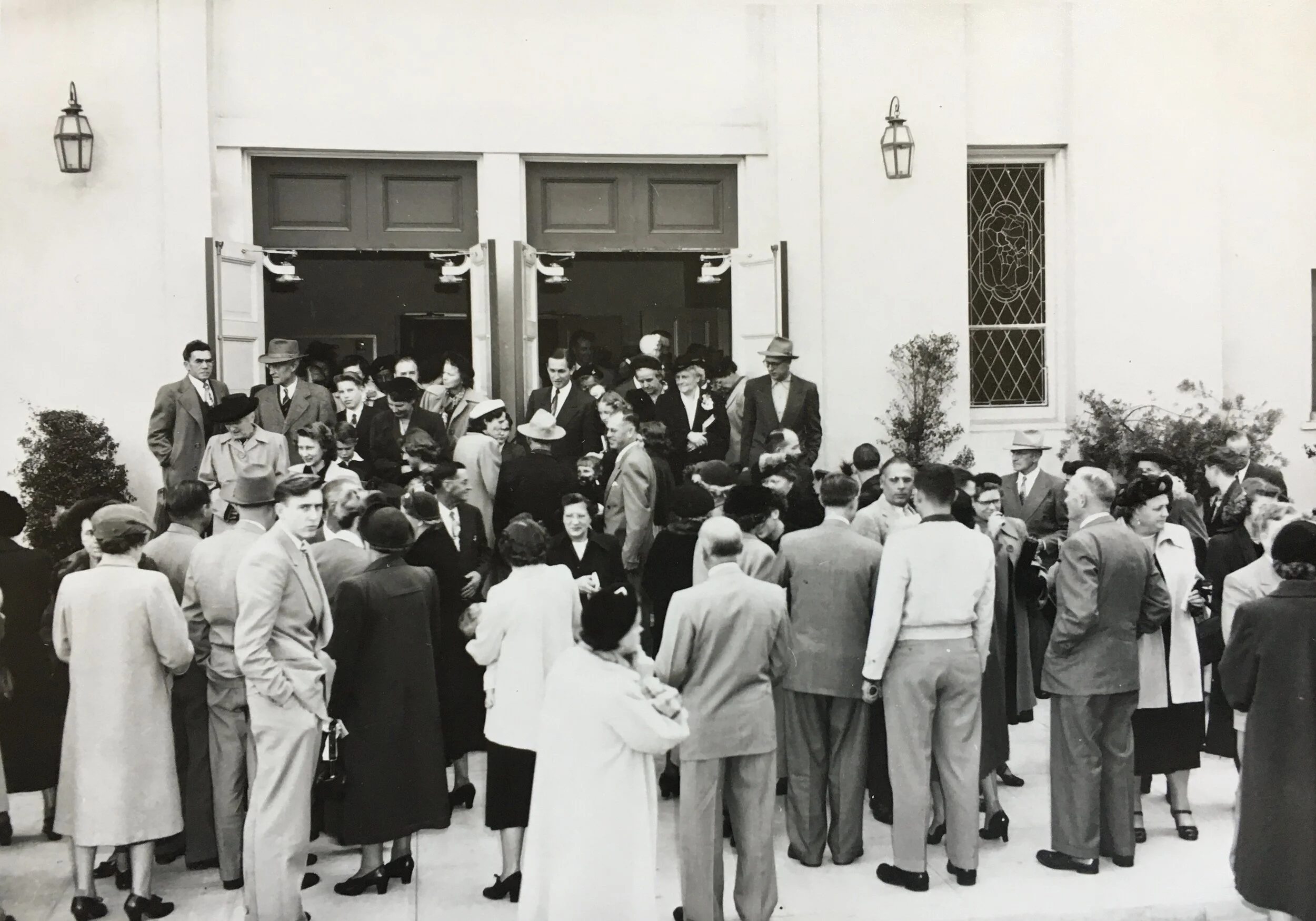
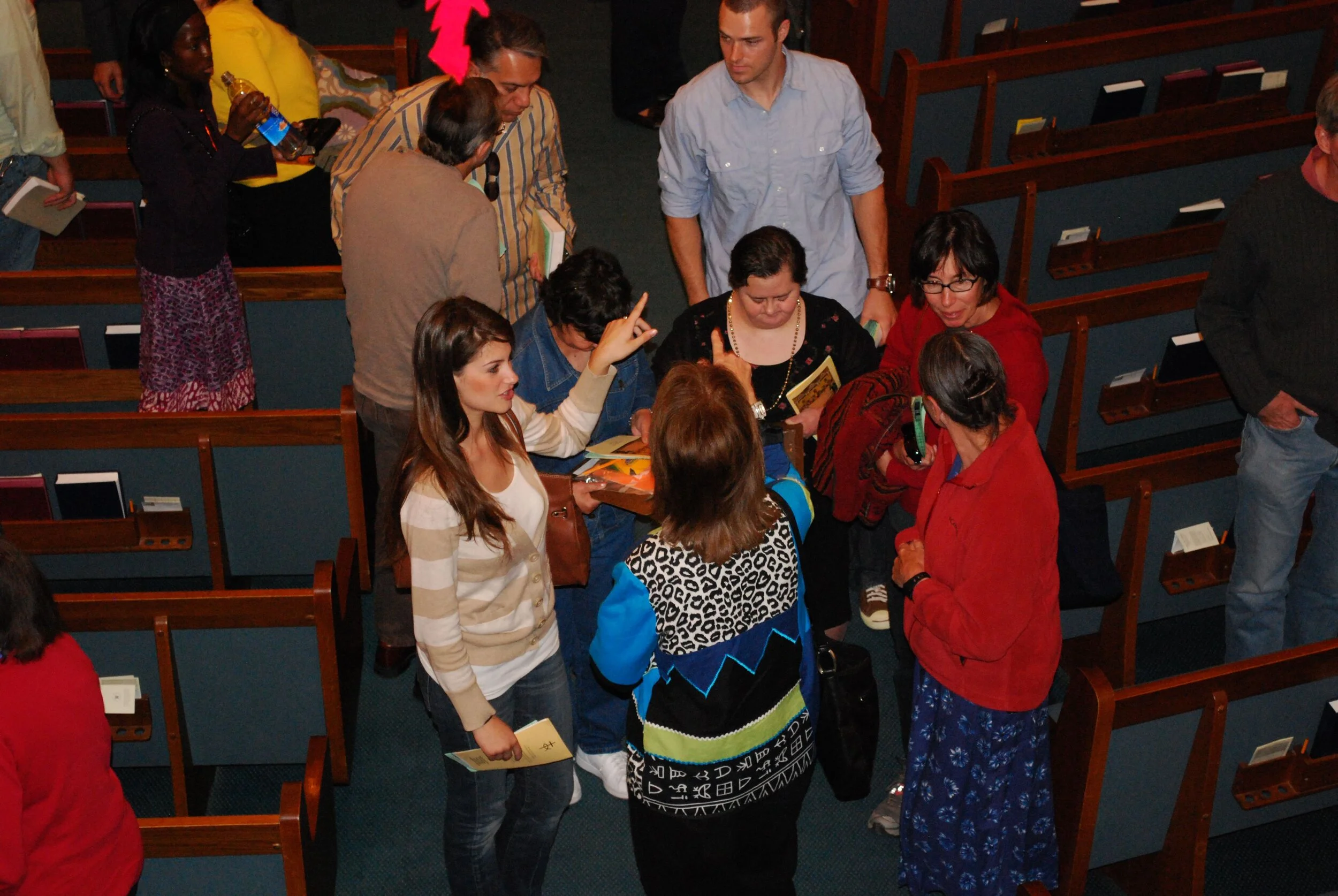
As we do so, you might want to put our reflections in the context of Pasadena’s history. When the church was founded in 1922, the population of Pasadena was about 45,000. Now the population is more than 141,000. Pasadena started off as a resort town for wealthy East Coast and Midwest families and our members were mainly their domestics. In 1940 the Arroyo Seco Parkway linked it to downtown and the rest of that post-WWII decade brought technology ventures here, including JPL—Pasadena had become a city now, not just a town.
Our city has had its share of turmoil. In the 1960s, school desegregation caused a tragic exodus from our public schools, and the 210 freeway was built along a controversial corridor in the 1970s. Other changes were received more positively such as the 1990s’ revitalization of Old Pasadena, and the opening of the Metro light rail line in 2003.


Each decade (or less) brings new challenges and changes. For example, over the past five years the cost of the average home in Pasadena has increased over 50%, pricing out most young families and those new to the area.
Sometimes looking back on history makes us nostalgic; other times, sad—we miss people and events. Sometimes looking back on history makes us relieved—we are thankful that things are different now.
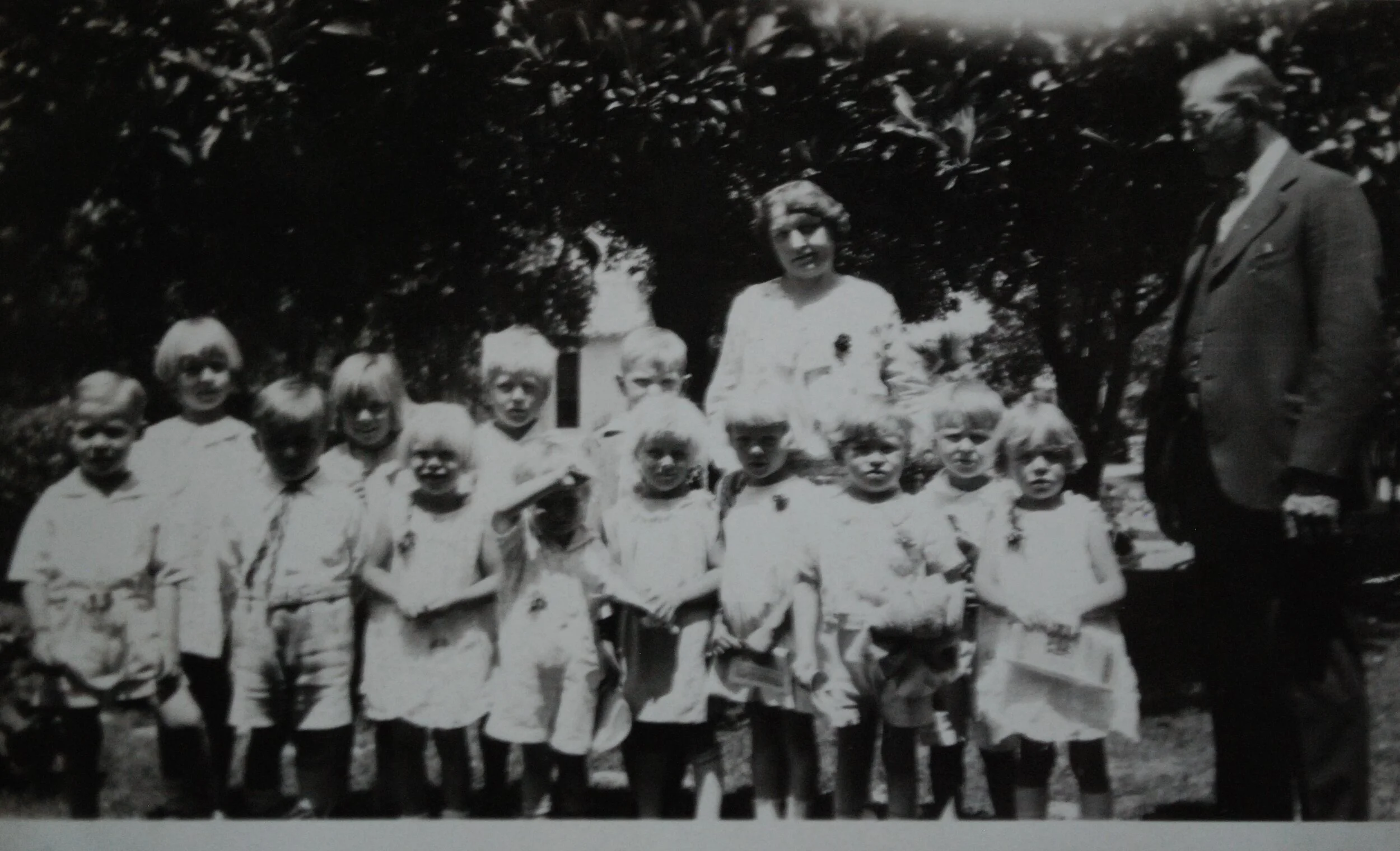
Sometimes looking back on history makes us realize that problems are recurrent. (As the writer of Ecclesiastes reminds us, there is nothing new under the sun.)
Consider these two examples, both relevant to our present context: The senior pastor’s report in 1957 commented: “A decrease in attendance in Sunday school can be explained by the excessive flu epidemic.” Again, members coming and going have always been a hallmark of Pas Cov; for example, in the 1961-2 annual report, the membership section listed people moving to Oregon, Minnesota, Iowa, Washington DC, and northern California.
But we look back not for the sake of finding interesting facts or being sentimental. The purpose of this deep dive into our history is to look for God. It is to remind ourselves of how God worked in the past and, perhaps more importantly, to anticipate how God will continue to work in the future.
On Sept 19, 2021 the worship service included a chat with three church members who value history. To listen, click the link (and move to ~15:00).
“Biblical faith takes history very seriously because God takes it very seriously. He took it seriously enough to begin it and to enter it and promises that one day he will bring it to a serious close.”